
Dark Ash Furniture: Grain, Finish and Care
The finish, grain pattern and daily care determine whether your cabinet, desk or coffee table keeps its depth after years of use.
If you are comparing naturally dark timber with stained ash, the most convincing choice usually preserves the ash’s open grain. A completely uniform black surface can look flat, while visible grain gives minimalist and mid-century furniture its character.
Key Takeaways
- Black/dark ash is often stained or ebonised, not naturally black
- Visible grain gives dark furniture depth and movement
- Lacquer offers stronger surface protection than oil
- Use coasters, mats and a barely damp cloth
- Avoid abrasive sprays, standing water and direct heat
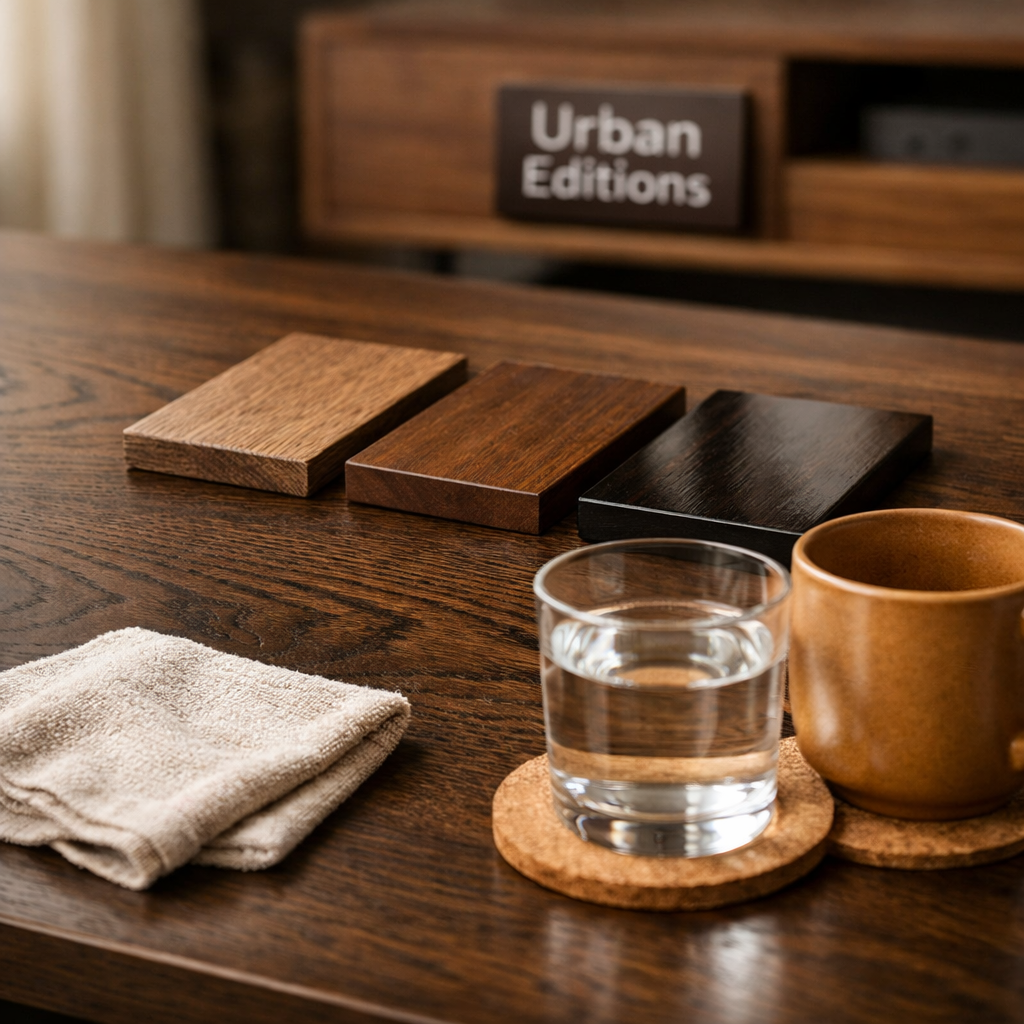
- Samples reveal colour better than screen images
What Is Black Ash Furniture Made From?
Black ash furniture is usually made from ash wood that has been stained, ebonised or finished in a dark coating. True black ash timber exists in nature, but it is not the standard explanation for every black ash cabinet or table sold in the UK. Ask how the colour is achieved before comparing pieces.
Ash is a strong, pale hardwood with a clear, open grain. Its natural colour ranges from creamy white to light brown, with darker growth lines that create a pronounced pattern. That grain remains visible when a suitable black stain is applied.
Black ash furniture is best understood as ash timber with a dark colour treatment, unless the maker specifically identifies naturally dark black ash.
The word ebonised describes a process that makes wood resemble ebony. A stain penetrates the timber to add colour, while a pigmented finish can sit closer to the surface. These methods produce different results when the grain, end grain and edges catch the light.
A black finish also reveals workmanship. Uneven sanding, glue marks or poorly prepared edges can show through a dark surface more clearly than they would in natural oak. Good preparation before colouring matters as much as the colour itself.
For a solid wood product, movement remains part of the material’s behaviour. Indoor heating, sunlight and seasonal humidity affect furniture in the same way whether the surface is pale walnut, honey-coloured oak or black ash.
Why Does the Grain Matter More Than a Uniform Black Colour?
The grain gives black ash furniture its visual depth. When light passes across an open ash pattern, some lines absorb more colour and others reflect it, producing a surface that changes as you move around the room. A flat black coating removes much of that effect.
This matters in rooms with minimalist styling. Clean-lined furniture has fewer decorative details, so the timber surface carries more of the visual interest. A black media unit with visible grain feels warmer than a smooth painted box, particularly beside a turntable, framed artwork or a pale wall.
How Ash Wood Grain Reacts to Dark Stain
Ash has larger pores than many fine-grained hardwoods. A penetrating stain may settle more heavily into those pores, making the grain appear darker and more pronounced. If the surface is grain filled first, the final result becomes smoother and more even.
Neither result is automatically better. Choose open grain when you want a tactile, natural appearance. Choose a filled and darker surface when you want a quieter look that sits behind the rest of the room.
Black Ash Versus Stained Ash
Naturally dark black ash and stained ash are not interchangeable terms. Stained ash gives the maker greater control over colour and allows the pale timber’s grain to remain visible. It is often the more practical route for matching a room scheme or a pair of existing pieces.
Natural variation is also part of the appeal. Two ash boards may absorb the same stain differently, so a built-to-order item should be judged as timber rather than as a perfectly uniform colour sample.
When a Consistent Black Surface Makes Sense
A more even finish works well where you want media equipment or storage to recede visually. It suits a TV stand with strong geometric lines, especially when the room already contains patterned flooring, colourful art or contrasting metalwork.
The trade-off is character. The darker and more uniform the surface, the less ash grain you will see. That can make the item look closer to painted furniture, even when it is made from solid hardwood.
Which Wood Finish Works Best for Black Ash?
Choose lacquer when you want the strongest day-to-day barrier against spills, fingerprints and light abrasion. Choose oil when you want a softer, more tactile surface and accept more regular maintenance. For most media furniture, I recommend a durable low-sheen lacquer because drinks, cables and equipment create repeated contact.
A finish does not merely protect wood. It changes how the grain reads, how repairs are handled and how often the surface needs attention. Confirm the maker’s finish before applying any product, because oil and lacquer require different care.
| Finish | Appearance | Protection | Care pattern | Best use |
|---|---|---|---|---|
| Oil | Low-sheen, tactile | Moderate | Re-oil when the surface looks dry | Desks and lightly used tables |
| Matt lacquer | Natural-looking, restrained sheen | Strong | Dust and wipe spills promptly | TV stands and cabinets |
| Satin lacquer | Slight reflective sheen | Strong | Simple routine cleaning | Coffee tables and consoles |
| Paint-like coating | Very even colour | Depends on product | Follow maker’s instructions | Uniform black interiors |
Oil Finish: Warmth With More Maintenance
Oil leaves the surface feeling close to the timber. It can make the grain appear richer and easier to see, particularly on ash with deep pores. Small marks may blend into the overall texture rather than forming a sharp glossy patch.
Oil is not maintenance-free. A dry-looking surface may need a compatible maintenance coat, and any repair should use the same product system. Never add household oil, furniture polish or wax without checking the original finish.
Lacquer Finish: Protection for Busy Rooms
Lacquer forms a cured film over the wood. It is the better choice for a coffee table beside a sofa, a family desk or a media unit where hands, controllers and equipment are moved often.
A matt lacquer preserves a quieter appearance than a high-gloss coating. It still needs sensible protection, though. Lacquer resists ordinary splashes; it does not make timber waterproof. Water left around a plant pot or speaker base can still reach joints, edges or damaged areas.
Matching Care to the Finish
Find out whether your furniture is oiled or lacquered before cleaning it. If you cannot confirm the finish, start with a dry microfibre cloth and ask the maker for written guidance rather than testing a polish on the top surface.
The finish also affects how a sample should be judged. Look at it near a window and under evening lighting. Black surfaces can appear warmer, cooler, flatter or more reflective depending on the light source and viewing angle.
How Do You Clean Black Ash Surfaces Safely?

Clean black ash furniture with a soft, dry cloth for dust and a barely damp cloth for marks. Wipe in the direction of the grain, then dry the surface immediately. Do not soak the timber, spray cleaner directly onto it or use abrasive products that can dull the finish.
A simple routine prevents most damage. Dust weekly if the furniture sits near an open window, and deal with drink rings or fingerprints as soon as you notice them. A clean cotton or microfibre cloth is enough for everyday work.
A Four-Step Cleaning Routine
- Remove dust with a clean, dry microfibre cloth.
- Dampen a second cloth with plain water and wring it thoroughly.
- Wipe the mark lightly, following the grain.
- Dry the surface with a fresh cloth within a minute.
This method suits ordinary dust, light fingerprints and small splashes. It does not remove every stain, and repeated rubbing can change the sheen in one area.
Products to Avoid
Avoid bleach, scouring cream, solvent sprays, furniture polish and rough paper towels unless the manufacturer specifically approves them. Abrasive cleaners can leave pale scratches across a black surface, while silicone-heavy polishes may create a patch that is difficult to refinish.
Do not use a steam cleaner. Steam drives heat and moisture into joints and edges, where swelling or finish failure can begin.
A small mark is easier to manage than a large wet patch.
If a spill occurs, lift it with a cloth rather than spreading it across the surface. Red wine, coffee and cleaning fluid deserve immediate attention because a dark finish can hide moisture until the edge starts to lift.
How Should You Protect Black Ash Furniture From Heat and Moisture?

Use coasters, trivets and equipment mats wherever heat or moisture meets the surface. A hot pan, wet plant pot or recently watered vase should never sit directly on black ash furniture. Protection is especially important on horizontal surfaces, where liquid remains in place longer.
Boiling water reaches 100°C, but a mug, charger or amplifier also transfers heat over time. Put a heat-resistant mat beneath anything that feels hot, including a turntable power supply or a laptop used for long periods.
Media Furniture and Equipment
Leave ventilation around amplifiers, games consoles and other heat-producing equipment. Do not block vents against the back panel, and use a felt or rubber mat beneath devices that could vibrate or mark the cabinet.
For a media unit, cable placement matters too. Cables pressed against a damp wall or trapped beneath equipment can create localised moisture and pressure. Keep the cabinet dry and allow air to circulate around connected equipment.
Design-conscious homeowners can compare media units in different solid hardwood options when the timber, finish and equipment layout all need to work together.
Drinks, Plants and Damp Objects
Use a coaster beneath every drink, not only hot ones. Cold glasses can create condensation, and a damp ring may sit unnoticed beneath a coaster that has shifted.
Plant pots need a waterproof tray with an air gap beneath it. Never place a wet pot straight onto the wood. Water can travel through tiny gaps, leaving a pale mark, swollen edge or softened finish.
Sunlight and Indoor Climate
Strong sunlight can change dark finishes over time, particularly near a south-facing window. Position furniture away from direct rays where possible, or use curtains and blinds during the brightest part of the day.
Keep the room at a normal, comfortable indoor temperature rather than placing furniture beside a radiator. Rapid changes in heat and humidity put more strain on joints and wide solid-wood panels than steady conditions.
How Do You Choose Black Ash Furniture for a Minimalist Interior?

Choose the furniture around the room’s function first, then use the black finish to control visual weight. A low TV stand suits a long wall, while a tall vinyl cabinet uses vertical space and keeps records accessible. Measure the wall, skirting boards and cable route before ordering.
A dark cabinet can anchor pale walls and timber flooring, but too many black pieces can make a small room feel heavy. Balance one substantial item with lighter surfaces, open space or warm-toned accessories.
Match Grain Direction to the Shape
Long horizontal grain reinforces a low console or TV stand. More vertical movement suits a tall record cabinet or narrow shelving. Ask how boards will be arranged, because the grain direction affects whether the piece feels calm or energetic.
The size of the room changes the decision. In a compact flat, a black ash console with closed storage may provide a cleaner line than several smaller units. In a larger sitting room, a broad media unit can carry the dark tone without dominating every wall.
Consider the Rest of the Room
Black ash works with pale oak, cream paint, brushed metal and muted green. It also pairs with walnut, but two dark woods need a clear difference in tone or grain so they do not look accidentally mismatched.
Mid-century furniture often depends on proportion as much as colour. Tapered legs, recessed storage and a low profile can make a dark piece feel lighter than a boxy design with a solid plinth.
Built-to-Order Versus Standard Dimensions
Built-to-order furniture is useful when your equipment, alcoves or record collection do not fit standard sizes. Check the usable internal dimensions, door swing and ventilation space rather than measuring only the external width.
The practical drawback is waiting for production rather than taking a piece home immediately. That delay earns its place when the result avoids awkward cable holes, wasted gaps or a cabinet that cannot hold the items it was bought for.
What Should You Check Before Buying Solid Black Ash Furniture?
Check the timber, colour method, finish, dimensions and care instructions before placing an order. A product described as black ash may be solid ash with stain, ash veneer over another board, painted material or naturally dark timber. Those differences affect repair, grain and long-term appearance.
Ask for a wood sample where the colour is unfamiliar. A screen cannot show pore depth, sheen or how the grain reacts to daylight. Judge the sample beside your flooring and wall colour, not against a white webpage.
Confirm whether the furniture is made from solid hardwood throughout or combines solid sections with panels. Both approaches can be well designed, but you need accurate information before comparing price or expected behaviour.
Look at edges and corners. These areas receive knocks and reveal whether the colour runs through the timber, sits in the pores or forms a surface film. On a dark piece, an exposed pale edge is immediately noticeable.
For UK buyers, delivery access also deserves attention. Measure stair turns, lift doors and the narrowest entrance, then keep the route clear on delivery day. A beautifully proportioned cabinet is still the wrong purchase if it cannot reach the room.
The Urban Editions designs and makes furniture in the UK using sustainably sourced solid hardwoods including ash, oak, walnut and iroko. Its built-to-order approach allows customers to customise designs and order wood samples before committing to a piece.
Conclusion
Choose stained or ebonised ash when you want black colour with visible grain, and choose a more uniform coating when the room needs a quieter surface. For busy media furniture, select a durable lacquer, use mats beneath warm equipment and wipe spills promptly. If colour and dimensions need to match your room precisely, review the customisable media furniture collection and order a sample before commissioning the final piece.
Frequently Asked Questions
Is black ash naturally black?
Usually, no. Most black ash furniture uses pale ash timber treated with a dark stain, dye or ebonising process. Naturally dark timber is less common, so ask the maker how the colour is achieved if grain visibility and future repair matter to you.
Can I use furniture polish on black ash furniture?
Only use furniture polish when the maker confirms it suits the finish. Many polishes contain oils, waxes or silicone that alter sheen and complicate later refinishing. Start with a dry microfibre cloth and a barely damp cloth for marks.
Is lacquer or oil better for a black ash desk?
Lacquer is better for a desk that receives daily handling, drink spills and contact with laptops. Oil gives a warmer, more tactile finish but needs more attention. Use the finish specified by the maker rather than mixing maintenance products.
Will black ash furniture fade in sunlight?
Direct sunlight can change the appearance of dark finishes over time. Keep the furniture out of strong direct rays, use blinds during bright periods and rotate loose objects so one area does not age differently from the rest of the surface.
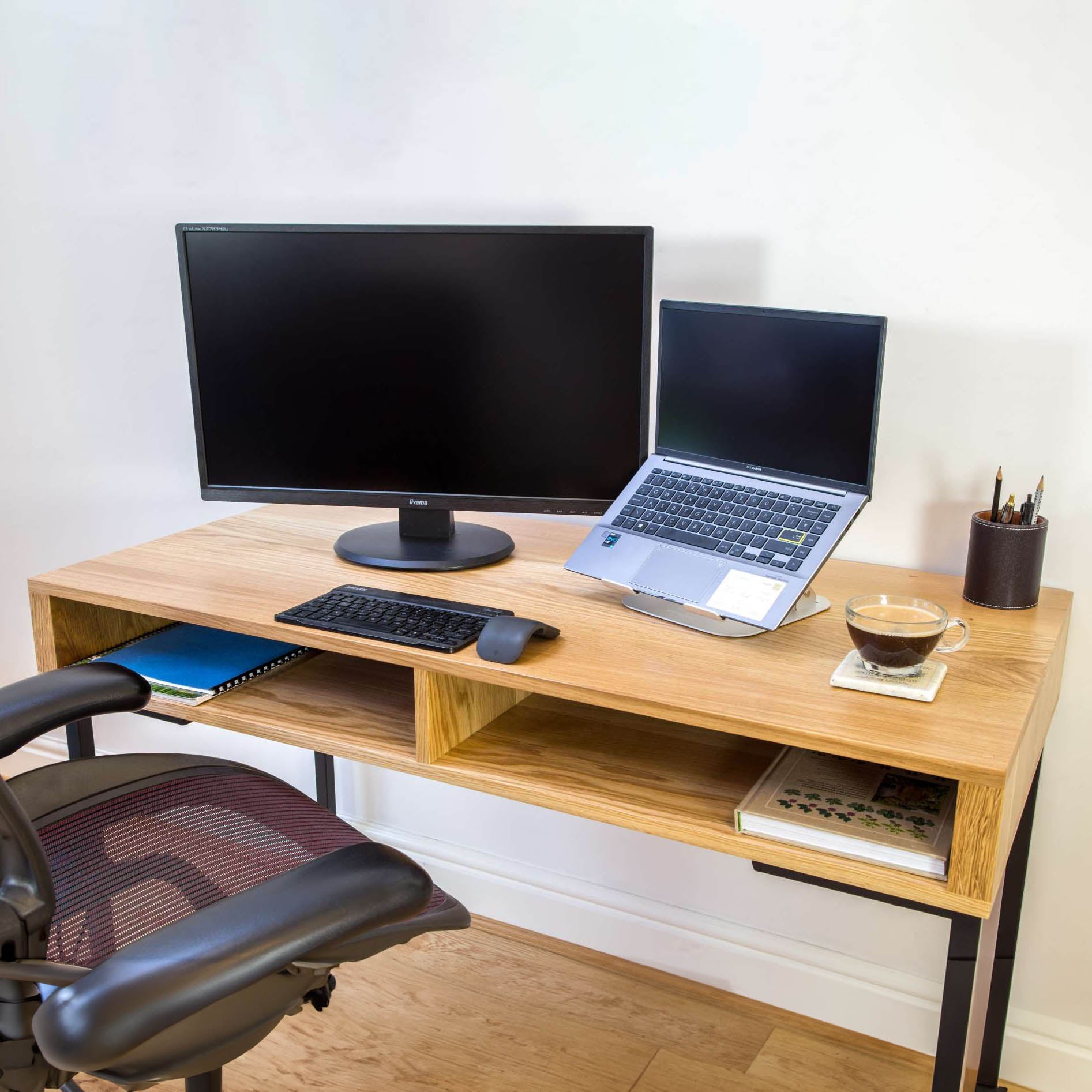

Blog posts
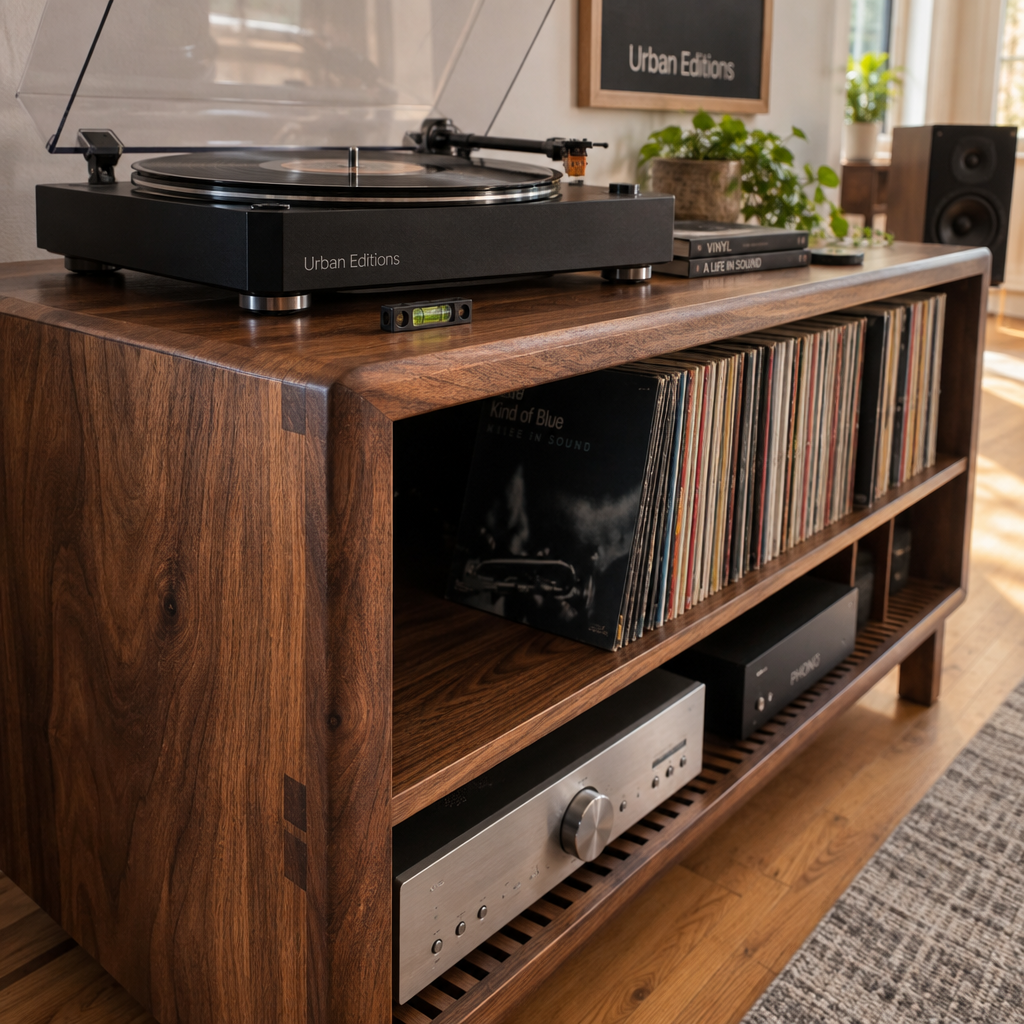
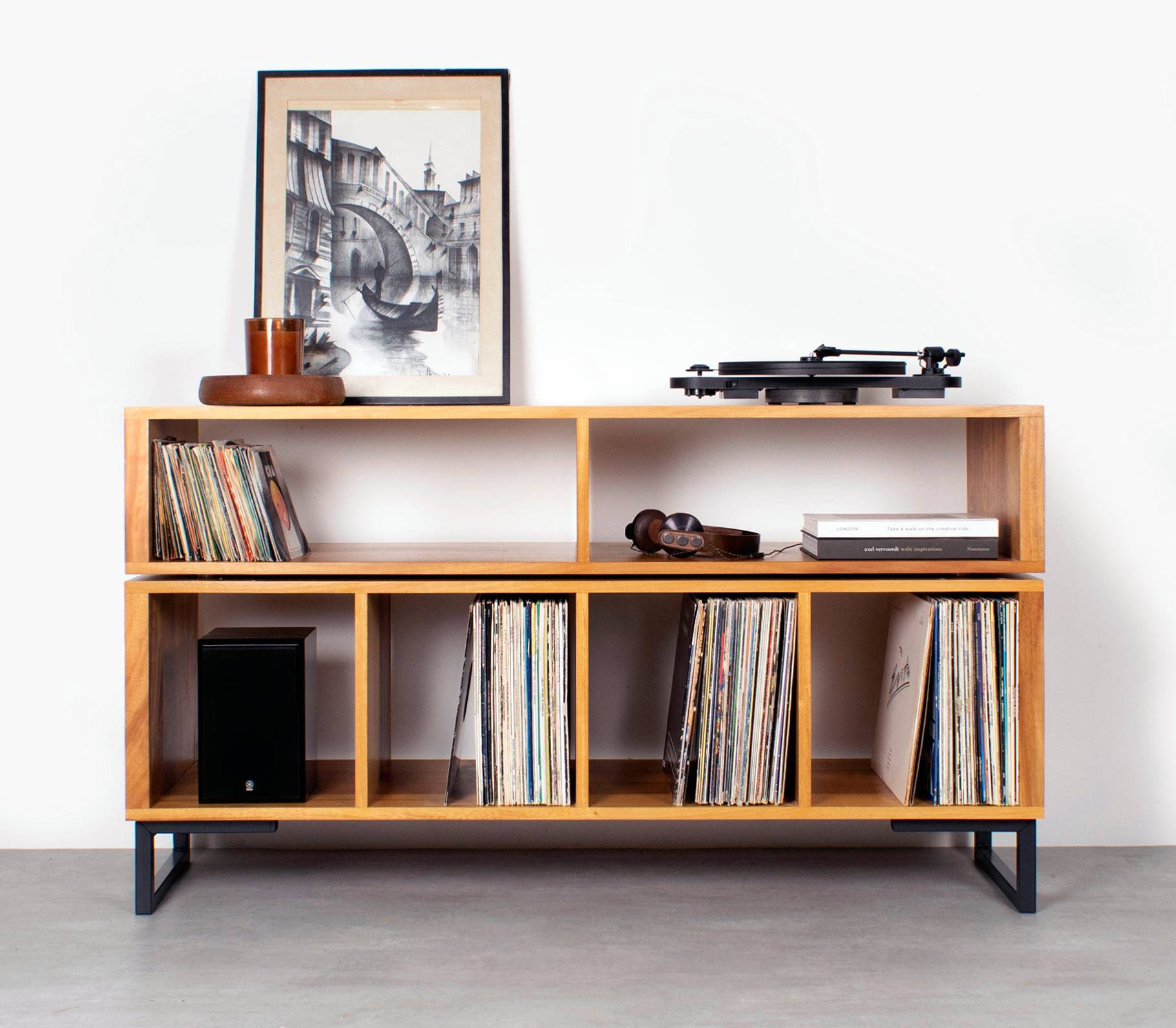
Stand for Vinyl Record Player: Solid Wood Options
Choose a stand for vinyl record player with stable solid wood construction, practical storage, ventilation and cable space.
Read more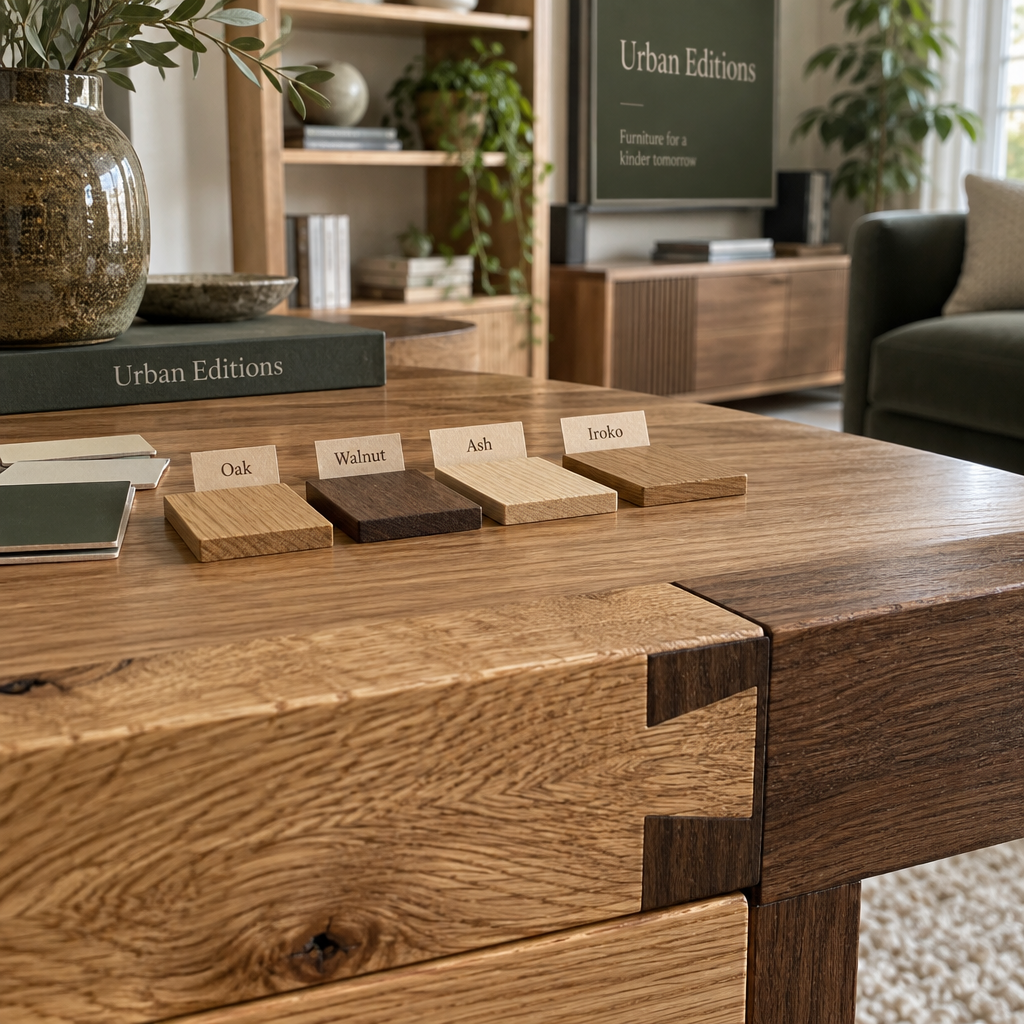
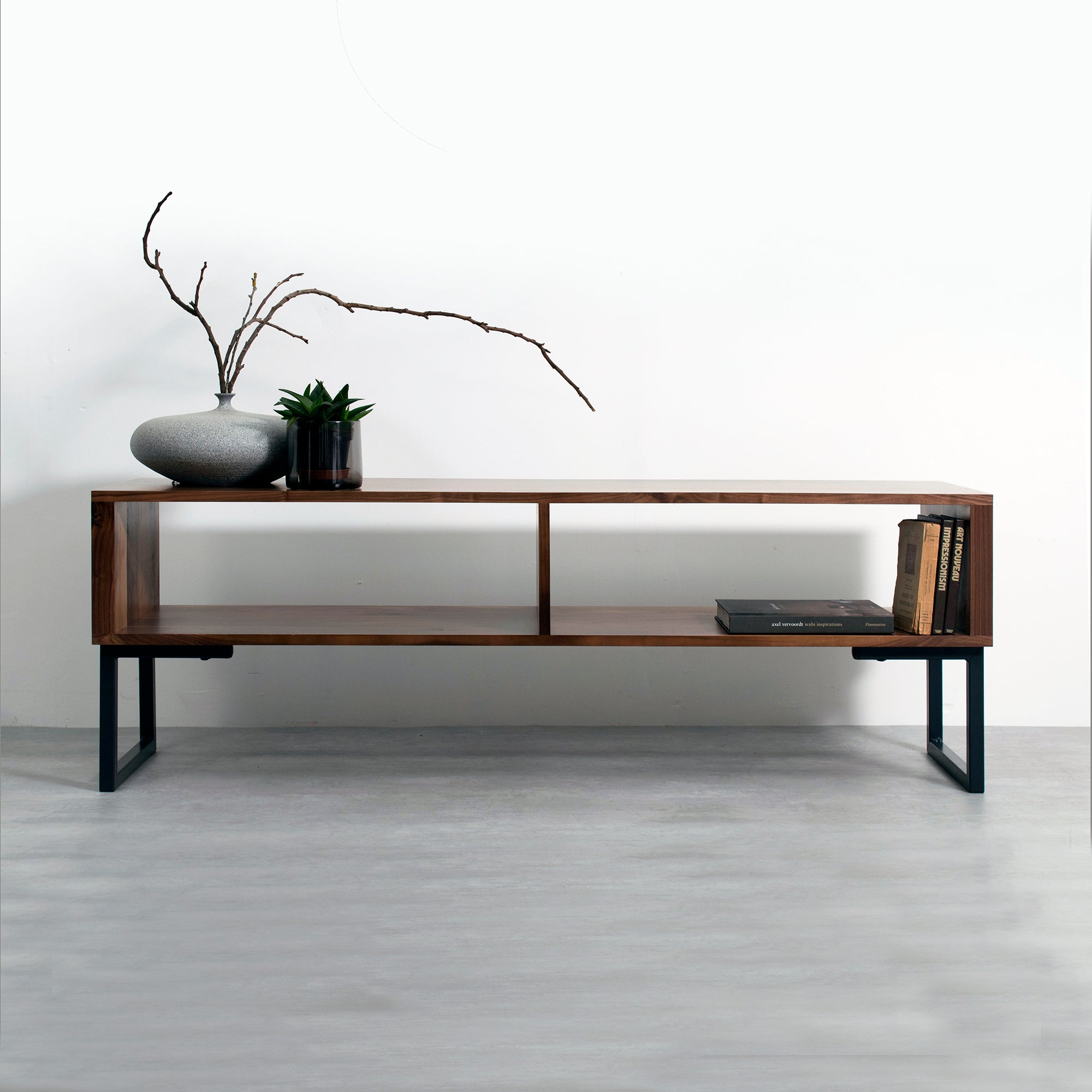
Woods Furniture: Choosing Timber for Lasting Interiors
Choose the right woods furniture for lasting interiors by comparing grain, durability, finish, repairability and room use.
Read more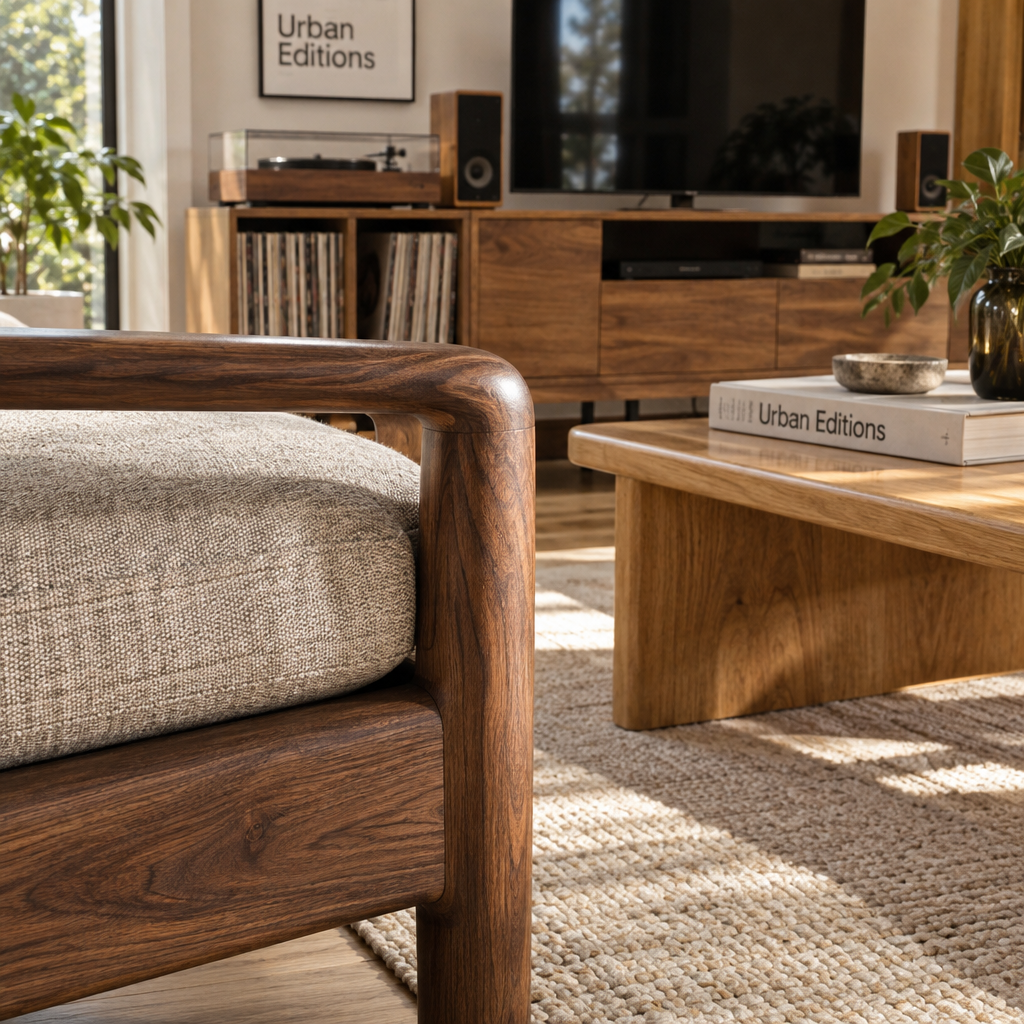
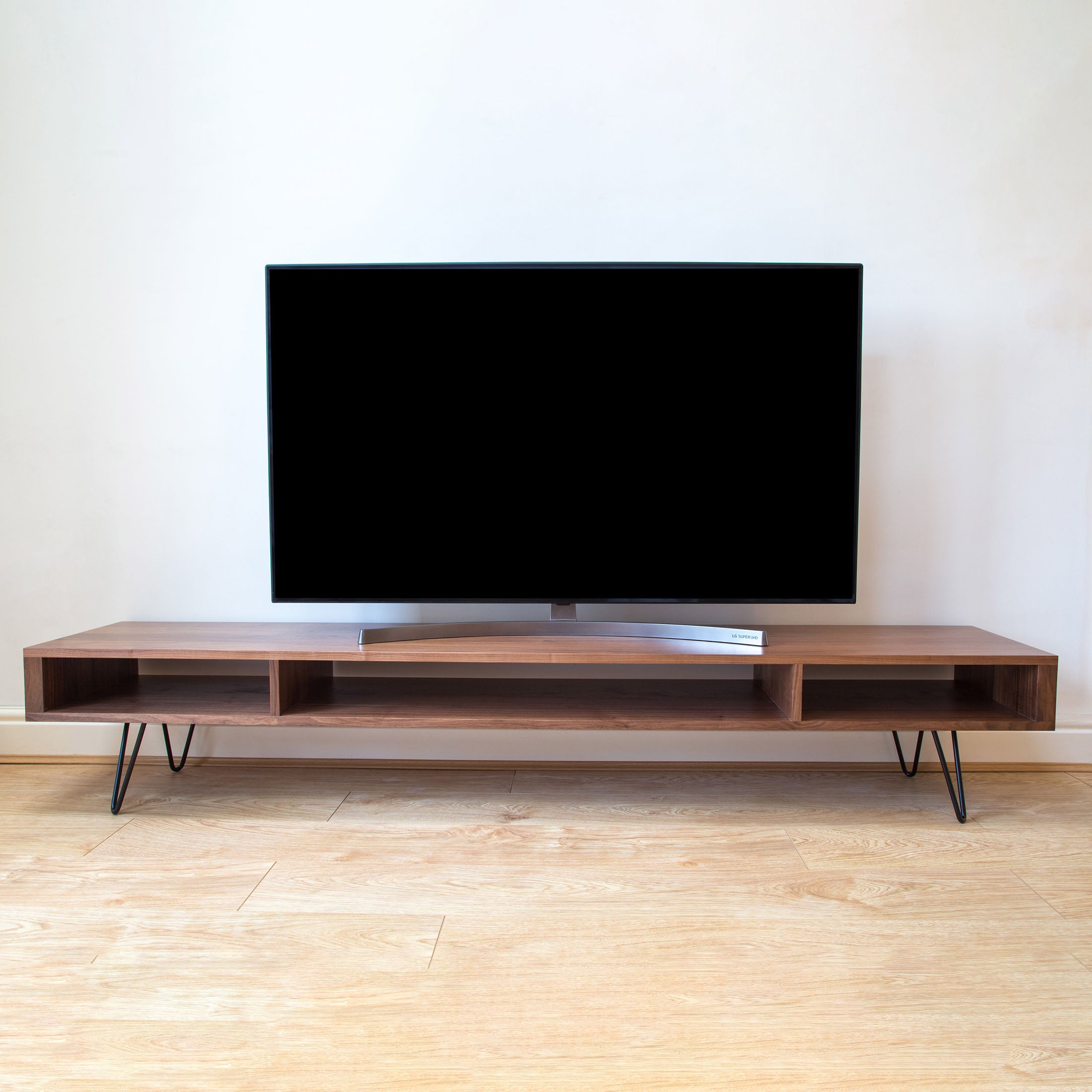
Living Room Furniture: Solid Wood Pieces for Modern Homes
Choose living room furniture in solid wood with the right proportions, storage and finishes for a modern UK home.
Read more