September SPECIAL OFFER! Sign-up to our newsletter to receive the latest offers and news.
Bespoke Wooden Furniture: Design and Ordering Guide
Allow roughly 6–10 weeks for bespoke wooden furniture, rather than expecting next-day delivery. That lead time gives a joinery team space to confirm your dimensions, prepare solid hardwood and apply the chosen finish properly.
The best custom furniture is a fit-and-function decision, not simply a luxury purchase. You get genuine value when a standard cabinet wastes space, cannot hold your equipment or clashes with awkward features such as skirting boards, cables and doors.
Key Takeaways
Custom dimensions solve real storage and access problems
Oak, walnut, ash and iroko suit different rooms
Measure walls, skirting boards, cables and ventilation
Built-to-order furniture needs more planning time
Samples reveal grain and finish better than screens
Standard furniture wins when its dimensions already work
When Does Bespoke Wooden Furniture Make Sense?
Choose bespoke wooden furniture when a fixed dimension, unusual storage need or specific piece of equipment makes standard furniture a poor fit. A custom depth of 35cm instead of 40cm can preserve a walkway, while a tailored width can use the space beside a chimney breast.
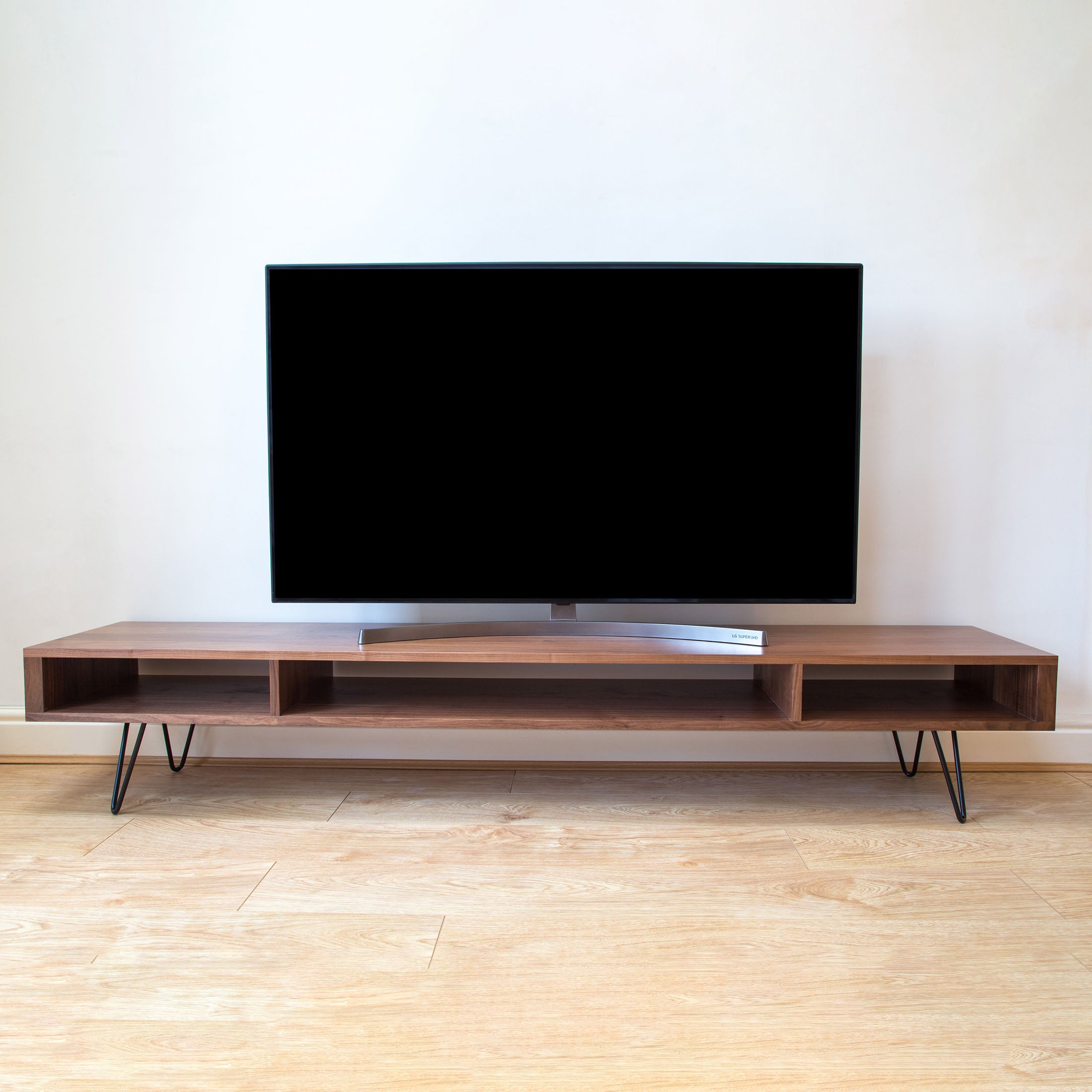
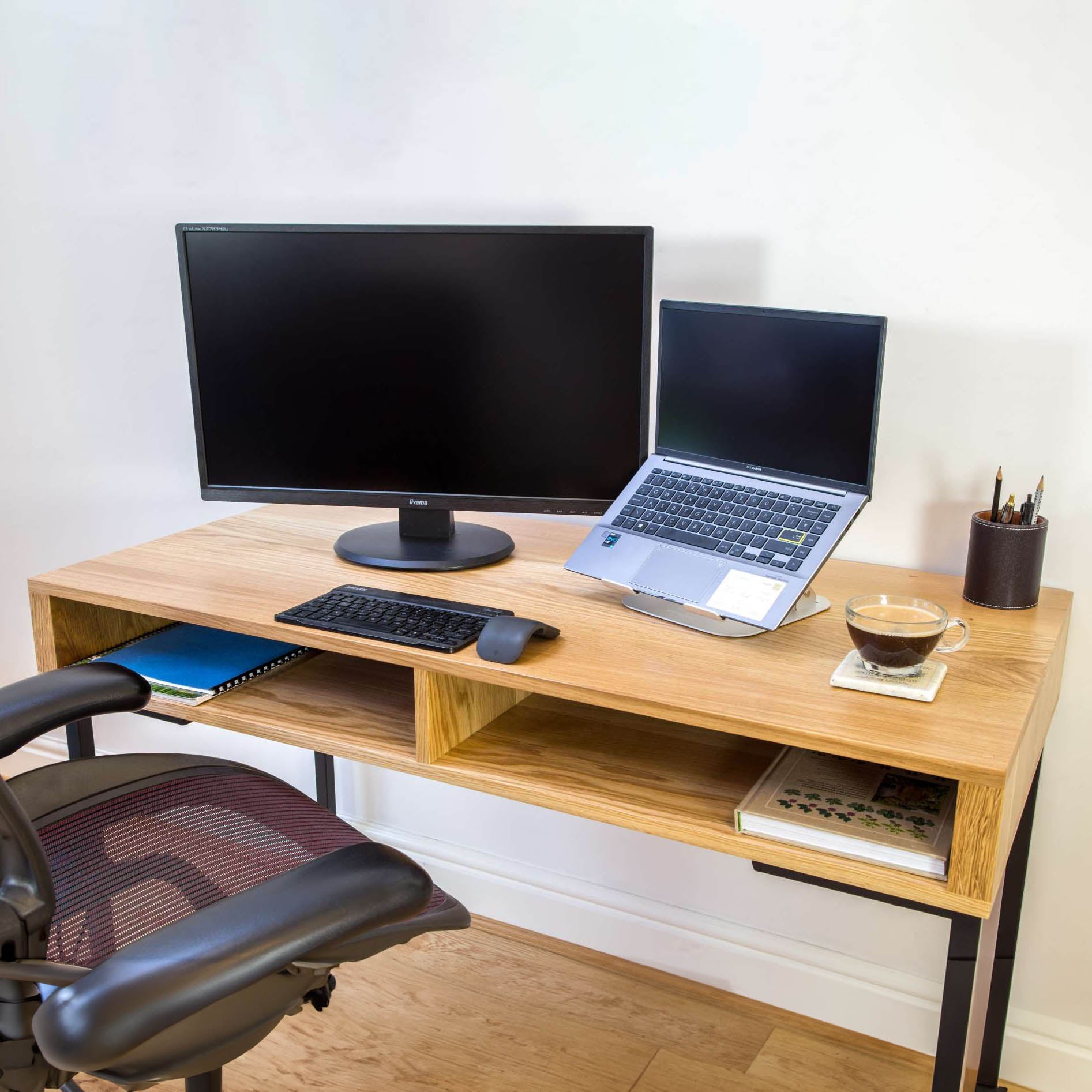
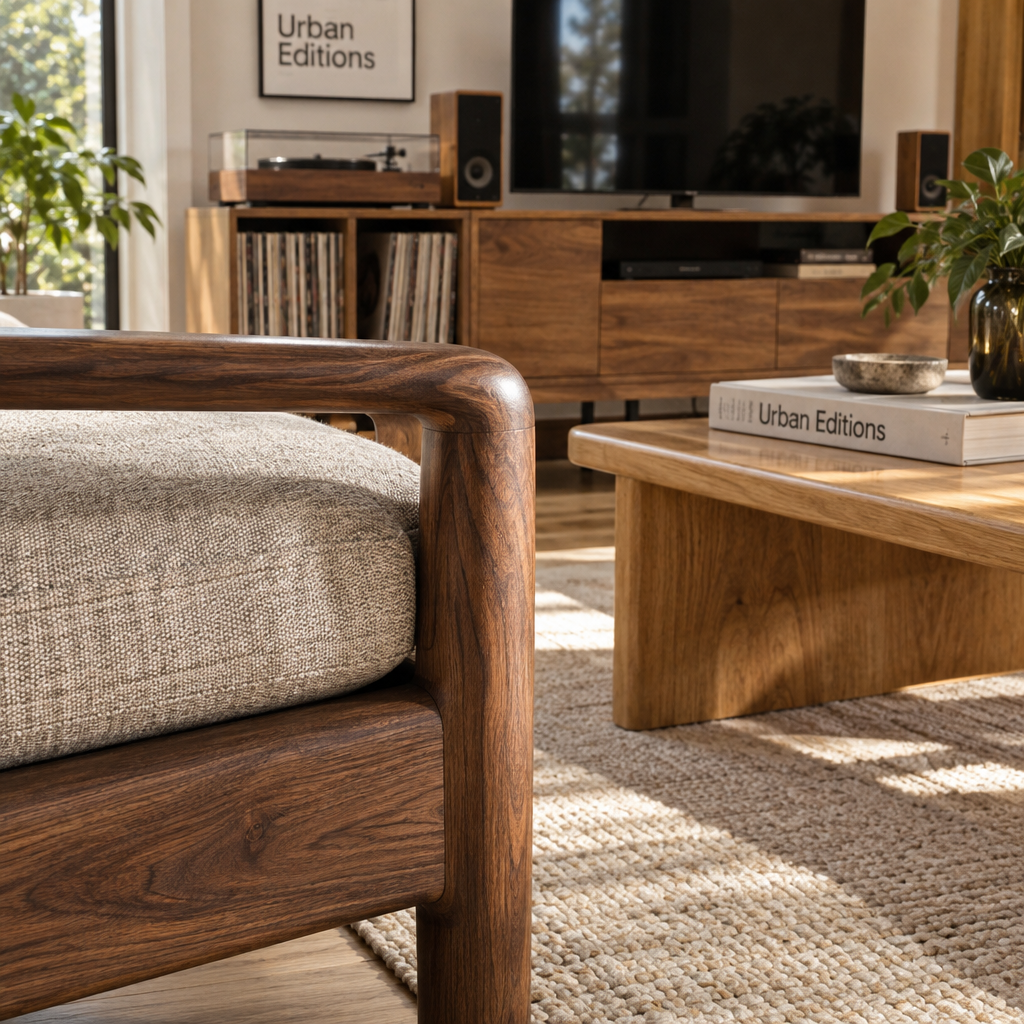
Start with the room, not the style. A low TV stand may need space for a soundbar, games console and cable routing. A vinyl cabinet needs shelf dimensions that suit records, while a desk must leave room for your chair, knees and power leads.
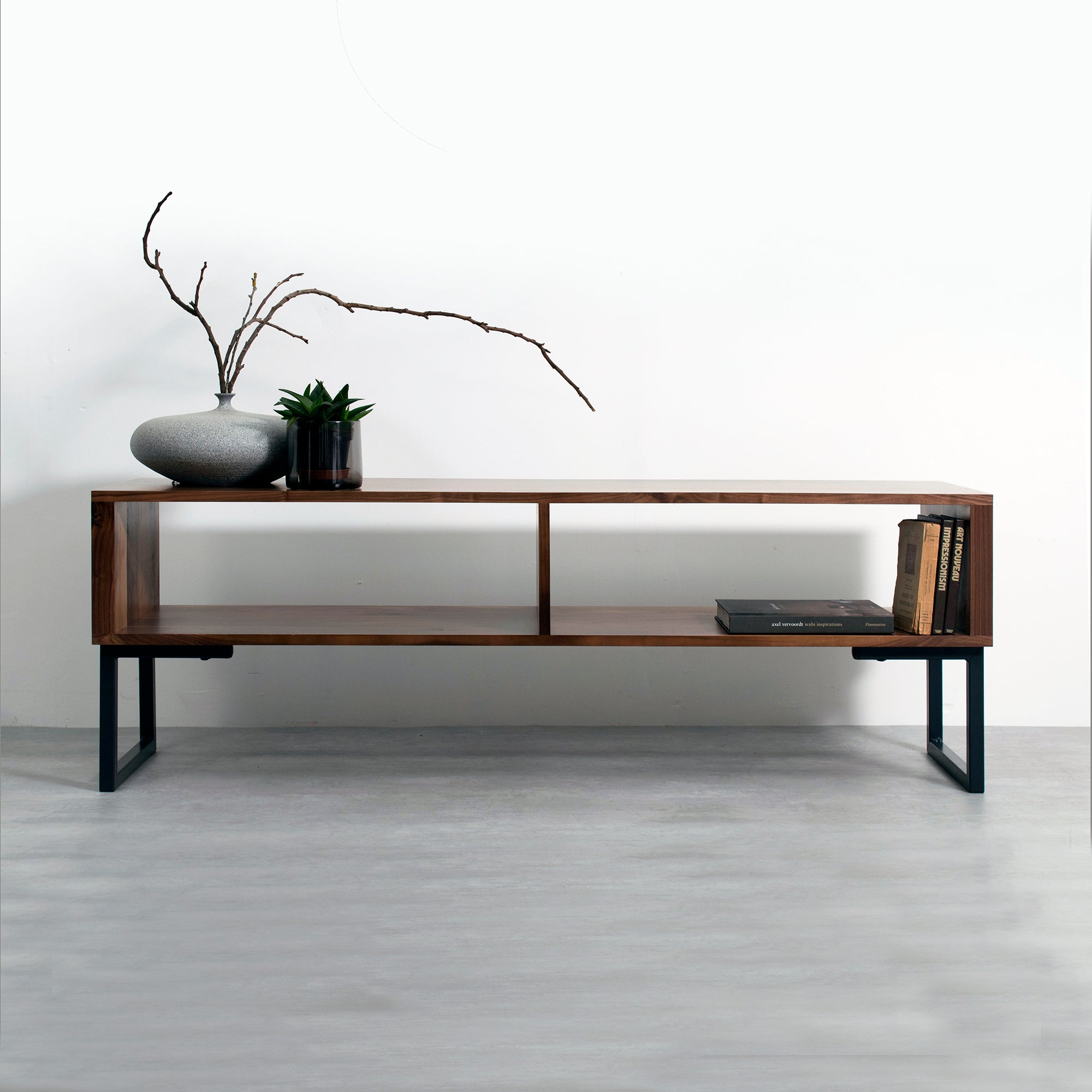
Customisation also solves visual problems. A console table built to the length of a 2.4m hallway wall looks considered; a smaller standard table can leave an awkward gap or force you to centre it around a radiator.
Fit and function before luxury
Think of a bespoke piece as a practical tool. It should improve access, reduce clutter or use difficult space more efficiently. If a standard coffee table already gives you the right height and footprint, commissioning a custom version adds little functional value.
The strongest case is usually a room with constraints. Alcoves, sloping ceilings, deep skirting boards and equipment ventilation all change the usable dimensions. Record collections create another clear example because the furniture must support heavy, regularly handled items without blocking access.
Customising an existing design
Bespoke does not always mean designing an entirely one-off object. You might choose an existing mid-century-inspired cabinet, then change its width, height, timber or internal arrangement.
That approach gives you a proven starting point while still addressing your room. It also makes the ordering conversation clearer because you can discuss a recognisable design rather than describing every joint and panel from scratch.
When standard furniture is better
Choose a standard design when the available dimensions already work, you need the furniture immediately or the budget is tightly fixed. A well-made ready-sized console that leaves 10cm of clearance can be a better purchase than a custom piece that delivers only a visual change.
The Forest Stewardship Council describes responsible forest management as balancing environmental, social and economic needs for present and future generations.
Sustainability claims still need checking. Ask where the timber comes from, whether the furniture uses solid hardwood and how the workshop manages waste. The Urban Editions uses sustainably sourced solid hardwoods including oak, walnut, ash and iroko, with furniture designed and made in the UK.
Which Timber Should You Choose?
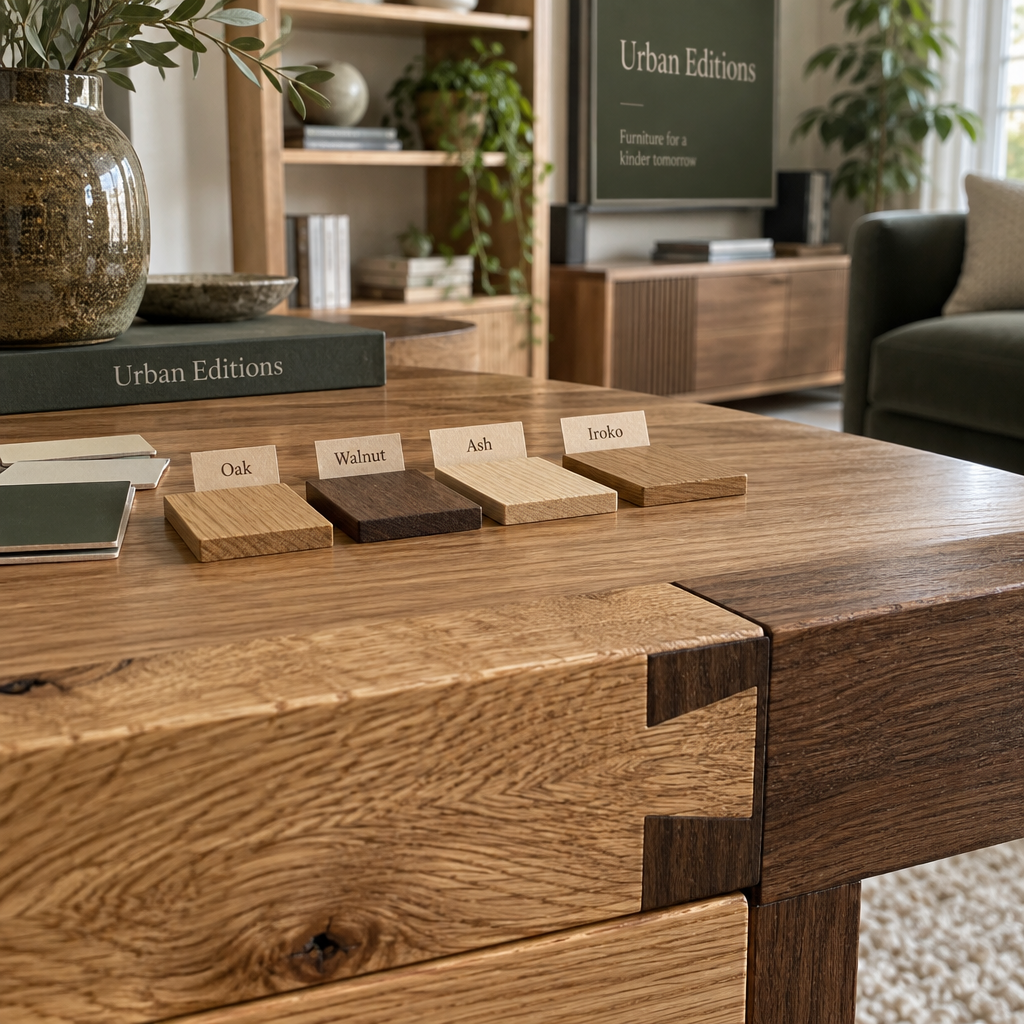
Oak is the safest all-round choice for bespoke wooden furniture when you want visible grain, dependable durability and a warm finish. Walnut gives a darker, richer appearance, ash has a lighter open grain, and iroko suits a more distinctive look. Colour matters, but it should come after use and room conditions.
Solid hardwood behaves differently from painted MDF or veneer. It responds to humidity, changes slightly across seasons and shows natural variation from board to board. That variation is part of the material, not a manufacturing flaw.
Oak, walnut, ash or iroko?
Timber
Appearance
Practical character
Good match
Oak
Warm, clear grain
Hard-wearing and versatile
TV stands, desks, dining and storage
Walnut
Deep brown tones
Premium appearance with strong grain
Media units, desks and statement cabinets
Ash
Pale, pronounced grain
Light visual weight and durable surface
Scandinavian and bright interiors
Iroko
Golden to brown tones
Dense, distinctive and durable
Feature furniture and richer schemes
Oak works particularly well in a contemporary UK home because it suits pale walls, brick, painted joinery and darker accents. It also gives you more freedom when the room changes later.
Walnut makes a stronger visual statement. Use it when the furniture should anchor a room, such as a media unit against a light wall. Its darker tone can make a small room feel visually heavier, so balance it with open space and lighter textiles.
Grain, hardness and room conditions
Inspect grain direction when choosing a large top or cabinet front. Long, continuous grain creates a calmer appearance, while smaller sections show more variation. A sample cannot show every future board, but it helps you judge the base colour and finish.
For a desk or frequently handled cabinet, prioritise a timber and finish that will tolerate regular contact. A pale, open-grained surface may show marks differently from a dark, smooth one. Ask how the workshop expects you to clean it before ordering.
What sustainable timber should mean
Sustainably sourced timber should be more than a reassuring phrase on a product page. Look for clear information about the wood species, sourcing and production location. UK-made furniture also reduces the distance between design, joinery and delivery compared with imported mass-market pieces.
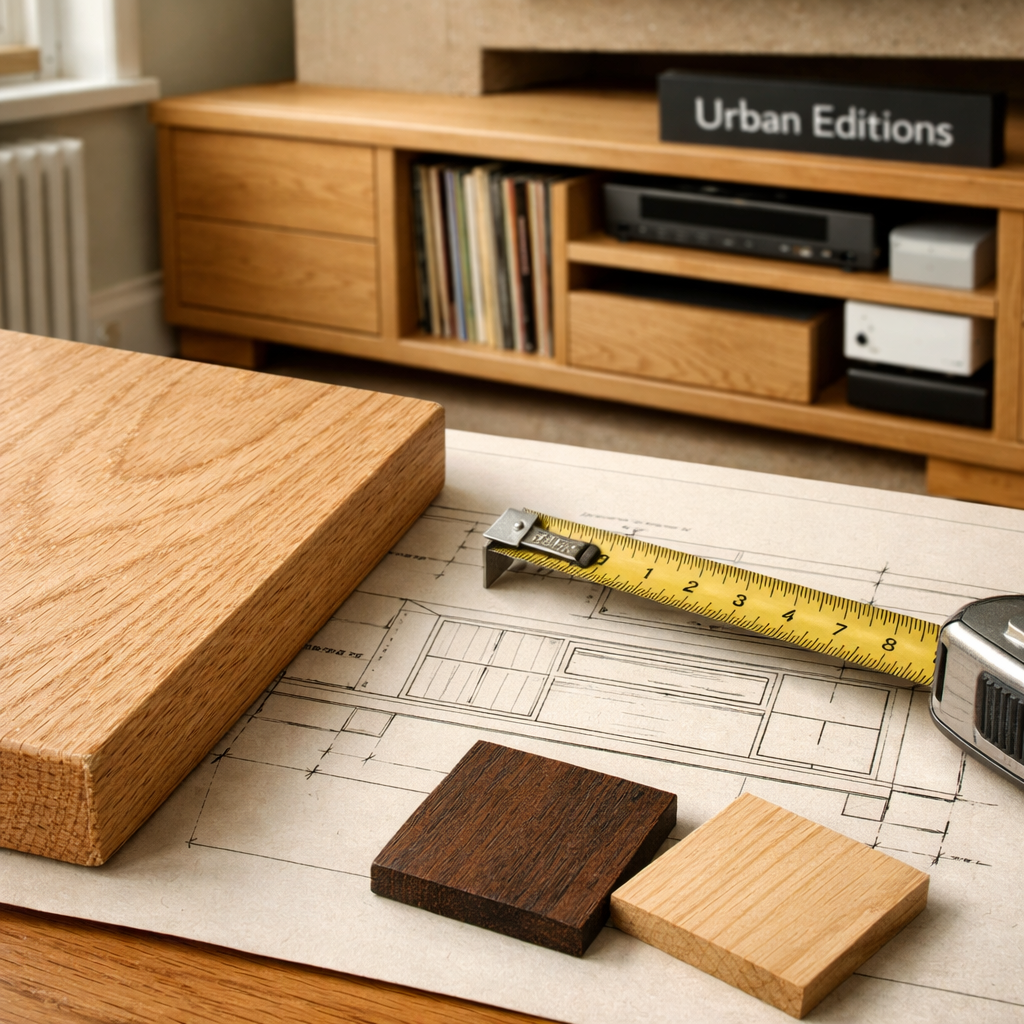
The Urban Editions offers wood samples before you commit. Order them if the furniture will sit near flooring, kitchen cabinetry or painted walls, because indoor lighting changes how timber appears between morning and evening.
How Should You Measure for Custom Furniture?
Measure the full installation area, then subtract the space needed for movement, doors, cables and ventilation. For a cabinet beside a wall, record the wall length, skirting-board projection, socket positions and door swing before choosing its final width.
A tape measure is enough for the first survey. Use a steel tape, pencil, masking tape and a phone camera. Mark the proposed footprint on the floor with masking tape so you can test whether drawers open and whether you can still walk past.
The five measurements to record
Write measurements in millimetres rather than relying on memory. Record:
Overall wall width at floor level and at the intended top height.
Floor-to-ceiling height, including any coving or uneven ceiling.
Skirting-board height and projection from the wall.
Socket, aerial and broadband outlet positions.
Door, window, radiator and ventilation clearances.
Walls are rarely perfectly square. Take the width at the floor, halfway up and near the top of the proposed furniture. If those figures differ, use the smallest usable measurement and discuss the tolerance with the maker.
For media storage design examples, the UK media unit collection shows how cabinets can be planned around screens, records and connected equipment rather than treated as empty boxes.
Cables and equipment ventilation
Leave a route for power and signal cables before finalising the back panel. A tight cabinet may look tidy in a drawing but become difficult to use when HDMI leads, speaker cables and plugs need to bend.
Equipment also produces heat. Leave manufacturer-recommended clearance around amplifiers, games consoles and other warm devices. If your equipment manual specifies a gap, use that figure rather than guessing.
Use a written specification
Send the maker a simple room sketch with dimensions, photos and a note about access. Include stair width, lift restrictions and the narrowest doorway. A 120cm cabinet may fit the room but fail at a 75cm turn on the staircase.
Ask the workshop to confirm finished dimensions, not just nominal ones. Clarify whether the stated width includes handles, overhanging tops or feet. This small check prevents an expensive surprise after production begins.
What Should You Specify Before Ordering?
Prepare a written specification covering dimensions, timber, finish, storage, cable management, delivery access and the intended equipment. A clear brief reduces revisions and gives the maker a reliable basis for confirming the order.
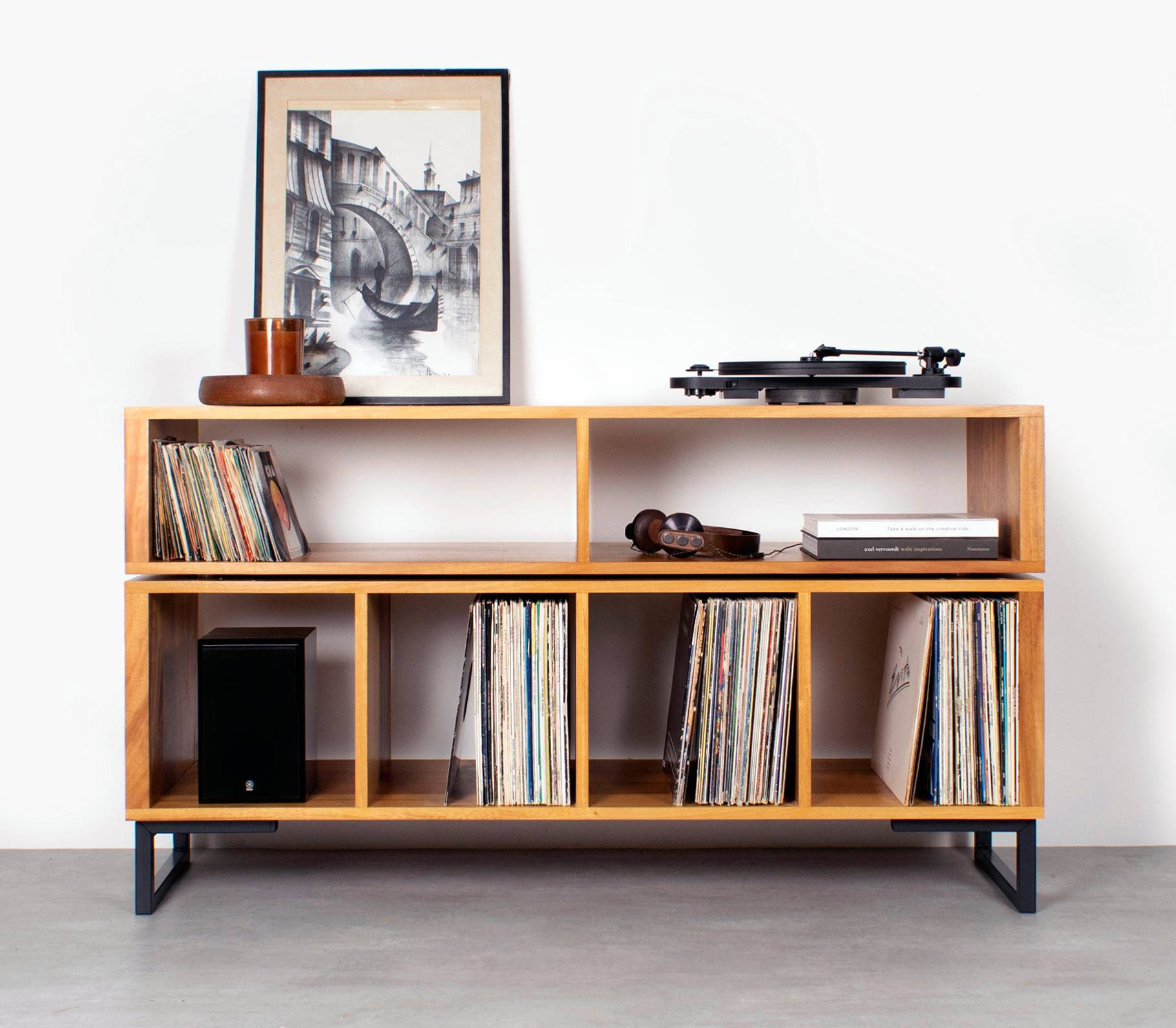
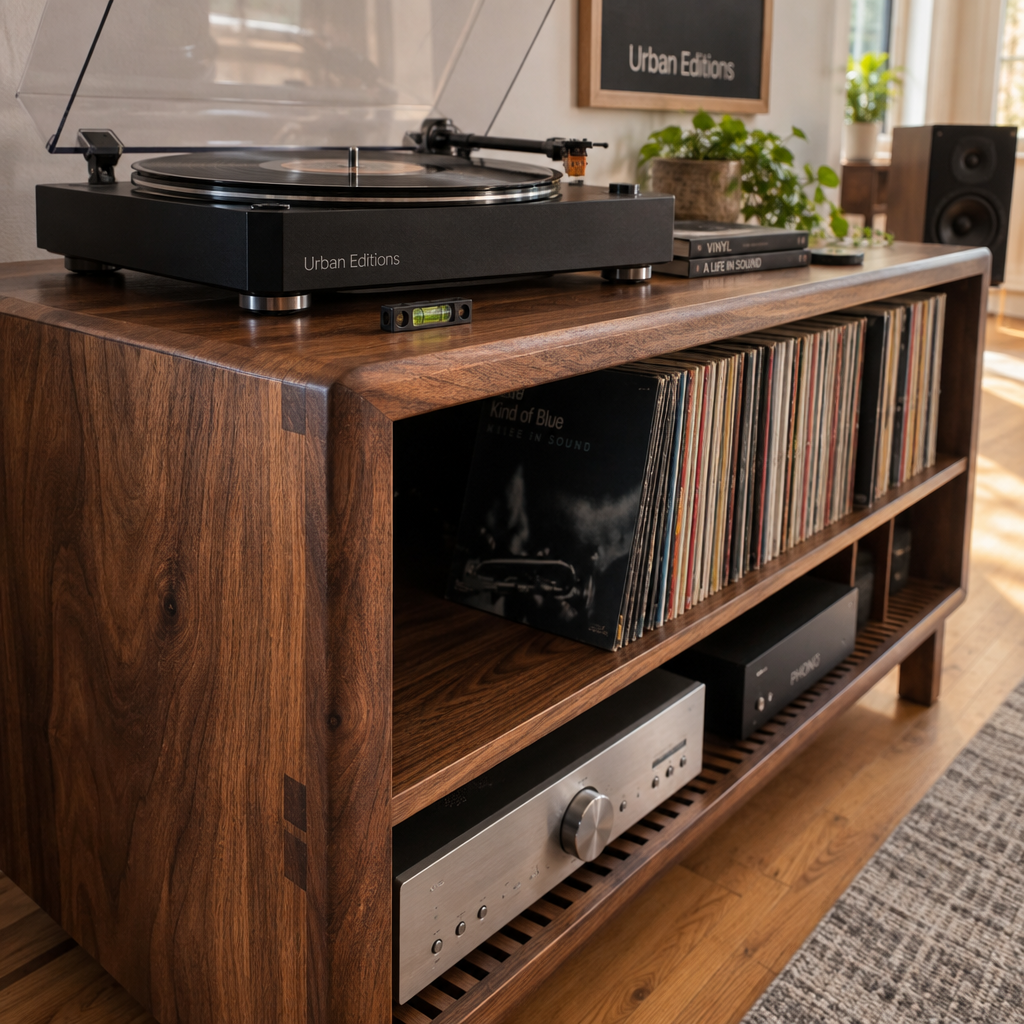
Start with the object’s job. A vinyl storage cabinet might need open access to records, closed storage for accessories and a stable top for a turntable. A desk might need a wide working surface but no bulky drawers.
Interior layout and load
Measure the items that will live inside the furniture. Vinyl records need vertical storage with enough tolerance for sleeves and easy removal. Books, amplifiers and boxes all need different internal clearances.
Do not fill every centimetre of a cabinet. Allow hand clearance at the top and sides, especially for objects you use weekly. A shelf that technically fits can still fail if you cannot grip what sits on it.
Weight matters too. A long shelf loaded with records places more demand on its span than a shelf holding folded linens. Tell the maker what the furniture will carry, not only how it should look.
Finish and hardware
Decide whether you want the timber to look pale, warm, deep or natural. Oil, hardwax oil and lacquer each affect sheen, touch and future maintenance. The right choice depends on the surface and how much handling it receives.
Request a sample finished in the proposed treatment. Timber can look markedly different under warm kitchen lighting compared with daylight from a north-facing window. A sample also shows whether the grain feels too busy beside your flooring.
Specify hinges, doors, handles and cable openings in writing. If you want a clean front, push-to-open hardware may suit the design; if you want easy daily access, a discreet pull can be more practical.
Delivery and installation conditions
Confirm whether delivery is to the room of choice, whether assembly is required and who checks access. UK homes often include narrow staircases, low porches and turns that do not appear in a floor plan.
Built-to-order furniture is made for your confirmed specification. Check the order carefully before production, particularly dimensions and finish. A change after cutting timber can affect both the schedule and the cost.
How Long Does Built-to-Order Furniture Take?
Expect a longer lead time than standard retail furniture because the piece moves through design confirmation, timber preparation, joinery, sanding, finishing and delivery. A practical planning estimate is 6–10 weeks, although the confirmed schedule depends on the design and the workshop’s current queue.
Order before a decorating deadline rather than alongside it. If your room must be ready for Christmas, allow extra time for delivery access, finishing delays and the possibility that other trades will alter the space.
A typical production sequence
The process usually follows this order:
Confirm the design, dimensions and timber.
Approve the final specification and order.
Prepare and machine the solid hardwood.
Assemble, sand and inspect the furniture.
Apply the selected finish and allow curing time.
Arrange delivery and check access.
The finish needs time to cure before careful packing and transport. Rushing that stage can mark a surface or leave odour in a room, so a sensible lead time protects the final result.
Questions to ask before paying
Ask for the current estimated lead time, what starts production and when changes stop being possible. Confirm the delivery area, packaging method and what happens if access prevents delivery.
Also check the care instructions. Furniture finished for normal indoor use still needs sensible protection from standing water, heat and harsh sprays. The maker should tell you what cloth and cleaning method suit the chosen finish.
The cost of waiting
The main drawback of bespoke furniture is that you cannot treat it like an emergency purchase. You need to plan around the delivery date, especially if the piece replaces a working desk or stores equipment currently spread across the room.
That delay buys precision. You receive furniture made to a confirmed size and finish rather than adapting your room to whatever is available in stock.
How Do You Care for Solid Hardwood Furniture?
Dust solid hardwood furniture with a soft, dry cloth and deal with spills promptly using a lightly damp cloth. Keep it away from prolonged direct heat and avoid abrasive sprays, silicone-heavy polishes and standing water, which can affect the finish.
Daily care should stay simple. Lift objects rather than dragging them, use coasters beneath drinks and place felt pads under accessories that move often. These habits protect the surface without covering its natural character.
Control heat, light and moisture
Do not position furniture hard against a radiator unless the design and clearance allow it. Rapid heat changes can stress joints and dry the timber unevenly. Keep vents and cable openings clear around warm electronic equipment.
Sunlight also changes timber over time. A cabinet beside a south-facing window may develop a different tone from a section kept in shade. Rotate ornaments rather than leaving one object in the same position for months.
Repair small marks early
A light surface mark is easier to manage than a deep dent or water ring. Stop using the area, clean it gently and follow the maker’s care guidance before applying any product.
Never sand or re-oil a finished surface without checking the finish type. A treatment suitable for an oiled oak table may leave a lacquered cabinet looking patchy.
Keep care information with the order
Save the care sheet, finish name and timber details with your household documents. If you move house or need to refresh the surface years later, those details tell you what not to use.
A solid hardwood piece should show signs of use without looking neglected. Proper care preserves the finish while allowing the grain and small changes in colour that make the furniture individual.
How Do You Order Bespoke Wooden Furniture Without Mistakes?
Order bespoke wooden furniture by turning your requirements into a confirmed written specification before production starts. Include the finished dimensions, timber, finish, storage layout, cable needs, delivery access and intended use. Then check the final confirmation against your room measurements.
Use this short decision test:
Choose custom dimensions when the room has alcoves, tight walkways or awkward services.
Choose a standard design when its size already works and speed matters.
Choose oak for flexible, warm and practical everyday furniture.
Choose walnut when a darker statement is part of the room plan.
Choose samples when colour, grain or finish affects the wider scheme.
The Urban Editions designs and makes furniture in the UK through a family-run UK joinery. You can customise selected designs, choose from sustainably sourced solid hardwoods and order wood samples before committing to a built-to-order piece.
Free UK delivery and international shipping are available, but access still needs checking at your end. Measure the route from the delivery point to the room, including stairs, corners and door openings.
For customisable record player stands, browse the Technic vinyl storage cabinet and compare its proportions with your turntable, records and available wall space. Choose the final dimensions only after checking cable routes and listening position.
Conclusion
Measure the room first, choose timber for use as well as colour, and treat the written specification as part of the furniture. Choose bespoke when it solves a real fit or storage problem; choose a standard design when it already does the job. For a built-to-order piece, allow 6–10 weeks and confirm access before production begins.
Frequently Asked Questions
Is bespoke wooden furniture worth the extra cost?
It is worth the cost when standard dimensions waste space, restrict equipment or create difficult access. If a ready-sized cabinet fits perfectly, choose it instead. The value comes from solving a specific room or storage problem, not from customisation alone.
Can I change the dimensions of an existing furniture design?
Often, yes. Many built-to-order designs can be adapted in width, height, depth, timber or finish. Ask for the finished dimensions in writing, because changing one measurement can affect shelf spacing, proportions and delivery access.
Which wood is best for a TV stand?
Oak is the strongest all-round choice for a TV stand because its warm grain suits many interiors and its finish is practical for regular use. Walnut works well when you want a darker visual anchor, while ash creates a lighter appearance.
How do I protect a wooden cabinet from vinyl record weight?
Keep records upright on properly supported shelves and tell the maker the intended load before production. Avoid tightly packing the cabinet, and leave enough hand clearance to remove records without pulling against shelf edges or neighbouring sleeves.