September SPECIAL OFFER! Sign-up to our newsletter to receive the latest offers and news.
Conservatory Furniture: Solid Wood for Light-Filled Rooms
A 600mm-deep cabinet can change how easily you move through a conservatory. Choose conservatory furniture at the wrong scale and you lose circulation, daylight and the room’s calm feel; choose it well and solid wood connects the glazed extension to the rest of your home.
You don’t need to default to wicker or lightweight rattan-style pieces. Carefully scaled oak, walnut, ash or iroko furniture brings warmth and useful storage, provided you account for direct sunlight, seasonal temperature changes and the way your household uses the room.
Key Takeaways
Keep main walking routes around 750mm wide
Solid hardwood adds warmth and visual weight
Direct sun needs careful positioning and finish choice
Oak, walnut, ash and iroko look distinctly different
Avoid heavy furniture if you rearrange the room often
Why solid wood works in a conservatory
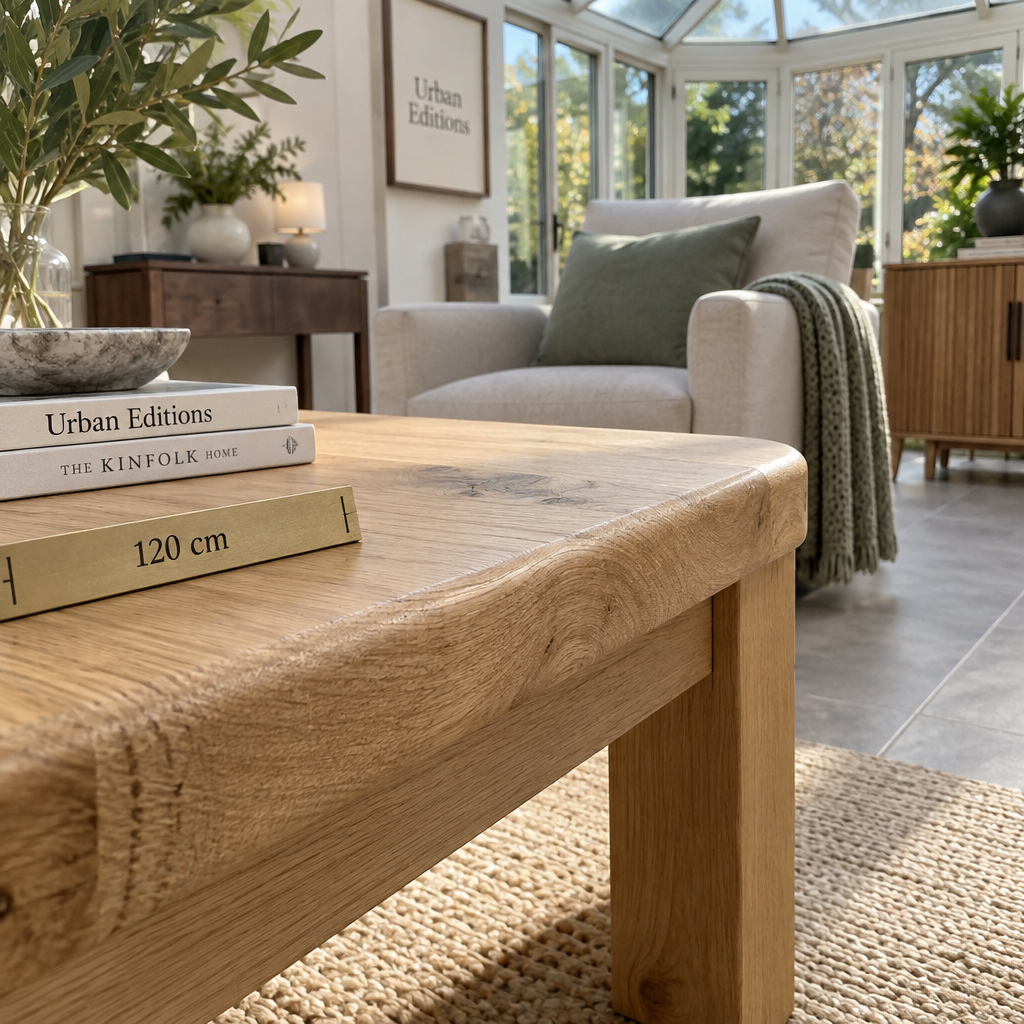
Solid wood works in a conservatory because it adds visual warmth to a room dominated by glass, frames and hard flooring. A 1,200mm oak coffee table, for example, gives a seating area a clear centre without requiring a full suite of matching furniture. Its weight also makes the room feel connected to the main house.
The mistake is assuming that a glazed room needs deliberately lightweight furniture. Rattan and metal have their place, but they are not the only materials that suit bright interiors. A slim solid-wood console table or compact TV stand gives you the same open feeling with more useful storage.
Warmth without visual clutter
Minimalist interior design depends on proportion and restraint, not on using the lightest possible material. Choose furniture with clean lines, tapered legs or recessed storage, and the grain becomes the feature rather than a source of fuss.
A solid hardwood top also ages in a way that suits a room used throughout the year. Small marks from everyday living are easier to accept on natural timber than on a highly uniform laminated surface, particularly when the conservatory doubles as a dining, reading or music space.
The weight needs a reason
Solid wood is a poor choice if you regularly clear the room for exercise, children’s activities or large gatherings. A heavy coffee table that needs two people to move will frustrate you if the layout changes every Saturday.
For a stable seating area, however, that weight is useful. It prevents a table or media unit from feeling temporary, especially on smooth tiles where lighter furniture may shift during normal use.
“Hygroscopic” means a material absorbs and releases moisture from the surrounding air, a property that affects how timber responds indoors.
Wood is hygroscopic, so normal seasonal movement is part of owning solid hardwood furniture. Good joinery allows for that movement; placing a cabinet tight against a damp external wall does not.
Which hardwood suits a bright, glazed room?
Oak is the strongest all-round choice for most conservatories because its mid-toned grain works with pale flooring, painted walls and natural textiles. Walnut creates a darker, more dramatic look, while ash keeps the room light and understated. Iroko brings a warmer golden-brown character and suits homes that want more colour in the timber.
Oak: balanced and adaptable
Oak has a recognisable grain and a warm, medium colour that sits comfortably beside cream, grey, green and terracotta. It is a reliable choice for a coffee table, console table or TV stand when you want the piece to remain visible without dominating the glazing.
Use oak when the conservatory links directly to a traditional kitchen or a neutral modern sitting room. Its character is clear, but it rarely dictates every other finish in the space.
Walnut: contrast for pale rooms
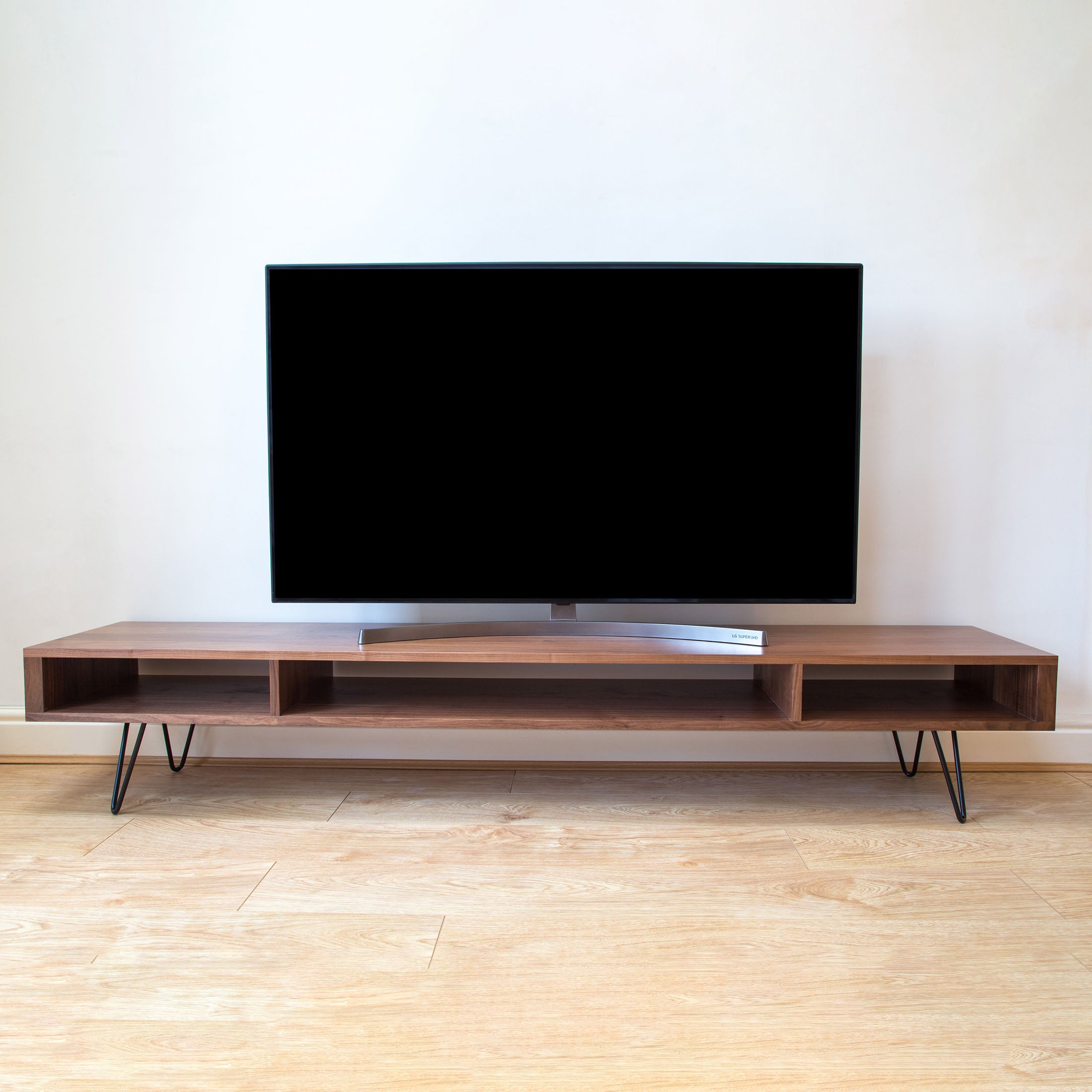
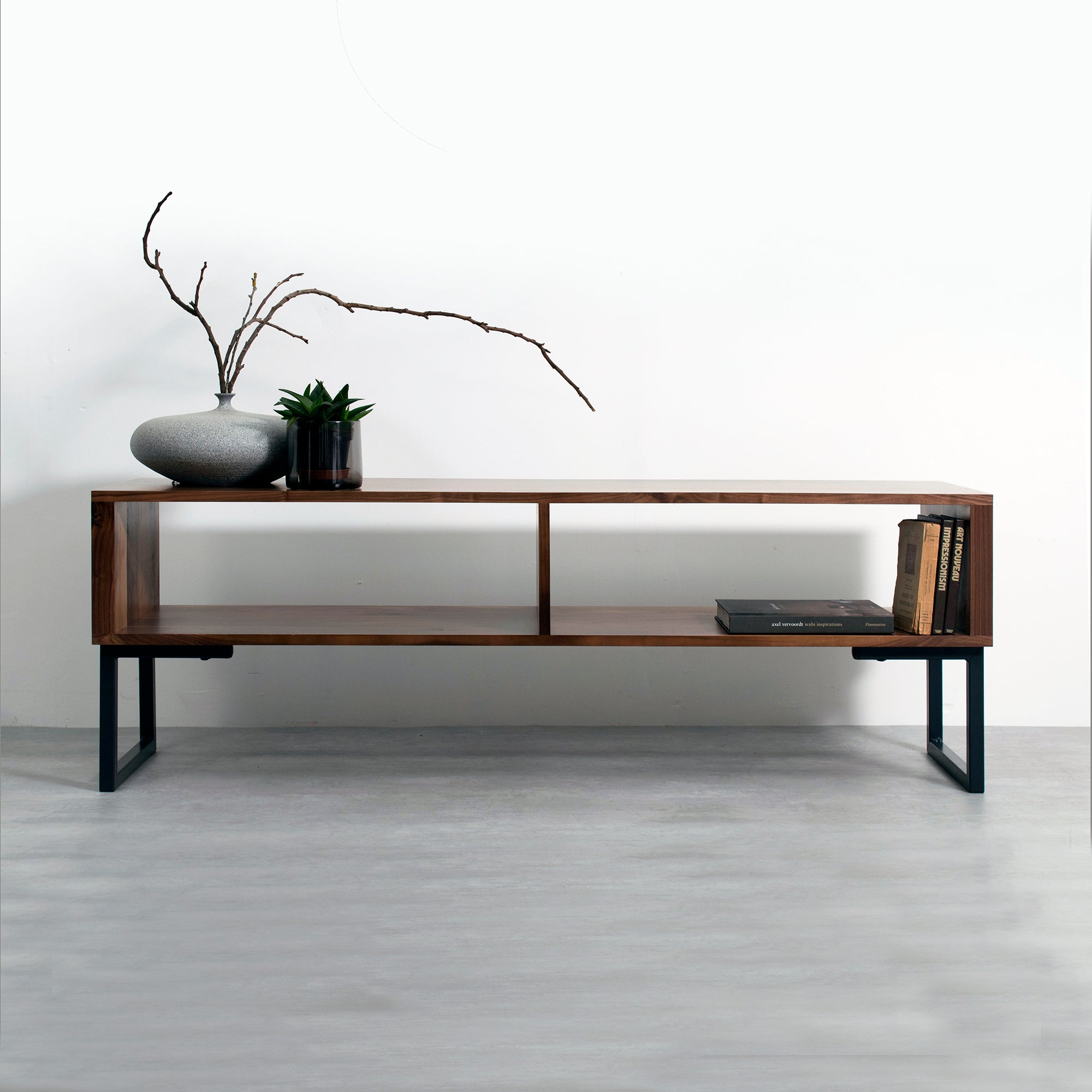
Walnut is darker and more visually weighty than oak or ash. A walnut media unit can anchor a room with white walls and pale porcelain tiles, particularly when the rest of the furniture has simple silhouettes.
That contrast comes with a drawback: dust and strong reflections can show more clearly on darker surfaces. If your conservatory receives intense afternoon sun, position walnut away from the brightest beam rather than placing it directly beside the glass.
Ash and iroko: lighter and warmer alternatives
Ash has a pale base with a lively grain. It suits smaller conservatories because it keeps the overall palette bright, especially when paired with a compact two-seat sofa and a 900mm-wide coffee table.
Iroko has a deeper golden tone and a more pronounced presence. It can make a large glazed extension feel less stark, but use it selectively. Two substantial iroko pieces may give a narrow room too much visual weight.
Hardwood
Visual character
Strong choice for
Main watchpoint
Oak
Warm, balanced grain
Coffee tables and console tables
Can look busy beside heavily patterned flooring
Walnut
Dark, rich contrast
Media storage and TV stands
Shows dust and strong reflections more readily
Ash
Pale, lively grain
Smaller rooms and light schemes
Needs protection from harsh direct sun
Iroko
Golden, substantial tone
Larger conservatories
Can feel heavy in narrow layouts
The finish matters as much as the species. Order wood samples before committing to a large cabinet, because the same room can make ash look almost white in morning light and noticeably warmer later in the day.
How should you protect conservatory furniture from sunlight?
Protect conservatory furniture by managing the light before it reaches the timber. Keep cabinets out of the strongest direct beam, use blinds or solar-control window treatments where needed, and leave space around external glazing so heat does not build up against the furniture. No finish makes solid wood immune to ultraviolet exposure.
Positioning beats repair
A cabinet placed 200mm from a south-facing window may receive more concentrated light than one positioned against an internal wall. Rotate rugs and accessories occasionally so the surrounding surfaces age more evenly, but do not rely on rearrangement to correct poor furniture placement.
UV exposure can gradually deepen, fade or alter timber colour. The effect varies with species, finish, glazing and exposure time, so treat a bright conservatory differently from a shaded north-facing extension.
Control heat and temperature changes
Conservatories experience sharper temperature changes than most internal rooms. A sunny afternoon can make the air uncomfortably hot, while a winter night leaves the space much colder than the adjacent lounge.
Avoid placing solid wood furniture directly beside a radiator, heater or unshaded pane. Keep the room ventilated, and do not push a cabinet tightly against an external wall where condensation could collect behind it.
Choose finishes with daily life in mind
A practical finish should suit how you use the room. If the coffee table holds drinks, books and plant pots, choose a surface designed for regular domestic use and wipe spills promptly rather than allowing moisture to sit on the timber.
A finish will not prevent all colour change. It gives the surface protection, but the best long-term result comes from combining a suitable finish with sensible placement, blinds and stable room conditions.
What proportions work best in a conservatory?
The best proportions preserve a clear route through the room while giving each piece enough space to function. Aim for roughly 750mm of comfortable circulation around the principal route, and measure door swings, opening windows and radiator positions before ordering furniture. A smaller piece in the right place beats an oversized statement item.
Start with a scaled plan. Mark the conservatory’s internal dimensions, then add rectangles for a sofa, chairs, coffee table and any media furniture. Use masking tape on the floor or cardboard templates to test a 1,200mm table against a 900mm alternative.
Coffee tables and seating
A coffee table usually works best when it sits close enough to reach but not so close that knees collide. Leave a practical gap between the table and seating, then check that the remaining route still feels natural when someone pulls out a chair.
For a compact conservatory, a 900mm square or slim rectangular table may work better than a large 1,400mm design. The right choice depends on the sofa depth and the location of the main entrance.
Console tables and narrow walls
Console tables are useful where a conservatory has a long blank wall but limited depth. A piece around 300-400mm deep can hold lamps, books or a turntable without blocking the passage.
Keep the console away from opening doors and ensure cables do not cross the walking route. If the wall is only 1,000mm wide, a custom-sized console will look more intentional than a standard piece that leaves awkward gaps.
TV and media proportions
The TV should not force every other object into a corridor. A low media unit with concealed or organised storage keeps the screen visually stable while allowing the seating to face it without blocking the glazing.
Check the television width, stand position and cable exit before selecting the cabinet. A unit that is 1,800mm wide may suit a large extension, but it can overpower a 3m-wide conservatory and reduce usable floor space.
How can media storage keep the room calm?
Media storage keeps a conservatory calm when it hides cables, records, controllers and accessories without becoming the room’s largest visual block. Choose a unit with a width that suits the wall, enough ventilation for equipment and storage that matches your actual collection. A low cabinet usually preserves more daylight than a tall bookcase.
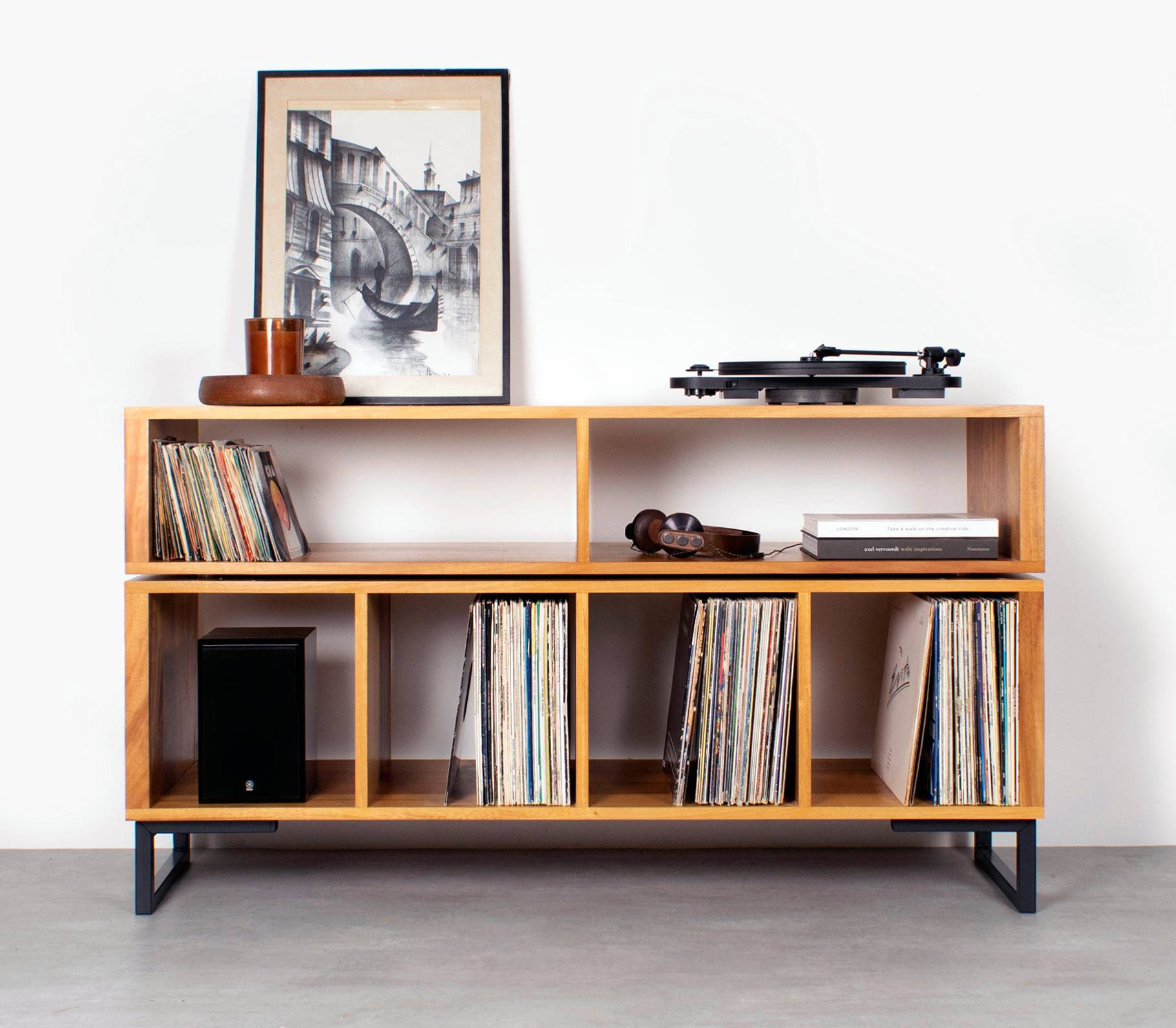
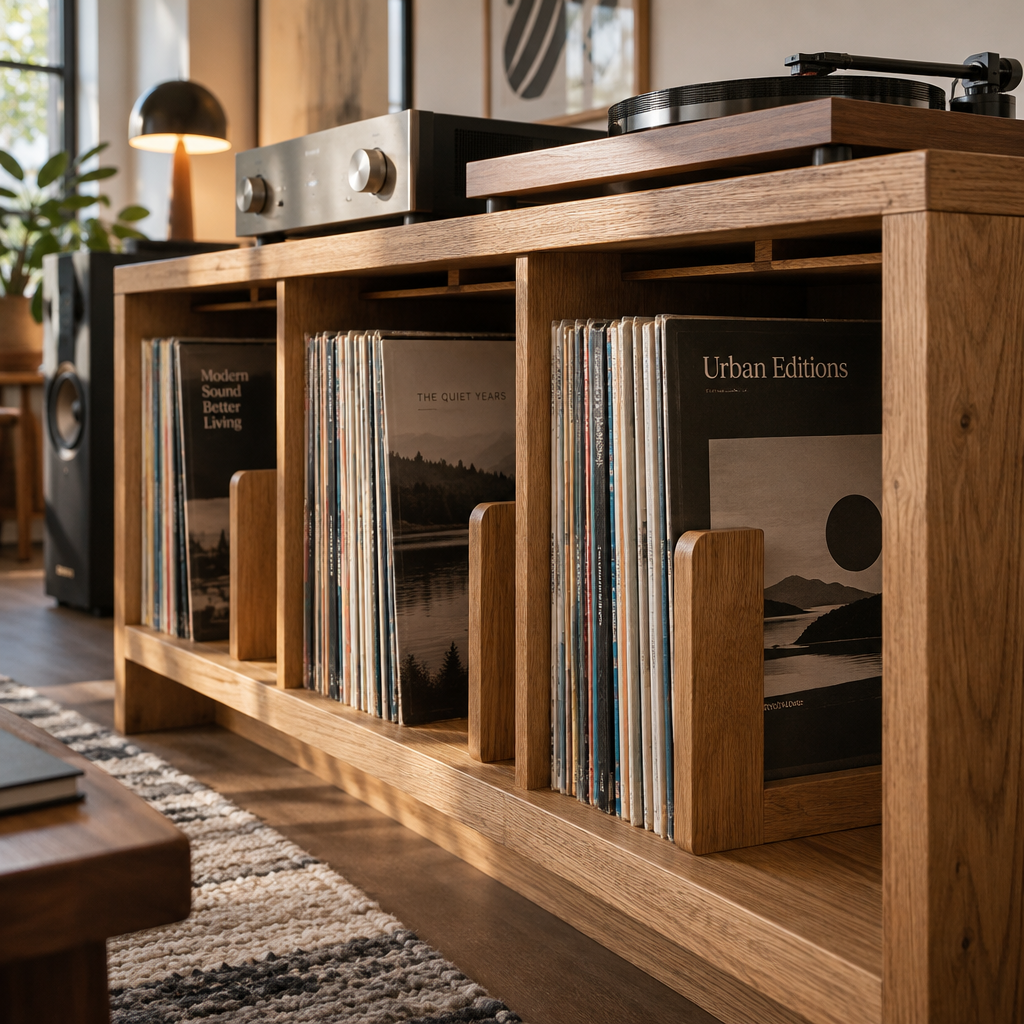
A vinyl setup needs particular care. Records are heavy, so shelves need proper support and should stay upright rather than leaning at an angle. Keep the collection away from direct sun and large temperature swings, since sleeves and discs are less forgiving than ordinary books.
Build around the equipment
Measure the turntable, amplifier, speakers and record sleeves separately. Allow working space above the turntable lid, room to reach rear connections and enough clearance to remove records without scraping a nearby wall.
If you use a soundbar or compact speakers, check whether the cabinet leaves the front of the equipment open. Doors that block remote signals or trap heat create daily irritation, even when the furniture looks excellent.
Use storage to connect rooms
A conservatory often sits between the garden and the main living area. A walnut TV stand may link darker furniture in the lounge, while an oak console can repeat the timber used in a kitchen or hallway.
The aim is continuity, not a matching suite. One well-made media unit and a smaller coffee table usually create a more settled result than filling every wall with storage.
For adaptable media storage solutions, The Urban Editions offers built-to-order solid hardwood media units with customisable designs and wood samples, helping you match the cabinet to the room’s width and timber palette.
Make access part of the design
Leave enough room to open doors, remove records and clean behind the unit. Conservatories collect dust and pollen when doors open to the garden, so a cabinet that is difficult to reach will quickly become a neglected corner.
Cable management also matters. Run cables along the rear of the furniture where possible, keep them away from opening doors and avoid loose loops across the floor, especially if the conservatory is a main route into the garden.
How do you choose furniture for year-round use?
Choose year-round conservatory furniture by planning for the room’s worst conditions, not its most attractive summer afternoon. Measure winter heating, check for condensation and consider how the room functions when the doors stay shut. A piece that works only in July is poor value.
Use this sequence before ordering:
Measure the internal floor area, door swings and opening windows.
Mark the strongest direct-sun zones at different times of day.
Choose the hardwood that suits the existing floors and adjoining room.
Test furniture footprints with tape or cardboard.
Check equipment, storage and cable dimensions.
Order a sample before confirming a large built-to-order piece.
Heating, cooling and humidity
Do not place timber directly over underfloor heating without checking the furniture maker’s guidance. Heat from below can create a harsher environment for wide solid-wood panels than a stable internal room.
During warm weather, ventilate before the conservatory becomes excessively hot. During colder months, steady background heating is usually kinder to furniture than leaving the room freezing and then heating it sharply for an evening.
Cleaning and everyday care
Dust with a soft, dry cloth and deal with spills promptly. Avoid soaking the surface or using abrasive cleaners designed for tiles and glass. A plant saucer should sit beneath a pot, even if the pot appears dry.
Keep strong cleaning products, wet coats and muddy garden equipment away from the furniture. Conservatory furniture often sits closer to the garden than lounge furniture, so small habits protect the finish.
When solid wood is the wrong choice
Solid wood is the wrong choice when you need to move furniture constantly, when harsh sun falls directly on every available wall, or when the room is used as a flexible play and exercise area. In those cases, lighter modular furniture may suit your routine better.
For a settled sitting, dining or music area, choose solid hardwood with confidence. Built-to-order sizing is especially useful in conservatories because standard widths often leave either blocked routes or wasted strips of floor.
How can built-to-order furniture solve awkward layouts?
Built-to-order furniture solves awkward conservatory layouts by adjusting width, depth and proportions to the room rather than forcing the room around a standard product. This matters when a wall measures 1,460mm, a doorway opens beside it and a radiator takes up another 100mm of usable length.
A custom console can stop short of a frame. A media cabinet can fit beneath a low window. A turntable stand can be sized around the equipment you already own instead of making you replace it.
Measure the fixed points first
Record the positions of glazing bars, sockets, radiators, skirting boards and doors. Measure at floor level and again at the intended furniture height, since a sloping sill or projecting frame can change what will fit.
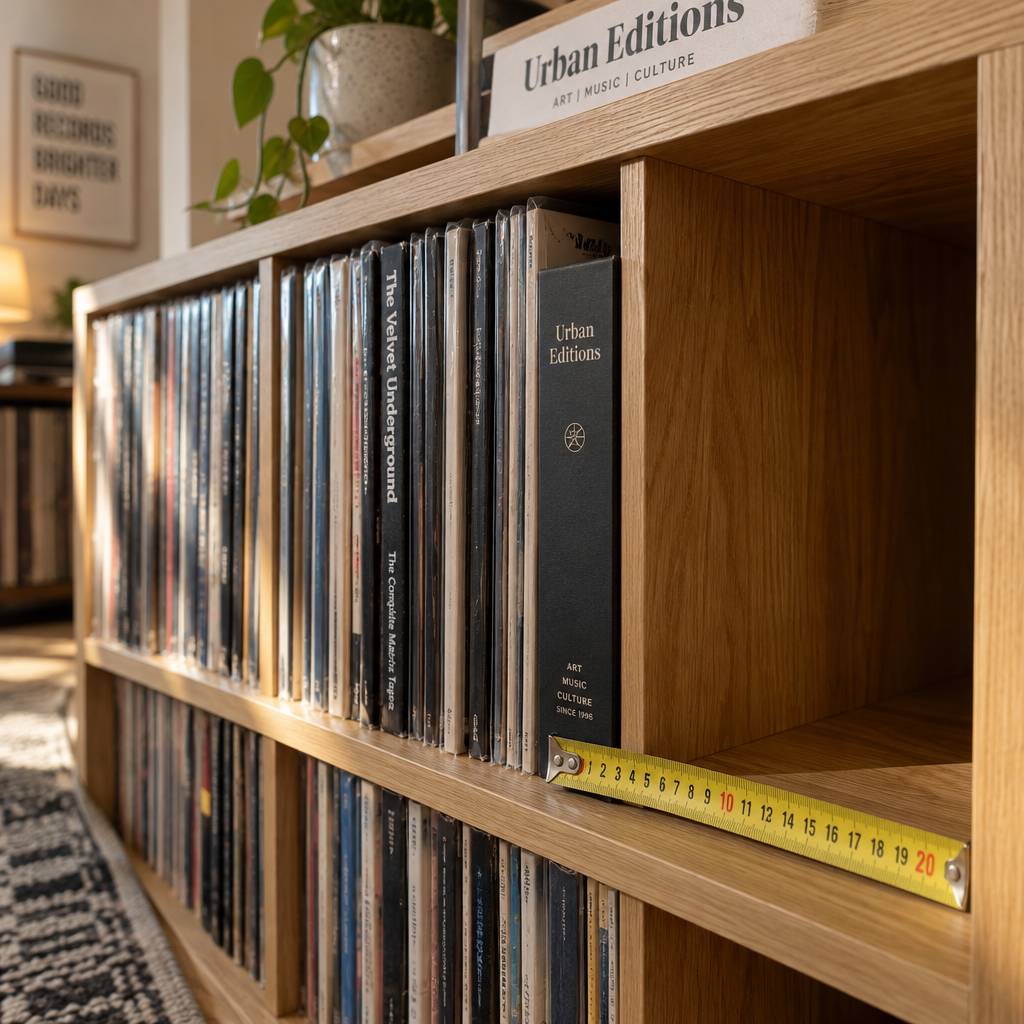
Take photographs with a tape measure visible. They help you check details when comparing timber samples or discussing a design, particularly if the conservatory connects to two differently styled rooms.
Keep the silhouette simple
Minimalist furniture benefits from clear gaps around it. Recessed handles, clean fronts and a restrained leg design keep a solid cabinet from feeling bulky, even when it provides substantial storage.
Avoid filling every available centimetre. A 1,300mm cabinet with breathing room often looks better than a 1,500mm cabinet pushed tightly into both corners.
The family-run UK joinery behind The Urban Editions makes designed and made in the UK solid hardwood furniture to order, with customisable designs, sustainably sourced oak, walnut, ash and iroko, plus wood samples to check before you commit.
Plan delivery and installation access
Check how the furniture will enter the property. Measure the front door, hallway turns and the conservatory entrance before ordering a wide cabinet, and remember that a glazed roof does not make an awkward corner easier to navigate.
Free UK delivery and international shipping are available through The Urban Editions, but access details still need checking at your property. A beautifully proportioned cabinet is only useful if it can reach the room without damage.
Conclusion
Choose solid hardwood conservatory furniture when the room needs warmth, organised storage and a stronger link to the main home. Choose oak for flexibility, walnut for contrast, ash for a lighter feel or iroko for golden depth. Measure circulation first, control direct sun and order to the wall rather than guessing from standard sizes. For conservatory TV furniture, browse the solid hardwood TV stand collection once you know your screen and wall measurements.
Frequently Asked Questions
Can solid wood furniture cope with a conservatory’s temperature changes?
Yes, provided the room is ventilated, the furniture is kept away from direct heat and condensation, and the timber is allowed normal seasonal movement. Avoid placing a cabinet against a damp external wall or beside a heater, and wipe moisture from surfaces promptly.
Is oak or walnut better for a sunny conservatory?
Oak is usually the more adaptable choice because its medium colour works across many schemes, while walnut gives stronger contrast in pale rooms. Neither should sit in harsh direct sun without sensible shading and positioning, because UV exposure can alter timber colour.
How much space should I leave around conservatory furniture?
Aim for roughly 750mm on the main walking route where the room allows it, then check doors, windows and seating clearances. Use masking tape to mark a proposed 1,200mm coffee table or cabinet footprint before placing an order.
Can I use a vinyl cabinet in a conservatory?
You can, but keep records and equipment away from direct sunlight, damp areas and extreme heat. Allow ventilation around the amplifier and access above the turntable, and choose media storage that supports the weight of upright records without forcing sleeves to lean.