September SPECIAL OFFER! Sign-up to our newsletter to receive the latest offers and news.
Shelves Vinyl Records: Storage for Growing Collections
12 inches is the standard diameter of a vinyl LP, but that measurement does not tell you how much room your collection needs. Shelves vinyl records storage must also allow for sleeve depth, browsing space and the weight of expanding albums. Choose badly and you will fight tight gaps, bowed shelves and awkward stacks every time you play a record.
The right setup keeps records upright, protected from heat and easy to reach. It also gives your next 50 or 100 albums somewhere to go, without forcing you to replace the whole unit.
Key Takeaways
Allow roughly 33 cm depth for sleeved 12-inch records
Store LPs upright, never in tall horizontal stacks
Check shelf strength before filling a large bay
Leave expansion room for future purchases
Keep vinyl away from radiators, damp and direct sunlight
How Much Space Do Vinyl Records Need on Shelves?
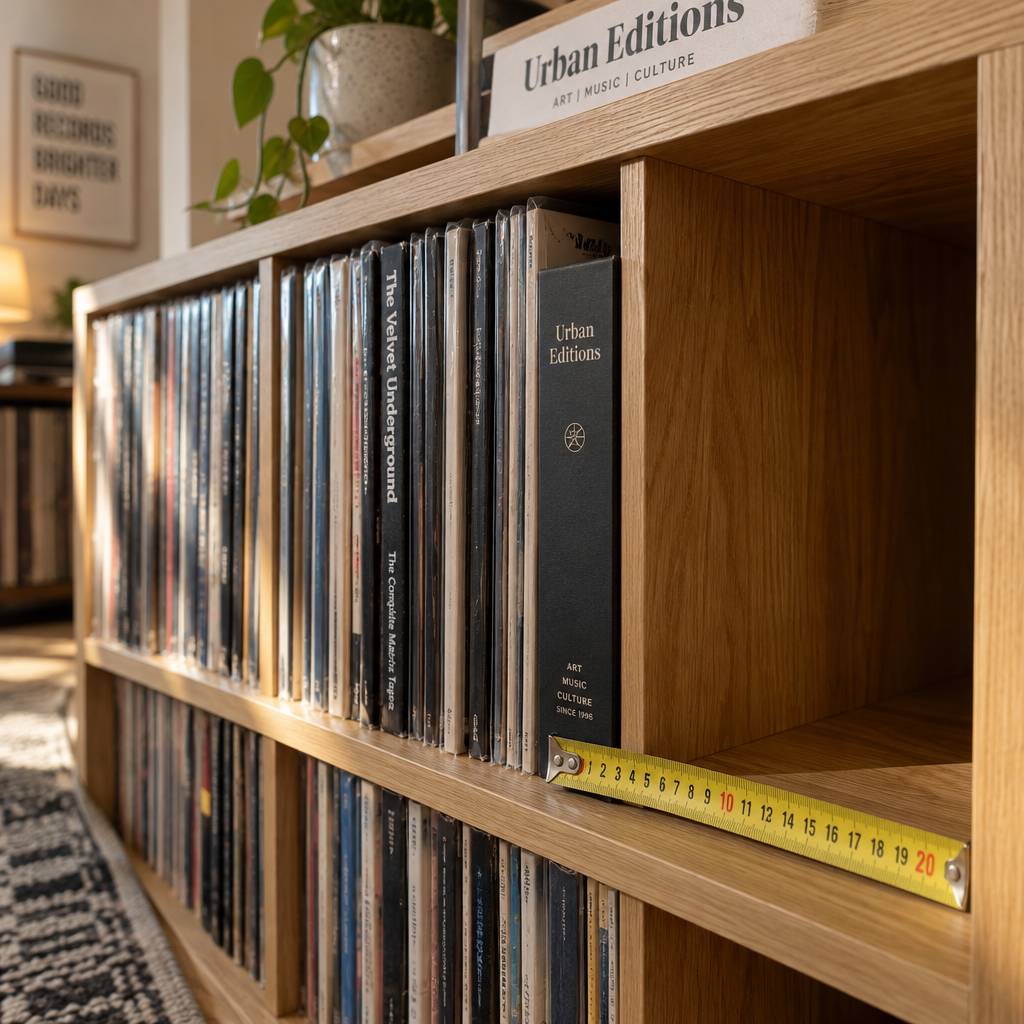
A practical vinyl shelf needs about 33 cm of usable depth for sleeved 12-inch records, with enough clearance to remove an album without catching its cover. Allow around 2.5 to 3 cm of width per record as a planning estimate, although gatefold sleeves, box sets and thick protective covers need more. Build around the collection you expect to own.
A standard LP measures roughly 31.5 cm across, but the outer sleeve adds a little more. A shelf that measures exactly 32 cm deep may leave the edges exposed or make browsing frustrating. I recommend choosing a unit with a little spare depth rather than pushing records against the back panel.
Width, depth and clearance
A 90 cm-wide shelf might hold around 30 standard records if each takes 3 cm, but a mixed collection will occupy more room. Double albums, gatefold releases and box sets quickly reduce that figure. Measure your own records before treating any stated capacity as exact.
Vertical clearance matters too. Most 12-inch sleeves need a compartment slightly taller than the record itself, particularly when you lift them from the top edge. A practical opening around 35 cm high gives your fingers room to work and avoids scraping sleeves against the underside.
A useful planning rule: size the shelf for the record sleeve, not the bare record.
Why oversized shelves waste space
A very deep cabinet is not automatically better. If it leaves 10 cm of unused space behind each row, it takes up more floor area without making your collection easier to browse. Deep storage also encourages you to push records out of sight, especially when the rear of the unit becomes a second row.
Fully enclosed shelving has a place in bright rooms, but it can reduce visibility and make expansion less convenient. Open-front storage gives you a faster view of your categories, while doors offer more protection from dust and sunlight. Choose the format that suits the room rather than assuming the largest cabinet is the safest choice.
Plan capacity before buying
Count your current records, then add the albums you expect to buy over the next few years. Someone with 180 LPs who buys two or three records a month needs more headroom than someone building a small occasional collection.
A useful example is a 240-record collection planned into eight 30-record sections. That arrangement leaves clear category boundaries and makes a new section easy to add. It also avoids filling every shelf to the last centimetre, which makes records hard to remove and increases pressure on the storage furniture.
Which Shelf Materials and Designs Handle Record Weight?
Choose shelves with a clear load path and limited unsupported span. Vinyl is heavier than it looks, and a full 90 cm bay can place substantial weight on the shelf and its fixings. Solid hardwood gives you a durable furniture material, but the design still needs sensible dimensions, secure joints and proper wall support where required.
A single LP often weighs around 180 grams, before adding its sleeve and inner protection. Two hundred sleeved records can therefore approach 40 kg as a practical estimate, with the exact figure changing by pressing and packaging. That load stays in one place for long periods, so shelf deflection matters more than a brief static test.
Solid wood shelving
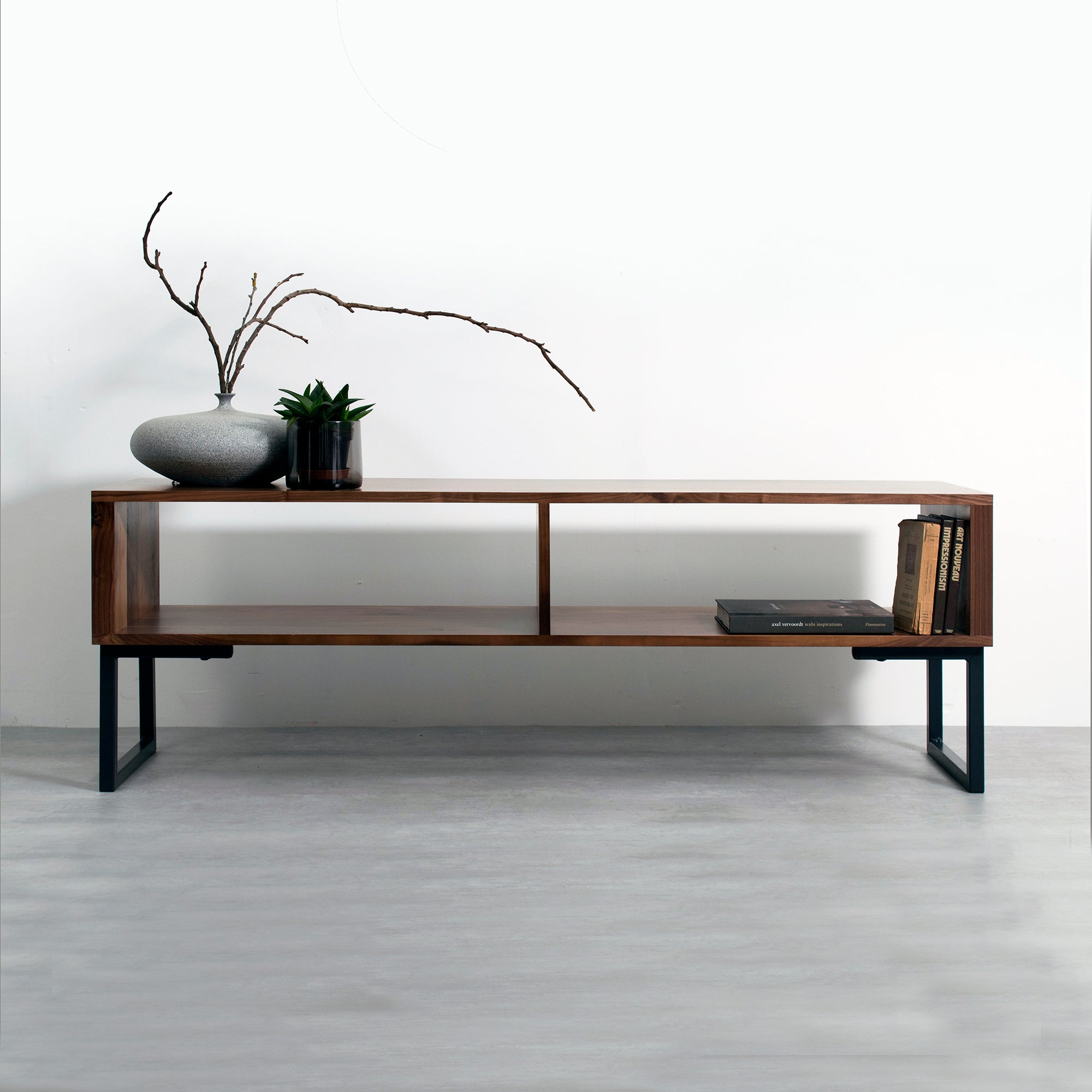
Solid oak, walnut, ash and iroko are all used in hardwood furniture, with different grain patterns and tones. The material gives a substantial feel and works well in a living room where the storage is part of the interior rather than a utility rack.
Construction matters as much as timber choice. A long shelf with no central support carries more bending stress than a shorter compartment. A built-to-order unit can use its dimensions and dividers to suit records instead of adapting a general bookcase after purchase.
Modular cube storage
Modular cube units are popular because they are easy to expand and widely available. A cube that comfortably accepts a 12-inch record sleeve can provide a straightforward starting point, especially for a collection divided into small sections.
The weakness is inconsistency. A flat-pack bookcase may be rated for books under its manufacturer’s test conditions, but that does not guarantee long-term performance when every bay holds dense records. Check the stated load guidance, the span between supports and the quality of the back panel before filling it.
Shelf strength and fixings
Inspect the shelf thickness, support spacing and connection points. A thin panel spanning a wide opening is more likely to bow, particularly in a warm room where timber-based boards can move. A centre divider reduces the unsupported distance and gives each record group a more controlled compartment.
Tall units also need attention at floor level. Uneven flooring can twist a cabinet, while a narrow, heavily loaded unit may need anti-tip fixing to the wall. Use the supplied fixing method and choose hardware suited to your wall type, whether that is masonry, plasterboard or a stud partition.
The finish should protect the timber without creating a sticky surface that catches sleeves. Keep records in their sleeves, and avoid placing anything heavy on top of them while the shelf is loaded.
Should Vinyl Records Be Stored Vertically or Flat?
Store vinyl records upright, like books, with light support around the row. Tall horizontal stacks put pressure on the lower sleeves and make the records at the bottom difficult to reach. A vertical row lets you browse the spines, remove one album cleanly and distribute weight across the shelf.
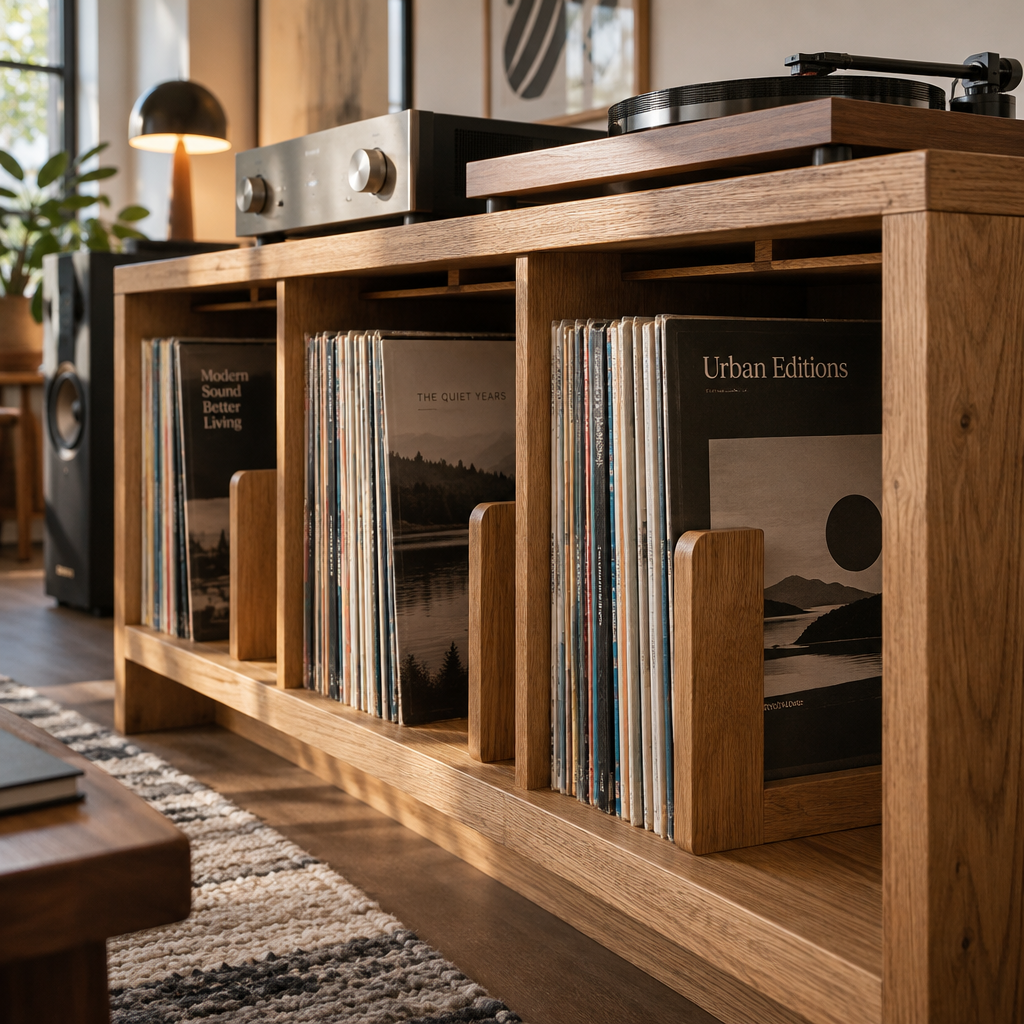
Do not leave a small group leaning sharply against one side of a compartment. A slight lean may seem harmless, but long-term pressure can distort sleeves and place uneven force on the records. Use bookends or a divider when a section is not full.
The correct row arrangement
Keep each record standing vertically with enough room for your fingers to grip the sleeve. A shelf packed so tightly that you must pull several albums forward is overfilled, even if the total weight remains within the furniture’s limit.
Aim for a row that stays upright when one record is removed. This is easier when each section contains a manageable group rather than one uninterrupted run of hundreds of albums. Dividers also make genre, artist or label categories easier to maintain.
Avoid flat stacks
Flat storage works for short-term handling, such as a record waiting beside a turntable, but it is poor long-term organisation. A stack of 20 LPs puts the lowest sleeve under pressure and forces you to move the entire pile to reach it.
Box sets and unusually heavy packages are the main exception to a standard row. Give them a separate horizontal compartment if the manufacturer allows it, and keep the stack low enough to lift without dragging it across neighbouring sleeves.
Make browsing part of the design
A storage unit should make listening easier, not turn each record into an archive box. Arrange frequently played albums at a comfortable standing or seated height, while seasonal or rarely used records can occupy lower sections.
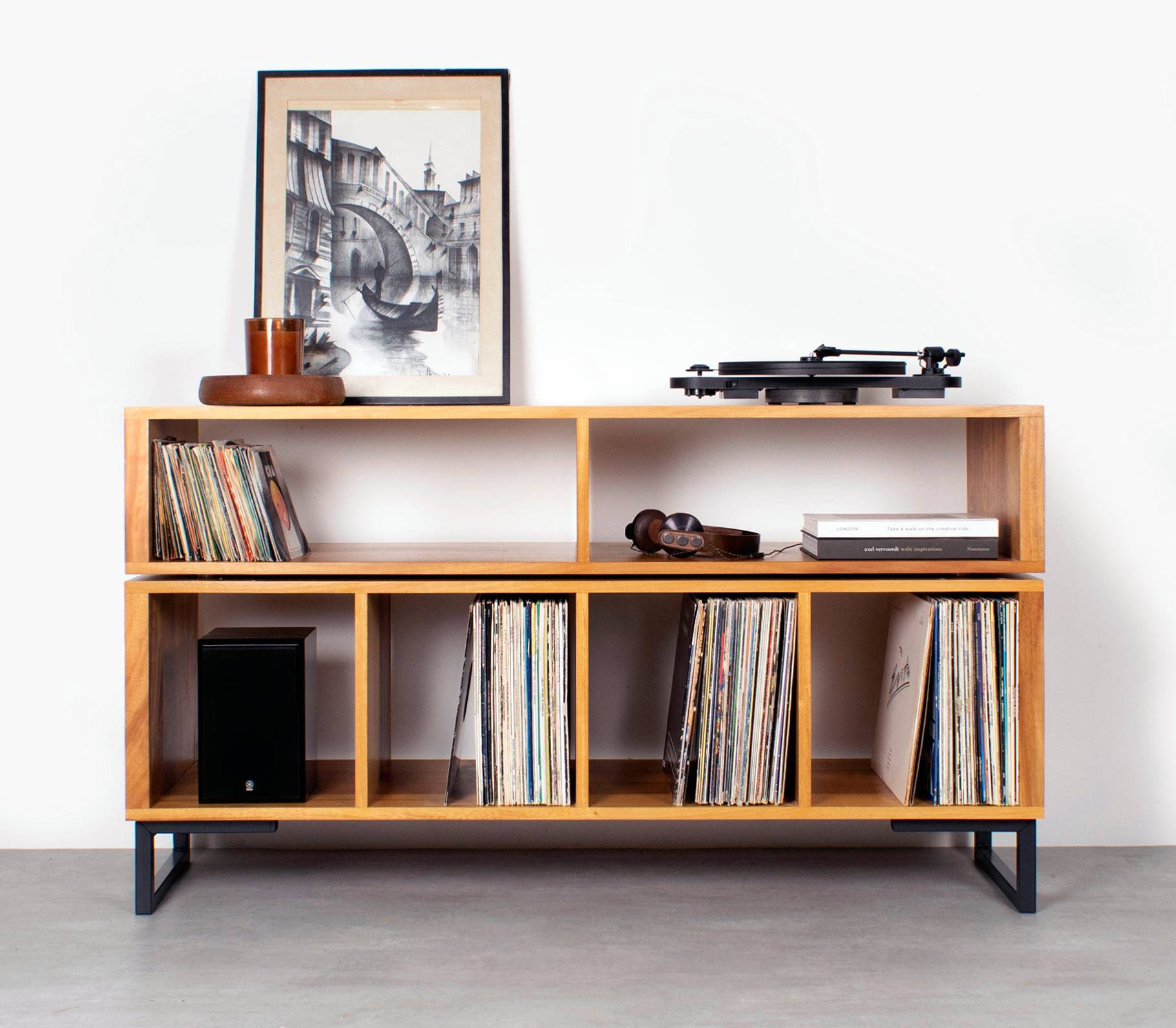
Leave the front of the shelf open if you want fast browsing. A purpose-built media unit, such as handcrafted storage for records and hi-fi equipment, can combine record compartments with space for a turntable or amplifier without forcing one piece of furniture to do an unrelated job.
How Do You Protect Vinyl from Heat, Light and Damp?
Place vinyl in a dry, stable room away from radiators, windows and external damp. Heat can soften sleeves and affect storage conditions, while direct sunlight fades artwork and warms the records. A living room wall away from a south-facing window is usually a better position than a conservatory or radiator alcove.
Do not store records in a garage, shed or damp spare room unless you have measured and controlled the conditions. UK homes can experience significant seasonal changes, and condensation around cold external walls creates a greater risk than ordinary household dust.
Position the shelving carefully
Keep the cabinet several centimetres away from a wall if that improves airflow and the design allows it. Avoid placing it directly above a radiator, where rising heat reaches the records for hours each day. Do not block a heater’s airflow with a low media unit.
Sunlight is also a furniture-planning issue. UV exposure can fade a sleeve even when the record itself remains playable. Use curtains or blinds where needed, but do not rely on a thin window covering if the shelf receives strong afternoon sun throughout summer.
Use sleeves and sensible handling
Keep records in their inner and outer sleeves, and handle the disc by its edge and label area. Fingerprints on the playing surface attract dust and make cleaning more difficult. Store cleaning brushes and accessories nearby, but do not allow liquids to sit on the shelving.
Avoid cramming oversized plastic outer sleeves into a compartment designed for bare paper sleeves. They add depth and friction, so measure a protected record rather than assuming every LP occupies the same amount of space.
Control the room, not just the cabinet
A sealed cabinet cannot correct a damp room. If condensation appears on windows or a room smells musty, solve the room’s ventilation and moisture problem before moving a collection there. A small hygrometer gives you a clearer picture than guessing from how the air feels.
Keep cardboard packaging off a cold floor. Raising the furniture on its intended base protects the lower section from minor spills and cleaning water, while careful dusting prevents grit from building up around sleeves.
How Should You Organise Shelves Vinyl Records as the Collection Grows?
Organise records using a system you will still follow at 300 albums. Alphabetical order works for broad browsing, while genre, format or listening frequency can work better for collectors who return to specific sections. The best method is the one that lets you find a record in under a minute without moving half the shelf.
Start with broad categories rather than creating a new section for every small style. A collection could use rock, electronic, jazz, classical and soundtracks, then apply alphabetical order inside each group. Keep the labels consistent, especially when an artist crosses several genres.
Choose a system that survives expansion
Leave spare room inside each category. If a jazz section is filled to capacity, new purchases will end up in random gaps or on top of the unit. Reserving one compartment for future growth keeps the system usable.
Use removable dividers rather than permanent labels when your collection changes often. A slim divider at every 25 to 40 records creates manageable browsing blocks without turning the unit into a rigid filing cabinet.
Follow a simple sorting sequence
Remove damaged sleeves and records needing cleaning from the main row.
Group the remaining records by your chosen category.
Arrange each group alphabetically or by a clear personal rule.
Measure the space each group occupies before assigning compartments.
Keep one spare section for new purchases and reissues.
Record unusual box sets separately so they do not distort the main order.
This process exposes capacity problems before you buy furniture. It also shows whether you need more narrow compartments or fewer wide bays.
Leave room for the next purchase
Collectors often underestimate the space needed for new records because a few purchases feel insignificant. Five gatefold albums can occupy more room than ten thin single sleeves, and box sets change the calculation again.
Plan for the collection you will have, not only the records you own today. A 20% capacity reserve is a practical planning target, not a guarantee, particularly if your buying pattern includes deluxe editions and boxed releases.
How Can You Combine Record Storage with a Turntable Setup?
Keep the turntable on a stable, level surface separate from tightly packed record rows. The deck needs room for the lid or dust cover, access to controls and enough clearance to lift a record safely. An attractive shelf is not suitable if it forces you to handle albums at an awkward angle.
Your hi-fi components also need ventilation. Amplifiers and other equipment produce heat, so avoid enclosing them in a narrow compartment with no airflow. Records can sit beside the system, but the hottest component should not share a sealed cubby with sleeves.
Set the listening height
A turntable at a comfortable standing height reduces bending and gives you a clear view of the record. The ideal height depends on your furniture and listening position, but a surface around waist height is a useful starting point for many rooms.
Leave space around the deck for changing records. A 12-inch sleeve needs more room than the platter alone, so a narrow stand can become cluttered quickly. Keep cleaning tools in a drawer or nearby compartment rather than on the playing surface.
Separate equipment from storage pressure
Do not use a record row as a support for speakers, amplifiers or decorative objects. Heavy equipment adds load exactly where you need reliable browsing clearance, and vibration can affect turntable performance.
A dedicated turntable stand with adjacent record storage gives each function a defined place. If you commission furniture, specify the equipment dimensions, cable route and record capacity together, then check the final layout against the actual components you own.
Build around the room
Measure skirting boards, sockets and door swings before ordering a tall unit. A cabinet that fits the wall width may still obstruct a socket or leave too little clearance beside a door. Mark the footprint on the floor with masking tape before committing to the position.
Designed and made in the UK, built-to-order hardwood furniture can be configured around your room and collection. The Urban Editions offers customisable solid hardwood designs in oak, walnut, ash and iroko, with wood samples available before you choose a finish.
Is Custom Hardwood Storage Worth the Cost?
Custom hardwood storage is worth choosing when the room, equipment or collection does not fit standard dimensions. It costs more than a basic flat-pack unit, but you gain control over shelf depth, compartment width, finish and future capacity. The decision makes less sense when you need temporary storage or expect to move soon.
The main objection is price. A mass-market bookcase usually costs less at the point of purchase, while a built-to-order hardwood unit carries the cost of joinery, material and finishing. That cheaper option can become expensive if it bows, wastes floor space or needs replacing after your collection grows.
Compare the real trade-offs
Storage format
Best for
Main advantage
Main limitation
Modular cube unit
Smaller collections
Easy to expand section by section
Load capacity and finish vary
Standard bookcase
Temporary storage
Widely available and low initial cost
Depth and shelf strength may not suit LPs
Solid hardwood cabinet
Long-term living-room storage
Durable material and furniture-quality finish
Higher upfront cost
Built-to-order media unit
Mixed records and hi-fi
Dimensions suit the room and equipment
Requires planning before manufacture
A standard bookcase can be a sound short-term choice if its shelves are deep enough, properly supported and rated for the load. Do not assume its use for books proves it is suitable for dense vinyl.
When custom dimensions pay off
Custom dimensions matter in awkward alcoves, under sloping ceilings and rooms with fixed sockets. They also matter when your turntable, amplifier and records need to occupy one coherent layout rather than several unrelated pieces.
A cabinet designed around 33 cm-plus record depth, equipment clearance and a spare compartment wastes less space than an oversized unit selected from a limited range. The result is easier to browse and less likely to need replacement when the collection expands.
Choose the next step
Measure the available wall, the deepest protected record and the equipment footprint. Note the number of LPs you own, the number you buy in a typical month and the formats that take extra space.
For a tailored hardwood option, browse the tall stack minimalist record player stand. The Urban Editions makes furniture in a family-run UK joinery, offers free UK delivery and provides international shipping for customers outside the UK.
Conclusion
Measure your largest sleeved record, plan for future purchases and choose shelves that support dense weight across sensible spans. Select modular storage for flexibility, or custom hardwood furniture when your room and hi-fi setup need precise dimensions. Before ordering, mark the footprint on the floor and reserve at least one section for the collection you have not bought yet.
Frequently Asked Questions
Can I store vinyl records in an ordinary bookcase?
You can use an ordinary bookcase if each shelf is deep enough for sleeved 12-inch records, supports the expected weight and keeps them upright. Check the manufacturer’s load guidance and avoid filling long, unsupported shelves with dense records.
How much space should I leave for future vinyl purchases?
Reserve around 20% of your planned capacity as a practical starting point. Increase that allowance if you regularly buy gatefold albums, deluxe editions or box sets, because these occupy more width than standard single LP sleeves.
Are cube shelves suitable for vinyl records?
Cube shelves suit vinyl when each opening accepts a 12-inch sleeve with spare clearance and the unit has adequate load support. Check the internal dimensions rather than relying on the outside measurement, and secure a tall unit against the wall where appropriate.
Should records be stored near a turntable?
Records can sit near a turntable, but keep them away from heat-producing equipment and leave enough surface space to handle sleeves safely. Store cleaning liquids separately, and avoid placing a heavy amplifier on a shelf intended for record browsing.