September SPECIAL OFFER! Sign-up to our newsletter to receive the latest offers and news.
LP Storage Cabinet: Solid Wood Storage for 12-Inch Records
30.5cm records need more than a shelf that looks the part. A proper lp storage cabinet gives 12-inch sleeves enough depth, keeps your collection upright and puts each album within easy reach. Choose badly, and tight shelves, unstable piles or trapped heat will damage both your records and your listening setup.
The best cabinet balances capacity with access. You need space for future purchases, a stable surface for your turntable and ventilation around your equipment. Solid hardwood adds lasting strength, while custom dimensions let the furniture fit your room instead of forcing your room around it.
Key Takeaways
Allow at least 32cm internal shelf depth
Store records vertically, never in tall horizontal piles
Leave room for future collection growth
Separate turntable ventilation from record storage
Solid hardwood supports long-term daily use
Choose browseable storage over maximum stated capacity
Why 12-inch records need purpose-built storage
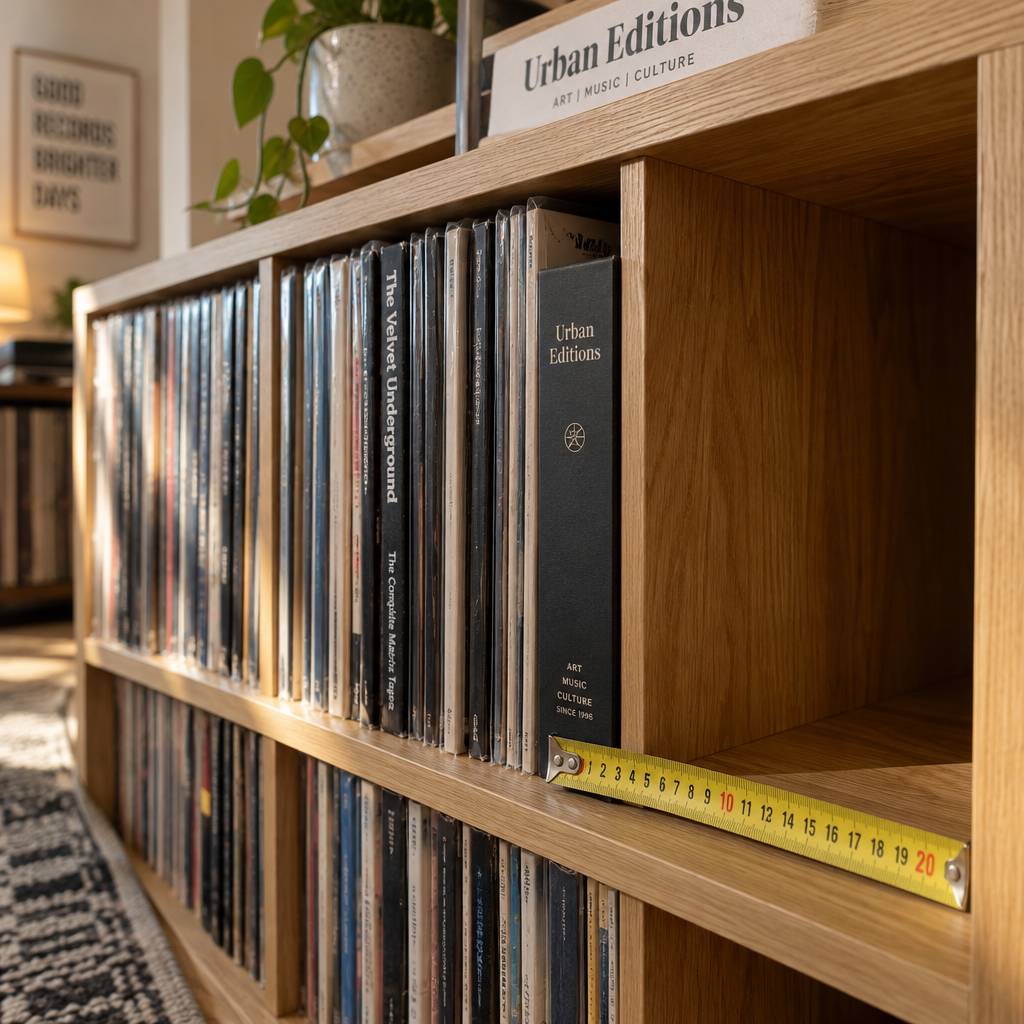
A 12-inch LP sleeve measures roughly 31cm across, but the cabinet needs extra clearance around it. Choose at least 32cm of usable internal depth, with enough width for your hand to pull a record forward without scraping the sleeve. A shallow bookcase may look suitable yet leave corners exposed or records leaning against the back.
Record storage works best when albums stand vertically, like books. Horizontal stacks place the weight of several records on the bottom sleeve, making retrieval awkward and increasing the chance of bent corners. Keep the records upright and supported across the full height of the shelf.
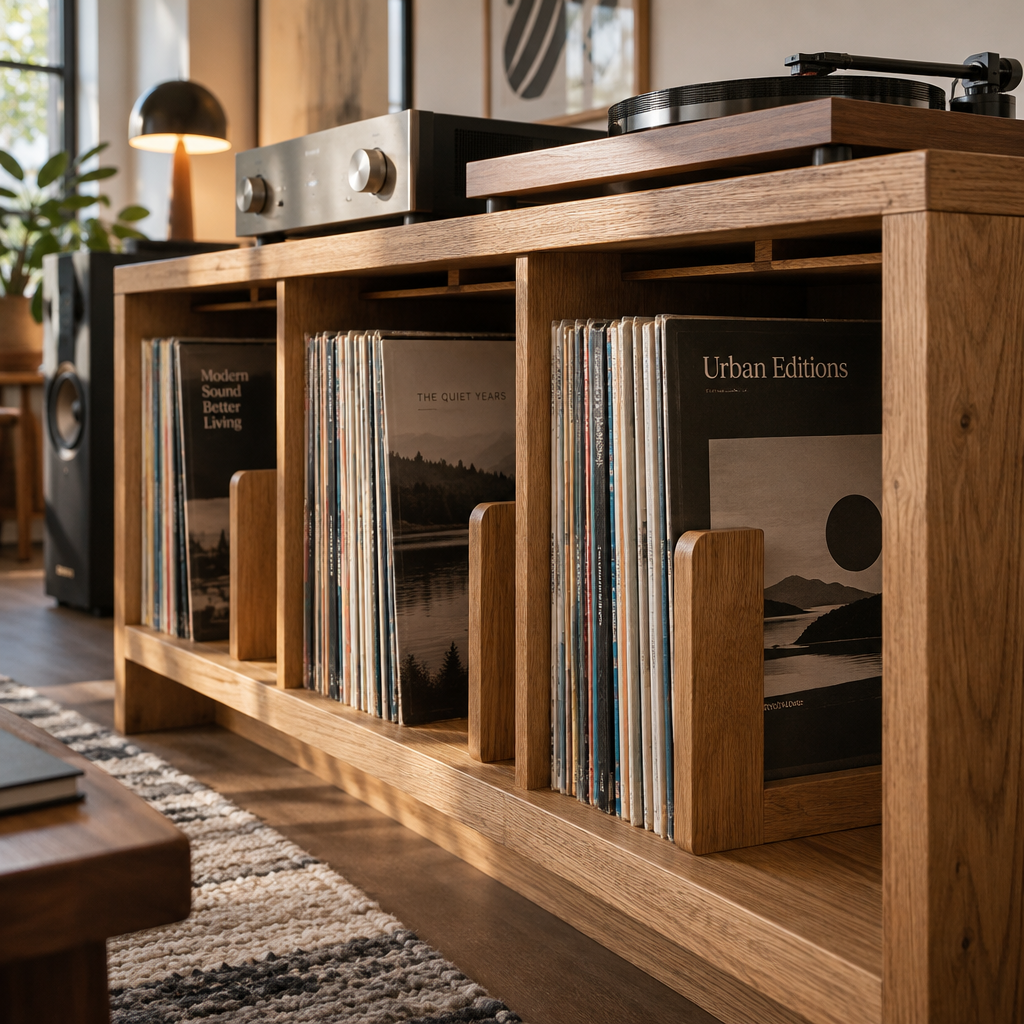
A suitable LP shelf is deep enough for a 12-inch sleeve, strong enough for a loaded collection and open enough for comfortable browsing.
Sleeve depth is not cabinet depth
Manufacturers often quote the outside depth of a cabinet. That figure includes the back panel, doors and any cable space. If the cabinet is 34cm deep externally, its usable shelf may be closer to 30cm, which is too tight for many record sleeves.
Measure the clear internal depth from the front edge of the shelf to the rear obstruction. Allow several millimetres for easy handling, plus extra room if you use protective outer sleeves.
Support prevents leaning
A half-filled shelf creates a storage problem. Records can lean, and the pressure concentrates along sleeve edges. Use dividers, adjustable sections or bookends that do not crush the jackets. A 60cm-wide opening is easier to manage when divided into two browsing groups.
Leave the records standing firmly without packing them tightly. You should be able to remove one album without dragging five others forward.
Doors, drawers and open shelves
Open shelves offer the quickest browsing and make album spines visible. Doors reduce dust, but hinges and frames reduce access space, so check the opening rather than relying on the cabinet’s external measurement. Drawers suit smaller sections, although deep, heavy drawers need strong runners and careful loading.
For a frequently used collection, I recommend accessible shelves with a clean front edge. You will handle the records more often, but you will also spot leaning sleeves and reorganise the collection before a small storage issue becomes damage.
How much LP storage capacity do you need?
Buy for your next phase of collecting, not only for today’s pile. A practical estimate is around 100 records for each 35cm of usable shelf width, depending on sleeve thickness, protective covers and how tightly you load the shelf. Treat that as a planning guide, not a manufacturer-rated capacity.
A collection of 150 records might fit into three 50-record sections, while a 300-record collection needs more substantial furniture or two units. Do not fill every shelf to the edge. Keep a little breathing room so a new purchase has somewhere to go.
Collection size
Practical storage plan
Useful arrangement
50–100 records
One compact section
Alphabetical or genre groups
100–200 records
Two sections
Split by genre, artist or period
200–300 records
Three sections
Add dividers and future space
300+ records
Multiple units
Keep the listening area browseable
Capacity figures vary because a thin original sleeve takes less room than a gatefold release inside an outer protector. Box sets also consume more width. Measure the records you actually own before ordering furniture.
Build in growth space
Reserve 15–25% of the cabinet for future additions. If your collection currently occupies 80cm of shelf width, choose a design with roughly 95–100cm of usable space rather than filling a smaller unit immediately.
This spare capacity also protects access. You can pull an album forward, check its condition and return it without compressing the whole row.
Capacity versus browsing
Maximum capacity is not always the best result. A tall cabinet may hold more records, but a lower unit keeps albums at a comfortable height and gives you a stable place for a turntable or amplifier.
A slightly smaller cabinet beside your listening chair may be more useful than a larger unit across the room. You will select records more often because the collection remains visible and easy to reach.
Organise for real use
Alphabetical order works for a small collection. Larger groups often work better by genre, label or listening mood. Keep a simple written index or spreadsheet once the collection passes roughly 200 records, especially if several people use it.
Use dividers with clear labels. Avoid permanent adhesive labels on sleeves or furniture, since both can leave residue.
Solid hardwood construction: what changes in daily use
Solid hardwood furniture gives an LP storage cabinet weight, repairable material and a finish that develops character over time. Oak, walnut, ash and iroko each have different grain and colour, but the practical result is the same: a properly built cabinet feels stable when a loaded shelf is in use.
A record collection is heavy. One LP may weigh around 180–220g before packaging, so 200 records can approach 40kg, with sleeves and protective covers adding more. This is why shelf span, joinery and back support matter more than a decorative finish.
Shelf span and sag
Long, unsupported shelves are more likely to flex under a heavy load. A cabinet with shorter compartments spreads the weight more effectively than one wide opening. Dividers also keep records upright, which reduces pressure on sleeve corners.
Ask for the usable shelf width and the support arrangement. A built-to-order design can divide the interior around your collection rather than relying on one oversized shelf.
Timber choices for a contemporary room
Oak gives a lighter, familiar appearance that suits Scandinavian and mid-century interiors. Walnut creates a darker, richer contrast against pale walls, while ash offers visible grain with a lighter tone. Iroko brings a deeper golden character and a distinctive presence.
Order wood samples before choosing a finish. Natural timber varies from board to board, so a small sample gives you a better sense of colour in your own room’s daylight.
Finish and maintenance
Use a soft, dry cloth for regular dusting and follow the maker’s care guidance for the finish. Keep drinks away from the turntable surface, and wipe spills promptly rather than allowing moisture to sit along joints or shelf edges.
Do not use abrasive sprays or soaking cloths. They can mark the finish and leave moisture around the record storage area.
Built-to-order dimensions
Custom dimensions solve awkward spaces, chimney breasts and low media walls. You can specify a cabinet that takes 12-inch records while leaving space above for cables, below for skirting boards or beside it for speakers.
The Urban Editions makes built-to-order media units in the UK, with customisable designs and sustainably sourced solid hardwoods including oak, walnut, ash and iroko. Its media units for built-to-order storage give you a route to match shelf depth, overall width and room proportions.
Where should an LP cabinet sit in your listening setup?
Place the cabinet where you can browse without blocking speakers, walkways or ventilation. A turntable needs a stable, level surface, while amplifiers and other hi-fi components need open air around their vents. Do not treat the record cabinet as a sealed equipment cupboard unless it has been designed for that purpose.
Keep the turntable away from strong vibration. A cabinet beside a speaker or on a springy floor may transfer movement through the stylus. The best arrangement gives the turntable a rigid top, records within arm’s reach and cables a clear path behind the furniture.
Turntable height
Aim for a surface that lets you cue a record without bending sharply. For many seating arrangements, a cabinet top around 75–90cm high feels workable, but the right height depends on your chair, turntable and listening position.
Measure your existing equipment. A turntable, isolation platform and dust cover can add several centimetres, so leave enough clearance to lift the cover fully.
Heat and ventilation
Amplifiers release heat through vents, often on the top or sides. Leave the clearance required by the equipment manual, and avoid pushing the back of a cabinet tight against a radiator or external wall with condensation risk.
Records should stay away from direct heat and strong sunlight. A spot beside a radiator may feel convenient in January, but repeated heat exposure can warp vinyl and dry out sleeves.
Cable access
Allow space for power, speaker and signal cables. Tight bends place strain on plugs and make future changes frustrating. A cable opening near the rear of the equipment bay keeps wires controlled without forcing them across the front.
Plan the route before the cabinet arrives. A 2m cable that barely reaches the socket may dictate the whole layout.
Integrated or separate furniture?
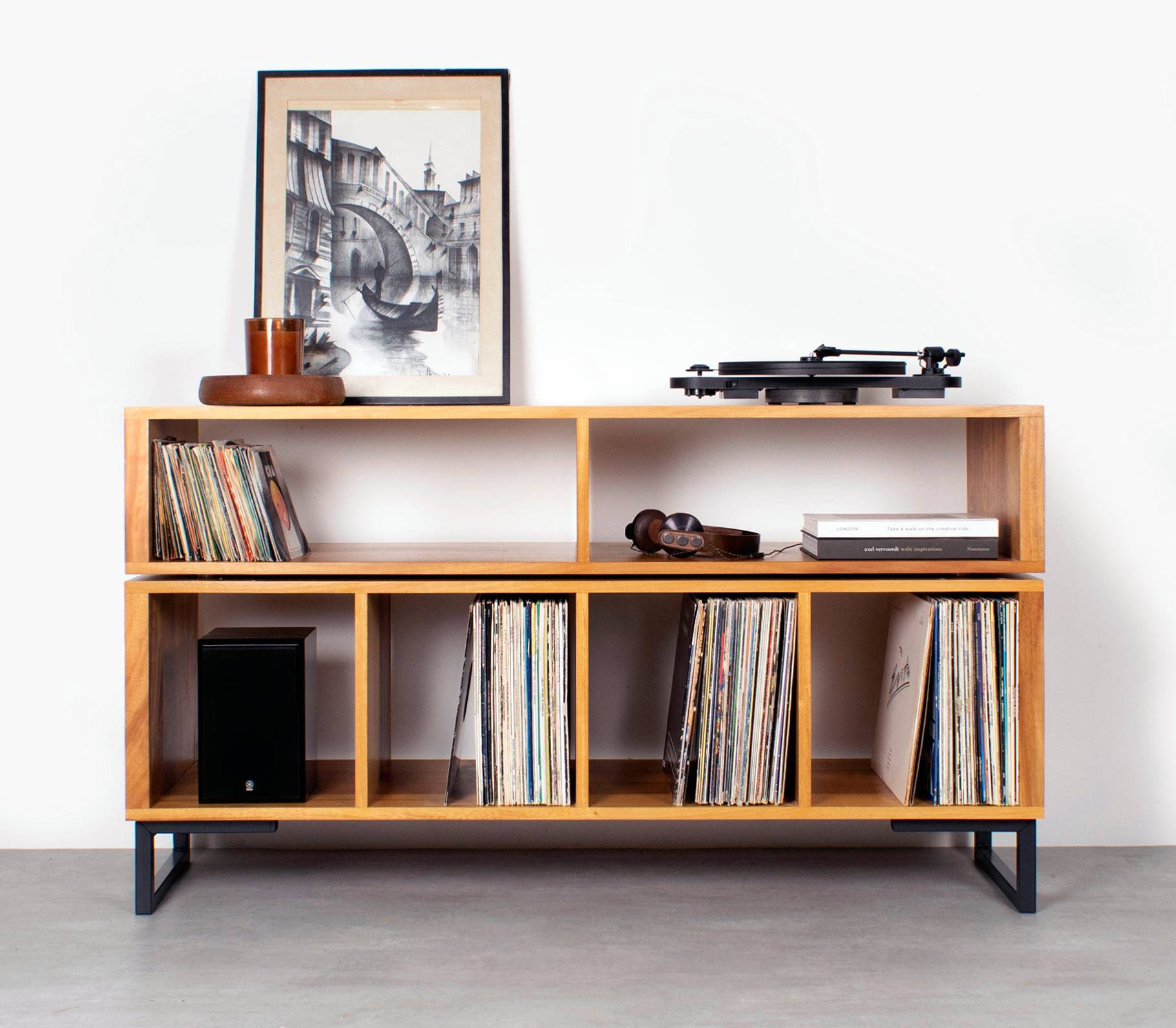
An integrated cabinet combines record storage and equipment space in one piece, which creates a cleaner visual line. Separate units give you more flexibility if your system changes or you move home.
Choose integrated storage when the cabinet will remain in one listening position. Choose separate pieces when you expect to upgrade equipment, add speakers or rearrange the room within the next few years.
How do you protect and organise a vinyl collection?
Keep records upright, dry and away from sunlight. Use inner sleeves that do not scratch the playing surface, and place the record and sleeve inside the outer jacket if that arrangement prevents pressure on the opening. Handle vinyl by the edge and centre label, never across the grooves.
Dust is a practical problem, not a minor cosmetic one. A carbon-fibre brush before each play removes loose particles, while a proper record-cleaning routine deals with heavier contamination. Store cleaning fluids away from the cabinet’s timber surface.
A simple shelving sequence
Check that every shelf is deep enough for the largest sleeve.
Group records by your chosen system.
Add dividers at manageable browsing intervals.
Leave 15–25% spare space for new purchases.
Check that every record stands vertically.
Review the layout after the first month of use.
Keep valuable or rarely played editions in protective outer sleeves. Do not overpack them, since a tight row makes removal harder and increases the chance of catching a sleeve corner.
Moisture and room conditions
Avoid placing the cabinet against a damp wall or beside a frequently opened external door. A stable indoor room is better than a conservatory, garage or unheated shed, where temperature and humidity change sharply.
If condensation appears on windows in winter, improve room ventilation before moving records into a nearby cabinet. Timber furniture and paper sleeves both respond poorly to persistent damp.
Dust control without sealing everything
A door can reduce visible dust, but it does not replace cleaning. Open shelves are easier to inspect and browse, while enclosed storage needs enough internal depth and a reliable door opening.
Never use a cabinet that traps heat around the amplifier simply because it keeps dust away. Protect the equipment first, then choose the most practical record access.
Which cabinet style suits a minimalist or mid-century room?
Choose a low, horizontal cabinet when you want the furniture to anchor a seating area and support a turntable. Choose a taller unit when floor space is limited and the collection needs more capacity. In both cases, proportion matters as much as storage volume.
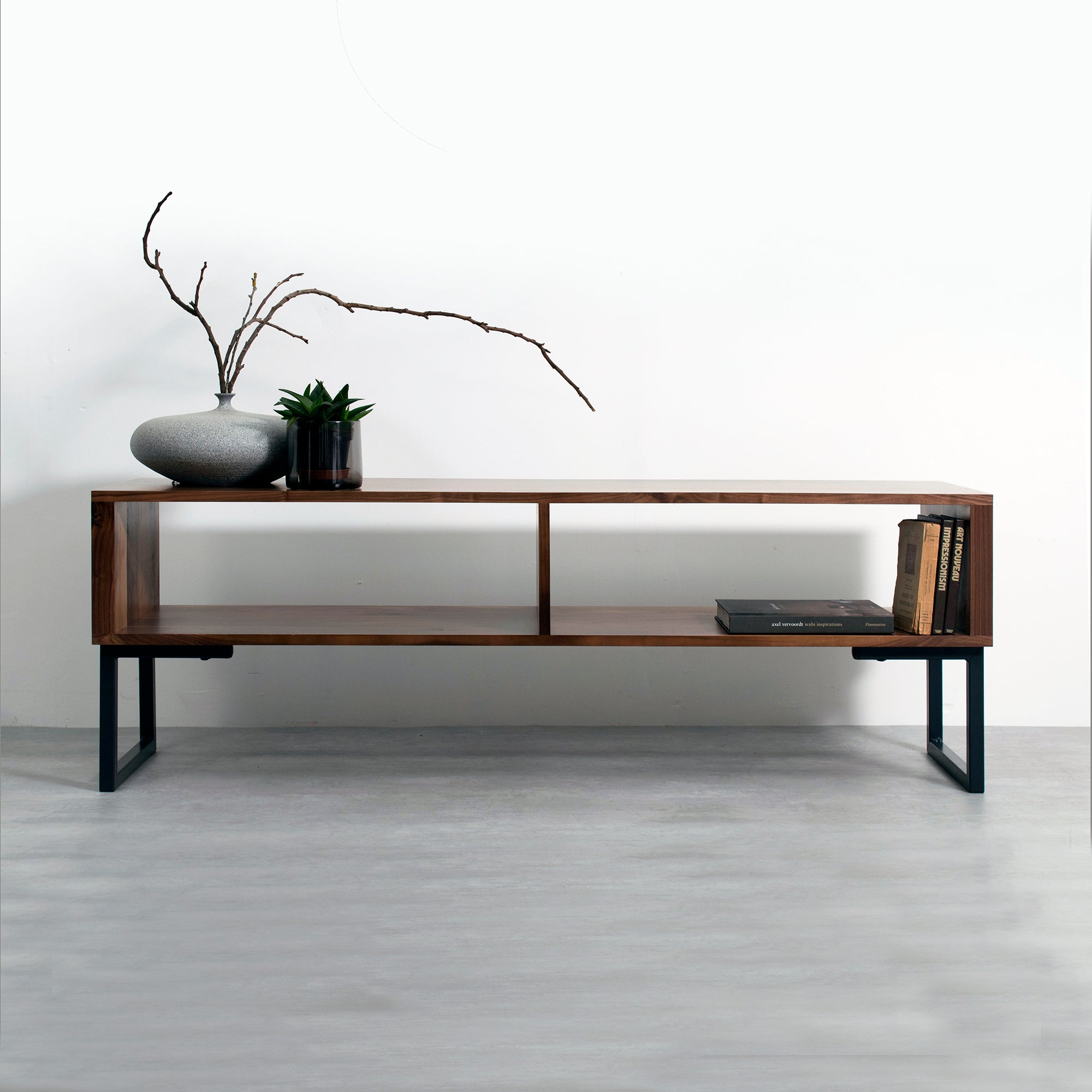
Minimalist furniture works when the lines are quiet and the storage has a clear purpose. A solid hardwood cabinet with tapered legs, recessed handles or a clean front can sit comfortably beside a modern sofa without looking like office equipment.
Low media units
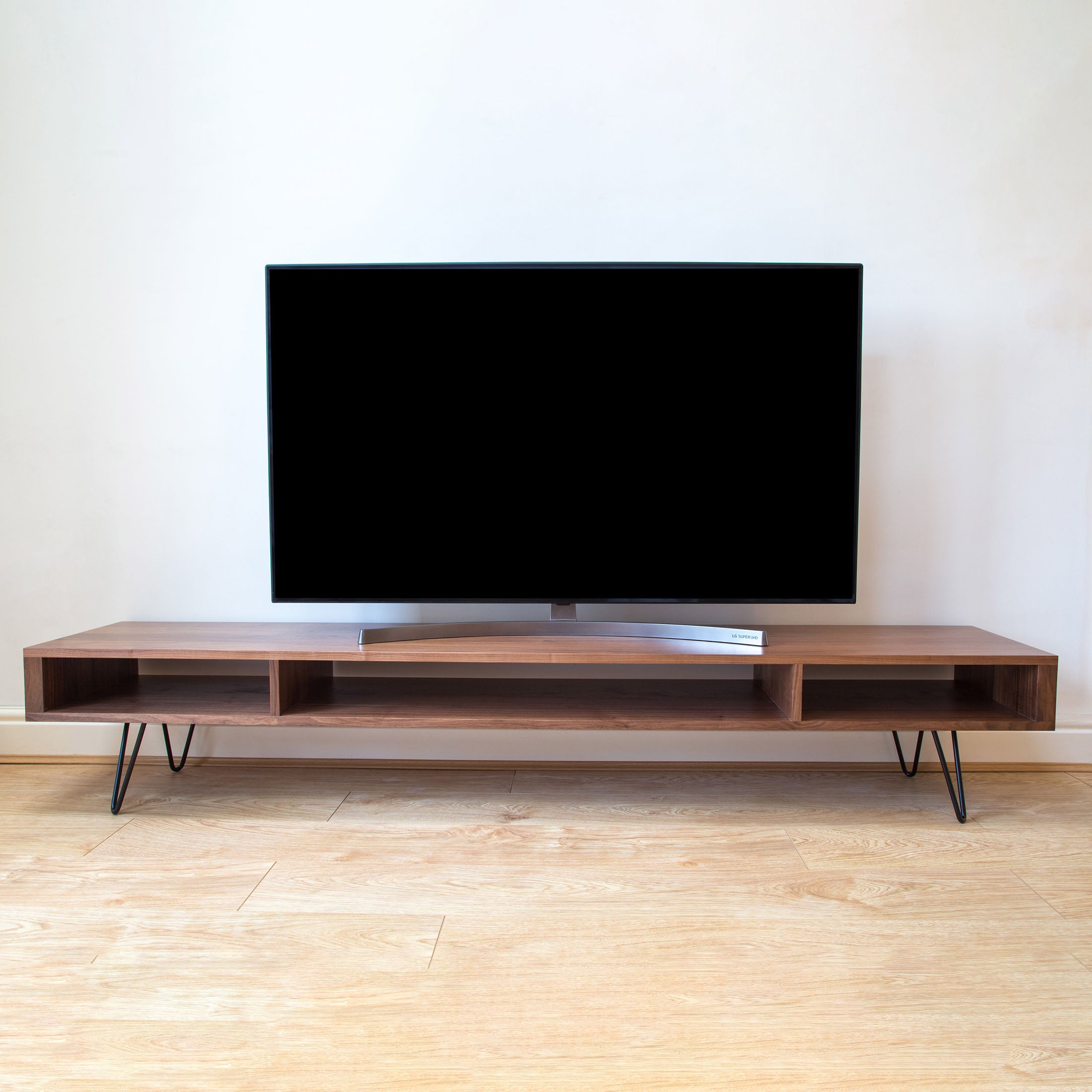
A low unit keeps records at a natural browsing height and can place the turntable at the centre of the room. It needs a wide, stable footprint, especially if the top also carries an amplifier or speakers.
Leave enough distance between the cabinet and your seating position to open doors or pull records forward. A 30cm walkway may feel too tight once cabinet handles and knees are involved.
Tall storage cabinets
Tall furniture uses vertical space but raises the centre of gravity. Secure it according to the maker’s guidance, particularly in homes with children, pets or uneven floors. Heavy records belong on lower shelves where possible.
Split a tall collection by section rather than loading every record at the top. The lower shelves should carry the densest weight.
Mid-century details
Walnut, angled legs and carefully proportioned doors create a recognisable mid-century direction without forcing a retro theme. Oak and ash work well when you want a lighter, more contemporary finish.
The cabinet should complement your room’s existing materials. Match timber tones loosely, not obsessively; a room with identical wood everywhere can look staged.
Custom furniture dimensions
Measure the wall, skirting board, socket position and speaker placement before choosing a design. Record the maximum width, height and depth, then subtract clearance for cables and ventilation.
A custom cabinet made in a family-run UK joinery gives you more control over those constraints than mass-market furniture designed around one standard media size. The trade-off is lead time, so confirm the build schedule before rearranging the room.
What should you check before ordering an LP storage cabinet?
Start with a tape measure and your largest record sleeve. Write down the internal depth you need, the total collection width and the equipment footprint. Then check how the cabinet will enter the property, especially if it must pass through a narrow hallway or turn on a stair landing.
Use this five-minute audit:
Measure the wall, skirting and nearby sockets.
Measure the deepest sleeve with its protective cover.
Add the turntable, dust cover and any isolation platform.
Mark speaker and cable positions on the floor.
Reserve 15–25% storage space for growth.
Ask for wood samples where colour matters. Natural hardwood may look different in north-facing daylight than under warm evening lamps, and a sample makes that difference obvious before you commit.
Check the cabinet’s stated dimensions against usable storage dimensions. Ask whether doors, hinges or rear panels reduce the shelf depth, and confirm whether the top is intended to carry audio equipment.
Solid wood usually costs more than veneered or flat-pack alternatives. The drawback is genuine: you pay for material, joinery and made-to-order work, and delivery may take longer than buying a ready-made unit. The benefit is a cabinet that fits the records, equipment and room you already own.
For UK buyers, The Urban Editions designs and makes its furniture in the UK, offers free UK delivery and provides international shipping. Its built-to-order approach lets you select hardwood options and order samples before finalising the piece.
Conclusion
Choose a cabinet with at least 32cm of usable shelf depth, upright support and 15–25% spare capacity. If your turntable shares the furniture, prioritise a stable top and clear ventilation over the highest record count. For a coordinated option, browse the Technic vinyl storage cabinet as a starting point for your listening setup.
Frequently Asked Questions
How deep should an LP storage cabinet be?
Allow at least 32cm of clear internal shelf depth for 12-inch records, with extra room for protective outer sleeves and comfortable handling. Check the internal measurement rather than the cabinet’s external depth, since back panels and doors reduce usable space.
Is solid wood better for vinyl storage?
Solid hardwood is a strong choice for vinyl storage because it provides a stable, weight-bearing structure and suits long-term furniture use. The cabinet still needs sound shelf support, since a wide shelf can flex under a collection even when made from hardwood.
Can I put a turntable on an LP storage cabinet?
Yes, if the cabinet has a rigid, level top and enough clearance for the turntable’s dust cover. Keep amplifiers away from blocked vents and leave a clear cable route behind the unit. Avoid placing the turntable where speakers or footfall cause vibration.
How should I store records in a cabinet?
Store records vertically, supported across the shelf, rather than flat in tall piles. Keep them away from radiators, direct sunlight and damp walls. Leave room to browse without compressing the sleeves, and use dividers when a shelf becomes difficult to manage.