October SPECIAL OFFER! Sign-up to our newsletter to receive the latest offers and news.
Custom Desk: Built-to-Order Solid Wood Options
720 mm is the common starting point for a desk, but that height will not suit every chair, monitor or room. A custom desk gives you control over the measurements that affect comfort, storage and daily use, rather than forcing your workspace around a fixed product.
Built-to-order furniture is not automatically the better purchase. If a standard desk fits your chair clearance, doorway and working position, it may be the more practical choice. Bespoke dimensions earn their cost when your room, equipment or preferred timber needs a precise solution.
Key Takeaways
Start with chair clearance, access routes and working height
Oak, walnut, ash and iroko have different visual character
Plan cable routes before the desk enters production
Wood samples prevent costly colour mistakes
Standard desks suit straightforward rooms and equipment
Built-to-order works best when measurements solve a real problem
When does a custom desk justify the investment?
A custom desk is worth ordering when a fixed width, depth, height or cable arrangement would compromise your room. It makes particular sense for alcoves, unusually tall or short users, multi-monitor setups and home offices that must share space with other furniture. Measure the room first, then specify the desk around the way you work.
The strongest reason to choose built-to-order is fit. A 1,400 mm-wide desk may suit one wall, while a 1,250 mm version leaves room for a radiator valve, bookcase or opening door. That difference is small on paper but meaningful in a compact UK room.
Tailored height also matters. A desk around 720 mm high is a useful reference point, not a universal rule. Your seated elbow should sit close to the keyboard height, with shoulders relaxed and feet supported. If you use a taller chair, a keyboard tray or a sit-stand frame, the correct specification changes.
A standard desk is often the sensible choice
Choose a standard desk when your room accepts common dimensions, your equipment is simple and you value a quicker decision. A ready design with a 1,200–1,400 mm width may suit a laptop, monitor and notebook without the extra planning involved in a commission.
There is no virtue in paying for a made-to-measure top when the only requirement is a rectangular work surface. The genuine drawback of bespoke furniture is that you must approve details before production, and a measurement error becomes your responsibility to catch.
Tailoring solves specific room problems
A built-to-order desk earns its place when the alternatives create awkward gaps or blocked access. Examples include a 1,600 mm wall that needs a 1,520 mm top, a shallow 500 mm work area beside a bed, or a corner that cannot accept a standard leg position.
A custom desk also suits design-led rooms where the timber needs to work with an existing floor or cabinet. The Urban Editions makes furniture in the UK using sustainably sourced solid hardwoods including oak, walnut, ash and iroko, with customisable designs and wood samples available before ordering.
Which solid hardwood suits your home office?
Oak is the safest starting point for a first solid wood desk because its grain is familiar, its colour works across modern interiors and it pairs well with black, white or natural metal legs. Walnut creates a deeper, richer appearance, while ash usually gives a lighter and more open look. Iroko adds a warmer, more distinctive character.
Timber species are not interchangeable. Two boards can have different grain movement, tone and figuring even within the same species. A photograph on a screen cannot show the full effect of a large desktop beside your wall colour and flooring, so order samples before committing to a prominent finish.
Oak, walnut, ash and iroko
Oak suits a calm Scandinavian or mid-century interior, especially where you want the desk to connect with shelving or a light floor. Walnut is a stronger visual choice for a study with darker seating, leather details or deep-coloured paint.
Ash has a paler appearance and visible grain, making it effective in rooms that already contain white cabinetry. Iroko is more golden and individual. Treat the sample as a guide to character, not a promise that every board will look identical.
Solid hardwood and daily wear
Solid wood gives you a substantial work surface and a material that develops character with use. It still needs sensible care. Standing water, hot mugs, abrasive cleaners and constant contact with rough equipment can mark any finish, whether the top is oak or walnut.
Use a desk mat beneath a writing pad, keep drinks on a coaster and lift equipment rather than dragging it. A monitor arm should clamp to a suitable position, away from a weak edge or an area already crowded with cable holes.
Have nothing in your houses that you do not know to be useful, or believe to be beautiful. — William Morris, Hopes and Fears for Art, 1882
That principle works well for a home office. Specify only the details that improve your work or the way the room looks. Extra compartments and fittings add visual weight when they do not solve a real need.
How should you measure a custom desk?
Measure the available wall, the chair path and the route into the room before choosing dimensions. Record the narrowest doorway, stair turn and corridor, then check the desk’s finished size against those points. A beautiful 1,600 mm top is useless if it cannot pass through a 700 mm opening or turn at the landing.
Start with masking tape on the floor. Mark the proposed front edge, chair position and any drawers or pedestals. Sit there for several minutes with your normal chair, then check whether the desk blocks a radiator, window handle or cupboard door.
Width and depth
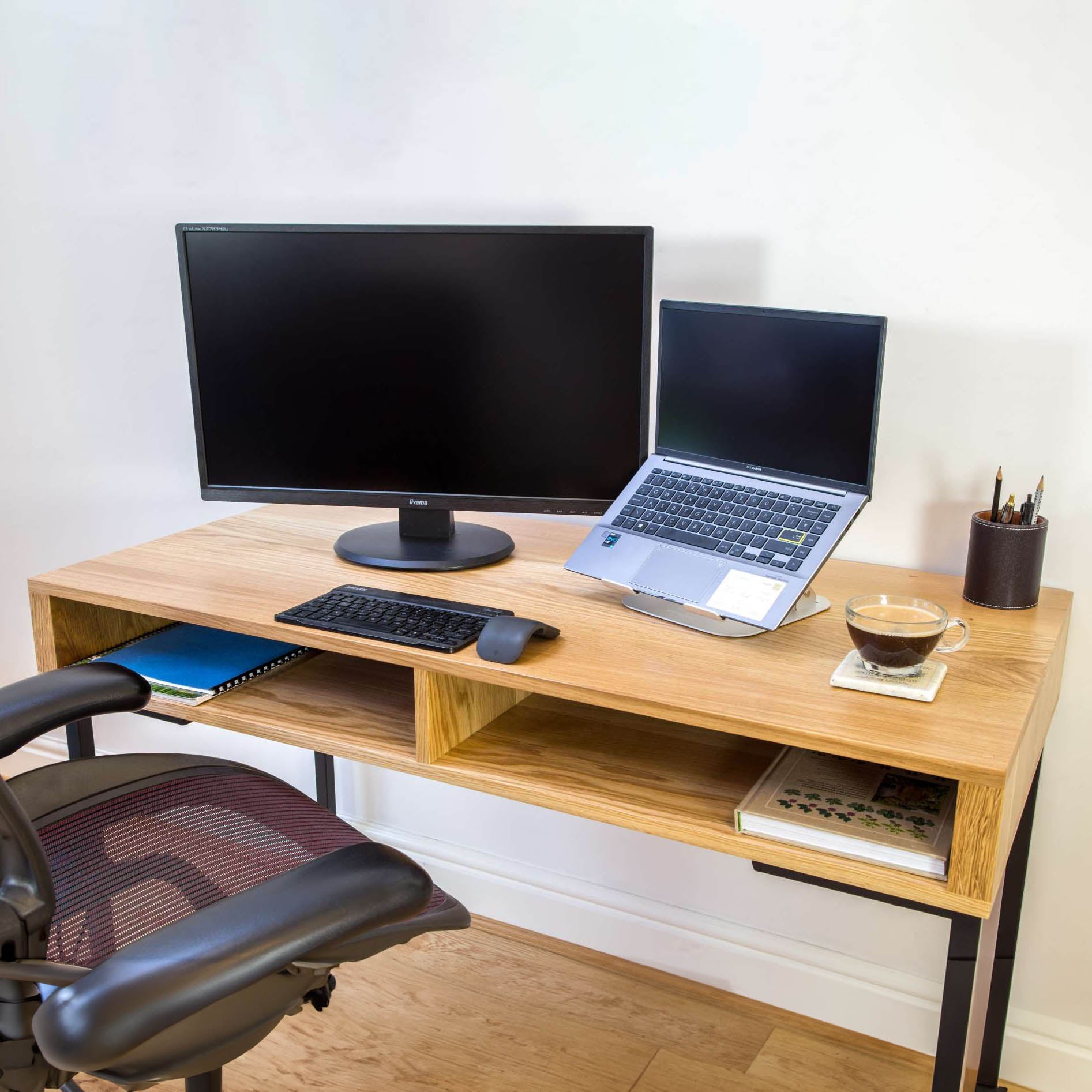
For laptop work, a depth around 600 mm often gives enough room for the screen and writing materials. A monitor, keyboard and speakers need more planning. At roughly 700–800 mm deep, you gain working distance but lose more floor space behind the chair.
Width depends on equipment and movement. A 1,200 mm top works for a compact setup; a 1,400–1,600 mm top gives more room for a second screen, paper and a lamp. Treat these as practical examples, not fixed rules.
Chair clearance and legroom
Leave space for your knees, feet and chair arms. If the desk has a modesty panel, check that it does not reduce the usable leg area. A chair needs more room when it reclines, and a wheeled chair needs a clear route to pull out without striking a nearby cabinet.
Measure from the finished floor to the underside of the desktop, not only to the top surface. A 25 mm-thick top changes the position of your knees and the chair height you need.
Access and installation
Built-to-order furniture still has to enter a real home. Measure door leaves with handles considered, and note whether a lift, stairwell or tight hallway affects delivery. If the top is large, ask how it will be carried and whether the room needs clearing before arrival.
The Urban Editions offers free UK delivery and international shipping, but you remain responsible for checking that the ordered dimensions suit your access route. Make that check before approving the order, when a correction is still possible.
What desk height and layout support comfortable work?
Set the desk around your body and chair, not around a fashionable measurement. Begin with a desk height near 720 mm, sit with feet flat, and check that your elbows remain close to your sides when typing. If your shoulders rise or your wrists bend sharply, adjust the chair or specify a different height.
A fixed custom desk works well when one person uses it and the chair has enough adjustment. A shared desk needs a compromise, so prioritise the shorter user’s comfortable position and select a chair with suitable height range. A footrest can improve support without changing the desktop.
The screen should sit far enough away for comfortable reading, with the top edge near eye level for many seated users. Exact positioning depends on screen size, eyesight and posture. A custom desk cannot correct every ergonomic issue, but it can give your chair and equipment the space they need.
Cable management belongs in the first drawing
Plan power and data routes before the desk is made. Decide whether cables should pass through a rear grommet, a discreet opening near the monitor or a route beneath the top. Cutting holes later can damage the finish and weaken a poorly chosen position.
Keep chargers, extension leads and docking equipment off the floor where possible. A cable tray or underside channel creates a cleaner result, but it also needs room beneath the top and must not interfere with drawers or your knees.
Equipment changes the specification
A laptop needs less depth than a monitor arm, speakers and a document stand. Record the footprint of each item, including the clamp width of the monitor arm and the position of the power socket. Leave a clear working zone rather than filling every millimetre.
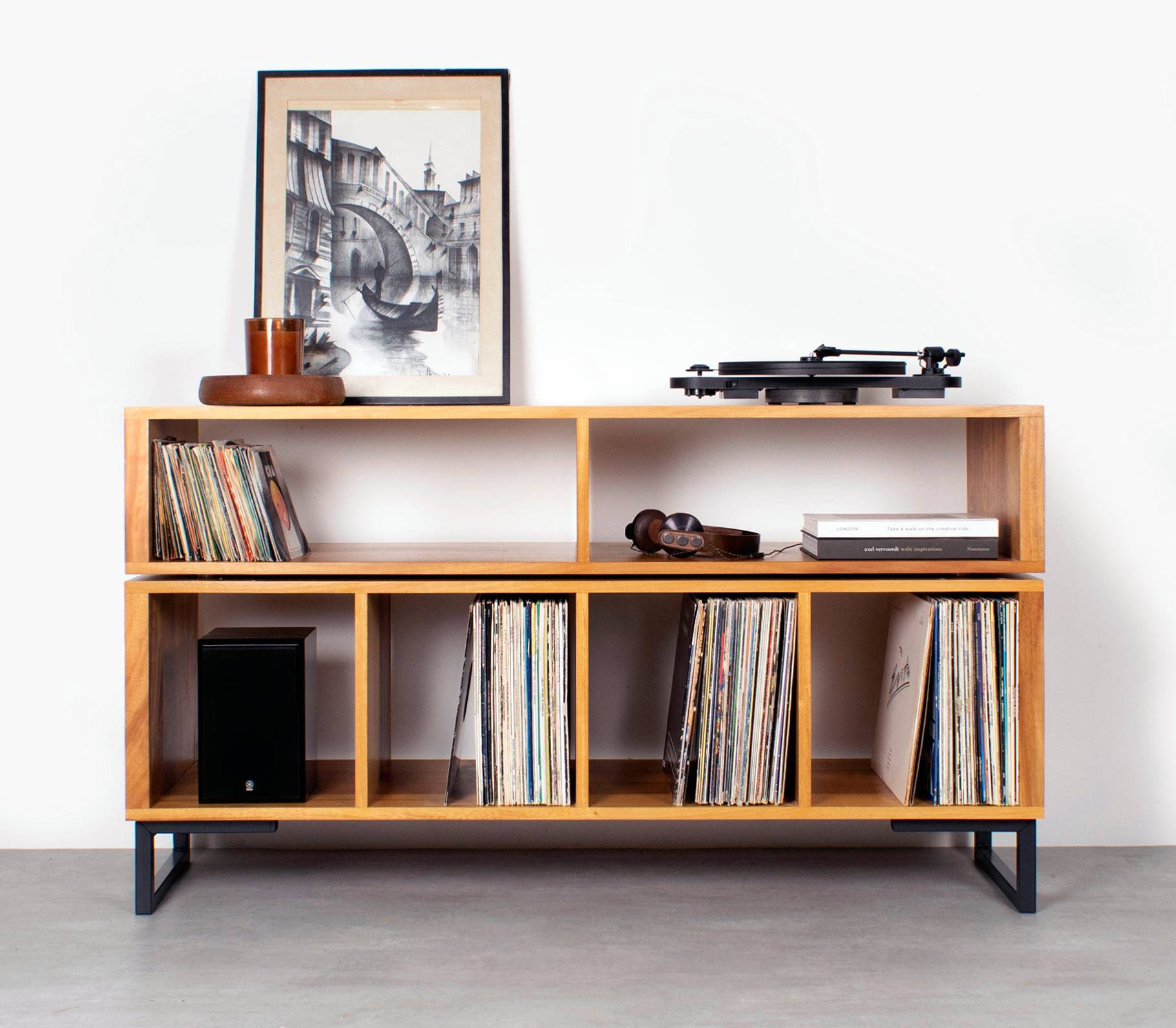
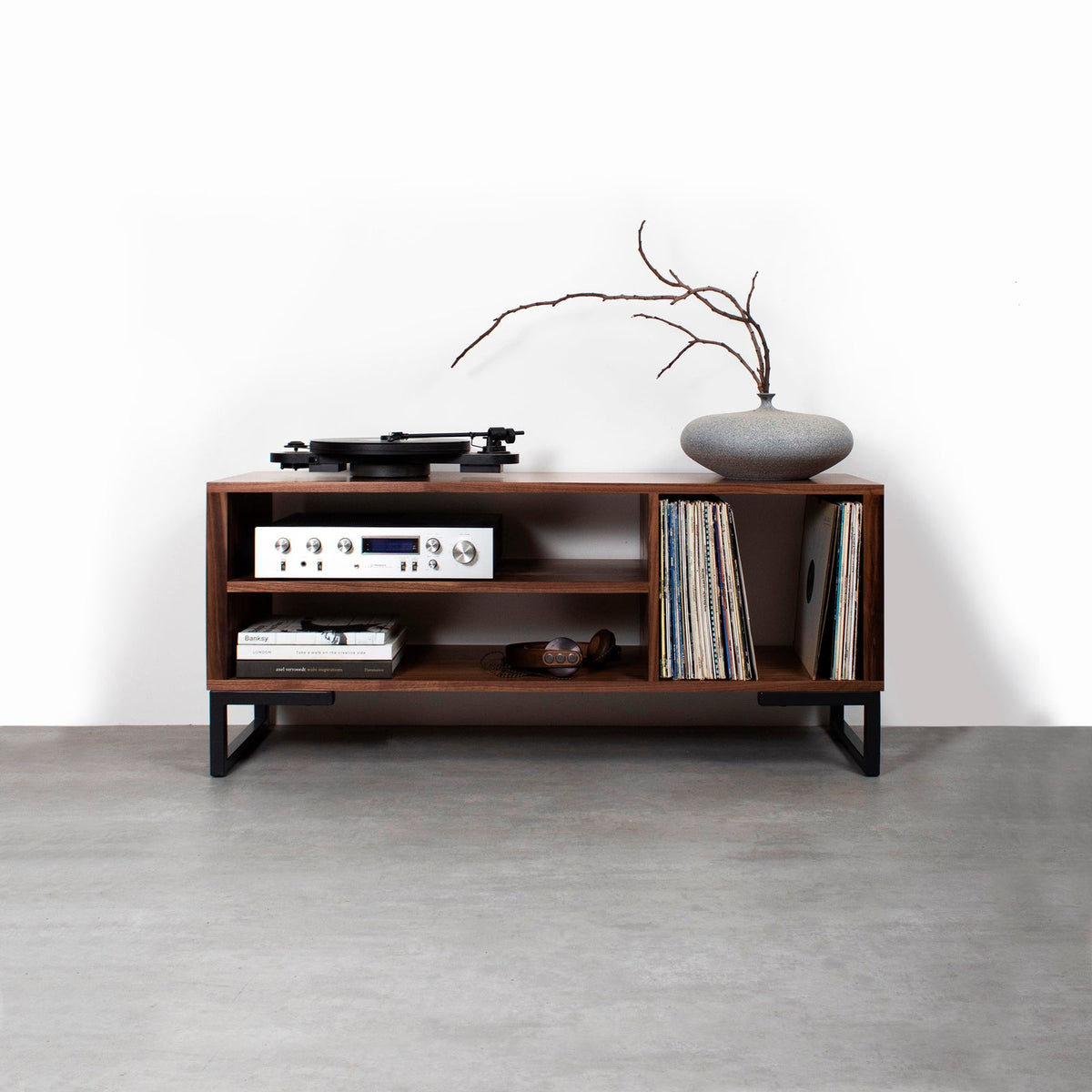
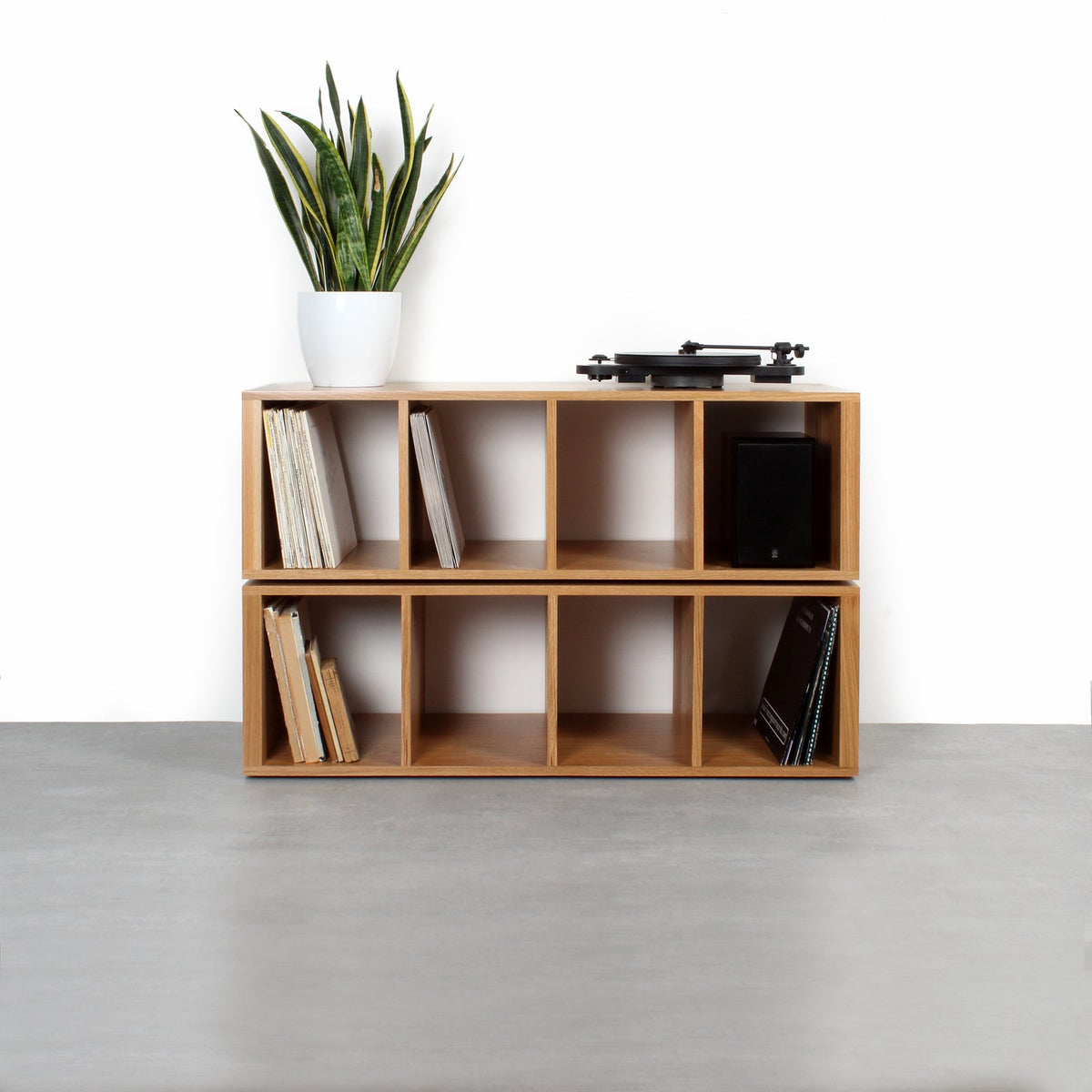
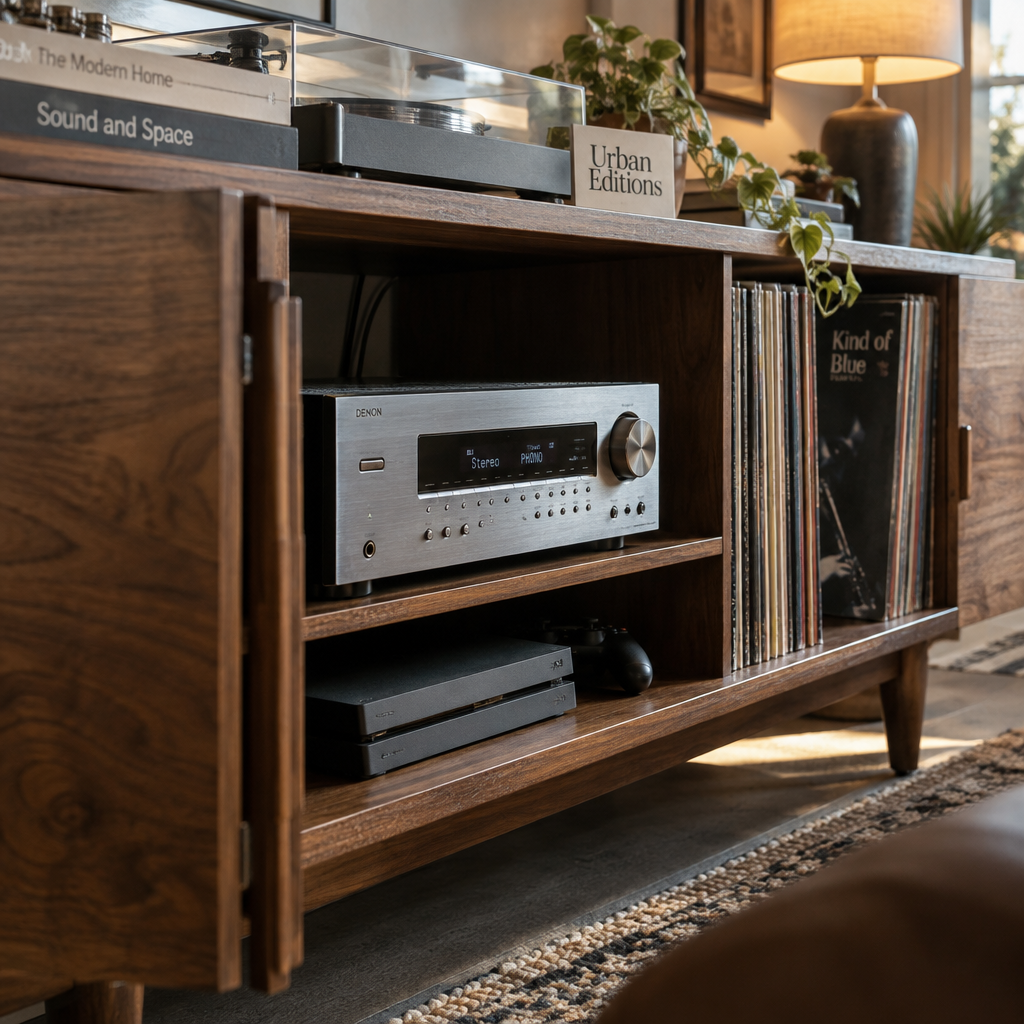
If you use a turntable, amplifier or record storage near the desk, account for heat, vibration and access. Related media furniture should not force cables across the main seating position.
Build a simple working brief
Write the specification in this order:
Measure the wall, floor space and access route.
Record chair height, legroom and the position of radiators.
List monitors, lamps, speakers and charging equipment.
Choose timber species and request wood samples.
Confirm cable openings, finish and final dimensions.
Check the written order before production begins.
This sequence prevents an attractive timber choice from distracting you from the practical measurements that determine whether the desk works.
Which finish and details make a desk last?
Choose a finish according to use, not only colour. A home office that sees daily writing, coffee and equipment needs a surface that is straightforward to maintain. Ask what cleaning method the maker recommends and whether the finish will alter the timber’s tone.
A clear finish can deepen pale wood and bring out grain. Walnut already has a strong visual presence, while ash may appear warmer after finishing. Samples are particularly useful when the desktop will sit beside painted walls or a floor with yellow or red undertones.
The edge profile affects both comfort and appearance. A sharp square edge gives a crisp modern line, but a small eased edge feels better against your forearms during a long working day. Confirm whether the design uses a particular edge treatment rather than assuming every solid wood desk has the same profile.
Details worth specifying
Prioritise a cable opening, a sensible rear clearance and enough legroom before adding decorative features. If you need drawers, decide whether they should sit centrally, to one side or beneath a return. Their position changes chair clearance and the way you approach the desk.
Leg design also changes the room. Tapered legs support a mid-century look, while a simple slab or trestle arrangement creates a stronger architectural presence. Choose one that leaves the floor visually open if the room is small.
Details to avoid adding automatically
Do not request drawers simply because a desk appears incomplete without them. They add weight, reduce knee room and can make a narrow room feel crowded. A separate pedestal or wall shelf may store stationery more effectively.
Likewise, do not assume every solid wood desk can be altered after ordering. Built-to-order means the item is made to an agreed specification; it does not mean unlimited changes are possible once materials have been prepared.
How do you order a built-to-order desk confidently?
A reliable order begins with a written brief containing the finished width, depth, height, timber, finish and cable details. Add a simple room sketch with wall length, socket positions and nearby furniture. This gives the maker something more useful than a broad request for “a desk for a small office”.
The Urban Editions lets customers customise designs and order wood samples, with furniture designed and made in the UK by a family-run UK joinery. Use those options to make decisions before placing the order rather than treating them as afterthoughts.
Check the timber decision
Place samples against the wall in daylight and evening lamp light. Oak may look quite different beside cool grey paint than beside warm cream, and walnut can dominate a small room if the rest of the furniture is also dark.
Look at grain direction and variation. Natural hardwood is not printed laminate, so the final desktop will have its own pattern. That variation is part of the material, but a sample helps you choose the right overall species.
Confirm the practical specification
Review every dimension, including the underside height and any cable aperture. Check the route into the room one more time. If the desk is for a loft, measure the stair turn; if it is for a first-floor flat, confirm lift or stair access.
Ask for the expected production and delivery timing before ordering. Built-to-order furniture requires more planning than a mass-market product, so build the desk into your office schedule rather than buying a temporary replacement at the same time.
Judge value by the problem solved
Compare a bespoke quote with a suitable standard desk on like-for-like materials, not with the cheapest flat-pack option. A custom desk makes financial sense when it removes a difficult gap, supports a particular height or integrates cable planning that you would otherwise retrofit.
The genuine objection is cost. A carefully chosen standard desk can be better value when your room and working equipment are ordinary. Pay for customisation only where the measurement, timber or integrated detail changes the result you will live with every working day.
Conclusion
Choose a standard desk when its dimensions already suit your room, chair and equipment. Choose a custom desk when a precise width, height, timber or cable route solves a clear problem. Measure access first, order samples, and approve the written specification before production. For a coordinated media setup, browse the solid wood media units collection alongside your desk.
Frequently Asked Questions
What is the best wood for a custom desk?
Oak is the most adaptable choice for many UK interiors, while walnut gives a darker, richer appearance and ash creates a lighter look. Iroko suits buyers who want warmer, more distinctive grain. Order samples because colour and grain vary across natural hardwood.
How deep should a home office desk be?
Allow roughly 600 mm for a compact laptop setup and around 700–800 mm when using a monitor, keyboard, speakers or paper materials. Measure your equipment and chair position before ordering, especially in a bedroom or narrow study.
Can a built-to-order desk be changed after I order it?
Do not assume it can. Confirm all dimensions, cable positions, timber and finish before production because changes may not be possible once materials have been prepared. Keep the written specification and check it against your room measurements.
Is a custom desk better than a standard desk?
A custom desk is better when it solves a specific fit or working problem. A standard desk is more practical when common dimensions suit your room and equipment, because it reduces planning, cost and the risk of ordering an unnecessary alteration.