October SPECIAL OFFER! Sign-up to our newsletter to receive the latest offers and news.
Vinyl Storage Wall: Choosing Cabinets and Shelves
20–25 kg is a sensible planning allowance for 100 sleeved LPs, and that load changes what a vinyl storage wall can safely sit on. Choose shelving for the records’ weight first, then decide whether you want open display or concealed storage.
The right dimensions matter just as much: standard 12-inch sleeves need more depth than many bookcases provide. Measure your records and wall before ordering, and leave enough room to browse without forcing sleeves into place.
Key Takeaways
Allow roughly 20–25 kg per 100 sleeved LPs.
Measure your largest sleeve before choosing shelf depth.
Match wall fixings to masonry or structural timber.
Keep records upright, with enough space to browse.
Plan spare capacity for collection growth.
Choose a finish in your room’s actual light.
Measure LP sleeves before planning capacity
Start with the collection, not the furniture. A typical 12-inch LP jacket measures close to 32 cm square, but outer sleeves, gatefold covers and box sets vary. Measure your largest records, including their protective sleeves, before settling on shelf depth or height.
Set usable depth and height
Aim for about 33–35 cm of usable shelf depth as a planning range, then check it against your own records. “Usable” means the clear space inside the shelf, not its outside measurement. A back panel or front lip can reduce the space available.
Allow similar clearance in the shelf opening so records slide in and out without catching. Measure the distance from the shelf surface to the underside above it, rather than relying on the unit’s overall height. Check that any dividers or supports won’t obstruct larger sleeves.
A standard bookshelf is not automatically suitable. Many are too shallow for LP jackets, and their shelves may not be designed for a dense, heavy collection. Measure the actual opening before buying, especially if the records will sit behind a front rail or inside a cabinet.
Count records and leave room to browse
Count your collection in manageable batches, such as one shelf or crate at a time. Note the number of LPs and any unusually bulky box sets. This gives you a useful starting point, but a record count alone doesn’t show whether a shelf will be comfortable to browse.
Plan roughly 25% spare capacity for new purchases and easier browsing. For example, a collection of 200 records needs space for about 250, rather than a shelf packed tightly to its limit. This is a practical allowance, not a fixed rule; leave more room if you buy records regularly.
Choose between wall shelves, cubes and cabinets
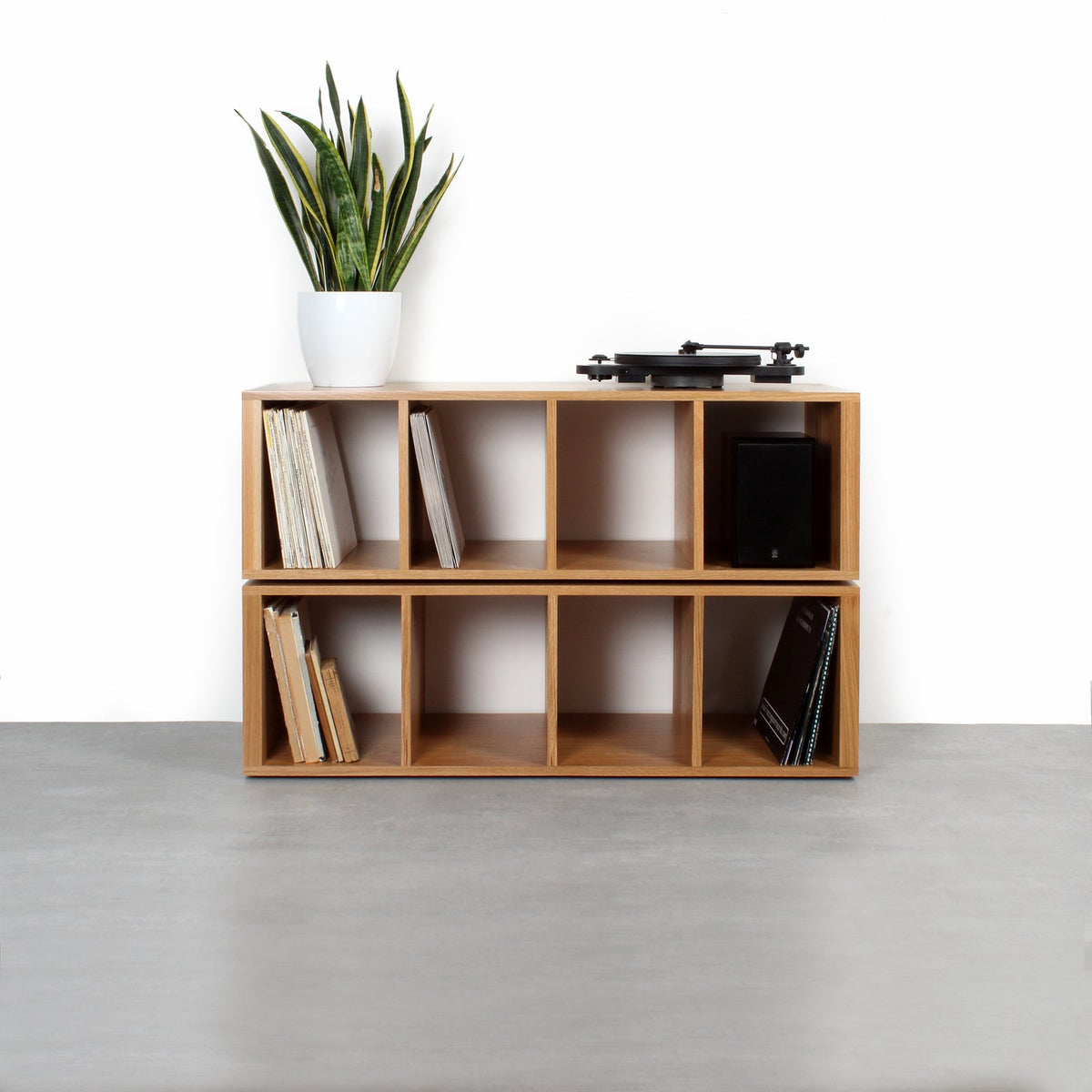
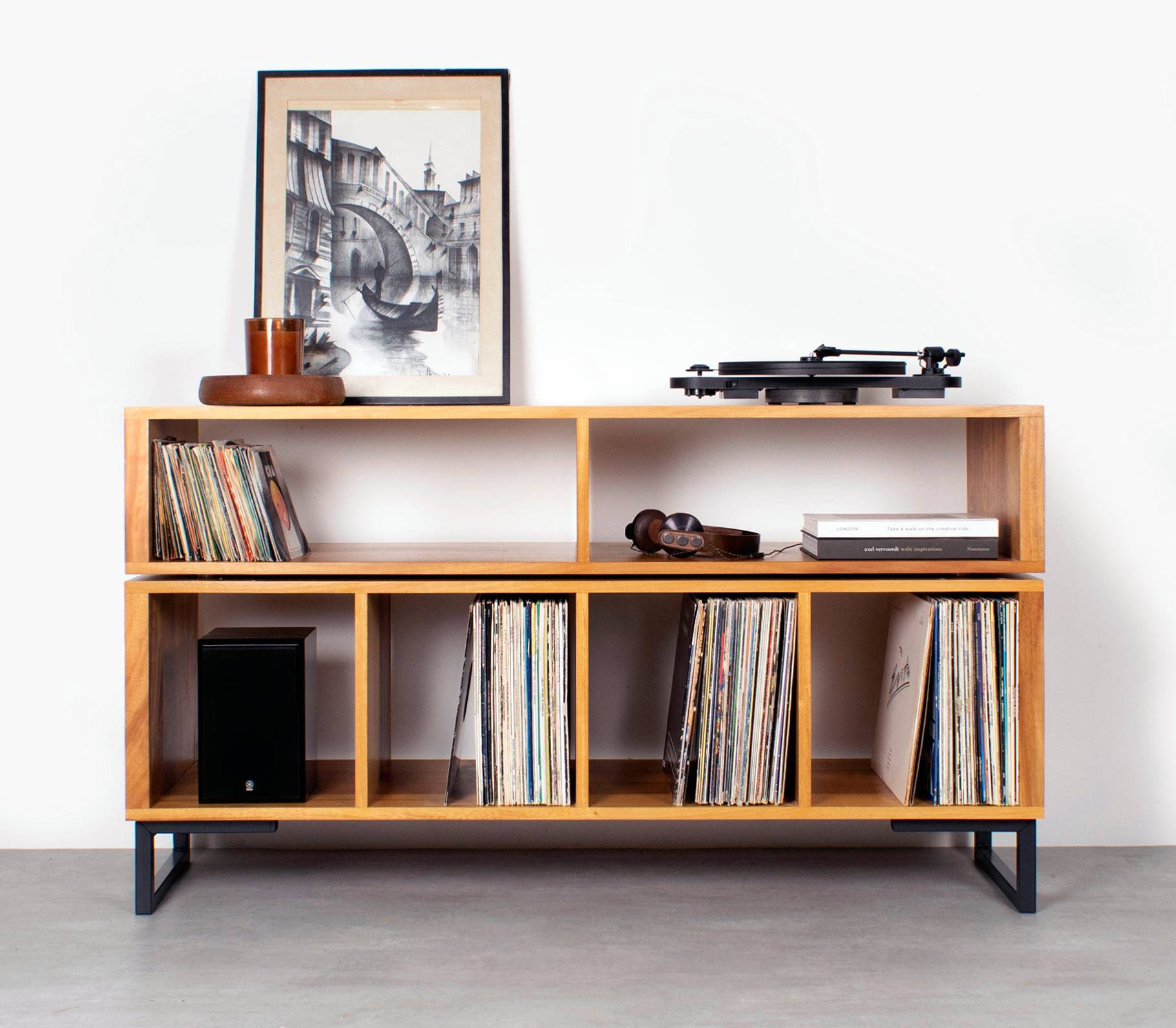
A record wall doesn’t have to be wall-hung. Floor-supported cube shelving or a cabinet is often the more practical choice when the collection is heavy or the wall structure is uncertain. Compare the support, access and visual effect before choosing a style.
Displays records, but the wall carries the loaded weight
Freestanding cube shelving
Floor-supported unit
Open access without loading a shelf into the wall
Closed vinyl cabinet
Floor-supported cabinet
Keeps records less exposed and gives the wall a tidier look
Open shelving for visible, easy access
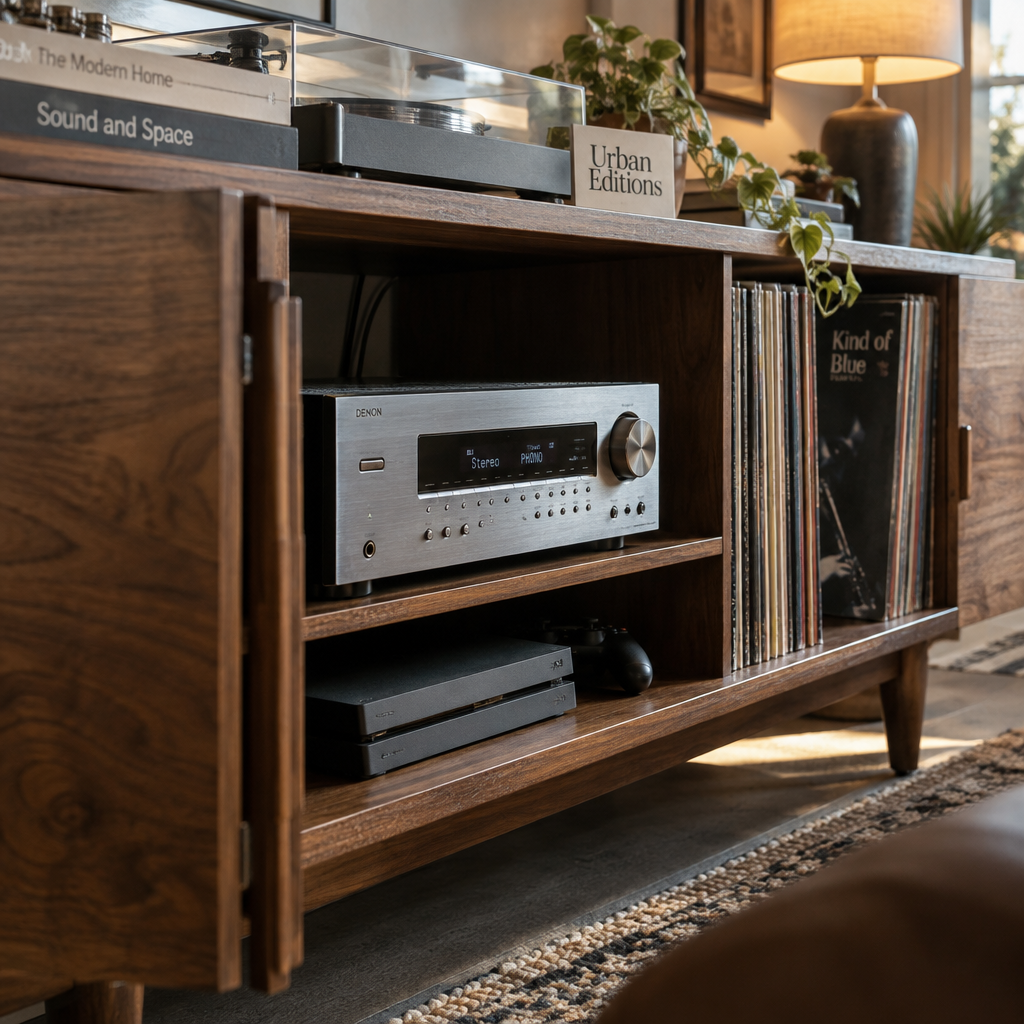
Open shelves make record spines easy to see and browse. Wall-mounted shelves suit a clear wall where suitable structural support is available; freestanding cubes keep the load on the floor and are easier to place without relying on wall fixings. Both need enough depth and a layout that prevents records from leaning.
Open storage makes browsing straightforward, but records are more exposed to dust and daylight. Allow space to pull a sleeve out without knocking neighbouring records, and avoid filling every compartment to its edge. A clean, minimalist look only works well if the records remain easy to handle.
Closed storage for a quieter look
A closed cabinet reduces visual clutter and helps shield records from everyday dust. Check the cabinet’s internal measurements and how its opening works before choosing it. The available space inside may differ from the unit’s outside dimensions, and you’ll need clear room in front to retrieve records comfortably.
Check loaded weight before choosing fixings
Records are compact, so their weight builds quickly. As a planning estimate, allow roughly 20–25 kg for every 100 sleeved LPs. Actual weight depends on the records, sleeves and box sets, and the shelving itself adds further load.
Working load is the weight a shelf and its fixings can safely carry in use, not simply the weight of the empty shelf.
Identify what the wall is made of
A plaster finish doesn’t tell you what sits behind it. UK homes may have solid masonry walls or plasterboard fixed to timber studs, and each needs a suitable fixing method. Use a stud detector where appropriate, and confirm the wall construction before choosing a wall-mounted design.
For masonry, the fixing needs to suit the wall material; for a stud wall, the shelf support must connect securely to structural timber. Follow the shelf maker’s fixing instructions and the fixing manufacturer’s stated load rating. Don’t treat an ordinary plasterboard fixing as a safe solution for a heavily loaded record shelf.
Include the weight of the shelf and its contents when checking capacity. The rating for a single fixing is not necessarily the safe load for the whole shelf. Spacing, the shelf’s construction and how the load sits across its supports all affect the result.
Choose the support route before the style
If you can’t confirm that the wall and fixings will take the full loaded weight, choose a floor-supported unit instead. A freestanding cabinet or cube shelving puts the records’ main load on the floor, although the floor still needs to be sound and level.
Wall-mounted shelving keeps the floor clear, but it needs careful measuring and installation. The drawback is real: securing several loaded shelves takes more planning than positioning a freestanding unit. If the wall is unfamiliar or the fixing instructions don’t cover your setup, ask a qualified installer to assess it before loading records.
Plan the layout for browsing and growth
A record wall should work when you’re choosing an album, not only when it’s photographed. Place it where you can stand in front of it and slide sleeves out without blocking a doorway, radiator or main route through the room. Check the planned position with the turntable area in mind, while keeping records away from heat and direct sunlight.
Measure the room, including awkward details
Measure the full wall width and height, then mark the skirting board, sockets, switches and nearby furniture. Skirting can stop a freestanding unit sitting flush, while a wall-mounted shelf may need to clear sockets or trim. Check the dimensions at floor level and at the intended shelf height; walls and corners aren’t always perfectly square.
Use this sequence before ordering or drilling:
Measure the wall and note skirting, sockets and door swings.
Measure the largest sleeved LP and confirm usable shelf depth.
Check wall construction if you’re considering wall-mounted shelves.
Estimate your record count and allow spare browsing space.
Mark the unit’s footprint on the floor and test the walking clearance.
The floor outline is a simple but useful check. Use masking tape to mark the proposed width and depth, then stand in front of it as you would while browsing. This reveals tight walkways and furniture conflicts before a unit arrives.
Leave room to handle and expand
Keep records upright and allow a little movement between groups. Don’t pack sleeves tightly or store a large collection in horizontal stacks; pressure makes browsing awkward and can put strain on sleeves. Dividers can help keep short sections standing straight, provided they don’t squeeze the records.
A comfortable browsing gap is the space that lets you move records aside and lift one out without bending its neighbours. Leave spare room at the end of each section rather than filling every centimetre. As the collection grows, that margin is more useful than a wall that looks full on day one.
Protect records from dust, sunlight and heat
Choose a position away from direct sunlight, radiators and damp areas. Strong sun can heat sleeves and records, while moisture can damage paper covers. Avoid placing storage against a wall that regularly feels damp, and don’t use a hot windowsill or radiator alcove as a display spot.
Open or closed storage?
Open shelving is quick to browse, but it leaves sleeves exposed to household dust and light. Wipe the shelves before returning records, and keep the unit away from cooking splashes or places where dust gathers quickly. A closed cabinet is a better fit if you prefer a tidier look or want less dust settling on the collection.
A cabinet is not a substitute for a suitable room. Keep records in a stable indoor space and avoid locations that regularly become hot, damp or cold. If you’re storing a particularly valuable pressing, use a protective outer sleeve and keep it upright with the rest of the collection.
Keep records upright and supported
Store LPs vertically, with their weight resting evenly on the shelf. A slight lean across a long, partly empty shelf can put uneven pressure on sleeves, so use dividers or arrange records in smaller groups. Don’t use horizontal stacks as a space-saving shortcut for a large collection.
Dust can build up at the top of open shelving and around the records’ exposed edges. A closed unit reduces that exposure, but you still need to keep the inside clean and dry. Avoid storing records in a cabinet while they’re damp or dusty from a recent move.
Choose a hardwood finish and cabinet that fit
The finish changes how a record wall sits in the room, even when the layout stays the same. Oak, walnut, ash and iroko each give a different visual tone, so compare the wood with your floor, paint and existing furniture. Check a sample in both daylight and evening lighting before making a final choice.
Match the wood and dimensions to your room
A lighter finish can keep a large unit from dominating a compact room; a darker finish can create a stronger contrast against a pale wall. Treat this as a visual judgement, not a rule. The light in your room matters: a finish can look different beside a north-facing wall than it does under warm lamps.
The Urban Editions’ furniture is designed and made in the UK using sustainably sourced solid hardwoods, including oak, walnut, ash and iroko. Its built-to-order designs can be customised, and wood samples let you compare finishes at home before choosing.
Check cabinet capacity against your collection
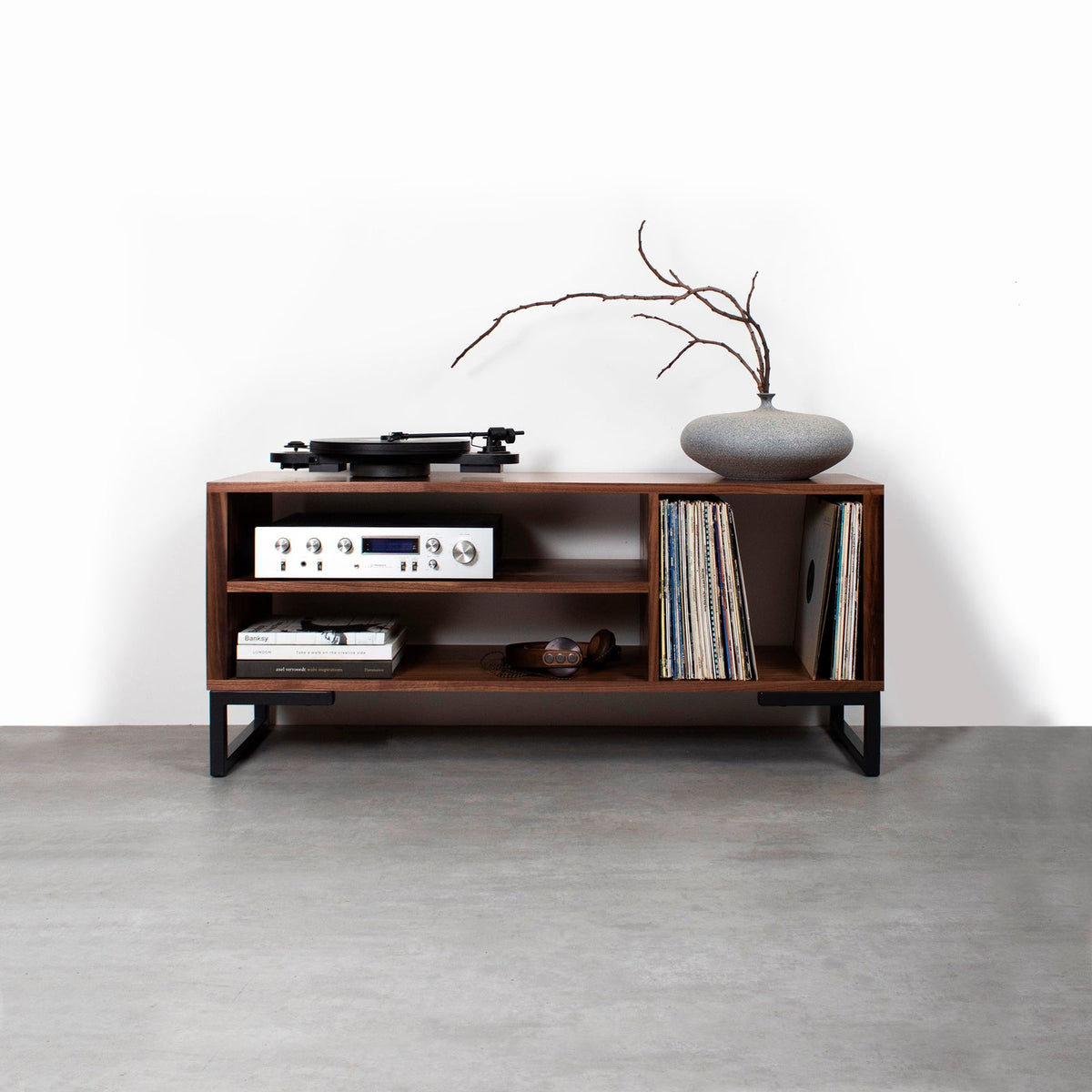
The Condor Vinyl Storage Cabinet On Minimalist Square legs is described as holding around 250–400 LPs, depending on the size ordered. It comes in 100 cm, 120 cm and 140 cm widths, with 15 cm or 25 cm legs and oak, dark ash, walnut or iroko finishes.
Treat that capacity as a guide for the stated cabinet, not a general figure for every record unit. Box sets and protective sleeves affect how many records fit, so compare the estimate with your own collection and leave space for browsing. Choosing a cabinet that is already full on arrival leaves no room for new records.
Conclusion
Measure your largest sleeved LP, count your collection and mark the furniture footprint before choosing a style. Pick wall-mounted shelving only when you can confirm the wall and fixings suit the loaded weight; otherwise, use a floor-supported cube or cabinet. Leave spare capacity and space to browse, then choose the hardwood finish in the room where it will live.
Frequently Asked Questions
How deep should shelves be for vinyl records?
Plan for about 33–35 cm of usable depth, then measure your largest sleeved record to confirm the fit. The outer measurement of a shelf isn’t the same as its clear internal depth, especially when it has a back panel or front rail.
Can I use plasterboard fixings for a vinyl shelf?
Only if the fixing and shelf instructions specifically confirm they suit the wall and full loaded weight. Records add up quickly, so identify whether the shelf can connect to structural timber or suitable masonry before installation.
Is it better to store vinyl records upright or flat?
Store LPs upright with even support. Horizontal stacking is unsuitable for a large collection because the weight of records above presses on the sleeves below and makes individual records harder to retrieve.
How much extra space should I leave for new records?
A practical starting point is around 25% spare capacity; for 200 LPs, plan space for about 250. Leave a little browsing room too, since a tightly packed shelf is harder to use even before you add more records.