October SPECIAL OFFER! Sign-up to our newsletter to receive the latest offers and news.
Record Cabinet: Solid Wood Storage for Vinyl Collections
30.5 cm is the diameter of a standard 12-inch LP, but its sleeve needs extra room. A record cabinet should store albums upright, leave space to browse and fit your room without crowding your equipment. Headline capacity alone won’t tell you whether a cabinet is practical.
Measure your collection and hi-fi before choosing a layout. Then compare the usable internal space, shelf support, finish and position of the turntable. These details help you choose storage that works for the records you own now and the collection you’re building.
Key Takeaways
Store LPs upright, supported and loose enough to browse
Measure internal clearance, not only the outside dimensions
Leave spare capacity for new records and box sets
Match cabinet layout to your turntable and hi-fi
Choose wood and finish to suit your room and daily use
Upright storage makes records easier to browse
A record cabinet is useful when you can see album spines and pull out a record without shifting a stack. Most 12-inch LPs sit inside sleeves around 31–32 cm square, so allow clearance for the jacket and your hand. Measure unusually large sleeves and box sets separately.
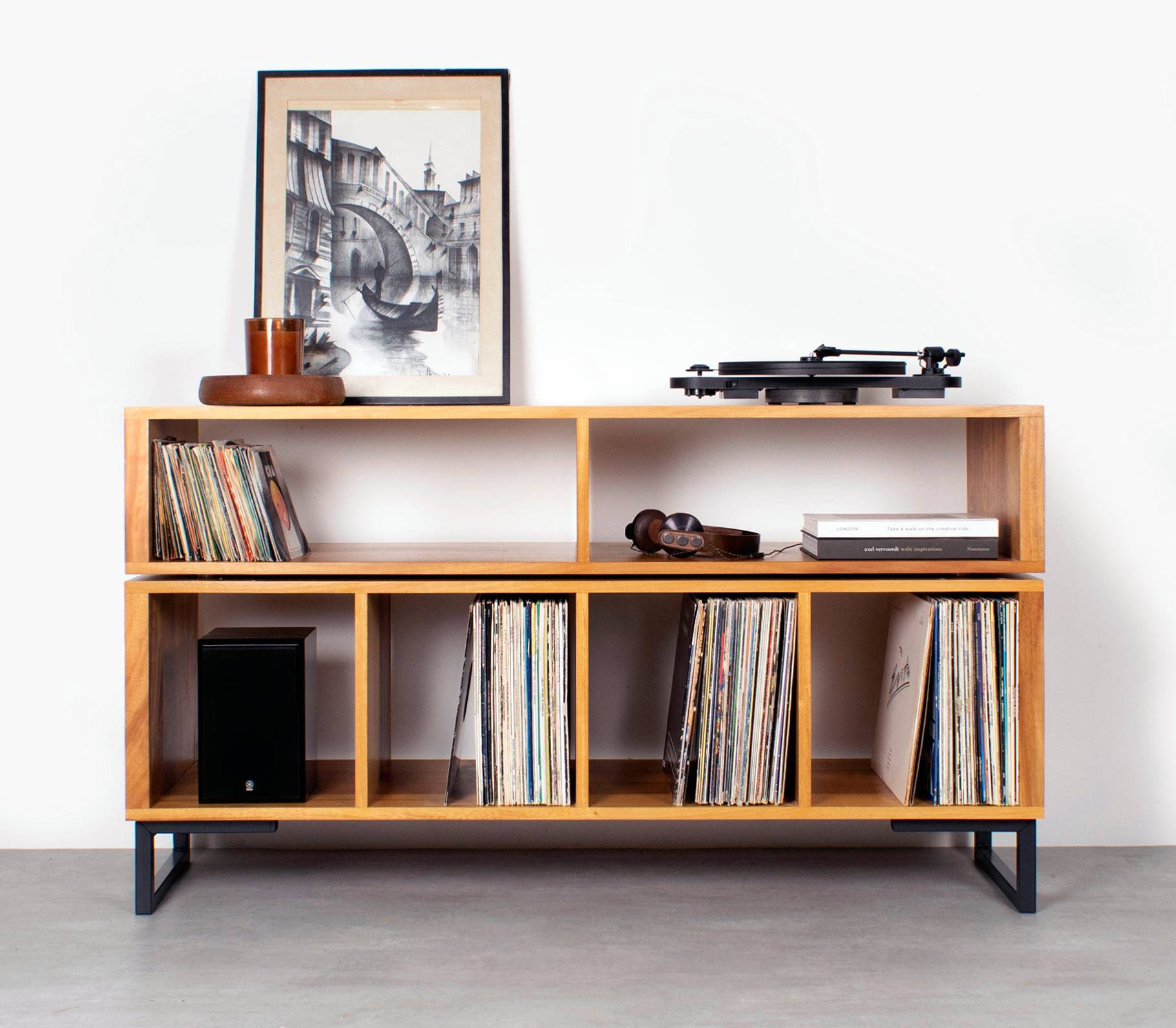
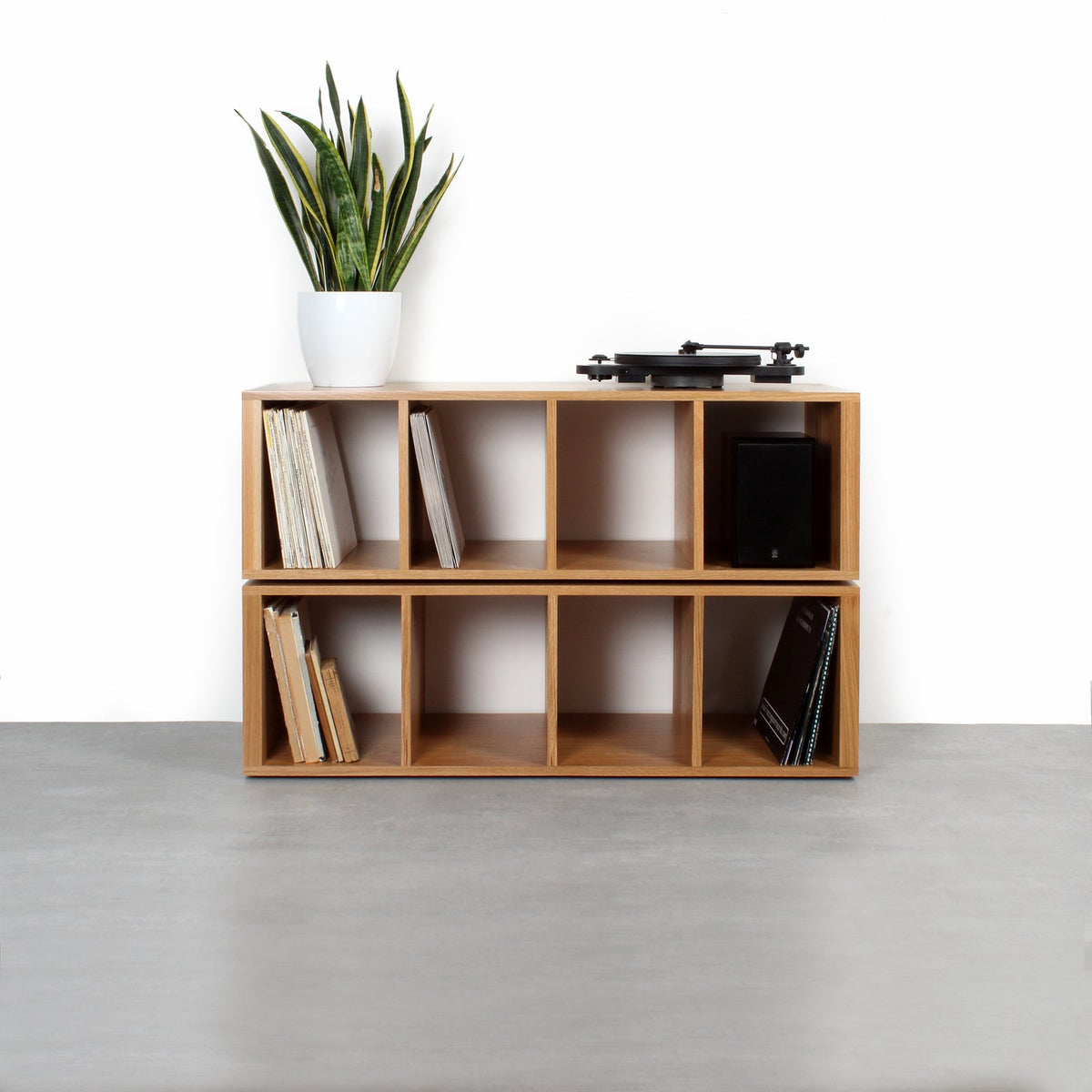
A record cabinet stores records upright, with their spines visible and space to remove them without disturbing the rest of the collection.
Keep the records supported
Store LPs vertically, like books on a shelf. Horizontal stacks put weight on the records at the bottom and make browsing slower. Records that lean at a sharp angle can also become distorted over time, so support the row across its length.
Leave enough room to slide an album out without forcing it past its neighbours. A tightly packed shelf can hold more records on paper, but it makes browsing awkward and increases the chance of catching sleeves. Easy access matters more than squeezing in the last few albums.
Allow room for sleeves and box sets
Check the clear internal height, width and depth of each compartment, not just the cabinet’s outside measurements. A useful starting point is around 33 cm of clear height for standard sleeves, with more room if you own larger editions. Measure your tallest record before ordering.
Depth matters too. A shelf that’s too shallow leaves sleeves unsupported; an overly deep compartment can make records harder to reach. Usable internal space is the area left after the cabinet’s sides, back and shelves are accounted for. Ask for internal dimensions if they aren’t listed.
Capacity should include room to grow
Count or measure the collection you actually own, then choose a cabinet with some spare capacity. The number of records a cabinet holds depends on sleeve thickness and shelf layout, so a single headline figure can mislead. Box sets, gatefold sleeves and protective outer sleeves take up more room than standard jackets.
One practical method is to measure the width of your current collection while it stands upright and supported. Add space for the records you expect to buy. I’d reserve about one-fifth of the usable shelf space for growth, especially if you regularly add new releases or visit record fairs.
Compare layouts by how you’ll use them
Layout
Storage pattern
Browsing and access
Works well when
Low cabinet
Records sit in one or more horizontal rows
Easy to scan and reach from above
You want a compact unit or a separate turntable stand
Tall cabinet
Records are arranged across several levels
Uses vertical space; upper shelves need a comfortable reach
Floor space is limited and you can reach each shelf safely
Media unit
Record storage sits alongside equipment or other media
Keeps components together, but compartments need careful checking
Your hi-fi and records share one area
A layout that holds the most records isn’t automatically the best choice. Deep rows can leave albums buried at the back, while high shelves may be awkward to use every day. Choose a capacity you can browse comfortably, rather than a figure that only works when every space is packed.
Plan for the shape of the collection
If you collect box sets, double albums or large-format sleeves, account for them before selecting a cabinet. Keep a few wider spaces if you need to store these alongside standard LPs. The same applies if your collection includes 7-inch singles, which need a different compartment height or a dedicated section.
Think about growth in practical terms: a new record each week adds up over a year. A spare section also means you can reorganise without cramming albums together. Leave usable room, not just an optimistic capacity margin.
Check dimensions, shelves and access before ordering
A cabinet’s external size tells you how much floor or wall space it occupies. It doesn’t confirm whether the shelves suit your records or equipment. Check the dimensions of the space where the cabinet will stand, then compare them with the product’s internal measurements and layout.
Measure the cabinet and its route into the room
Use these checks before you commit:
Measure the width, height and depth of the intended position, including skirting boards.
Check doorways, stairs and corners along the route to the room.
Compare internal shelf height and depth with your largest sleeves.
Measure your turntable and hi-fi components, including plugs and cables.
Ask the maker about shelf support if you plan to load a long or wide span.
This avoids the common mistake of buying a unit that fits the wall but not the doorway, or one whose outside dimensions conceal shallow storage. Leave room to open doors or drawers fully and to reach records without moving nearby furniture.
Consider shelf support and loaded weight
A shelf filled with records carries more weight than an empty shelf. Support depends on the material, shelf thickness, span and construction, so don’t assume every solid-wood shelf has the same load rating. If you’ll store a large collection, ask the maker how the shelves are supported and whether the design suits a full load.
The longer the unsupported shelf span, the more important its construction becomes. A central divider or additional support can reduce the distance a shelf must carry. Look for clear information about the cabinet’s intended use, and avoid overloading a shelf beyond the maker’s guidance.
Check access as carefully as strength. A shelf can be sturdy yet too low to lift a record out cleanly, especially if the cabinet has a lip or a close-fitting frame. Measure the opening as well as the shelf. That small check matters with box sets and protective outer sleeves.
Record cabinet layouts need to suit the room
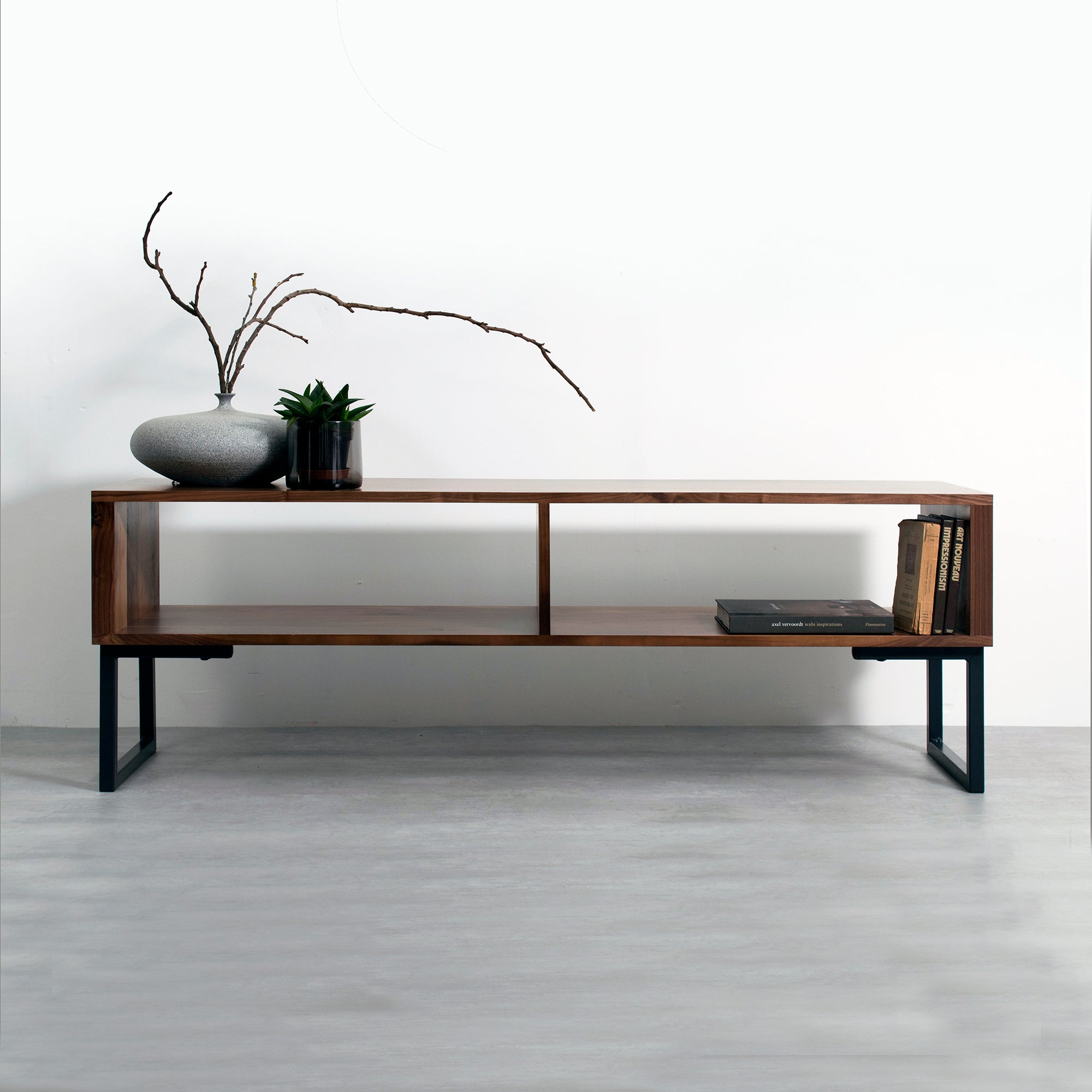
A low cabinet keeps records within easy reach and gives you a broad top surface, but it takes up floor space. A tall cabinet uses more of the wall and less floor area, though you’ll need to reach every shelf safely. The right form depends on your room, collection and how you listen.
Choose a low, tall or media-unit design
A low unit is often practical beside a listening chair or near a turntable stand. It also works in a living room where a taller piece would interrupt the sightline. A tall unit suits a smaller footprint, but secure it appropriately if its design or position makes tipping a risk.
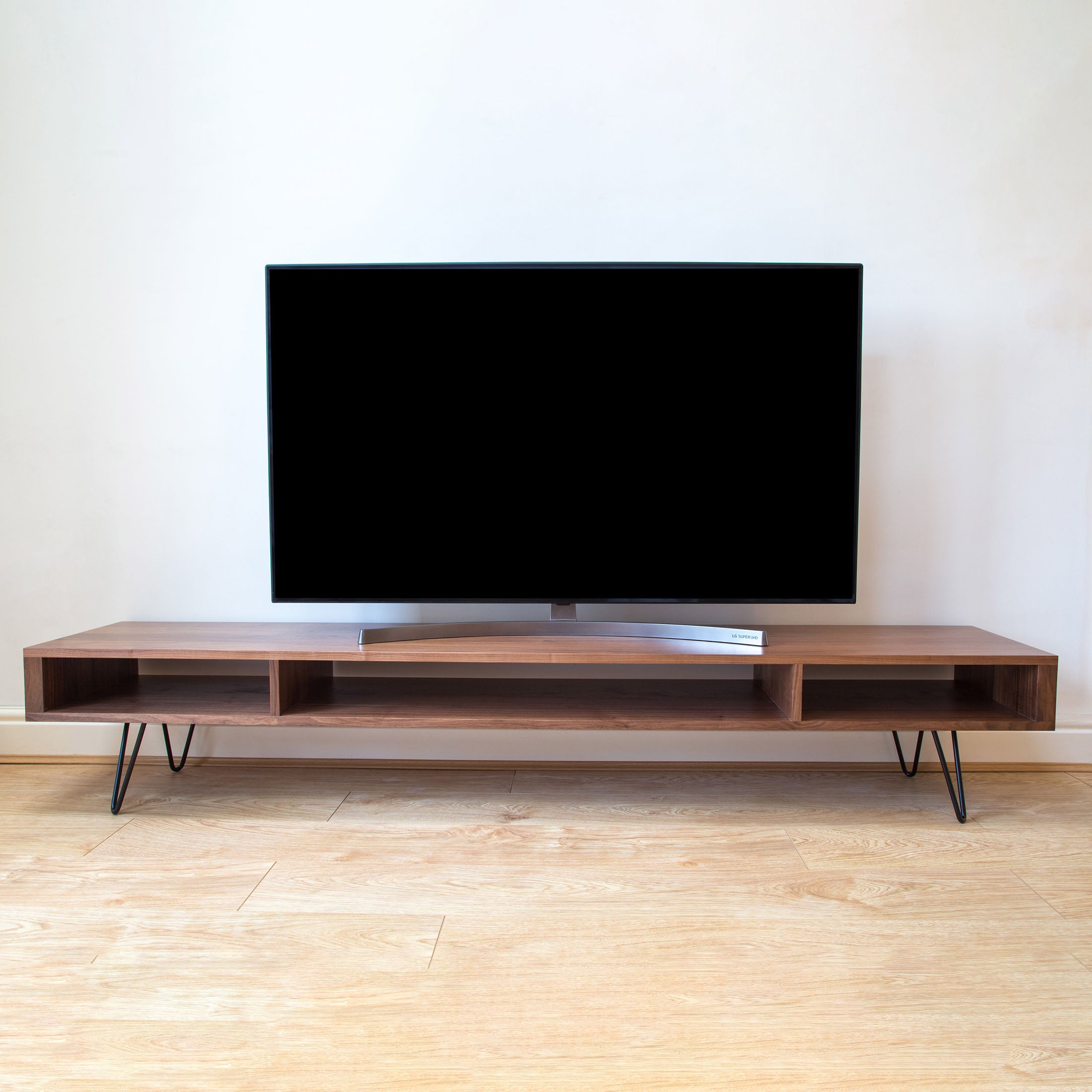
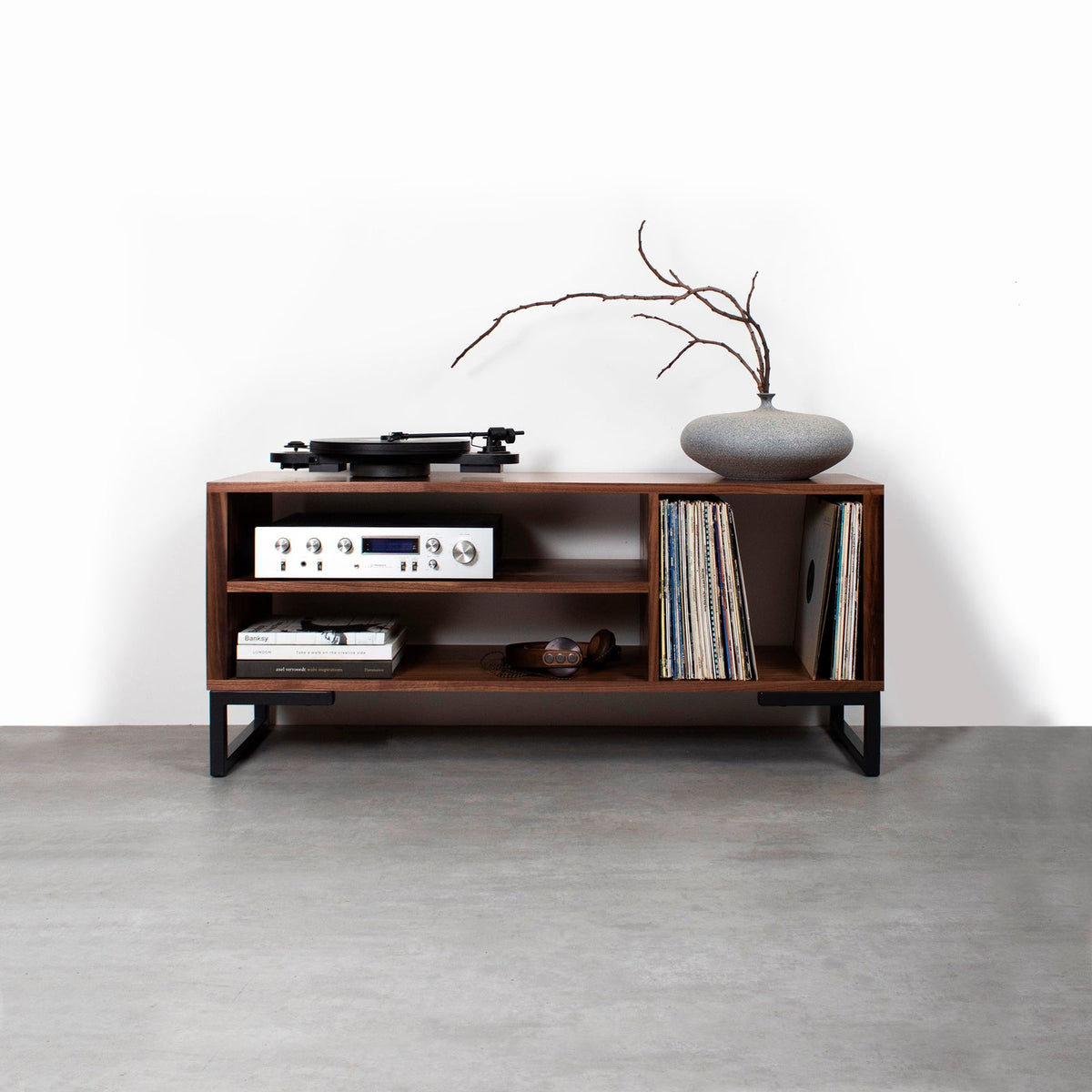
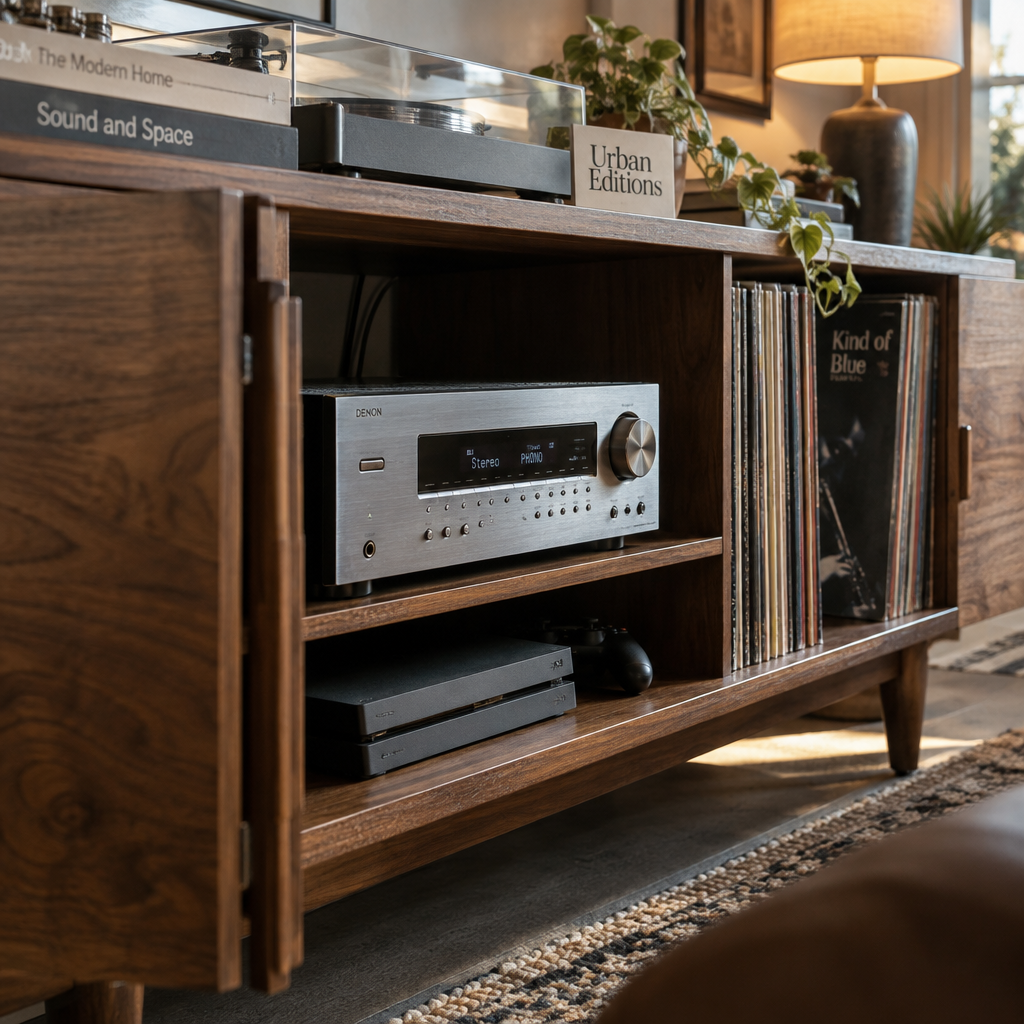
A media unit combines storage with a place for audio or television equipment. It can make a listening area feel organised, provided the compartments suit both the records and the components. The Urban Editions offers built-to-order media units in solid hardwood, with customisable designs for different interiors.
Match the proportions to the space
Measure the cabinet’s full outline against nearby furniture, including the space needed to sit, walk past and open doors. A large, deep unit can dominate a small room even when its finish matches the rest of the furniture. In a narrow room, a shallower layout may keep the route clear.
Consider what goes above and beside the cabinet. A turntable needs a stable surface and room to lift its lid, while a TV or speaker may affect the height and placement you can use. Visual balance matters, but practical reach comes first: don’t choose a tall design if its upper shelves will be difficult to use.
Solid hardwood gives you material and finish choices
Oak, walnut, ash and iroko each bring a different colour and grain to a room. Oak has a pronounced grain, walnut is typically darker, ash is pale, and iroko has a warm golden-brown appearance. The look of the finished cabinet also depends on the board and finish, so compare samples rather than relying on a screen.
Choose a wood that works with your interior
Look at the other timber tones in your room, including flooring and larger furniture. Matching every piece exactly isn’t necessary; a deliberate contrast can feel more considered than a near match. A lighter ash cabinet can stand apart from dark flooring, while walnut can connect with deeper tones already in the room.
Finish affects both colour and feel. Ask what finish is available and how it changes the appearance of the wood. Natural timber varies in grain and shade, so a sample gives you a more reliable comparison than a product image alone. Check it in the room’s daylight and evening lighting.
Solid hardwood is a substantial material, and the cabinet’s size and construction affect its weight. Make sure the floor and chosen position suit the finished piece. Keep wooden furniture away from persistent damp and direct heat, which can affect timber over time.
Specify custom dimensions carefully
Built-to-order furniture gives you the chance to match dimensions and design to your space. Before ordering, write down the maximum external width, height and depth, plus the internal clearance your records need. Include any skirting, plugs or cables that would prevent the cabinet sitting flush against a wall.
The Urban Editions’ furniture is designed and made in the UK in a family-run joinery, using sustainably sourced solid hardwoods including oak, walnut, ash and iroko. Customers can customise designs and order wood samples. Confirm the final dimensions, finish, delivery arrangements and expected lead time before placing an order; these details vary with the chosen design and specification.
Plan turntable placement, ventilation and cables
A cabinet top isn’t automatically the best place for a turntable. The right position depends on the unit’s stability, the turntable’s footprint and lid, and whether nearby speakers transmit vibration. A dedicated stand or separate surface can make more sense if the cabinet top is crowded or easily disturbed.
Give the turntable a stable position
Place the turntable on a level, steady surface with enough room to lift the lid and handle records. Avoid a position where people regularly bump the cabinet or where the turntable sits directly beside a speaker. Vibrations can affect playback, particularly at higher volumes.
Check the cabinet dimensions against the turntable’s actual footprint, including any feet and the space needed to reach controls. If your player has a hinged lid, measure the height with it open. A top that fits the machine but prevents normal use is the wrong size.
Allow air and access for hi-fi equipment
Amplifiers and other hi-fi components need the ventilation their makers specify. Don’t enclose equipment in a tight compartment without checking its clearance requirements. A cabinet with open space or suitable ventilation may be a better fit for components that produce heat during use.
Plan cable access before positioning the unit. Leave room for plugs, cable bends and connections at the back, rather than pushing equipment hard against a panel. If you want a combined record-and-turntable setup, browse the Technic vinyl storage cabinet as one option to compare with your equipment measurements.
A record cabinet works best when storage, listening and access have been considered together. Measure your largest sleeves, count the space your collection uses and check the turntable and hi-fi requirements. Choose a low, tall or combined layout based on the room and the way you listen, then confirm the final internal dimensions before ordering.
Frequently Asked Questions
Should vinyl records be stored upright or flat?
Store LPs upright, supported and with enough room to browse. Avoid stacking them flat or packing them tightly, as weight and pressure make albums harder to remove and can damage sleeves. Keep unusually large box sets supported as well.
How much extra space should I leave in a record cabinet?
Reserve around one-fifth of usable shelf space if you expect your collection to grow. This is a practical allowance, not a fixed rule; leave more room if you often buy box sets, double albums or records in thick outer sleeves.
Can I keep my records in a loft or garage?
Choose a dry, stable room rather than a space with damp, large temperature changes or direct sunlight. Loft and garage conditions vary widely, so check for condensation and heat build-up before storing records there.
Will a turntable fit on top of a record cabinet?
Only if the top is stable, level and large enough for the turntable and its lid to open. Check the manufacturer’s clearance guidance and keep the player away from sources of vibration, including nearby speakers.