October SPECIAL OFFER! Sign-up to our newsletter to receive the latest offers and news.
Wooden TV Stand: Solid Wood Storage for Modern Rooms
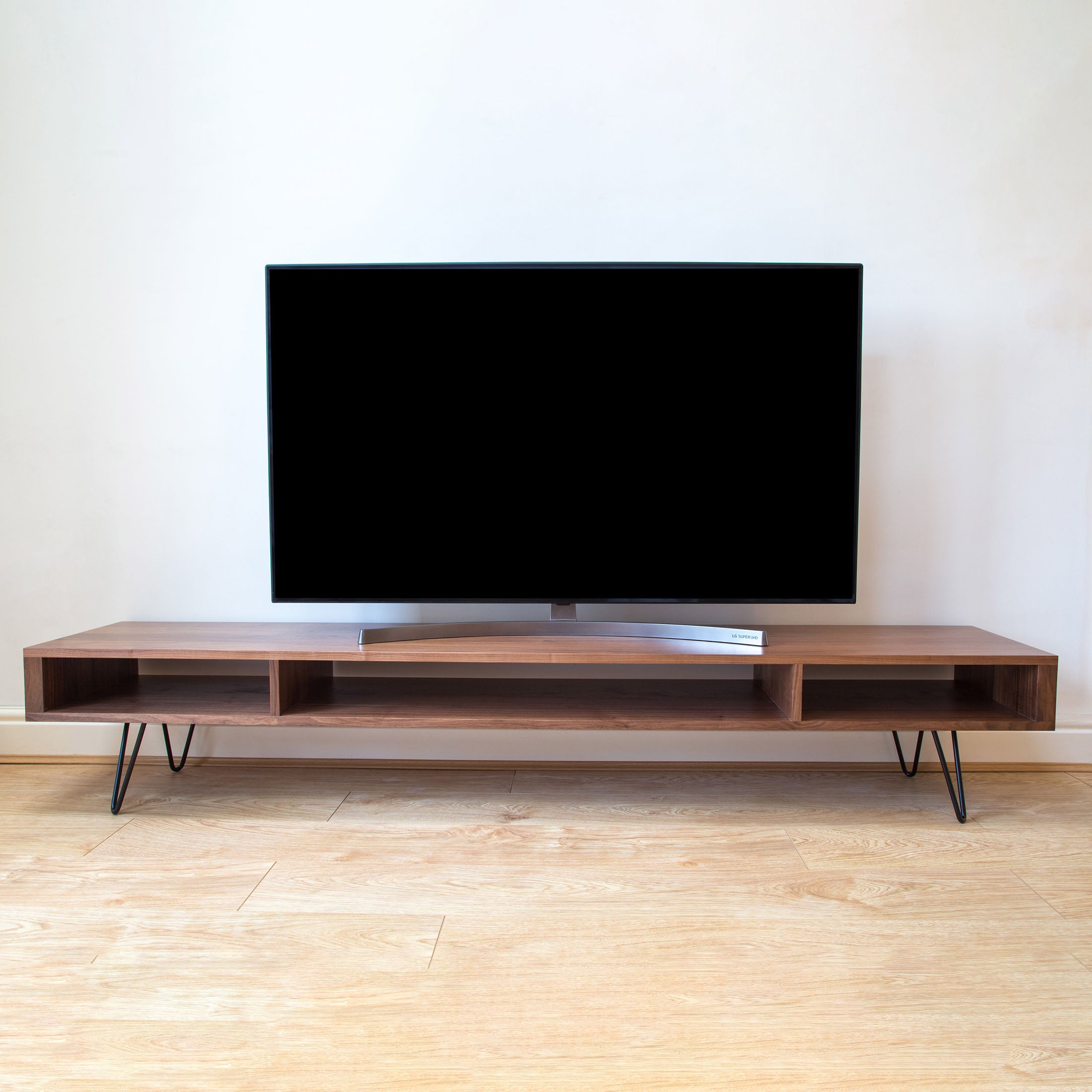
A 55-inch 16:9 television has a screen roughly 122cm wide, before its bezel. A wooden TV stand needs to fit that footprint, your equipment and the room, not simply match the screen’s diagonal.
The right choice gives your television a stable base and keeps cables, consoles and media organised. Compare the stand’s width, height and depth with your equipment, then decide whether open shelves, cupboards or vinyl storage suit how you use the room. Solid wood also brings visible grain and natural variation, while veneer and engineered wood offer different construction and care requirements.
Key Takeaways
Measure the screen, feet, room and equipment before choosing.
Solid hardwood has natural grain and can move with humidity.
Allow space for cables, plugs and ventilation around electronics.
Pick vinyl storage only if it fits your collection and setup.
Match stand height to your seated viewing position.
A well-sized stand starts with the screen base, not its diagonal
Screen size is measured diagonally, so it doesn’t tell you how wide the TV is or how far its feet sit apart. Use the panel width as a first check, then confirm the dimensions in the manufacturer’s specifications. Measure the space where the stand will sit, including skirting boards and nearby furniture.
Width: check the panel and feet
For a typical 16:9 screen, these approximate widths give you a useful starting point. The figures exclude the bezel, which adds a little to the television’s overall width.
Screen diagonal
Approximate panel width
What to check
43 inches
95cm
TV feet and available stand width
50 inches
111cm
Feet span and room clearance
55 inches
122cm
Whether the stand looks balanced
65 inches
144cm
Full footprint and support requirements
A stand wider than the screen often looks more balanced, but the TV’s feet matter too. A 55-inch screen is about 122cm wide; a 120cm stand is slightly narrower than the panel, while a 140cm stand leaves roughly 9cm each side when the TV is centred. Check the feet’s span and the manufacturer’s support guidance before deciding.
Height and depth: plan around your seating
When you’re seated, the centre of the screen should sit near eye level. Measure your eye height on the sofa, then account for the height of the TV itself: the stand needs to put the screen centre in a comfortable position. A soundbar on top changes the available height, so include it in your measurements.
Depth is easy to overlook. Measure from the front to the back of the TV feet, including any cables that bend behind the screen. A narrow console can look neat but leave the base overhanging; check the TV’s support instructions before accepting that arrangement. Keep a little room at the back for plugs and cable bends.
Solid hardwood, veneer and engineered wood are different choices
A wooden TV stand may be solid timber, veneered, or made from engineered wood such as MDF or particleboard. Check the construction description rather than relying on the word “wooden”. Some furniture combines materials, so ask which parts are solid wood, which are veneered and how the visible edges are finished.
What solid wood gives you
Solid hardwood is timber throughout each solid component, rather than a thin hardwood layer over a core. Its grain varies from piece to piece, which makes every surface distinctive. Wood also responds to changes in humidity; leave the stand in a stable indoor setting and follow the maker’s care guidance.
Veneer is a thin layer of real wood applied to a core, while engineered wood uses manufactured panels. Both can make well-finished furniture, but edge damage may expose the core beneath a veneer. With any construction, inspect the joints, finish and cable openings, as well as the headline material.
Solid hardwood is timber through the solid component, rather than a surface layer over a different core.
Oak, walnut, ash and iroko
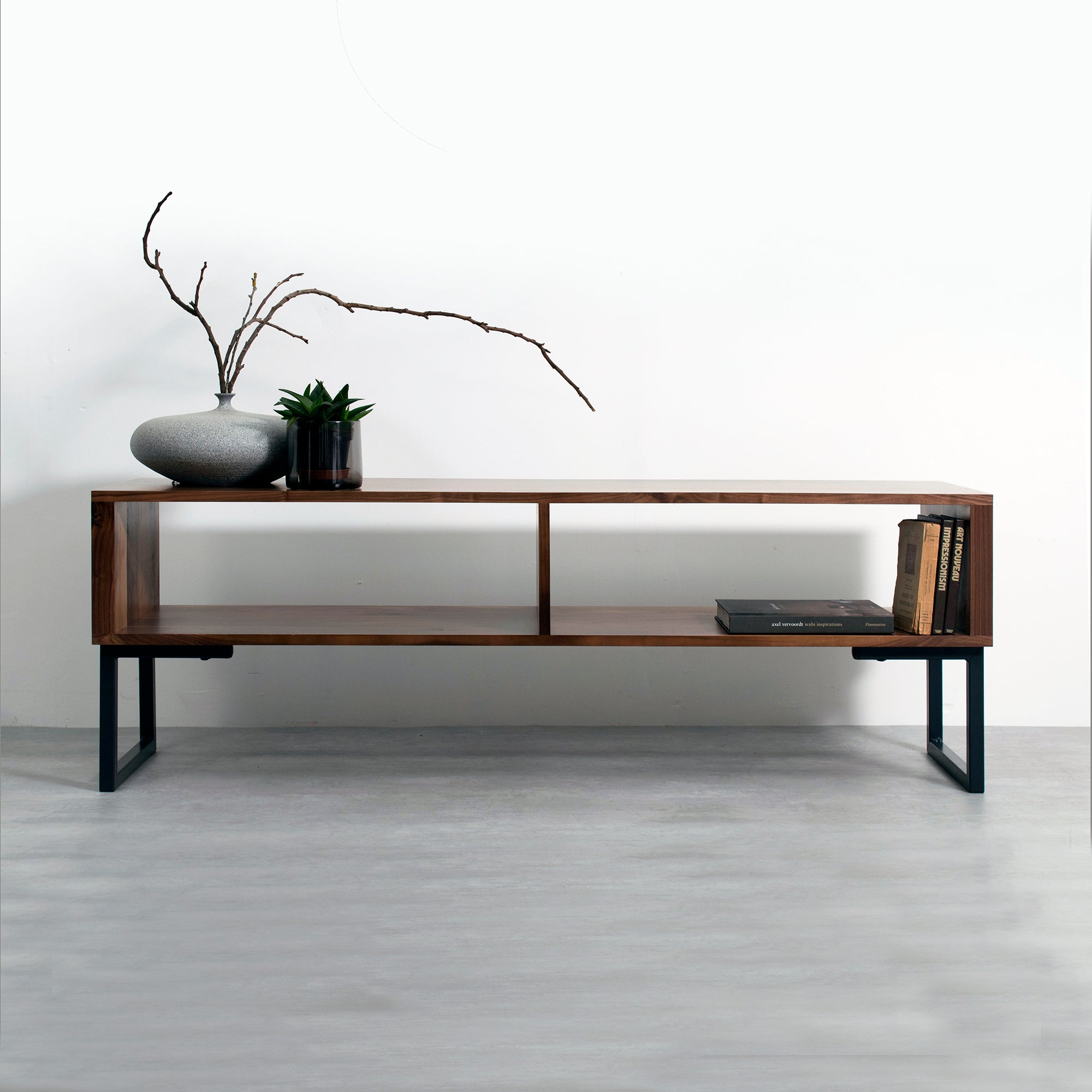
Oak is a versatile choice if you want a familiar grain and a light-to-medium wood tone. Walnut tends towards deeper brown, while ash is generally paler with a pronounced grain. Iroko has a warmer golden-brown appearance that deepens with age. Natural variation means a sample gives a more reliable colour impression than a screen image.
The Urban Editions’ furniture is designed and made in the UK in a family-run joinery, built to order from sustainably sourced solid hardwoods including oak, walnut, ash and iroko. You can customise designs and order wood samples, which is useful when checking how a finish sits beside your flooring and other furniture.
Plan cable access and ventilation before filling the stand
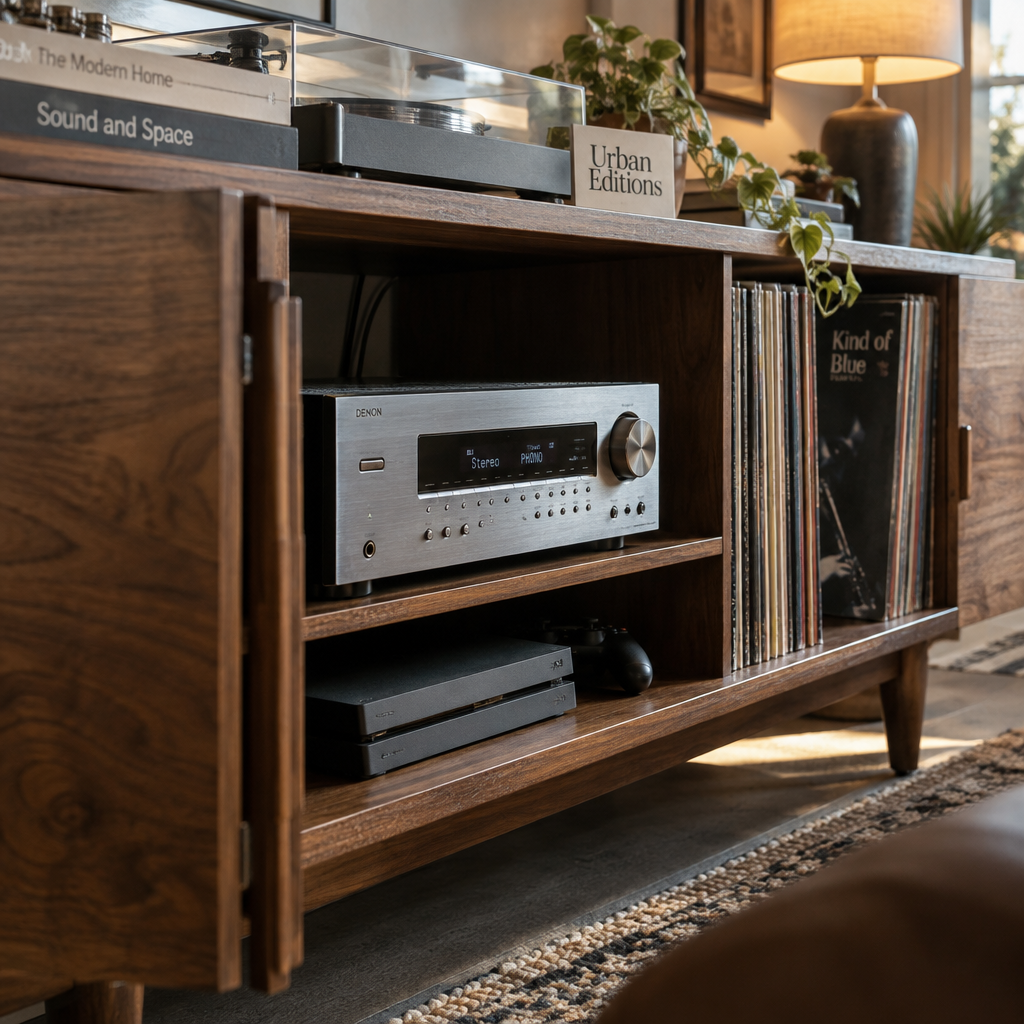
Treat the stand as part of your AV setup. A receiver, games console or streaming device needs more than a shelf: it needs suitable clearance, a route for cables and room for heat to escape. Check each device’s manual for its ventilation requirements before placing it in a closed compartment.
Measure equipment with cables attached
Record the width, height and depth of each device, including projecting plugs and any cable bends. Compare those measurements with the usable space inside the compartment, not its outside dimensions. A shelf that fits a console without cables may still leave no room to connect it safely.
Cable access also affects where equipment can go. Look for openings that line up with the TV connections and your plug sockets. If cables must pass around a cupboard door or be sharply bent behind the stand, access becomes awkward and the setup is harder to change later.
Check airflow, access and connections
Closed cupboards keep equipment out of sight, but they can trap heat if they’re packed tightly. Follow the device maker’s specified clearances and avoid stacking equipment in a way that blocks vents. If the stand has no suitable opening for your cables, choose a different layout rather than forcing leads through a narrow gap.
Work through this check before ordering:
List every device and measure its body and plugs.
Confirm the maker’s ventilation clearance for each device.
Check shelf height against the tallest device and its cables.
Trace the route from TV and equipment to the nearest sockets.
Leave a way to reach connections without emptying the compartment.
Leave enough space to unplug and reconnect equipment without pulling the stand away from the wall. If your sockets sit low behind the unit, measure the plug depth too. A cable opening that misses the socket can leave the stand sitting further forward than planned.
Choose storage around your records and equipment
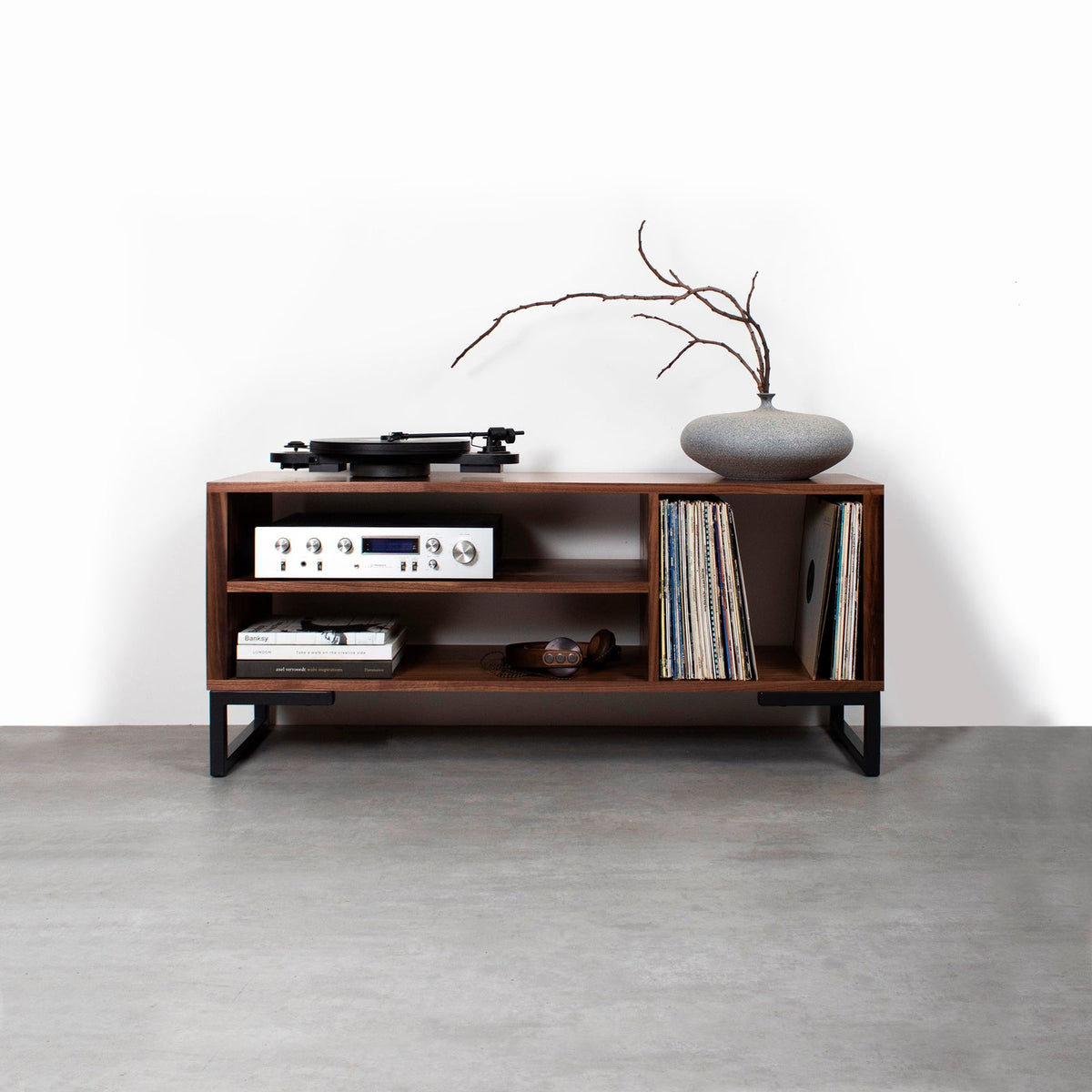
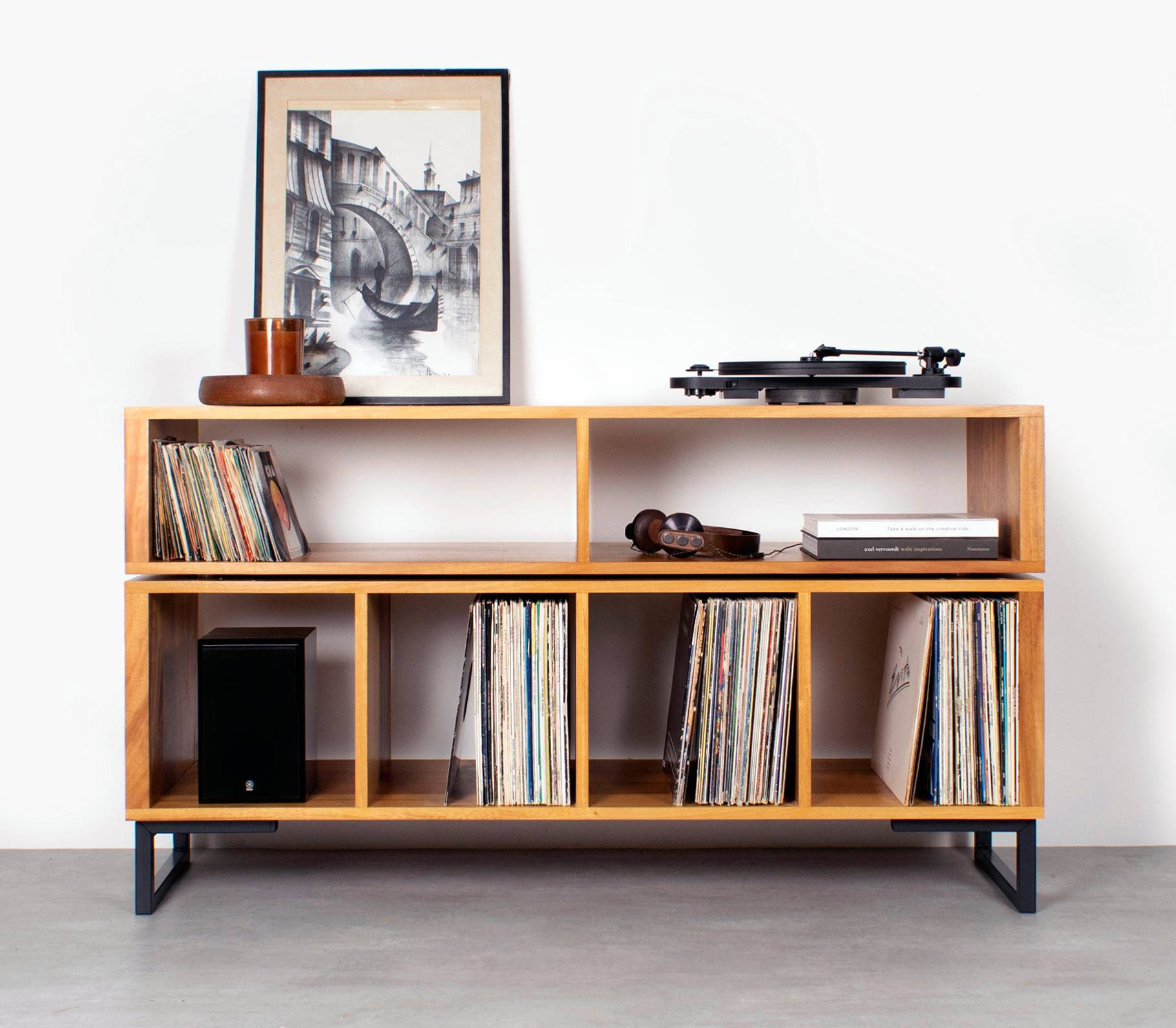
The best layout depends on what you actually keep in the room. Open shelves make devices easy to reach and see; cupboards hide clutter but need ventilation and cable access; drawers suit smaller items rather than bulky AV equipment. Decide what goes where before choosing a configuration.
Vinyl needs its own measurements
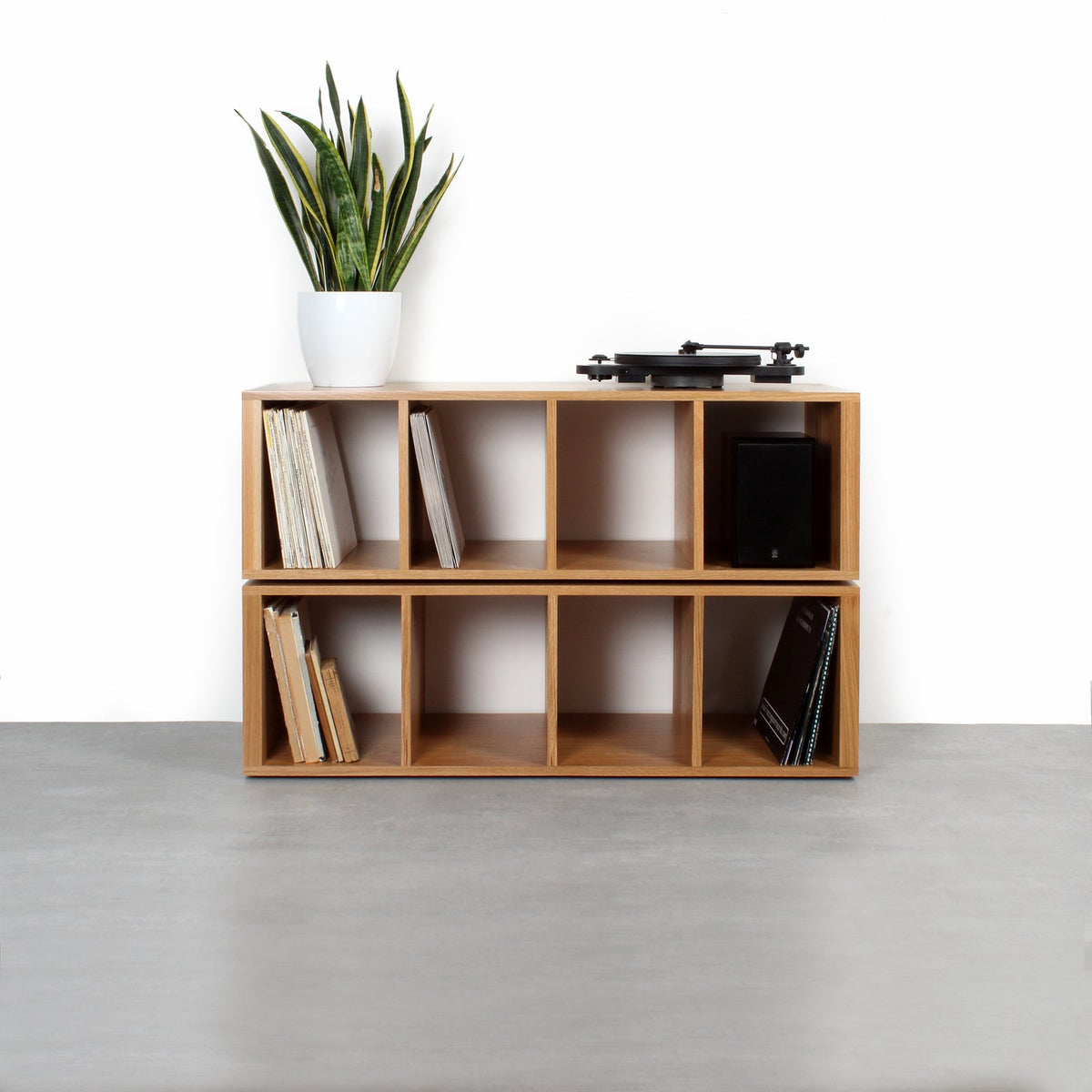
Most LP sleeves are around 30cm square. Check the internal height and depth of any record compartment, then consider how the collection will be stored and accessed. Keep records upright, with enough room to take one out without squeezing the sleeves or leaning heavily on the rest.
A turntable needs a level, stable surface with enough clearance for its dust cover to open. Measure the deck and check where its cables exit. If the record collection is modest or you don’t play vinyl, a dedicated record section may take space away from equipment you use more often.
The Asymmetric Media Stand is designed to work as a TV stand with vinyl storage and space for media equipment. It comes in 100cm, 120cm and 140cm sizes, with 15cm or 25cm leg heights and Oak, Dark Ash, Iroko or Walnut colour options. Match the internal storage to your records and devices before settling on a size.
Open shelves suit equipment you use often because you can see connections and reach controls easily. Their trade-off is visible wiring and dust. A cupboard gives the room a cleaner look, but only choose one for electronics if the shelf, ventilation and cable arrangements work for your specific devices.
Drawers are useful for remotes, headphones and small accessories, but they’re not a substitute for an equipment bay. Check drawer depth and handle clearance, especially if the stand will sit close to a sofa or walkway. For comparisons based on media storage, browse the range of media units and assess each layout against your equipment list.
Match the stand to the room, not only the screen
A wide stand can look imposing in a compact room, while a narrow unit beneath a large screen may feel unbalanced. Consider the television, stand and surrounding furniture as one group. Measure the full wall or alcove, then mark the proposed footprint on the floor with masking tape to judge how much space remains for walking and other furniture.
Use shape and leg height to manage visual weight
Low, long furniture tends to suit a wide television and a minimalist room. A stand on taller legs leaves more visible floor beneath it, which can make a room feel less crowded and gives you a clearer view of the flooring. Check the total height once the legs, top surface, soundbar and TV are all included.
An asymmetric design can add interest without relying on extra decoration. It still needs to work with the room’s other lines: compare its proportions with nearby shelving, a fireplace or a sofa. Leave enough clearance for doors, drawers and cables, rather than squeezing the unit tightly between fixed features.
Coordinate wood tones and finishes
You don’t need to match every wooden surface exactly. Instead, compare the warmth and grain of the stand with your flooring and other furniture. A sample lets you check the timber in the room’s daylight and evening lighting, where a finish can look different from how it appears on a screen.
Think about practical use as well as appearance. Dust and fingerprints show differently across finishes, and a busy room may benefit from a simpler surface that’s easy to wipe. Follow the furniture maker’s care advice, especially for cleaning products; a general household spray may not suit every wood finish.
Compare solid wood TV stand options before ordering
Before you place an order, confirm the dimensions that decide whether the stand will work: overall width, height and depth, plus the internal shelf or cupboard space. If the design is built to order, check which dimensions and finishes can be customised, and whether those options affect the final layout you have in mind.
Measure the whole setup
Measure the TV’s width and foot span, then note the dimensions of your soundbar and every device. Include handles, plugs, cable bends and any lid that needs to open. For a wall-mounted TV, check the height of the screen and the route from its connections down to the equipment below.
Check the room’s access route too. Measure narrow hallways, stair turns and doorways if the furniture will need to pass through them. For a made-to-order piece, confirm the finished dimensions before committing; a stand that fits the wall but cannot reach the room creates a costly problem.
Confirm the details that affect use
Ask for clarification where a product description doesn’t state an internal measurement you need, such as shelf height or compartment depth. Confirm the wood, finish, cable openings and any custom dimensions in writing. For a natural timber finish, a sample helps you judge the colour before choosing.
If you’re comparing solid wood TV stand designs, use the same checklist for each option: TV support, equipment clearance, ventilation, cable access and room fit. The best-looking stand is only the right choice when those details work with the equipment you own.
Conclusion
Measure your TV feet, equipment and available floor space before choosing a width or storage layout. Pick solid hardwood if you want visible natural grain and a stand made from solid timber; choose another construction if its finish and care suit your needs better. If you play records, check the compartment against your sleeves and turntable before ordering.
Frequently Asked Questions
Should a TV stand be wider than the television?
A stand wider than the screen often looks balanced, but the TV’s feet and manufacturer’s support guidance decide whether it fits safely. Measure the feet span and the stand’s usable top surface; screen width alone doesn’t confirm that the base will be supported.
Is solid wood better than veneer for a TV stand?
Solid wood gives you natural timber grain through each solid component, while veneer has a real-wood surface over a different core. Neither description alone guarantees quality; check the construction, joints, finish and care instructions before buying.
Can I put a games console inside a cupboard?
Yes, if the compartment provides the ventilation clearance specified by the console maker and has enough space for plugs and cables. A closed cupboard that traps heat or blocks vents is unsuitable, even if the console fits physically.
How do I protect a wooden TV stand from heat?
Keep the stand away from direct heat sources and follow the maker’s guidance for its finish. Don’t place hot AV equipment in a tight compartment; check its manual for operating clearance and leave airflow around vents.