September SPECIAL OFFER! Sign-up to our newsletter to receive the latest offers and news.
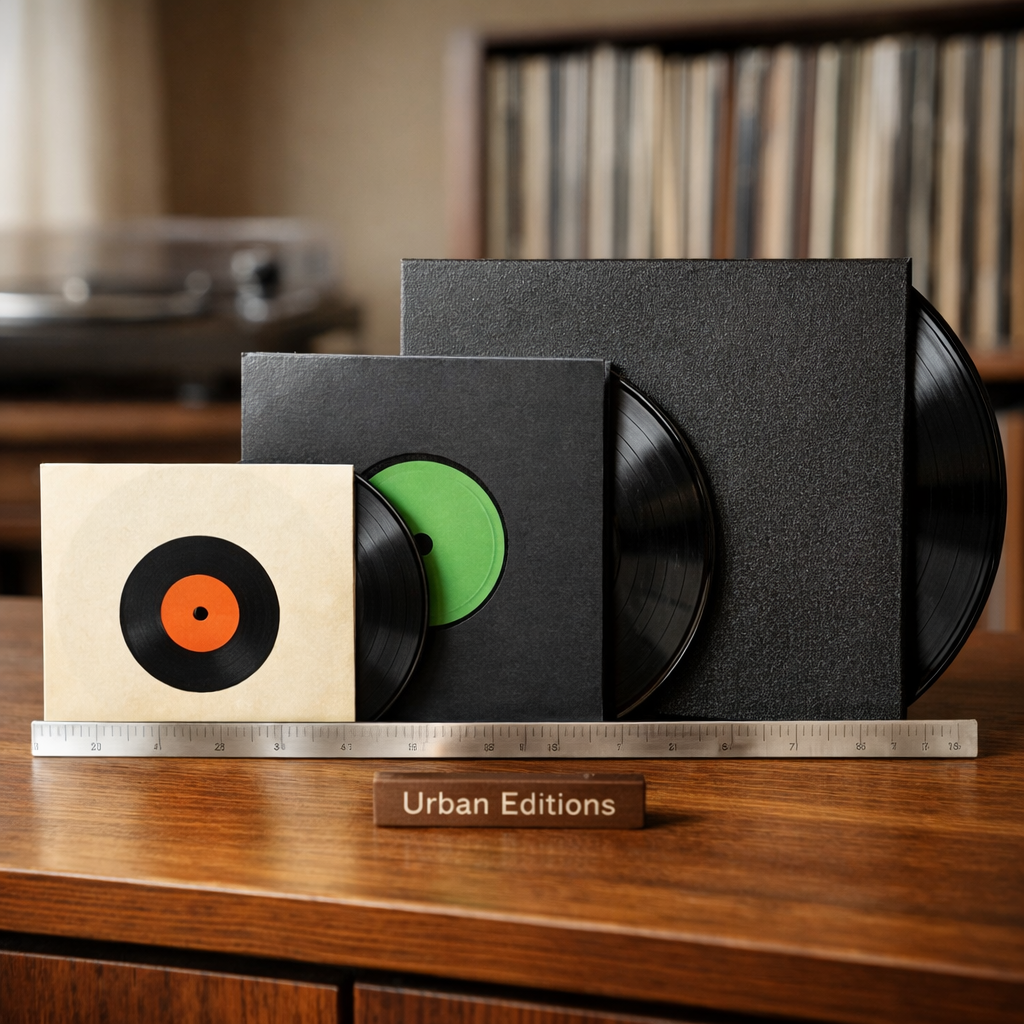
Dimensions of a Record: 7-Inch, 10-Inch and 12-Inch
7 inches, 10 inches or 12 inches determines more than a record’s appearance. The dimensions of a record affect its sleeve, storage space and how easily it fits beside your turntable. Choose the wrong cabinet depth and your collection becomes awkward to handle.
The disc is only one measurement. A protective sleeve adds width, height and thickness, while shelving needs extra clearance for your fingers. If you are planning a vinyl cabinet, measure the records in their sleeves first, then allow space for growth.
Key Takeaways
7-inch records usually hold singles
10-inch records need separate shelf planning
12-inch records are the standard LP size
Sleeve dimensions matter more than bare discs
RPM does not always match record diameter
Allow clearance for handling and future purchases
The three standard vinyl record sizes
Record size refers to the disc’s diameter, measured across its widest point. The common formats are 7-inch, 10-inch and 12-inch, although manufacturing tolerances mean the physical measurement is not always exactly the stated size.
A 7-inch record is commonly associated with a single. A 10-inch record sits between a single and an LP, while a 12-inch record is the familiar format for full-length albums. These labels describe physical size, not playing speed or recording length.
Record format
Approximate diameter
Common use
Typical speed
7-inch
17.8 cm
Singles and short releases
45 RPM, sometimes 33⅓ RPM
10-inch
25.4 cm
EPs, jazz and specialist releases
33⅓ or 45 RPM
12-inch
30.5 cm
LPs and 12-inch singles
33⅓ or 45 RPM
The measurements in the table describe the vinyl record diameter, not the complete package. A paper or card sleeve is larger, and a gatefold sleeve may be thicker than a standard single sleeve.
A record’s stated size describes the disc diameter; storage must accommodate the sleeved package.
That distinction matters when you buy furniture. A shelf that accepts a bare 12-inch disc may still damage corners, pinch sleeves or leave no room to remove a record safely.
What “7-inch” means
A 7-inch record measures roughly 17.8 centimetres across. It is often a single with one main track on each side, although modern releases also use the format for limited editions, picture discs and short compilations.
The centre hole may be a standard small hole or a larger hole designed for a push-out centre. That feature changes playback setup, but not the outer diameter or the storage space required.
What “10-inch” means
A 10-inch record measures about 25.4 centimetres across. It often appears in jazz, blues, classical and independent releases, particularly where a shorter playing time suits the music or original format.
Do not file every 10-inch record with 12-inch LPs unless the shelf has enough vertical support. Its smaller sleeve can lean or slip behind taller records, making it harder to browse.
What “12-inch” means
A 12-inch record measures about 30.5 centimetres across and is the standard LP format. Most album shelving, record dividers and vinyl furniture are designed around this size.
Twelve-inch singles also use this diameter, often with wider grooves and fewer tracks. The record may play at 45 RPM, so size alone cannot tell you whether it is an album or a single.
Are record diameter and sleeve size the same?
No. The record diameter is smaller than the sleeve that protects it. A bare 12-inch disc is about 30.5 centimetres wide, but its sleeve needs additional room around every edge for the opening, seams and manufacturing tolerance.
In practice, a standard 12-inch sleeve is often around 31.5 to 32 centimetres square, though exact dimensions vary by pressing plant, label and packaging style. A gatefold sleeve, box set or laminated cover needs more depth than a single card sleeve.
This is the first measurement mistake to avoid.
Sleeves need clearance
A record sleeve should slide in without scraping against the shelf sides. Leave enough room to grip the top or side of the sleeve, particularly if the cabinet is deep and the records sit several rows from the front.
For 12-inch records, a clear internal height of roughly 33 centimetres gives practical room around standard sleeves. Treat that as a working example, not a universal manufacturing rule, because oversized jackets and protective outer sleeves take up more space.
A 7-inch sleeve may be close to 18.5 centimetres square, while a 10-inch sleeve is often around 26 centimetres square. Those extra centimetres determine whether mixed-format shelving remains tidy.
Packaging changes the calculation
A plain single sleeve has a different footprint from a double LP, a 12-inch gatefold or a box set. Plastic outer sleeves add thickness, and rigid mailers or archival covers take up more space than thin paper inners.
If you collect limited editions, measure the largest package in your current collection. Designing around a standard 12-inch jacket alone creates a cabinet that works on paper but fails with your heaviest or widest releases.
The right way to measure
Measure five items: the tallest sleeve, the deepest package, the shelf opening, the internal shelf depth and the clearance above the records. Use a steel tape measure and write down the internal dimensions, not the outside dimensions of the furniture.
For a small collection, measure every format. For a larger collection, measure a representative group that includes gatefolds, double albums and outer-sleeved records. Record storage dimensions should follow the collection you own, not a nominal format chart.
Which record size needs the most storage space?
A 12-inch LP needs the most surface area, but the sleeve thickness often controls total storage capacity. The record itself is flat; a collection of 100 sleeved albums may occupy roughly 25 to 35 centimetres of linear shelf space, depending on packaging and how tightly you stand them.
That range is a practical estimate, not a fixed rule. Double albums and box sets reduce capacity quickly, while thin single sleeves use less room. Measure your own collection before ordering a cabinet.
A worked storage example
Imagine 80 12-inch LPs, 20 7-inch singles and 10 10-inch records. The LPs might occupy about 20 to 28 centimetres of shelf width, while the smaller formats need their own section or dividers to stop them disappearing among the albums.
The collection does not need three identical shelves. It needs one well-supported 12-inch section, a smaller compartment for singles and a correctly sized area for 10-inch releases.
Why accessible depth matters
A shelf that is too shallow leaves sleeves exposed to knocks and dust. A shelf that is too deep pushes records beyond easy reach, especially when the cabinet stands below a turntable or against a wall.
Aim for a usable internal depth that supports the sleeve without forcing it flat against the back. In many rooms, a practical record cabinet depth falls around 35 to 40 centimetres, but the turntable, cables and wall position may require more.
The best storage makes browsing a one-handed task.
Weight needs support
Vinyl is heavier than it looks. A 12-inch LP with a sleeve often weighs several hundred grams, and a shelf holding dozens of them carries a substantial load. Heavy box sets increase that pressure in a small area.
Use a cabinet with firm shelves and proper support rather than a lightweight display unit. Solid hardwood furniture gives you a stable starting point, but shelf construction and span still matter when planning a full collection.
For built-to-order storage, specify the number of records, the mix of formats and the intended shelf width. The maker can then plan the compartments around the actual load instead of a generic display size.
Do vinyl record speeds match their dimensions?
No. Record speed and record diameter are separate specifications. A 7-inch record often plays at 45 RPM, but some 7-inch releases play at 33⅓ RPM. A 12-inch LP usually plays at 33⅓ RPM, while many 12-inch singles play at 45 RPM.
Check the label or sleeve before selecting the turntable speed. Playing a 33⅓ RPM record at 45 RPM makes the music too fast and raises the pitch; playing a 45 RPM record at 33⅓ RPM does the opposite.
Check the centre label for “33”, “45” or “78”.
Read the sleeve notes if the label is unclear.
Set the turntable speed before lowering the stylus.
Listen for correct pitch and timing.
Return the speed control to its usual setting afterwards.
7-inch records and 45 RPM
The 7-inch single became closely linked with 45 RPM, but the format is not a guarantee. Some modern releases use 33⅓ RPM to fit longer playing times, and some specialist pressings use unusual combinations of size and speed.
A large centre hole also does not prove that a record plays at 45 RPM. It identifies the spindle arrangement, not the audio speed.
10-inch records are a separate format
A 10-inch record is not a shortened 12-inch LP in storage terms. It may use 33⅓ RPM, 45 RPM or, in older collections, another speed. The sleeve is smaller, and its content may be an EP, a short album or a historical release.
Keep 10-inch records together with suitable dividers. If they share a 12-inch compartment, they should sit in a box or raised section so you can see and remove them without bending the sleeve.
Turntable compatibility
Most modern hi-fi turntables support 33⅓ and 45 RPM. Some also support 78 RPM, but 78s generally require a compatible stylus and playback setup because their groove dimensions differ.
Your turntable’s platter must also support the record securely. A 7-inch disc should sit centrally, and a large-hole single may need a 45 adapter. The furniture must then leave enough room for the turntable controls, tonearm movement and cable routing.
How should you size a cabinet for sleeved records?
Size the cabinet around sleeved records, not bare discs. Start with the tallest sleeve and deepest package, then add handling clearance and room for new purchases. For most collections, that means planning around 12-inch sleeves first, even when 7-inch and 10-inch records make up part of the collection.
A cabinet built precisely to the nominal 12-inch disc diameter is too tight. The record may fit, but its sleeve will catch on the shelf or protrude past the front.
Plan the internal opening
For standard 12-inch records, a working internal opening of around 33 centimetres high gives useful clearance. Allow more for oversized sleeves, outer protectors and box sets. A shelf depth around 35 to 40 centimetres often gives a practical balance between support and access, subject to the furniture design.
Keep the front edge clear. You need to pinch the sleeve without scraping your knuckles against the shelf above.
Allow room to expand
Leave roughly 10 to 15 per cent spare capacity if you expect the collection to grow. A completely full shelf is difficult to browse and places more pressure on the sleeves. It also leaves no space for dividers.
A 100-record section should therefore not be planned to hold exactly 100 tightly packed sleeves. A little empty space makes every record easier to remove and reduces damage to corners.
Choose furniture that fits the room
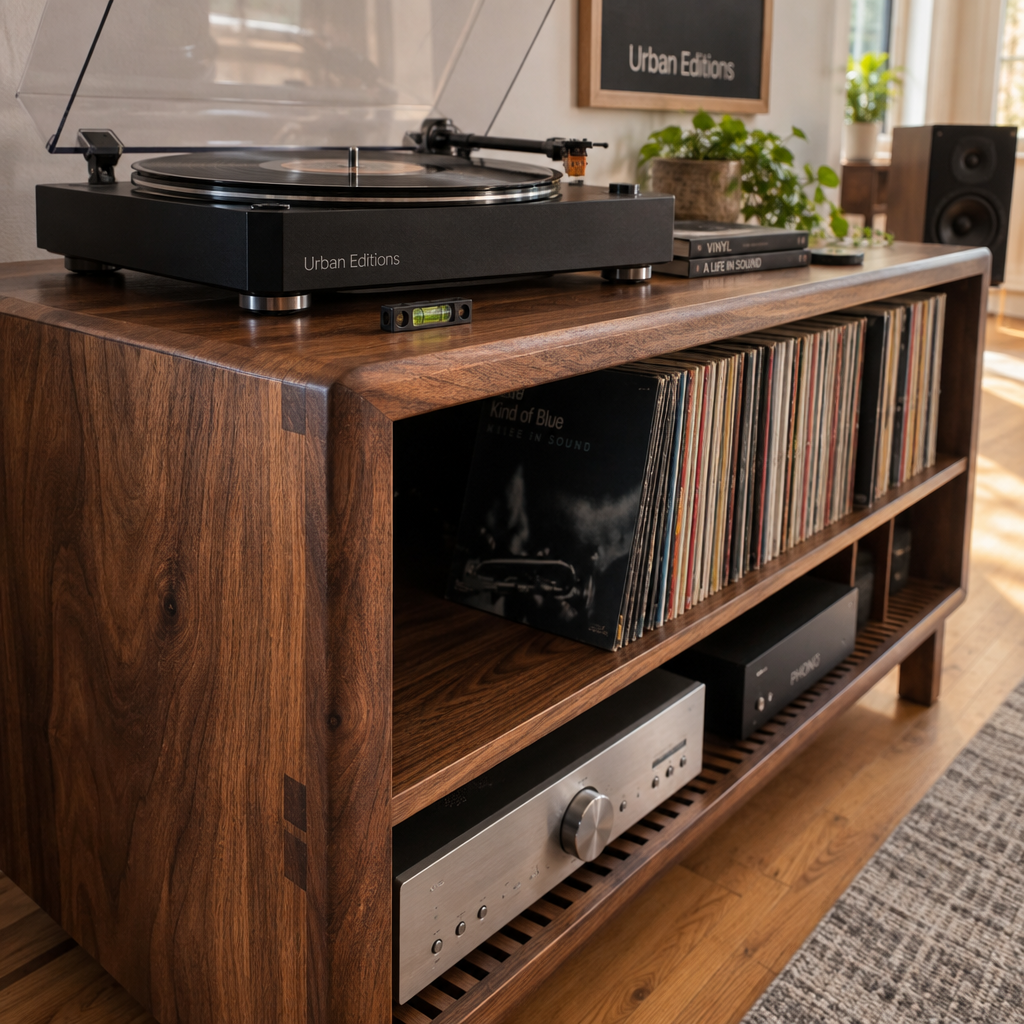
A low media unit can place records near the turntable, while a taller cabinet uses wall height but needs careful anchoring and access planning. Keep direct sunlight away from sleeves and avoid placing records beside a radiator, where repeated heat can warp vinyl.
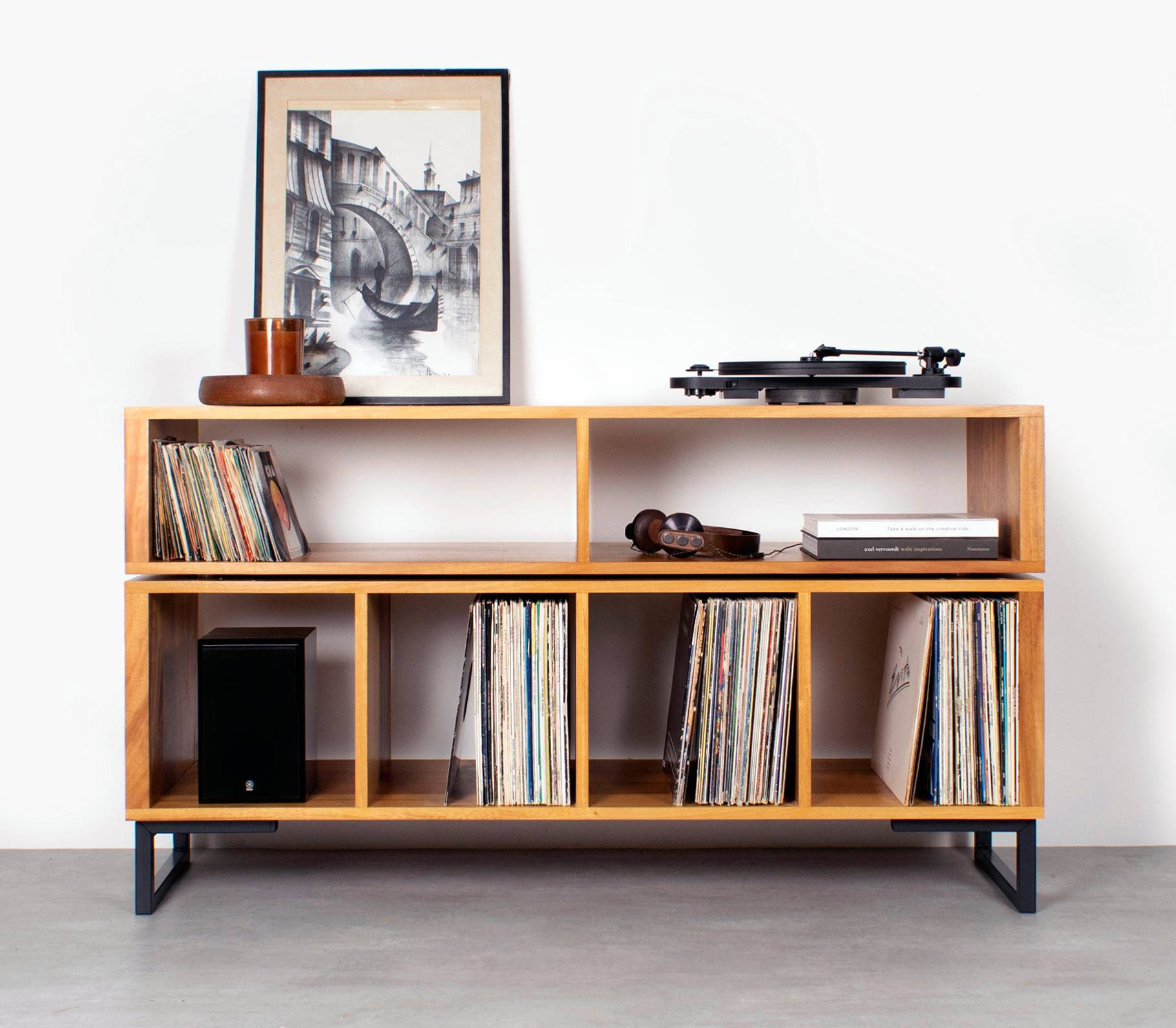
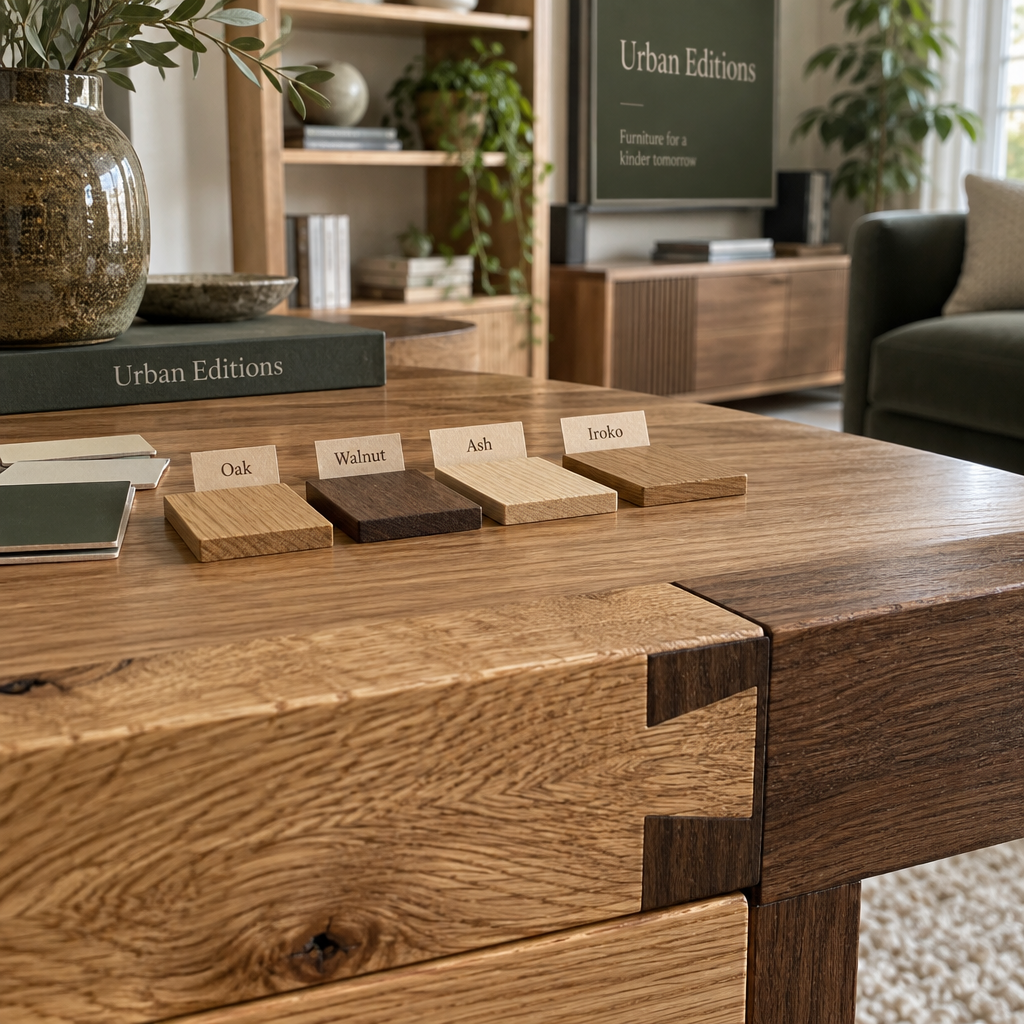
For a collection centred on sleeved records, media units designed for record storage provide a more suitable starting point than general-purpose shelving. The Urban Editions makes furniture in the UK from sustainably sourced solid hardwoods including oak, walnut, ash and iroko, with customisation available for built-to-order pieces.
Consider handling, not just capacity
A deep cabinet may hold more records but still be frustrating if you must remove a row to reach the back. Store records upright, with the spines visible where possible, and use dividers to keep sections stable.
Do not stack records flat for everyday access. The lower sleeves carry the weight of everything above them, and frequent lifting increases wear on corners and surfaces.
How do you store mixed 7-inch, 10-inch and 12-inch records?
Use separate compartments or adjustable dividers. Mixed-format collections are easiest to browse when each size has its own supported area, rather than when smaller sleeves are buried in front of or behind 12-inch LPs.
A practical arrangement places 12-inch LPs in the main section, 10-inch records in a dedicated smaller bay and 7-inch singles in a drawer, box or shallow compartment. The best layout depends on how often you play each format.
Keep records upright
Store vinyl vertically, like books, with enough support to stop leaning. A slight lean across a shelf is less damaging than a hard angle, but long-term pressure can distort sleeves and make records difficult to remove.
Use dividers every 10 to 15 centimetres as a practical guide for keeping a row stable. The divider should support the sleeves without pressing tightly against them.
Separate fragile packaging
Picture discs, signed sleeves, heavyweight gatefolds and box sets deserve their own space. Plastic outer sleeves protect surfaces but also increase the package width, so include them in your measurements.
Do not force a thick package into a standard bay. That can crease neighbouring sleeves and split the opening seam.
Keep the turntable area clear
Your turntable needs a stable, level surface with enough space for the platter and tonearm. A 12-inch record extends close to the edge of many turntables, so place the unit where the record can rotate without contacting a wall or nearby object.
Leave room behind the turntable for power and phono cables. A carefully sized cabinet still fails if cables are sharply bent or trapped against the skirting board.
Match storage to your listening habits
If you play 7-inch singles every weekend, put them at hand height. If 10-inch records are occasional purchases, a separate lower section may work better. Storage should reflect use, not only collection size.
The right layout also protects the sleeves. You spend less time dragging records across one another and less time leaving them on the floor beside the turntable.
What mistakes should you avoid when planning record storage?
The most common mistake is measuring the disc and ignoring the sleeve. The second is treating speed as a size indicator. The third is filling a shelf so tightly that removing one record damages the next.
Mistake 1: measuring the outside of a cabinet
Furniture dimensions include panels, doors and framing. Only the internal opening tells you whether a sleeved record will fit. Ask for internal shelf dimensions when comparing cabinets.
A cabinet advertised as 35 centimetres deep may offer less usable space once the back panel and front frame are included.
Mistake 2: treating all 7-inch records as 45s
Most 7-inch singles use 45 RPM, but not every one does. Check the label, especially with modern pressings, promotional releases and records bought second-hand without their original sleeve.
The wrong speed is easy to hear and does not damage the record, but it makes the listening session pointless until corrected.
Mistake 3: mixing 10-inch records with LPs
A 10-inch sleeve can slide down behind taller 12-inch records or become hidden by dividers designed for LPs. Give the format a dedicated position, even if that space is modest.
A simple shelf insert can solve the problem without requiring a full cabinet redesign.
Mistake 4: buying for today’s collection only
Collectors often underestimate future purchases. Leave expansion space and measure new formats before they arrive. A 12-inch box set can use the capacity of several standard LPs.
If your collection is growing quickly, built-to-order furniture gives you more control over shelf width, format separation and the room’s available wall space.
Conclusion
Choose storage from the outside in: measure the sleeved record, allow handling clearance, then plan for weight and growth. Choose 12-inch capacity first, give 10-inch and 7-inch records separate support, and verify RPM from the label rather than the disc diameter. For a coordinated turntable and record storage setup, browse the Technic vinyl storage cabinet and compare its design with your room and collection.
Frequently Asked Questions
What is the diameter of a standard vinyl LP?
A standard 12-inch LP is approximately 30.5 centimetres in diameter. Its sleeve is larger, usually around 31.5 to 32 centimetres square, so shelving should provide about 33 centimetres of internal height for practical access.
Are all 7-inch records 45 RPM?
No. Many 7-inch singles play at 45 RPM, but some play at 33⅓ RPM. Check the centre label or sleeve before playing. The record’s diameter identifies its format, not its speed.
How much space does a 100-record collection need?
A collection of 100 standard 12-inch LPs may occupy roughly 25 to 35 centimetres of shelf width, depending on sleeve thickness, gatefolds and outer protectors. Leave additional room so the records are not packed tightly.
Can 10-inch records go in a 12-inch record cabinet?
Yes, if the cabinet provides stable support and the smaller sleeves cannot slip behind taller records. Use a divider, raised base or separate compartment so 10-inch records remain visible and easy to remove.