September SPECIAL OFFER! Sign-up to our newsletter to receive the latest offers and news.
Living Room Furniture: Solid Wood Pieces for Modern Homes
12 inches is the width of a standard vinyl record, and that measurement affects far more than your turntable shelf. It determines cabinet depth, door clearance and how comfortably you can reach your collection. The right living room furniture works around real habits, technology and circulation space instead of forcing everything into a narrow visual style.
Solid hardwood gives you a durable foundation, but oak, walnut, ash and iroko do not look or age in the same way. Plan the room as one coordinated system, then choose each piece to support how you sit, watch, store and listen.
Key Takeaways
Measure circulation before ordering furniture
Keep coffee table clearance near 45 centimetres
Match wood tones across three or four main pieces
Conceal cables before styling shelves
Store vinyl upright, never in leaning piles
Built-to-order dimensions solve awkward layouts
Start with the room, not the furniture
A modern living room feels spacious when its furniture leaves clear routes between the sofa, doorway, window and media wall. Measure the room, mark each opening, and allow roughly 45 centimetres around a coffee table for comfortable movement. That simple plan prevents an oversized sofa or TV stand from swallowing the floor.
Use masking tape to map proposed footprints directly on the floor. Mark a 120-centimetre media unit, a 90-centimetre coffee table or a 40-centimetre-deep console, then walk around them with doors and drawers open. This gives you a more reliable answer than judging dimensions from a product photograph.
Proportion beats empty space
The coffee table should relate to the sofa rather than compete with it. A table close to two-thirds of the sofa’s length usually looks balanced, while its height should sit near the sofa seat height or slightly below it. A 45-centimetre-high table beside a 48-centimetre sofa seat gives easy access without blocking the view.
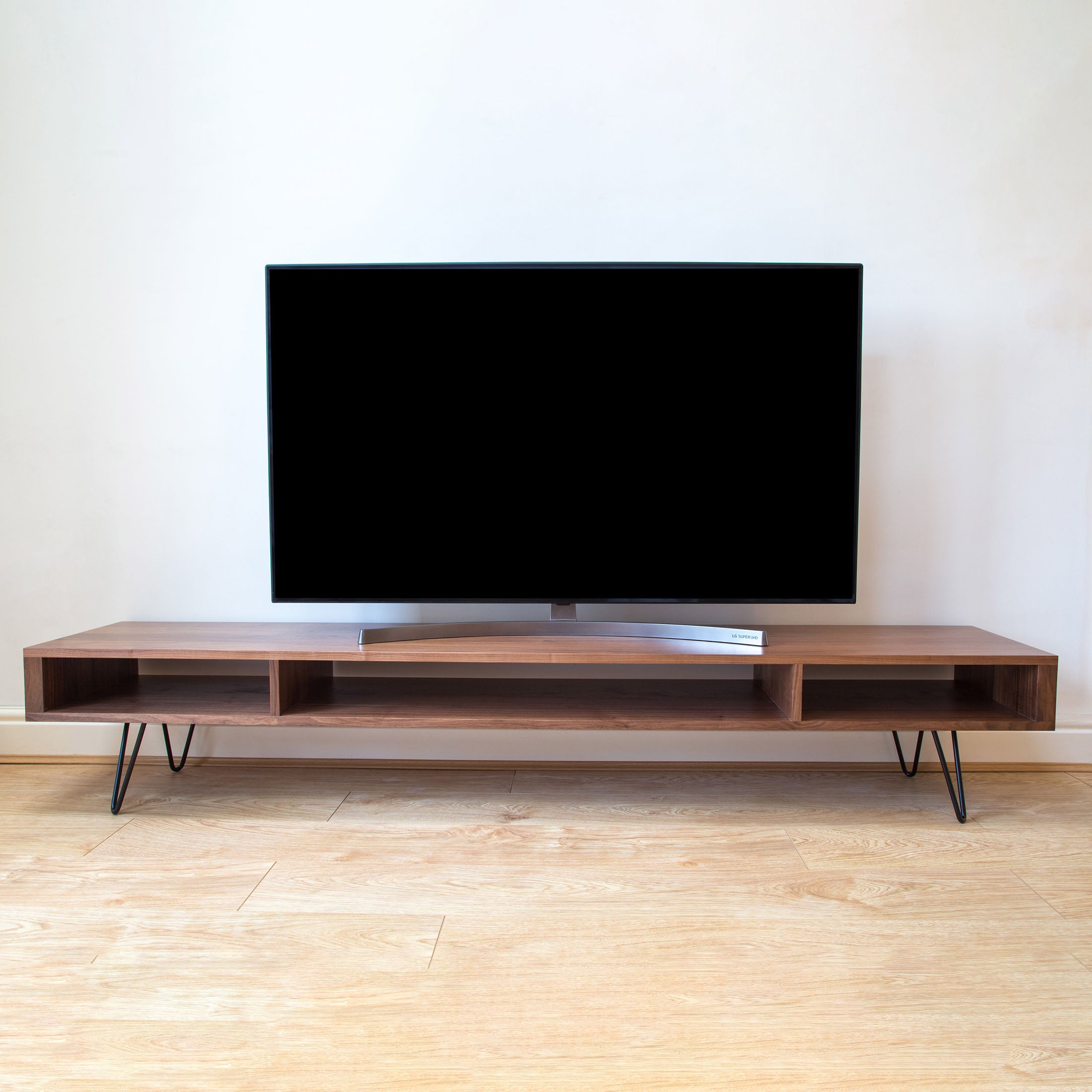
TV furniture needs equal care. Measure the television’s width, stand position and viewing height, then add room for ventilation and cables. A 55-inch television is often wider than 120 centimetres, so a narrow unit may look visually unstable even when it technically supports the screen.
Create a working plan
Write down five measurements before shopping:
Overall wall width and ceiling height.
Sofa footprint, including arms.
Door and drawer opening zones.
Cable route from sockets to the TV.
Collection volume, including future vinyl purchases.
Include skirting boards and radiator positions. A cabinet that fits between two walls on paper may lose several centimetres of usable width once the skirting and plug sockets are included.
Solid hardwood furniture is made from natural wood throughout the main structure, rather than a thin wood layer fixed over a different core.
That distinction matters, but it does not remove the need for sensible proportions. Solid wood is heavy, so moving a full cabinet through a tight hallway or up a narrow staircase requires planning before delivery day.
Which solid wood suits a modern living room?
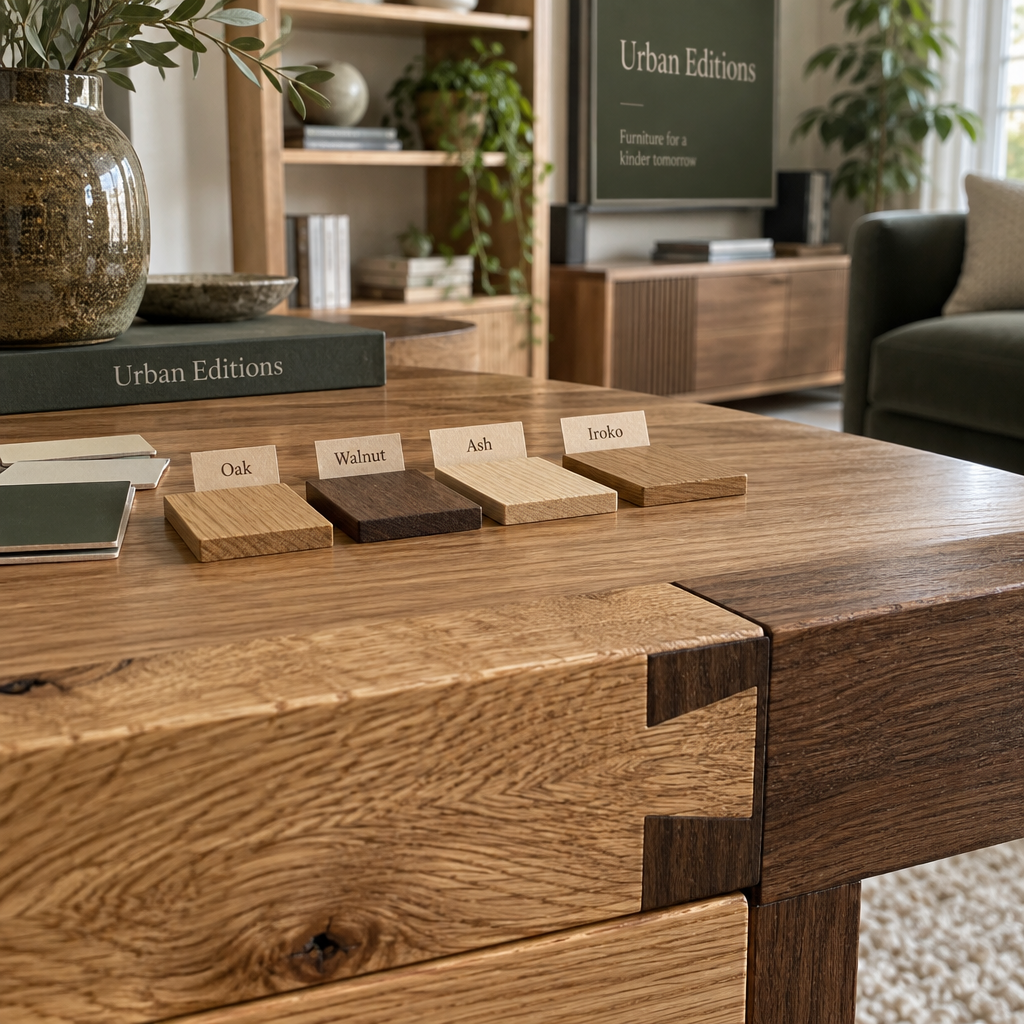
Oak is the safest choice when you want a light, versatile room with visible grain and a familiar British interior character. Walnut creates deeper contrast and suits darker floors, cream upholstery and mid-century modern furniture. Ash has a paler appearance with a clear grain, while iroko brings warmer colour and a stronger visual presence.
Wood type
Visual character
Works well with
Planning note
Oak
Light to medium, defined grain
Neutral upholstery and painted walls
Easy to coordinate across several pieces
Walnut
Deep brown, rich grain
Cream, green, blue and brass details
Use selectively in smaller rooms
Ash
Pale, clean and bright
Minimalist interiors and soft colours
Helps keep a compact room feeling open
Iroko
Warm golden-brown tones
Natural textures and darker accents
Sample the finish beside your flooring
Natural wood varies from board to board. Two oak pieces can differ in grain direction and tone, especially when one has a clear finish and another has a darker oil. Order samples where available and compare them beside the floor, skirting and largest upholstered item.
Match finishes without making the room flat
Use one dominant wood and one supporting finish. For example, oak coffee tables and a media unit can anchor the room, while a walnut turntable stand adds a controlled contrast. Mixing four unrelated wood tones makes the room look assembled rather than designed.
Finish changes colour as well as sheen. A matt surface suits minimalist furniture design, while a more pronounced finish draws attention to grain and edges. Keep the visual temperature consistent: warm woods work best with warm lighting, natural textiles and muted wall colours.
Choose for daily wear
Solid hardwood handles everyday use well when you protect it from standing water, hot objects and direct heat. Place coasters beneath drinks, wipe spills promptly and keep furniture away from a radiator where possible. Sunlight through a south-facing window can also change the appearance of wood over time.
The main objection is cost: solid hardwood furniture generally costs more than flat-pack board furniture. The trade-off is a piece made for long service, with repairable surfaces and dimensions chosen for your room rather than a fixed mass-market range.
The Urban Editions uses sustainably sourced solid hardwoods including oak, walnut, ash and iroko. Its furniture is designed and made in the UK, built to order in a family-run UK joinery, and available with wood samples so you can judge the finish before choosing.
How should coffee tables fit the seating area?
Choose a coffee table by clearance first, then by shape and finish. Keep about 45 centimetres between the table and sofa, with enough space for knees and a clear route to the seat. A rectangular table suits a long sofa, while a round or oval design improves movement around a compact seating group.
A 110-centimetre rectangular coffee table can work well with a three-seat sofa, provided it leaves room beside the sofa arms and does not block a doorway. In a smaller room, a 90-centimetre round table reduces sharp corners and gives several people equal access to the surface.
Rectangular tables
Rectangular coffee tables make efficient use of space in rooms with a long sofa against one wall. Choose a width that leaves a visible border of floor around the table. That gap gives the furniture breathing room and makes cleaning easier.
Look for a lower shelf only when you have a clear storage purpose. A shelf for books or a remote control basket is useful; a shelf that becomes a permanent pile of cables, magazines and chargers weakens the clean appearance you wanted.
Round and oval tables
Round tables suit corner sofas and homes where people walk through the seating area. Without square corners, they reduce the chance of catching a hip or catching a child’s head on an edge. They also create a softer contrast beside strongly linear TV furniture.
Oval tables combine the length of a rectangle with gentler ends. They are a strong choice for a narrow room where a rectangular table would make the route feel tight, particularly when the sofa faces a media wall less than 3 metres away.
Height and storage
Keep the table surface close to seat height. A table that is much taller than the sofa looks imposing and interrupts sightlines, while one that is too low becomes awkward for drinks and books. Check the height of your actual sofa, not a general furniture guide.
Choose solid wood coffee tables with a clear use in mind. A drawer can hold remotes, and a lower shelf can take a small basket, but the table should not become the room’s main storage unit. Put bulky items in a console or media cabinet instead.
The Urban Editions offers built-to-order coffee tables in minimalist and mid-century modern styles. Selecting the wood type and dimensions lets you keep the table proportionate when a standard size would leave either too much empty floor or too little circulation space.
How do you combine TV furniture and media storage?
Put the screen, equipment and storage into one measured zone. A TV stand should support the television visually while leaving space for ventilation, sockets and remote control access. Plan cable paths before the cabinet arrives, because a beautiful unit cannot hide a cable that enters from the wrong side.
Measure the screen width, soundbar, games console and any amplifier. Allow open space around equipment that produces heat, and check that cupboard doors do not block infrared signals. If your equipment is still changing, choose adjustable or open sections rather than filling every compartment with fixed dividers.
Concealed storage keeps the room calm
Closed doors hide controllers, power strips and discs when the system is not in use. Open shelving works for books, speakers or a small group of objects, but it needs restraint. Leave some compartments empty so the unit does not become a wall of visual noise.
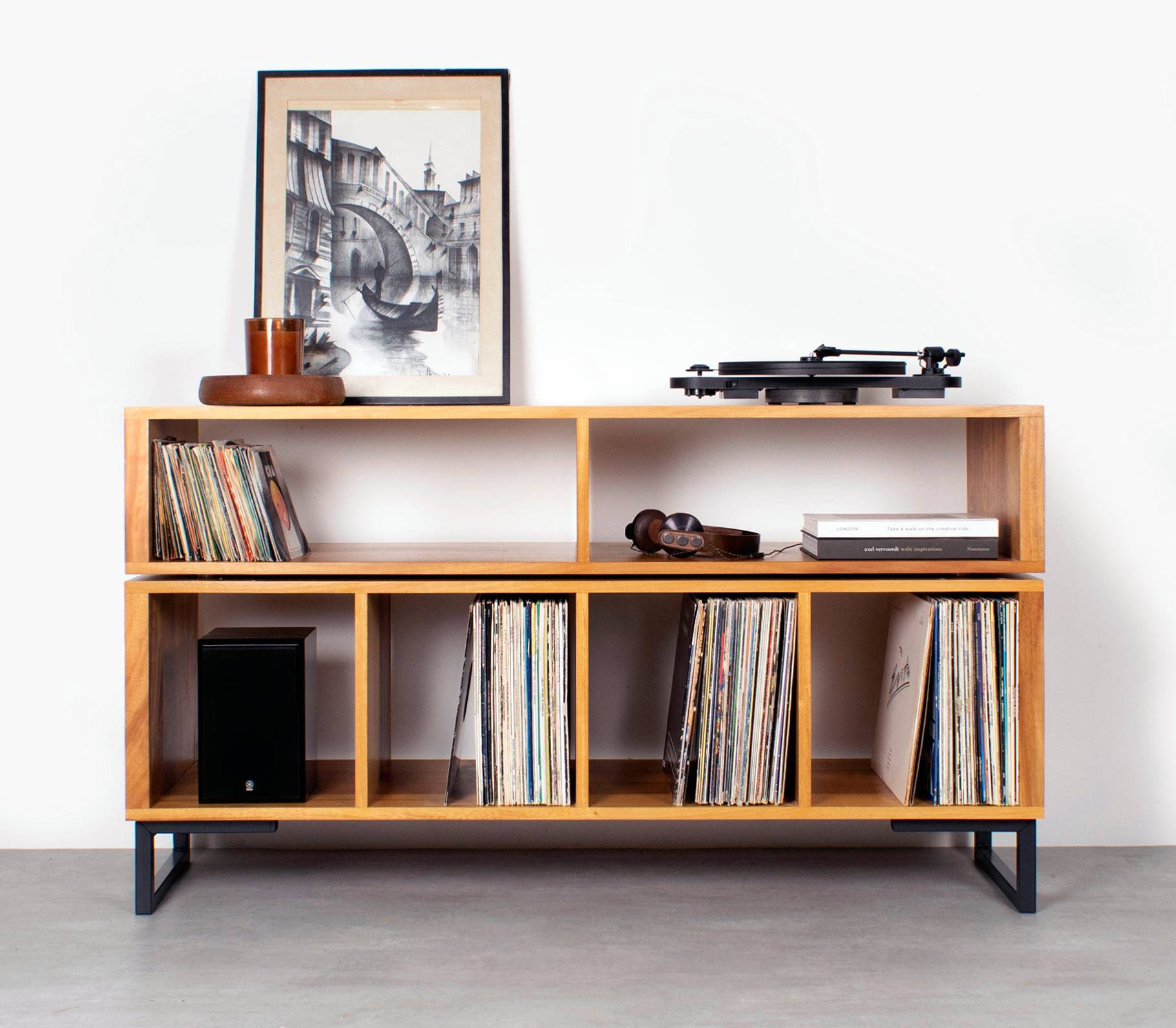
Media storage solutions should match the volume and format of what you own. A few streaming devices need less cabinet capacity than a film collection, while vinyl records require deeper, stronger compartments because each record is heavy and measures approximately 31 centimetres square.
For coordinated media storage solutions, The Urban Editions offers handcrafted media units in customisable solid hardwood designs, with wood samples and built-to-order options available through its solid wood media units.
Vinyl needs proper support
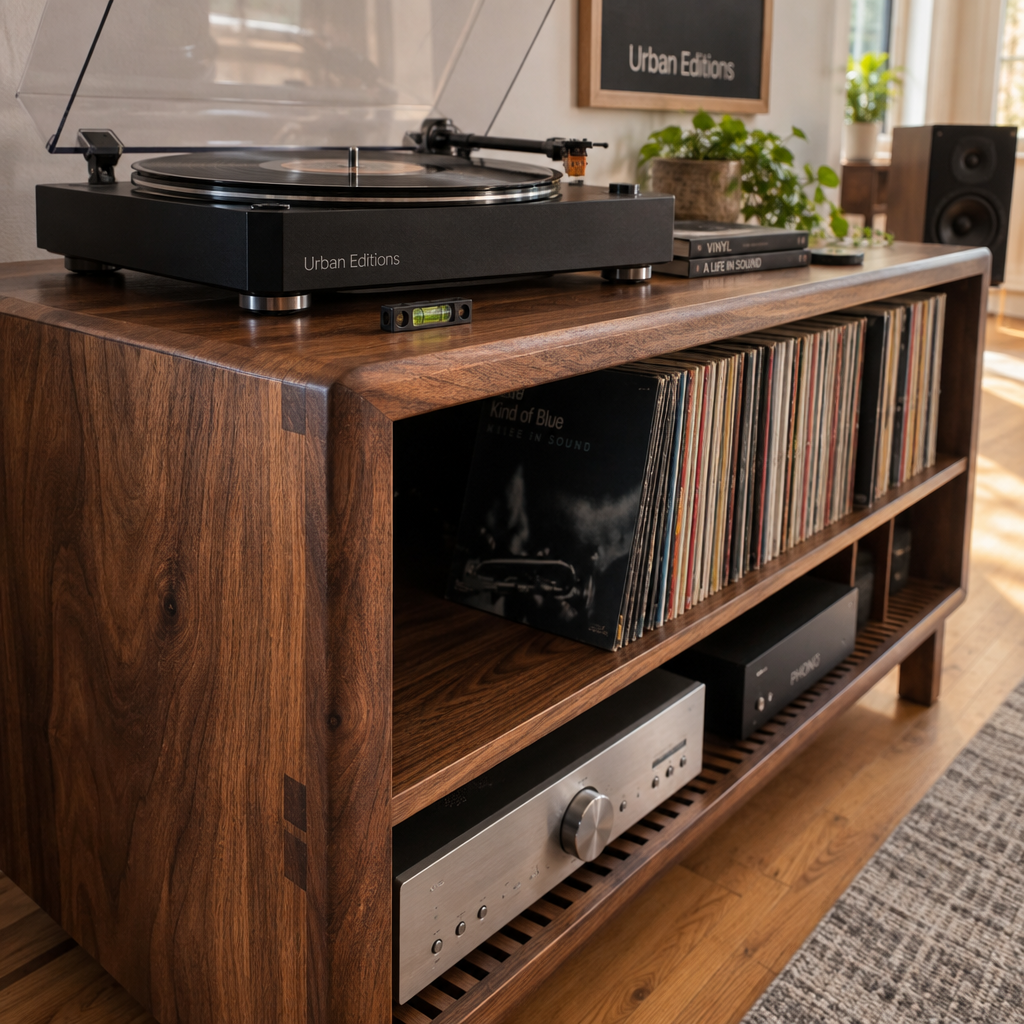
Store records upright with firm side support. Leaning a collection for months can place uneven pressure on sleeves and records, while overpacking makes individual albums difficult to remove. Leave a small amount of working room so you can browse without pulling the entire row forward.
A cabinet intended for vinyl should have a practical internal depth, strong shelves and an opening wide enough for your hands. Measure gatefold sleeves and box sets rather than planning only for standard single LPs. Your largest format determines the usable compartment.
Keep technology in proportion
A TV stand should be wider than the screen in most modern rooms. The extra width creates a stable visual base and gives you somewhere to place speakers or a small object without crowding the edges. Avoid filling every inch with equipment.
Mid-century modern furniture often uses tapered legs and raised bases, which make floor space visible beneath the unit. That detail suits smaller rooms, but it does not replace storage capacity. A raised cabinet with no useful cable route still leaves the practical problem unsolved.
Which storage pieces belong in a coordinated system?
Treat storage as a sequence of tasks. The TV stand handles daily technology, the vinyl cabinet supports browsing and collection weight, and the console table manages items that enter the room. When each piece has a defined job, you avoid buying one oversized cabinet to solve every problem.
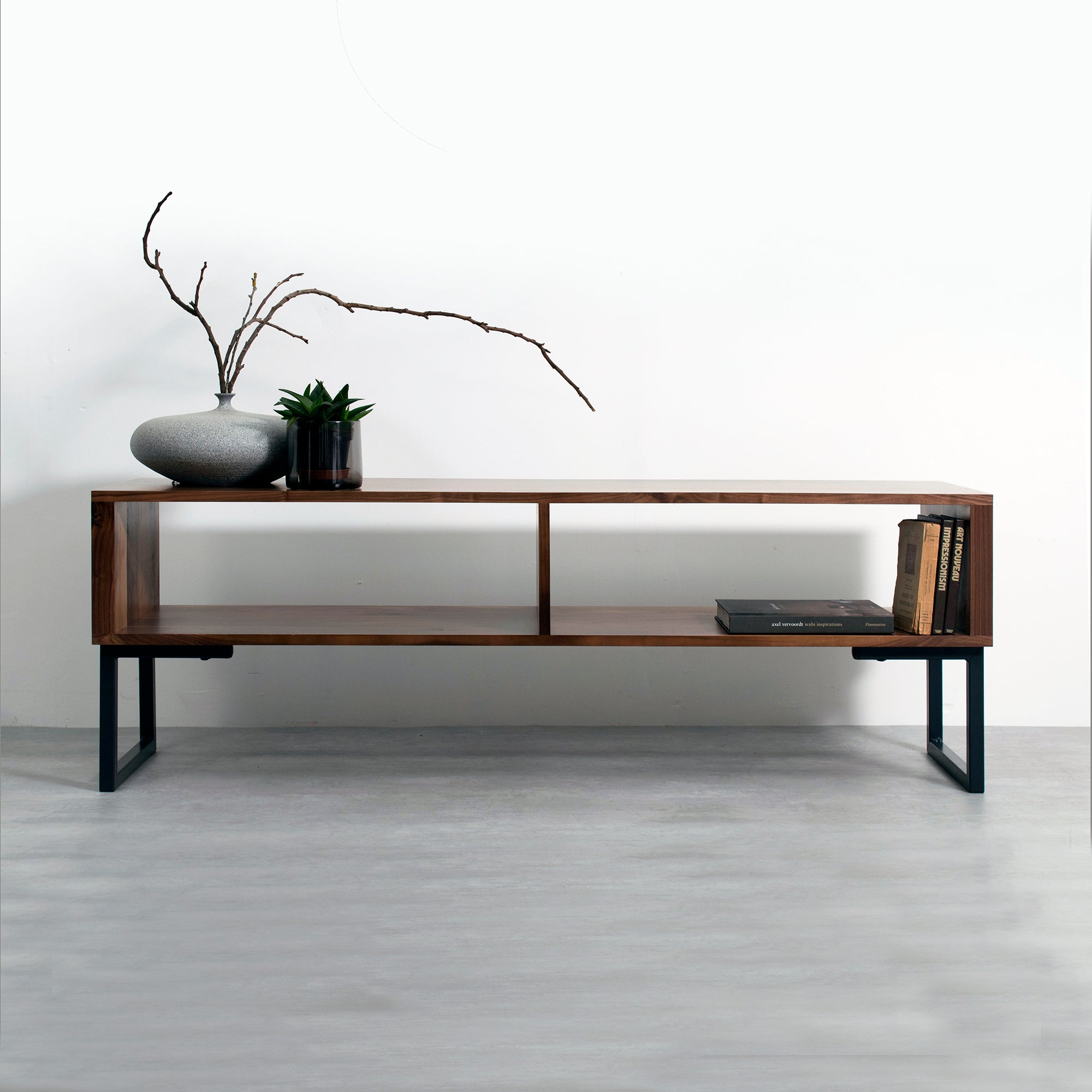
A console table works well behind a sofa, along an entrance wall or beneath artwork. At 30 to 40 centimetres deep, it can hold lamps, keys and books without taking the floor space required by a full cabinet. Keep the top surface edited, especially where the table is visible from the sofa.
Console tables
Choose a console based on the wall behind it and the items you want to place there. A 120-centimetre-wide console can carry two lamps or a lamp and a bowl, while a narrower 80-centimetre piece suits a hallway-style position beside the living room entrance.
Cable management becomes important when a console holds a lamp, charger or router. Route wires towards the nearest socket, use a rear cable opening where available, and avoid allowing leads to hang across a walkway. The best living room storage is useful before it is decorative.
Vinyl cabinets and turntable stands
Keep the turntable at a comfortable operating height, with enough clearance for the lid and room to remove a record without twisting your wrist. Do not place a turntable directly beside a speaker if vibration affects playback. A separate stand also gives the listening area a clear centre.
Vinyl storage should sit near the turntable, but not necessarily underneath it. Separating the two can give you more capacity and reduce the temptation to stack records beside the player. Check that the cabinet is level before setting up sensitive equipment.
Fewer pieces, better relationships
A large open-plan room may need a coffee table, TV stand, console and vinyl cabinet. A 3-metre-wide wall in a smaller room may need only the TV stand and coffee table, with storage built into one closed unit. Do not add furniture simply because an empty corner exists.
Use repeated details to connect pieces: matching leg profiles, the same timber, or consistent handle hardware. One contrasting walnut piece can add depth; several competing finishes make the room harder to read.
The built-to-order approach is practical when a standard cabinet leaves an awkward gap beside a chimney breast or window reveal. Custom dimensions let the room’s constraints guide the furniture rather than forcing the room around a catalogue size.
How do minimalist and mid-century styles work together?
Use minimalist furniture design for visual calm and mid-century modern furniture for warmth and character. The two styles share clean lines, useful storage and a preference for honest materials, so they combine well when you repeat one or two details across the room.
Minimalism does not mean owning as little furniture as possible. It means giving each item a clear purpose and removing visual clutter from the surfaces. A closed media cabinet, one coffee table and a properly scaled console can look calmer than a room filled with small occasional tables.
Build a visual hierarchy
Choose one main piece first. In many living rooms, that is the TV stand or media unit because it occupies the longest wall. Let its wood tone and proportions guide the coffee table, console and smaller storage.
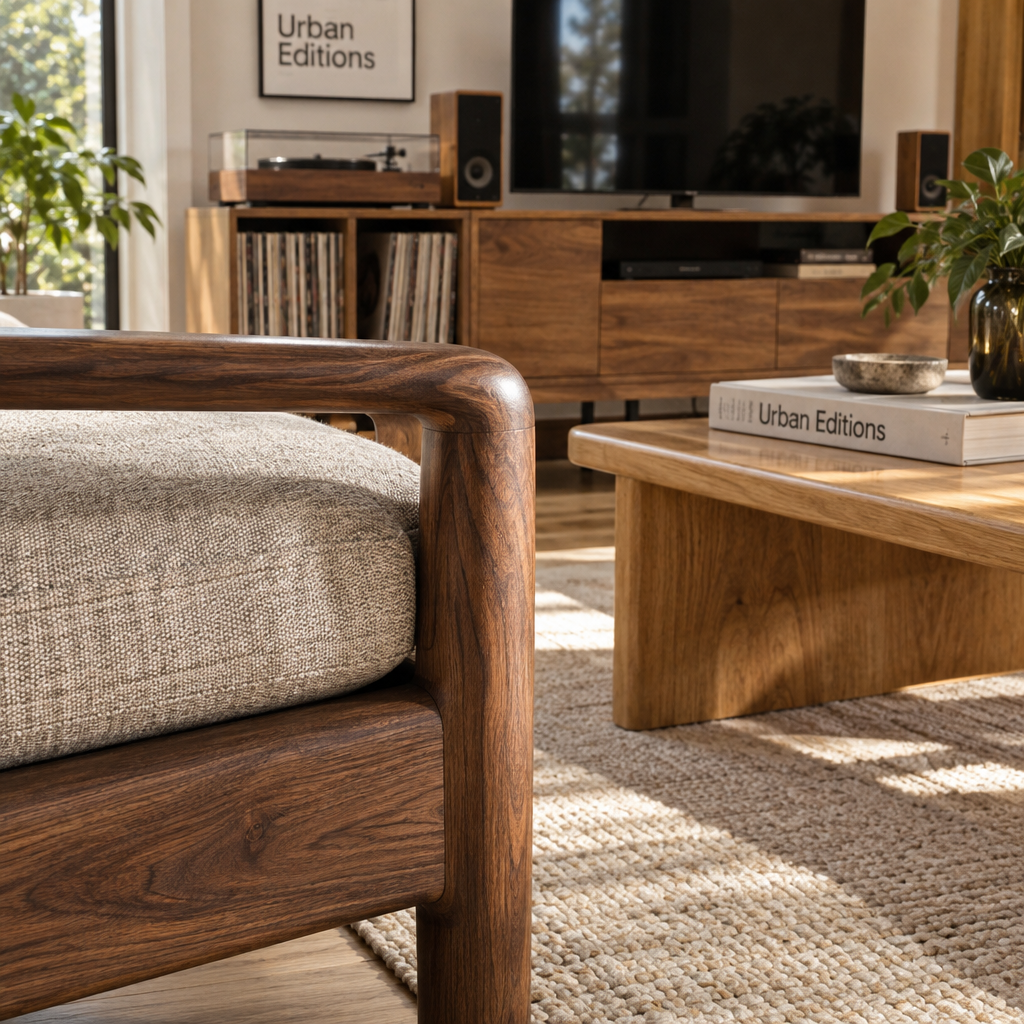
Use texture rather than extra colour to add interest. A walnut cabinet against a painted wall, a woven rug beneath an oak table and linen upholstery provide variation without introducing several unrelated finishes.
Use legs and lines carefully
Tapered legs, recessed bases and slim frames make furniture appear lighter. These features work particularly well in rooms with limited floor area, where a heavy plinth can make the furniture feel larger than its measurements suggest.
Do not choose slender legs at the expense of stability. A fully loaded vinyl cabinet carries considerable weight, so its structure and shelf support matter more than a delicate silhouette. Ask for the intended use and internal layout before placing heavy records inside.
Keep the technology honest
A modern room still contains routers, remotes, chargers, speakers and screens. Hiding every device is not realistic, but you can decide which items stay visible and which belong behind doors. Plan access for the equipment you use each week.
Cable management should follow the wall and cabinet layout. Keep power and signal leads organised, avoid crushing them behind the unit, and leave enough slack to move equipment for cleaning. This small detail has more effect on the finished room than an extra ornament.
The Urban Editions’ solid wood TV furniture is designed in the UK and built to order, with customisable designs and wood choices for contemporary interiors. Browse the solid wood TV stands when you have measured the screen, wall and equipment.
What should you check before ordering?
Start with a complete measurement sheet, including the route from the front door to the room. Note stair widths, lift dimensions, low ceilings and tight turns. Solid hardwood is substantial, and a cabinet that fits the living room may still be impossible to carry through a narrow Victorian hallway.
Check the product dimensions against your taped floor plan. Open every door and drawer on paper, then mark the swing with a strip of tape. This exposes conflicts with radiators, sofa arms and walkways before you commit to a piece.
Ask how the wood is finished and how it should be maintained. A dining environment, a home with young children and a room with direct afternoon sun all place different demands on the surface. Follow the maker’s care instructions rather than applying a general polish.
Confirm the practical details: delivery area, lead time, custom dimensions, sample availability and whether the furniture arrives assembled. The Urban Editions offers free UK delivery and international shipping, with furniture made to order in a family-run UK joinery.
Before finalising, stand in the room and check the sightline from each main seat. A TV stand that looks right from the doorway may block the screen from the corner sofa, while a coffee table that fits the plan may leave too little room to pull out a footstool.
Choose durability where hands, drinks and equipment meet the furniture. A well-planned cabinet earns its floor space every day; a decorative piece with no storage role becomes an obstacle quickly.
Conclusion
Measure the room, define each storage job and choose one main wood tone before ordering. Pick oak for broad flexibility, walnut for contrast, ash for a lighter look or iroko for warmth, then confirm the finish with a sample. If a standard size leaves wasted space, choose built-to-order living room furniture and make the room work around your actual habits.
Frequently Asked Questions
Is solid wood furniture suitable for a small living room?
Yes. Choose raised bases, shallow depths and closed storage to keep the floor visually open. A 90-centimetre round coffee table and a compact media unit often create better circulation than several small pieces with overlapping functions.
How much space should I leave around a coffee table?
Leave roughly 45 centimetres between the coffee table and seating for comfortable movement. Reduce that only where the route is secondary, and never allow the table to block a doorway, radiator or the main path across the room.
Can I mix oak and walnut in one living room?
Yes, but make one wood dominant and use the other as an accent. For example, use oak for the TV stand and coffee table, then add one walnut turntable stand rather than introducing different timber finishes on every wall.
What is the best way to store vinyl records?
Store records upright in strong, well-supported compartments with enough room to remove individual sleeves. Keep the turntable level, protect equipment from direct heat, and measure gatefold sleeves or box sets before choosing cabinet depth.