September SPECIAL OFFER! Sign-up to our newsletter to receive the latest offers and news.
Stand for Vinyl Record Player: Solid Wood Options
At 33⅓ revolutions per minute, a turntable gives small vibrations plenty of time to affect playback. The right stand for vinyl record player keeps the platter level, supports your hi-fi equipment and puts records within easy reach. It also prevents a common mistake: choosing a decorative cabinet that looks right but leaves no room for cables or ventilation.
A compact, properly proportioned unit often works better than a large media cabinet. You need enough space for your turntable, amplifier and records, but not so much furniture that access becomes awkward or the room feels crowded.
Key Takeaways
Choose stability before appearance
Measure every component, including cable depth
Store records upright, never leaning
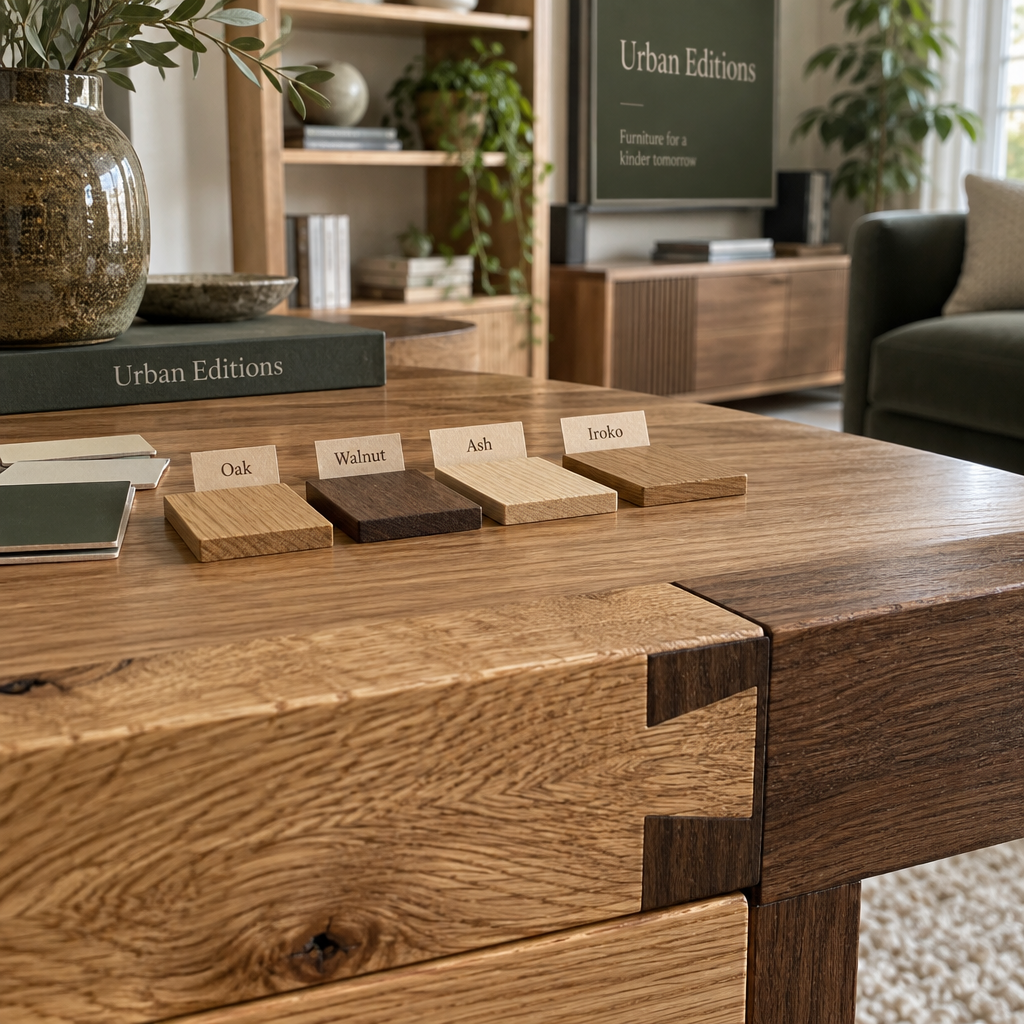
Oak, walnut, ash and iroko suit different interiors
Plan ventilation around your amplifier
Built-to-order dimensions solve awkward layouts
What Makes a Stand Suitable for a Vinyl Record Player?
A suitable stand combines a rigid top, sensible equipment space, cable access and record storage that keeps albums upright. It should support your turntable without rocking, leave room around the amplifier and place frequently played records at a comfortable height. A side table may look similar, but it rarely solves all four requirements.
The top must be broad enough for the turntable’s feet, lid and operating space. Measure the player with its dust cover open, then add room at the rear for signal and power leads. A unit measuring 60cm wide may suit a compact deck, while a larger setup could need 80cm or more.
A turntable stand is furniture designed around playback, storage and access, rather than a surface that merely holds a record player.
Stability Comes First
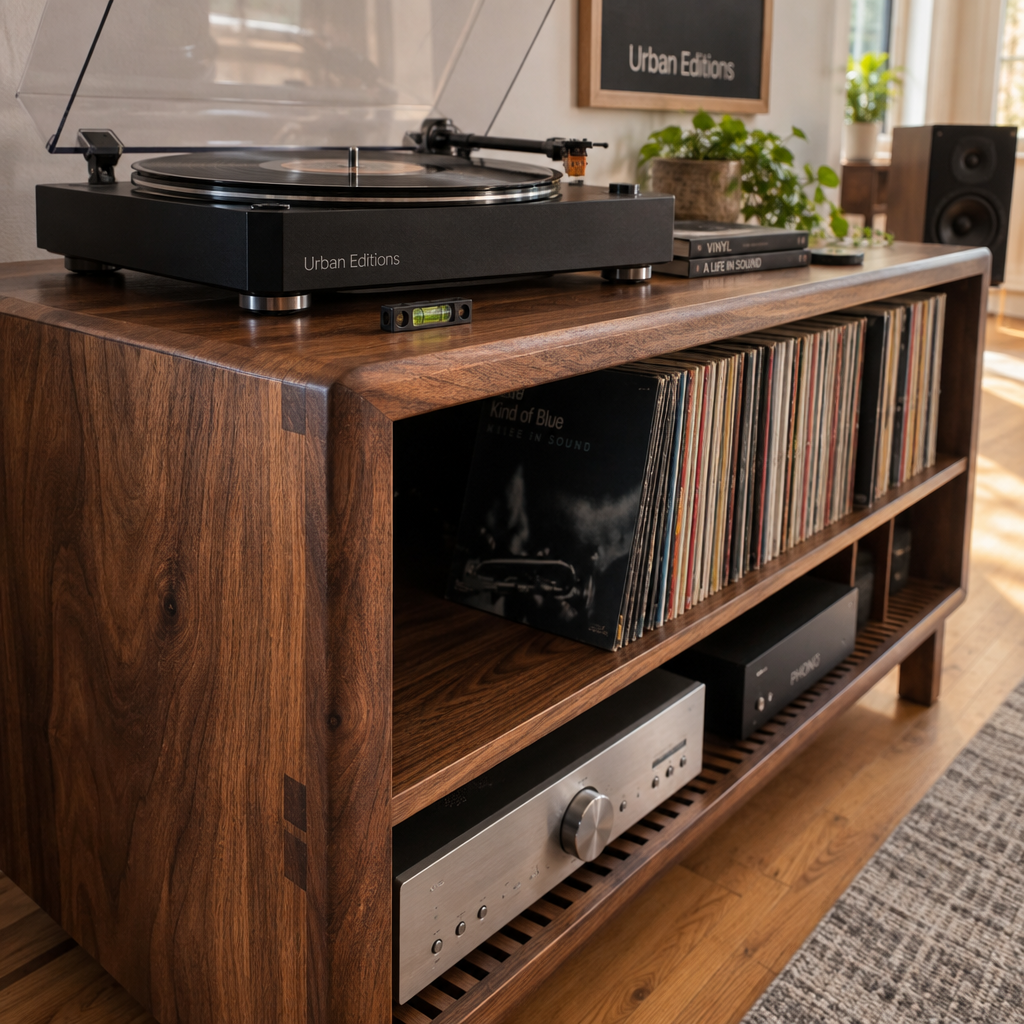
Solid wood gives a substantial feel, but weight alone does not guarantee good playback. A stand with a level top, firm joints and a sensible footprint reduces unwanted movement when you cue a record or walk across a timber floor. Place a small spirit level on the platter during setup.
Avoid positioning the stand directly against a radiator or on a springy section of flooring. If your floorboards flex, place the unit across the joists where possible. In a flat, stable position, the cartridge tracks more consistently and the tonearm is easier to balance.
Think Beyond the Turntable
Your system may include a phono stage, integrated amplifier, streaming box or compact speakers. A cabinet with one narrow shelf can become unusable once these pieces arrive. Allow space for the equipment you own now and the one upgrade you are most likely to make.
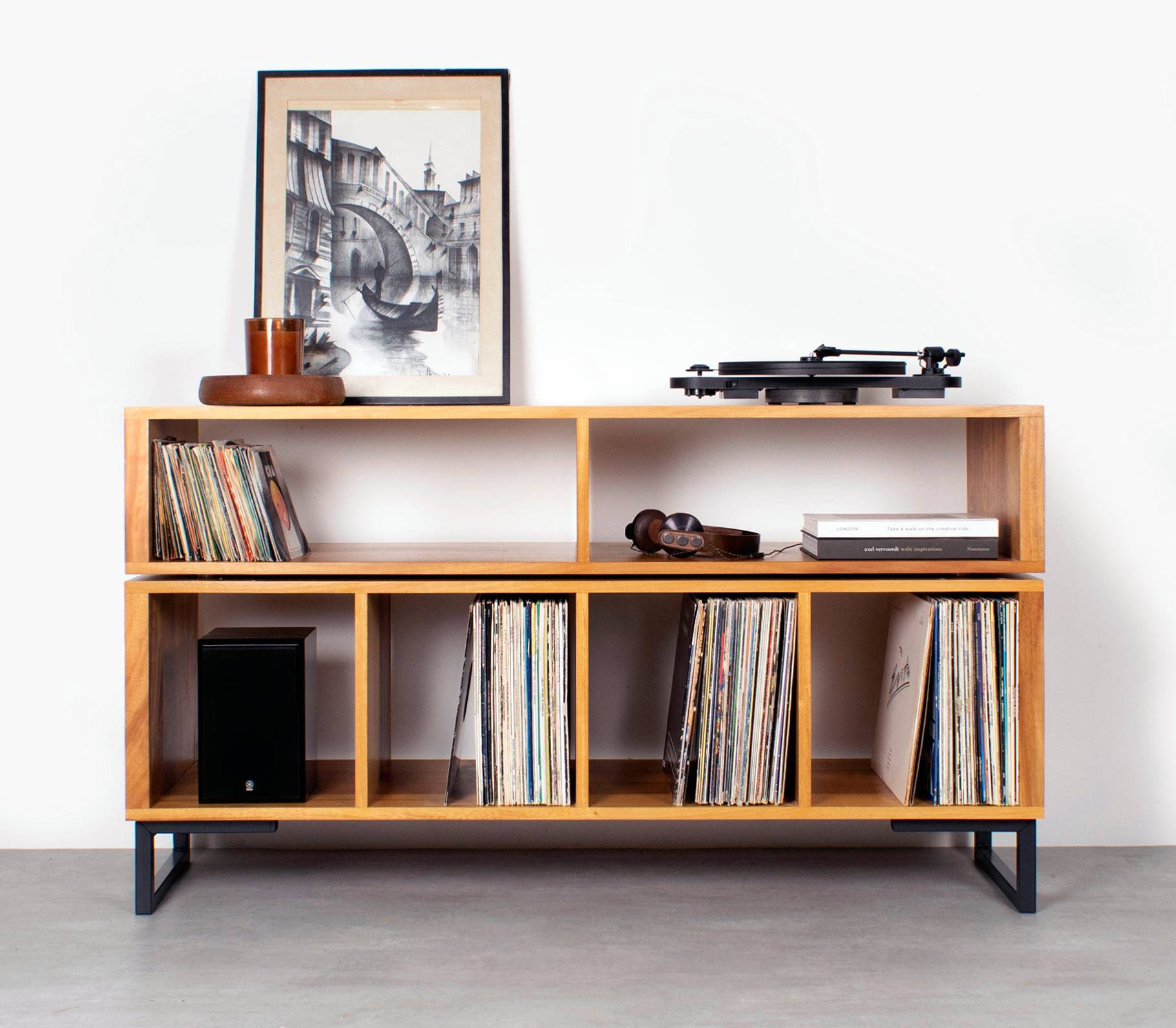
Purpose-built turntable stands give you a better starting point than generic occasional furniture. The purpose-built media units from The Urban Editions are designed around storage and equipment use, with solid hardwood construction and a mid-century modern approach.
How Should You Measure Your Equipment and Room?
Measure the turntable, amplifier and available wall space before choosing a stand for vinyl record player. Record the width, depth and height of each item, then add clearance for cables, ventilation and operation. A practical measurement session takes about 15 minutes and prevents the expensive mistake of buying furniture that cannot house your system.
Start with the turntable. Measure from the front edge to the furthest rear connection, not simply the main plinth. Check the lid as well. A lid that opens backwards needs space above and behind the unit, while a hinged lid that stays open may need more vertical clearance than expected.
A Useful Measurement Sequence
Measure the turntable with its lid closed.
Measure the depth with cables connected.
Measure the amplifier at its widest and tallest points.
Mark the proposed footprint on the floor with masking tape.
Check socket position and cable routes.
Add ventilation space around warm-running equipment.
The masking-tape test is particularly useful in a small sitting room. Mark a 70cm by 40cm footprint, place your listening chair where it normally sits and check whether drawers or record compartments remain accessible. This shows how the furniture will work, rather than how it looks on a product page.
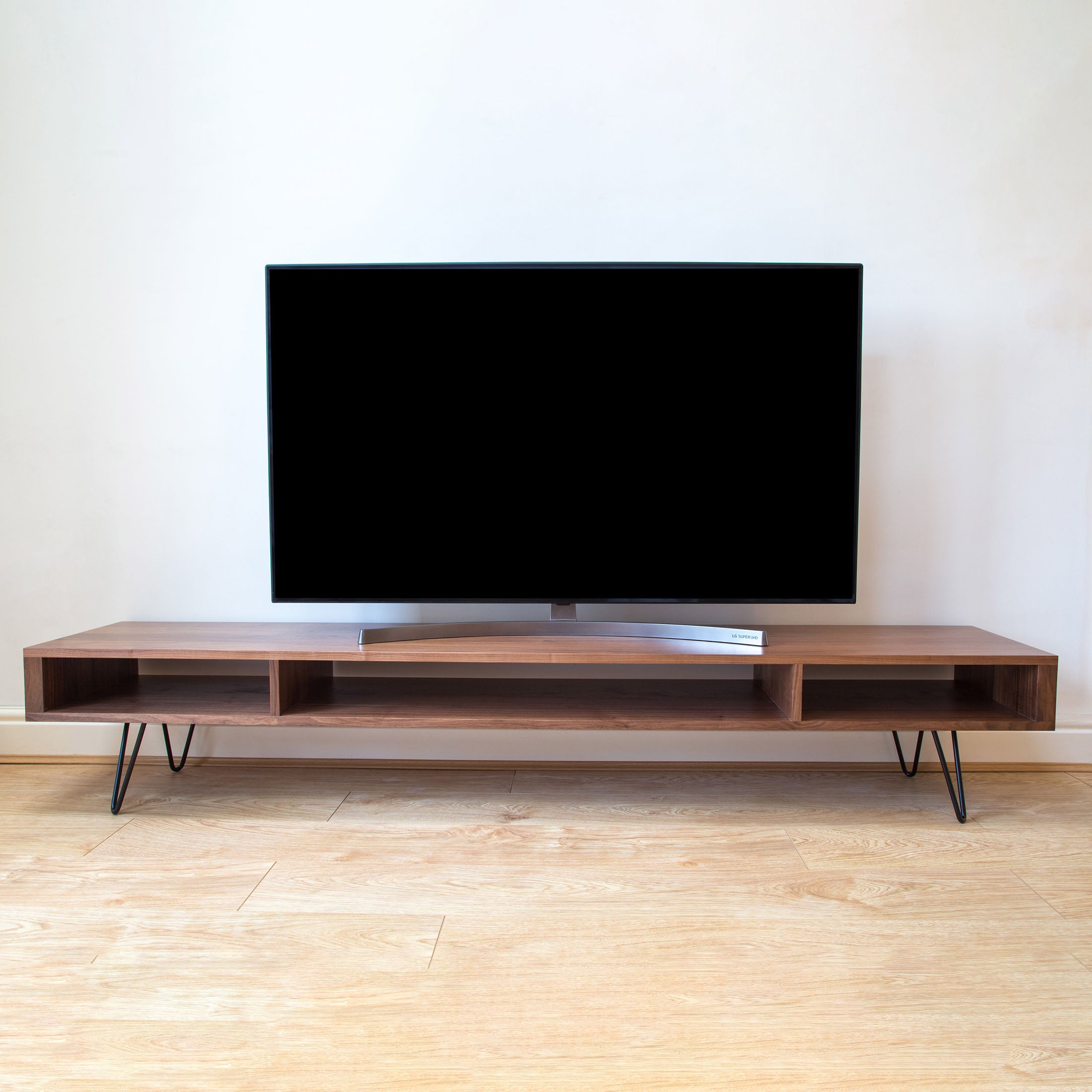
Your room also sets the sensible height. A low stand keeps the turntable visually discreet and suits a sofa-based listening position. A taller unit can place records at a convenient standing height, but it needs careful anchoring if children or pets use the room.
Leave Air Around the Amplifier
Amplifiers produce heat, especially when enclosed in a tight compartment. Leave open space around vents and avoid covering the top with records, sleeves or decorative objects. Cable depth and ventilation matter as much as the external dimensions.
For a typical compact system, plan roughly 5cm of free space above warm equipment as a practical starting point, then follow the equipment maker’s manual. If the amplifier becomes hot to touch after normal listening, move it to a more open shelf rather than closing the doors.
Which Solid Wood Works Best for a Record Player Stand?
Oak is the strongest all-round choice for a record player stand when you want a pale, versatile finish and a visible grain. Walnut suits darker, richer interiors, ash gives a lighter contemporary appearance and iroko brings a warmer golden tone. The best timber is the one that fits your room, existing furniture and preferred finish.
Solid hardwood has a depth and feel that veneered chipboard cannot match, but each species has a distinct visual effect. Oak works with painted walls and natural floors. Walnut creates stronger contrast against light interiors. Ash keeps a minimalist room bright, while iroko adds warmth without the reddish tone associated with some darker finishes.
Wood
Visual character
Best interior match
Practical design effect
Oak
Pale to medium grain
Contemporary and mid-century rooms
Easy to pair with light floors
Walnut
Deep brown, rich grain
Softer, darker or contrast-led schemes
Gives the stand visual weight
Ash
Light, clean grain
Minimalist interiors
Keeps a compact unit visually light
Iroko
Warm golden-brown tone
Natural, textured rooms
Adds warmth around black equipment
Oak for Flexible Styling
Oak is the safest recommendation when you expect to change your room over time. It works beside black hi-fi equipment, tan leather seating and painted cabinetry. Its grain remains visible without dominating a smaller room.
Choose oak when your record collection is growing but you want the furniture to stay visually calm. A compact oak unit can anchor a listening corner without making it feel like a dedicated media room.
Walnut for Contrast
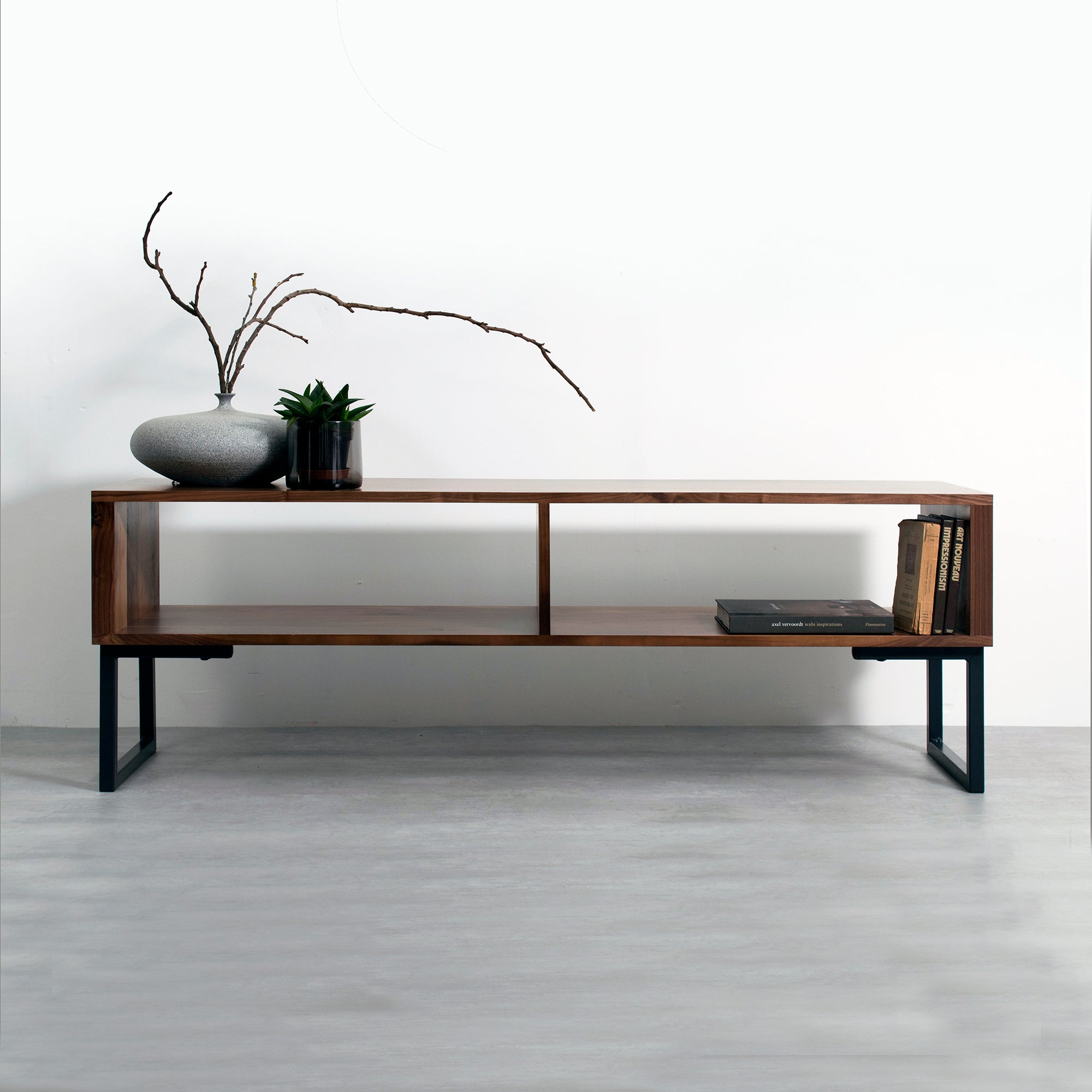
Walnut suits listeners who want the stand to become a stronger furniture feature. Its darker tone pairs well with brass details, cream walls and mid-century modern seating. It also makes black equipment look deliberately selected rather than simply placed.
The drawback is visual weight. In a narrow room, a tall walnut cabinet can feel more imposing than the same design in ash. Keep surrounding pieces simple and allow wall space around it.
Ash and Iroko
Ash is a strong choice for a light, clean scheme. Iroko works when you want warmth and a more pronounced natural character. Order wood samples before committing to a large built-to-order piece, because screen colours vary and the grain changes from board to board.
The Urban Editions uses sustainably sourced solid hardwoods including oak, walnut, ash and iroko. Furniture is designed and made in the UK, so selecting the timber becomes part of the room’s wider material plan rather than a last-minute colour choice.
How Much Vinyl Storage Do You Actually Need?
Store records upright in a compartment that supports the sleeves without forcing them tightly together. A practical starting point is to count your collection, then add room for future purchases. If you own 80 records, do not choose storage that fits exactly 80; allow usable space for browsing and gradual growth.
Records become difficult to remove when they are packed tightly or placed behind a deep front rail. They also lean when a compartment is too wide without a divider. Either problem makes everyday listening less inviting, which means the cabinet becomes a display object rather than working storage.
Choose Access Over Maximum Capacity
A smaller stand with 60 to 100 carefully accessible records may serve you better than a tall cabinet holding several hundred albums. You can see the spines, remove one record without disturbing the rest and keep the turntable close to the collection you play most.
Keep frequently played records in the easiest section to reach. Place heavier or less-used boxed sets lower down, provided the shelf supports their weight and the sleeves remain upright. Never store records where they must lean at a sharp angle.
Plan for Record Format
Most standard 12-inch LPs need a compartment designed around their sleeve size, not just the record itself. Gatefold sleeves and box sets take more room than single albums. Allow extra clearance at the top so you can grip a sleeve without scraping it against the shelf.
A record stand also needs to accommodate your browsing habit. Open shelves make titles visible and provide quick access. Enclosed doors reduce visual clutter and dust, but they need enough internal depth for sleeves and enough clearance for your hand.
Storage Is Part of the Listening Setup
Your record collection should sit close enough to browse without interrupting playback. Put the stand where you can reach the records from your listening seat, but leave the turntable away from the main traffic line. This simple arrangement keeps records accessible while protecting the tonearm from accidental knocks.
Custom dimensions make sense when your collection, wall width or equipment is unusual. Built-to-order furniture can give you a narrower record section, a taller cabinet or a separate shelf for a large amplifier without forcing a standard size into the room.
How Do You Manage Cables and Ventilation?
Route power, phono and speaker cables separately where possible, and leave enough rear clearance to unplug equipment without moving the whole stand. Keep mains cables away from sensitive signal cables when your layout allows. A few centimetres of planned space makes maintenance much easier.
Cable management starts with the wall socket. Identify where the cables enter the room, then choose a stand with an exit route on the same side. Avoid pushing a cabinet hard against the skirting board if the plugs bend sharply behind it.
Separate the Important Connections
The phono cable from a turntable is sensitive and often short. Keep it free from tight bends and avoid stretching it to reach a receiver on a lower shelf. If you use an external phono stage, position it close enough to the turntable for a neat connection.
Speaker cables need a different route. Run them from the amplifier towards the speakers without trapping them beneath the stand. Leave a small service loop behind each component so you can pull it forward for cleaning or adjustment.
Ventilation Needs a Deliberate Gap
A record player itself produces little heat, but amplifiers and power supplies can become warm. Do not place an amplifier in a sealed compartment unless the manufacturer specifically allows it. Open shelves are often the simplest solution for a small hi-fi system.
The common objection is that open storage collects more dust. That is true, but a quick weekly wipe with a dry microfibre cloth is a better trade-off than trapping heat around expensive electronics. Never sacrifice ventilation to hide one cable.
Keep the Stand Level
Cable pressure can pull a lightweight unit out of position. Once everything is connected, check that the stand remains level and that no lead touches a vibrating panel. Place a felt pad beneath a cable that rests against timber, then listen for rattles at a moderate volume.
Which Stand Size Suits a Small or Large Room?
Choose a small stand when your system has one turntable, one compact amplifier and a focused record collection. Choose a wider or taller unit when you need separate storage for records, a larger amplifier and additional components. The right size leaves clear access around the furniture rather than filling every spare centimetre.
A 60cm-wide unit may work in a narrow alcove with a compact deck. A 90cm-wide unit gives more freedom for components and browsing, but it needs proportionate wall space. These are practical examples, not universal rules, because turntable and amplifier dimensions vary.
Small Rooms
In a flat or snug sitting room, use height carefully. A narrow stand with vertical record storage can hold useful capacity without spreading across the floor. Keep at least a clear path to the socket and avoid blocking a radiator.
Choose a shallow design if the listening area is also a walkway. A deep cabinet may project into the room enough to catch knees or obstruct a door. Mark the full depth with masking tape before ordering.
Open-Plan Rooms
Open-plan spaces benefit from furniture that looks finished from every visible side. A solid hardwood cabinet can divide a listening area from a dining zone without the unfinished appearance of a basic equipment rack. Keep the back tidy because it may be visible from across the room.
In a larger room, resist buying the biggest cabinet available. A well-proportioned 70cm unit can look more intentional than a 120cm cabinet with empty shelves. Leave space beside it for speakers and allow the record compartment to remain easy to browse.
Built-to-Order Dimensions
Built-to-order furniture is useful when your wall has a chimney breast, a narrow recess or a socket in an awkward position. Custom dimensions also help when one component is unusually deep. Measure twice, then confirm the finished external dimensions and internal clearances before production.
The Urban Editions makes built-to-order solid hardwood furniture in a family-run UK joinery and allows customers to customise designs and dimensions. That route suits a room where a standard media cabinet would waste space or obstruct access.
How Do You Set Up the Stand for Better Playback?
Place the stand on a firm, level surface away from speakers and heavy foot traffic. Put the turntable on the most stable shelf, position the amplifier where it can breathe and keep records upright in an adjacent compartment. Finish by checking the platter with a spirit level and testing for movement at normal listening volume.
Start with the furniture itself. Remove packing material, check that doors and shelves sit squarely, and adjust the feet if the design includes them. A crooked cabinet can make a perfectly level turntable appear unstable.
Position the Turntable
Keep the turntable away from the speaker directly beneath it. Sound energy can feed back through the stylus at high volume, especially when the speaker and deck share a lightweight surface. A separate speaker stand or wider spacing improves the margin before feedback becomes audible.
Leave operating room around the platter and tonearm. You should be able to lift the dust cover, cue a record and reach the speed control without touching another component.
Organise the First Shelf
Put the amplifier on an open shelf if it runs warm. Place the phono stage close to the turntable, then route cables towards the rear exit without sharp bends. Keep the remote control and record brush in a small, stable tray rather than on the platter cover.
Do not stack heavy equipment on the turntable. A record player needs its own level surface, and adding weight above it increases the chance of vibration and accidental contact.
Maintain the Timber
Dust the surface with a soft, dry cloth and deal with spills promptly. Avoid soaking solid hardwood or applying household polish that leaves a slippery film. Keep drinks on a separate table, not beside the tonearm.
A well-made stand should remain useful as your system changes. If you later add a streamer or replace the amplifier, reassess ventilation and cable routes instead of forcing the new component into an unsuitable compartment.
Conclusion
Choose the smaller stand when it fits your turntable, amplifier and active record collection with room to browse. Choose the larger unit only when you genuinely need its extra storage. For awkward walls or changing equipment, select a built-to-order design, compare the hardwood samples and confirm every measurement before placing the order. Browse customisable record storage and turntable furniture when you are ready to match the stand to your room.
Frequently Asked Questions
Can I use a side table as a stand for vinyl record player?
You can, but only if it has a level, rigid top, enough depth for connected cables and no tendency to wobble. A side table rarely includes suitable record storage or ventilation, so a purpose-designed unit is safer for a complete hi-fi setup.
Should a record player stand be open or enclosed?
Choose open storage when your amplifier needs airflow or you change equipment often. Choose enclosed storage when reducing visual clutter matters more, but check that the compartment has cable access and follows the amplifier maker’s ventilation guidance.
Is solid wood better than MDF for a turntable stand?
Solid wood gives you a substantial, durable piece of furniture and a natural grain, while MDF can provide a stable surface at lower cost. For a long-term room feature, choose a well-constructed solid hardwood stand with a level top and suitable proportions.
How far should a record player stand be from speakers?
Keep speakers far enough away that normal listening does not create audible feedback through the stylus. Start with the speakers separated from the stand and positioned on their own stable supports, then increase distance if low-frequency feedback appears.