September SPECIAL OFFER! Sign-up to our newsletter to receive the latest offers and news.
Furniture Warehouse: Solid Wood Designs for Modern Homes
Four hardwood options can change how your room feels, functions and ages. A furniture warehouse should give you more than a large selection of products: it should help you choose solid wood furniture that fits your space, stores what you own and earns its place for years.
The best modern furniture combines clean lines with practical details. Check the timber, measurements, finish, cable management and build method before you compare prices. That approach leads to better value than choosing the cheapest piece that looks right online.
Key Takeaways
Solid hardwood lasts longer than many flat-pack alternatives
Measure doors, walls and viewing distances before ordering
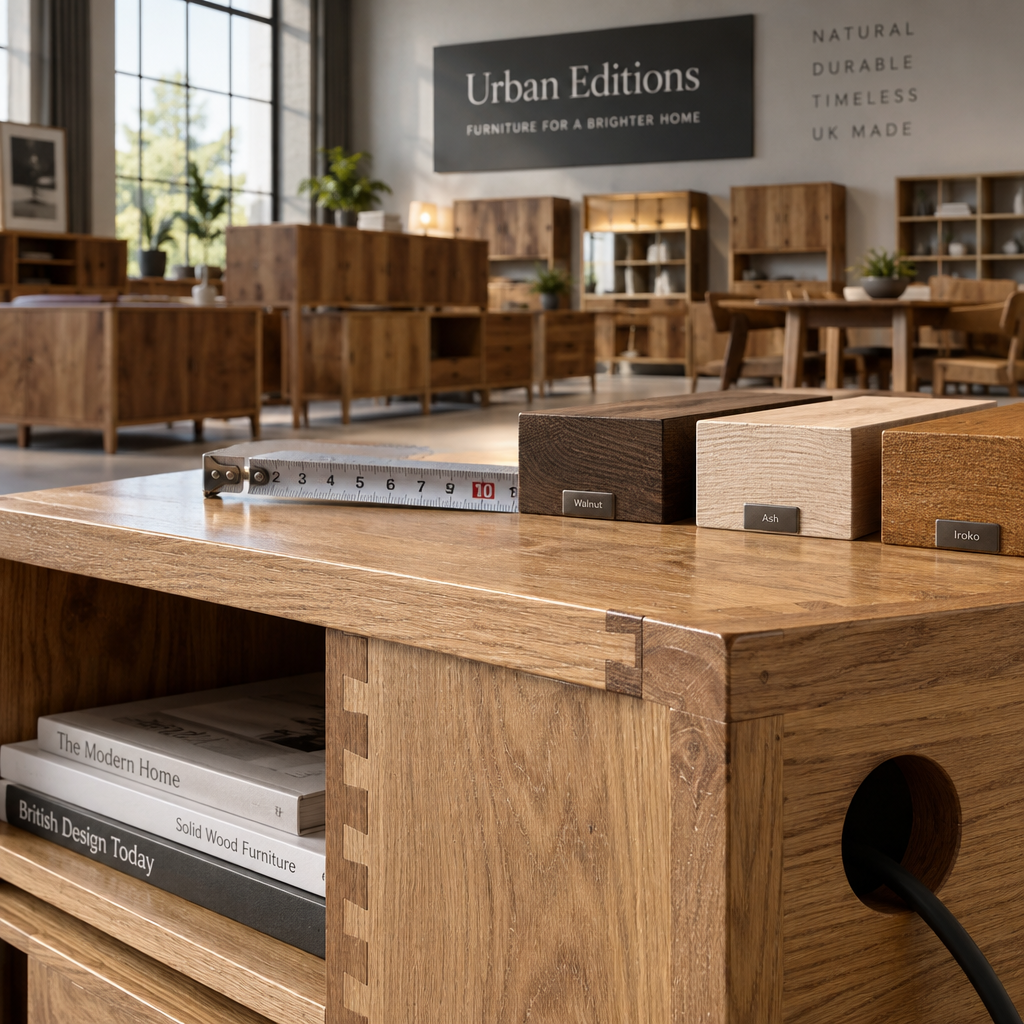
Oak, walnut, ash and iroko create different visual effects
What should you expect from a furniture warehouse?
A good furniture warehouse gives you choice without forcing you into standard sizes. For a modern home, look for solid hardwood construction, clear dimensions, finish samples and a build method that matches the price. The right piece must fit your room and your routine, not merely fill an empty space.
The term furniture warehouse often suggests mass-produced stock stacked in rows. That model suits a quick, low-cost purchase, but it is less useful when your wall is 186 centimetres wide or your record collection needs specific storage. Custom furniture takes a more measured approach.
Solid wood also varies widely. A cabinet made from quality hardwood has different repair, ageing and weight characteristics from a panel with a thin wood veneer over a composite core. Neither is automatically right for every budget, but you need to know which one you are buying.
Solid hardwood furniture is made from wood throughout its main structural components, rather than relying on a composite board core with a decorative wood layer.
The warehouse model needs a closer look
Ask whether each item is ready-made, made in batches or built to order. These terms affect delivery times, dimensions and the options available after you place an order. A built-to-order piece usually takes more planning, but it gives you control that standard stock cannot.
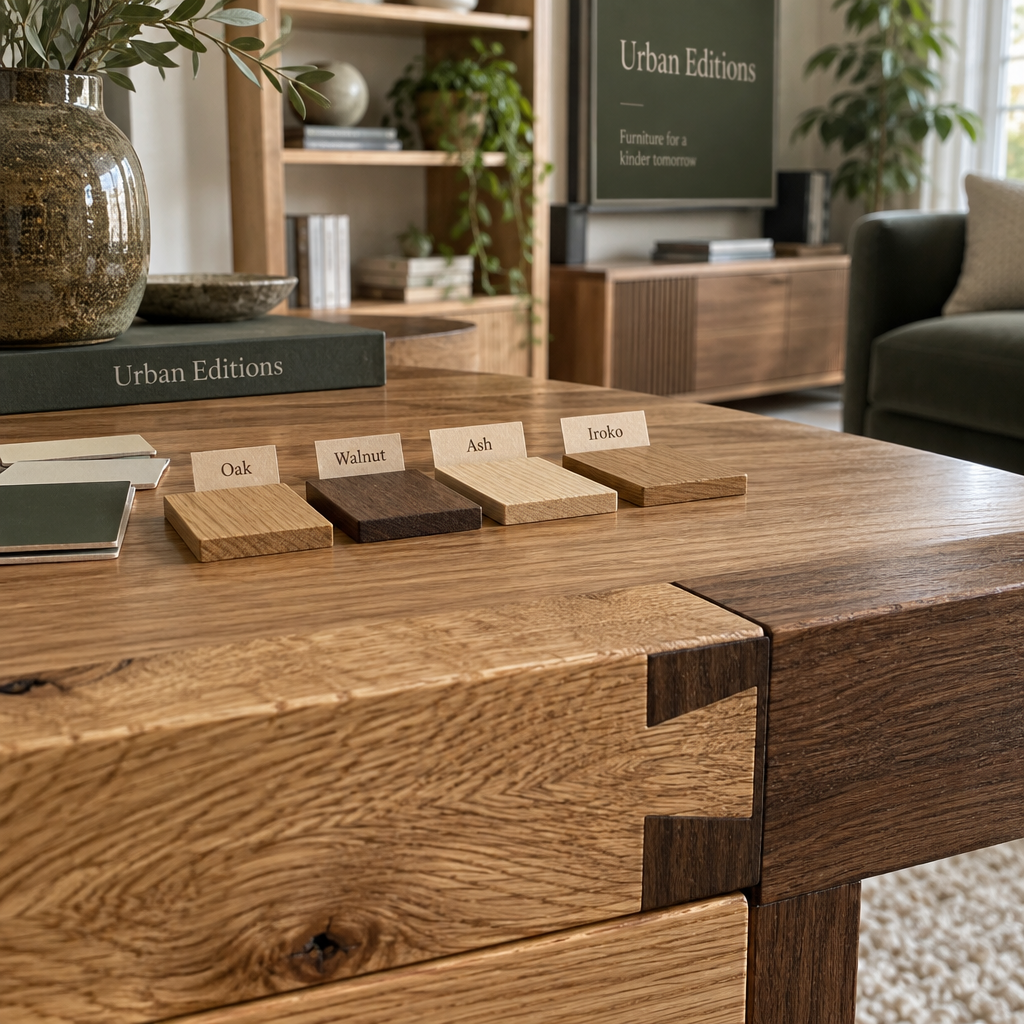
The Urban Editions is a UK furniture store where designs are made in the UK and built to order in a family-run UK joinery. Customers can select from sustainably sourced oak, walnut, ash and iroko, then order wood samples before committing to a finish.
What you are really paying for
The price covers more than timber. Joinery, sanding, finishing, hardware, design work and packing all affect the final figure. A low-priced unit may look similar at first glance, yet use thinner panels, weaker fittings or a finish that marks quickly.
A practical test is simple: identify the room problem first. If you need vinyl storage, prioritise record capacity and shelf access. If you need a work surface, prioritise depth, legroom and cable routing before choosing a colour.
Which solid wood suits a modern interior?
Oak is the safest choice for a light, adaptable interior. Walnut gives a deeper brown tone and a more dramatic mid-century feel, while ash has a paler appearance with visible grain. Iroko brings warmer colour and a distinctive character. Choose the timber that supports the room’s light and existing finishes.
Wood
Typical visual character
Works well with
Planning point
Oak
Light to medium, pronounced grain
Neutral walls and Scandinavian styling
A flexible everyday choice
Walnut
Deep brown, rich grain
Mid-century rooms and darker upholstery
Darker surfaces show dust sooner
Ash
Pale, open grain
Bright contemporary interiors
Suits rooms needing a lighter visual weight
Iroko
Warm, varied golden-brown tones
Natural textures and bold accents
Order a sample because grain varies
Oak for flexible styling
Oak works across modern and mid-century interiors because its grain adds interest without overwhelming a room. It pairs well with black metal, cream upholstery and painted walls. A 120-centimetre oak console, for example, can sit behind a sofa or along a hallway wall without dictating the rest of the scheme.
Choose oak when you want furniture that can move between rooms over time. Its relatively light appearance also helps a larger cabinet feel less visually heavy than the same design in walnut.
Walnut for stronger contrast
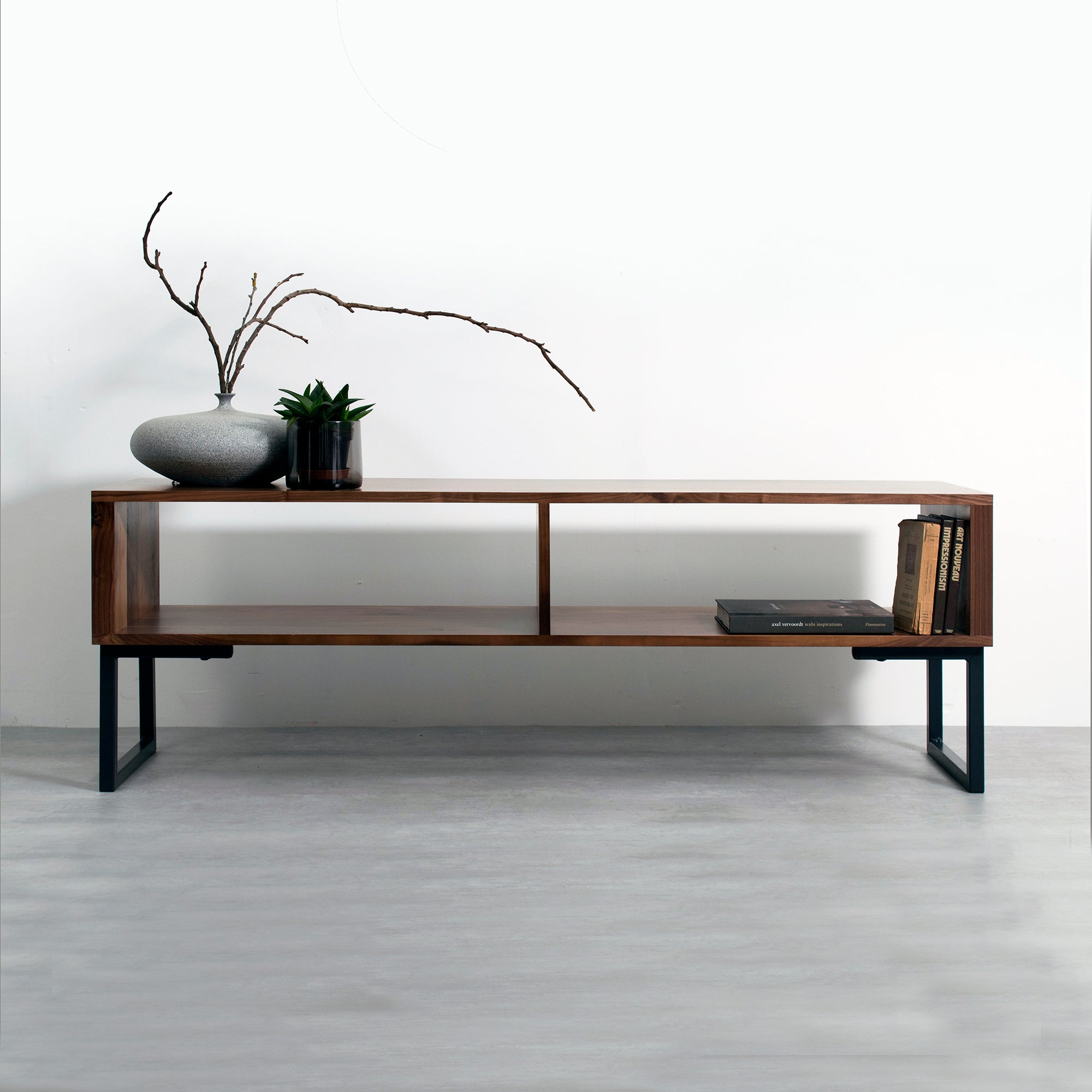
Walnut creates a richer backdrop for records, books and turntable equipment. It suits rooms with warm lighting, brass details or darker seating. The drawback is visual weight: a long walnut media unit may dominate a small lounge if the surrounding furniture is also dark.
Use a sample beside your flooring and wall colour. Timber changes under daylight, warm lamps and north-facing light, so a screen image is not enough for a confident decision.
Ash and iroko for character
Ash is a strong option when you want a clean, pale room with visible grain. It keeps a minimalist design from looking flat, especially when paired with white walls and simple black hardware.
Iroko has more tonal variation and a warmer presence. It is a good choice for a room built around natural materials, but inspect the sample closely because variation between boards is part of its appearance, not a defect.
How do you size furniture for a modern home?
Measure the available wall, the access route and the clearance around the furniture before ordering. Record the width, height and depth in centimetres, then check skirting boards, sockets, radiators and door swings. A cabinet that fits the wall can still fail if it cannot pass through a 72-centimetre doorway.
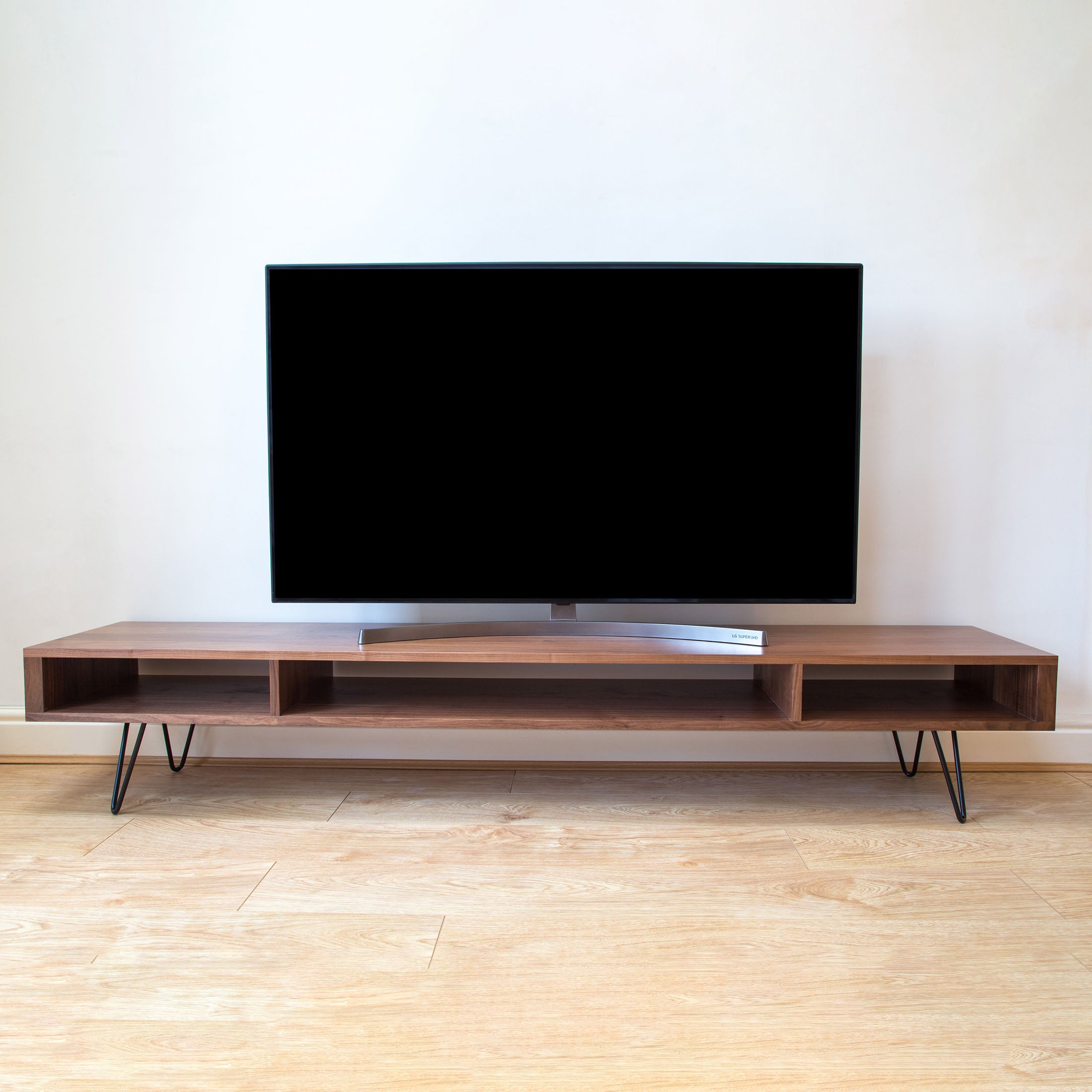
Start with masking tape on the floor. Mark the footprint of a proposed 180-centimetre TV stand or 100-centimetre desk, then walk around it with a normal chair in place. This exposes cramped routes faster than looking at a product image.
A practical measuring sequence
Measure the wall from skirting edge to skirting edge.
Note socket positions and the route for cables.
Measure the narrowest doorway, stair turn and corridor.
Mark the furniture footprint with masking tape.
Check door, drawer and record access when open.
Keep the final measurements with your order details.
Depth deserves particular attention. A 40-centimetre-deep console may suit a hallway, while a turntable stand often needs more room for equipment, records and safe handling. Do not assume that two products with the same width will occupy the same practical space.
Height affects balance. A low TV stand supports a relaxed viewing position and leaves more wall visible, whereas a taller media unit offers extra storage but creates a stronger block of timber. In a compact lounge, one wide low piece usually looks calmer than several narrow units.
Allow room around the piece
Furniture needs breathing space. Leave enough clearance to clean behind it, open doors and reach sockets without moving the entire cabinet. For a desk, the chair zone matters as much as the desktop: allow space to pull the chair back and stand comfortably.
Check the route into the house as well. A solid hardwood cabinet is heavier than a flat-pack equivalent, so lifts, staircases and tight corners deserve attention. Confirm access before production begins, particularly for a large built-to-order piece.
Scale the whole room
Avoid filling every wall. One 180-centimetre media unit, a compact coffee table and a single console may create a more settled room than several smaller items competing for attention. Modern interiors benefit from visible floor and wall space.
The right furniture warehouse will provide exact product dimensions rather than relying on labels such as “large” or “compact”. Treat those numbers as part of the design, not as a final check after you have chosen the finish.
Which furniture designs solve common room problems?
Choose furniture by the job it must perform. Vinyl storage cabinets protect and organise records, TV stands manage screens and cables, desks create a dependable work zone, and coffee tables control the distance between seating. Console tables add landing space without demanding the footprint of a sideboard.
A design that looks attractive but fails its daily task becomes clutter quickly. Start with the objects you need to store, then select the shape and finish around them.
Vinyl storage and turntable equipment
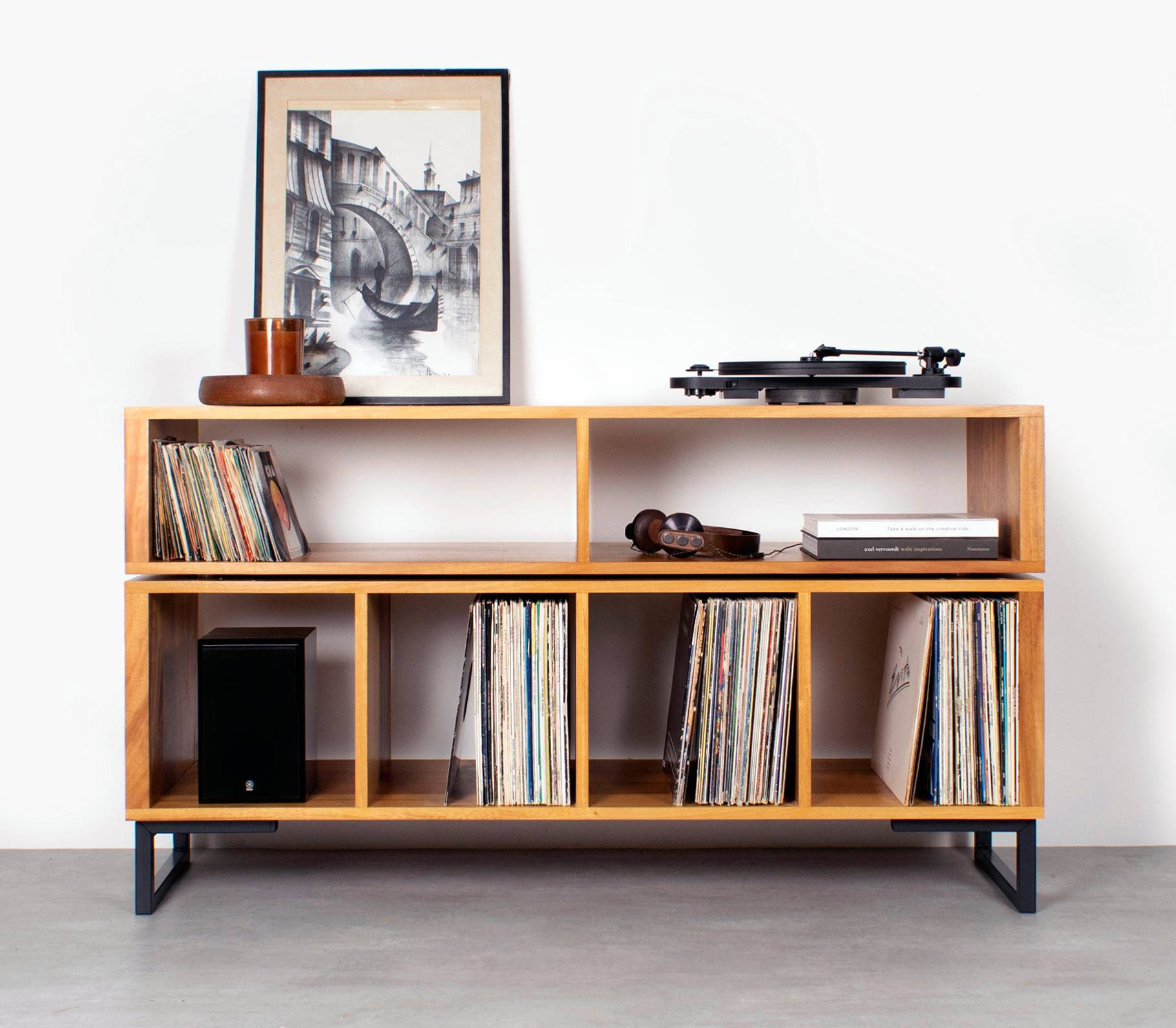
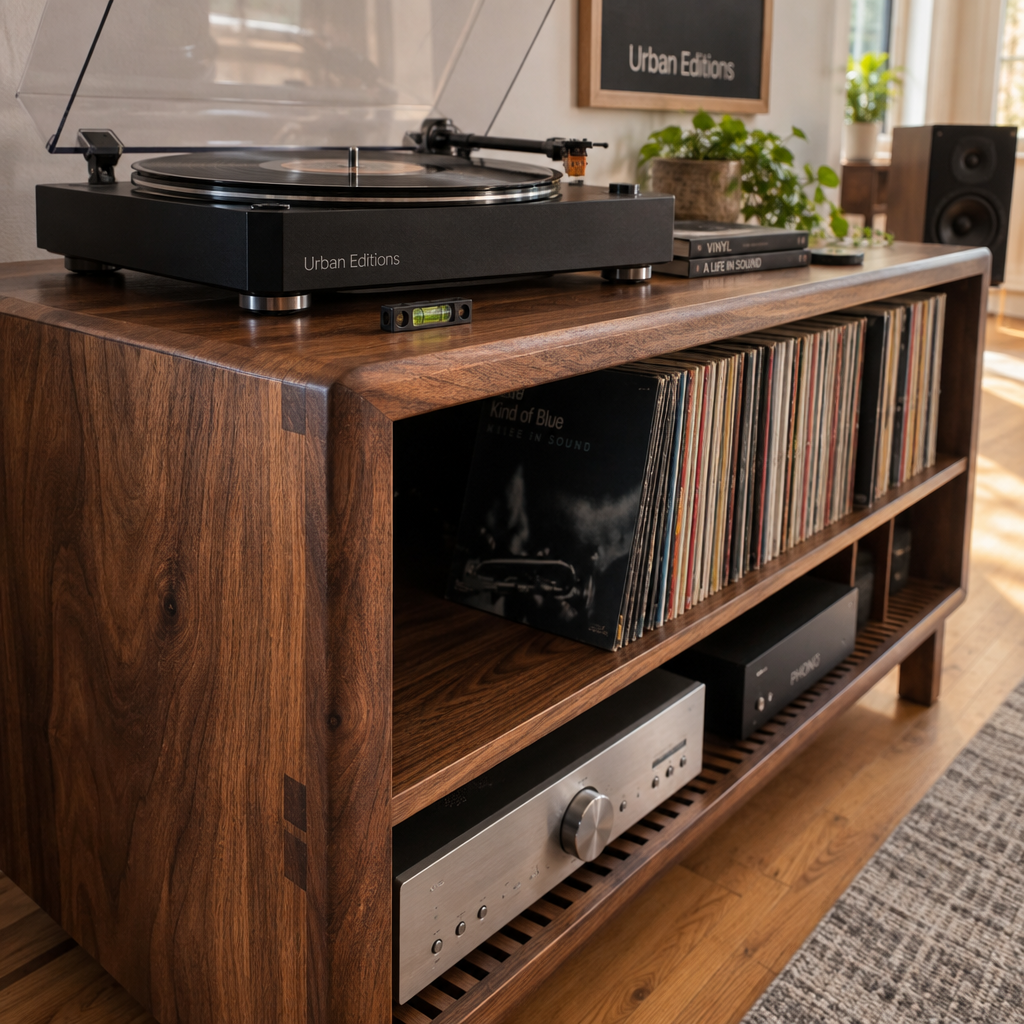
Records need vertical storage with sensible access. A vinyl cabinet should leave enough room to browse sleeves without lifting a heavy stack, while the top must provide a stable surface for a turntable and related equipment.
Keep the turntable away from the edge of the cabinet and plan for cables at the rear. If your collection is growing, choose a design with capacity beyond today’s total rather than filling every compartment on day one.
For considered media storage solutions, The Urban Editions offers handcrafted vinyl storage cabinets, turntable stands and related solid hardwood designs in oak, walnut, ash and iroko. You can select dimensions and order a sample before choosing the finish.
TV stands and media units
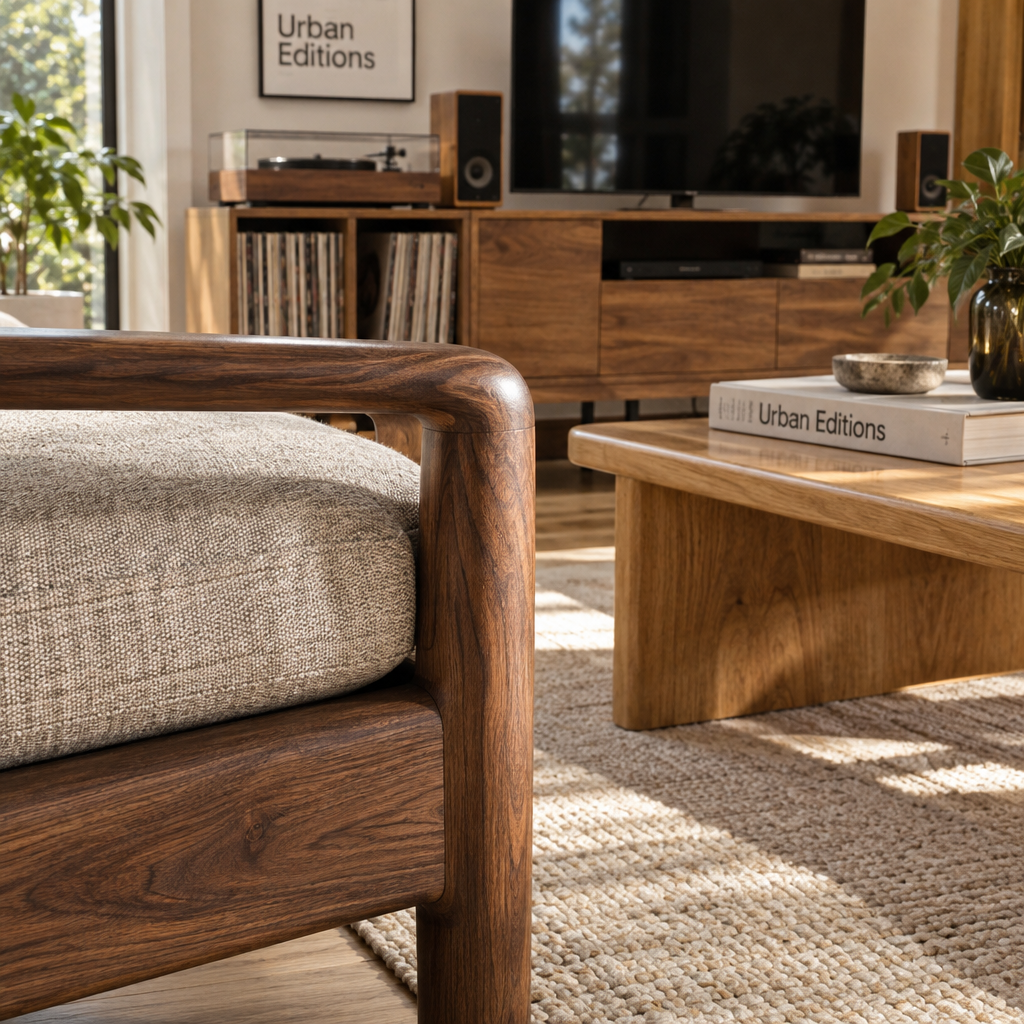
A TV stand should support the screen, hide or organise connected equipment and leave cables accessible. Check the width of the television base, the position of the sockets and the depth required for consoles, amplifiers or streaming boxes.
Avoid pushing every device into a sealed compartment. Electronics need ventilation, and remote controls work better when doors do not block signals. A rear cable opening also makes future changes less frustrating.
Desks, coffee tables and consoles
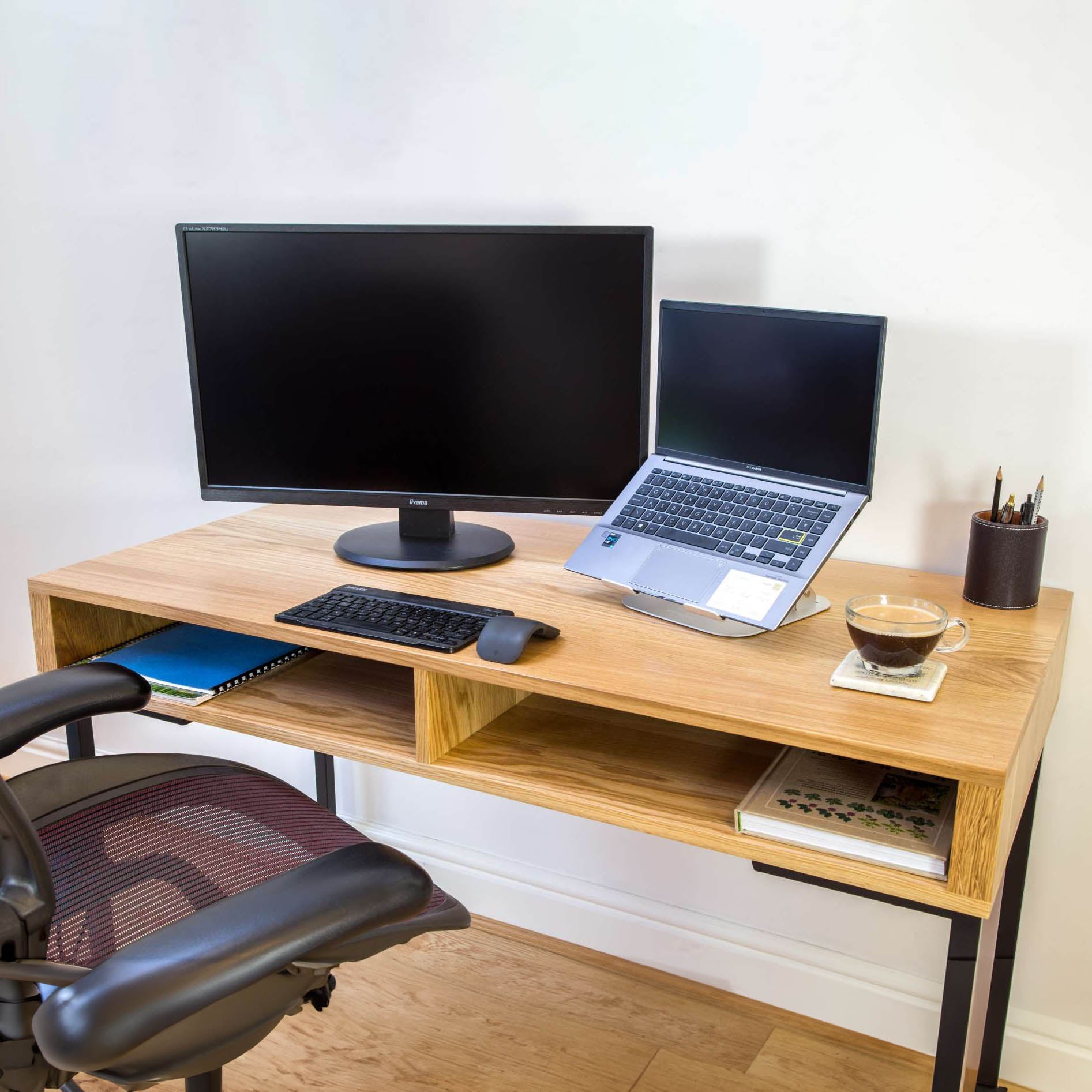
A desk needs enough depth for the work you actually do. A laptop-only setup takes less room than a monitor, keyboard, notebook and lamp. Measure the chair arms as well, because a desktop can be generous while the seating space remains restrictive.
Coffee tables should follow the seating arrangement rather than dominate it. A rectangular table suits a sofa, while a smaller round design improves movement through a compact room. Console tables work best when their depth leaves a clear passage behind the sofa or along the hall.
Is custom furniture worth the investment?
Custom furniture is worth the investment when standard sizes waste space, create awkward gaps or force compromises in storage. It is less sensible when the room is temporary or the piece will move frequently. Compare the cost with the years of use and the cost of replacing a poor fit.
The main objection is price. Built-to-order solid hardwood furniture costs more than mass-produced flat-pack furniture because it involves better materials, joinery and individual production. The answer is to buy fewer, better-chosen pieces and specify the dimensions you will use every day.
Custom dimensions that make a difference
A custom width can use an awkward wall without leaving a dust-catching gap. A custom depth can keep a hallway open. A custom height can align a console with a window ledge or place a TV at a comfortable viewing level.
Write down the exact reason for each adjustment. “Make it fit” is too vague. “Keep 85 centimetres of clear passage beside the sofa” gives the maker a useful design constraint.
Finishes and samples
Order a wood sample before choosing the final finish. Hold it beside the floor, skirting and largest upholstered item, then view it in morning and evening light. This small step prevents a common error: selecting a colour that looks right on a screen but clashes with the room.
A finish also changes how often the furniture needs attention. Darker surfaces show dust and fingerprints more clearly, while heavily textured grain draws the eye. Choose based on your cleaning habits as well as appearance.
When standard furniture is enough
Standard furniture works when you have a straightforward wall, flexible storage needs and a clear access route. A ready-sized coffee table is often easy to place, particularly in a rented flat or a room that may change soon.
Built-to-order furniture makes more sense for media walls, record collections and narrow spaces. The useful test is whether the custom detail solves a real problem rather than adding an option for its own sake.
How do you judge quality and long-term value?
Judge quality through materials, construction, finish and service details rather than appearance alone. Look for clear information about solid hardwood, dimensions, care and delivery. A well-made piece should feel purposeful in use, with doors, drawers and shelves aligned to the job they perform.
Run your hand across accessible edges and surfaces where possible. Clean sanding, consistent gaps and stable hardware indicate care in production. Online, ask for photographs of joinery or request samples when the product page does not answer your questions.
Construction and stability
A wide cabinet needs sound support beneath its top and across its base. Shelves must suit the intended load, particularly when storing books, records or equipment. Heavy objects should sit low where possible, keeping the centre of gravity stable.
Check how doors open and where hinges sit. A cabinet may fit its wall but fail when the door collides with a radiator or adjacent furniture. This is why a room plan is as valuable as a product photograph.
Finish and maintenance
Solid wood responds to its environment. Keep furniture away from direct heat sources, wipe spills promptly and use a soft cloth rather than abrasive cleaners. Follow the maker’s care instructions for the specific finish.
Expect natural variation in grain and tone. Two oak boards will not look identical, and walnut may include lighter or darker areas. That variation is part of solid wood’s appeal, but samples give you a more accurate expectation.
Delivery and ordering
A UK-made, built-to-order piece requires more planning than a boxed item collected from a warehouse. Confirm the estimated production and delivery schedule, then measure the entrance before ordering. Free UK delivery is available from The Urban Editions, with international shipping also offered.
Keep your order confirmation, chosen dimensions and sample reference together. If the room changes before delivery, contact the maker promptly rather than assuming an alteration is possible after production has started.
How should you compare furniture warehouse prices?
Compare the complete value, not the lowest ticket price. Put material, dimensions, storage function, finish, delivery and expected use beside one another. A £700 solid hardwood cabinet that remains useful for a decade may be better value than replacing a £300 alternative twice, but treat that as a planning comparison, not a guaranteed lifespan.
Price differences often come from wood species and labour. Walnut usually creates a different material cost from ash, while a custom width requires individual planning. Ask what changes the price before removing the features that make the piece work.
A simple comparison helps:
Question
Lower-cost option
Higher-value option
Material
Composite core or thin veneer
Solid hardwood construction
Sizing
Fixed standard dimensions
Custom dimensions available
Storage
Open or limited compartments
Storage planned around equipment
Finish
One standard appearance
Samples and finish selection
Production
Ready-made stock
Built-to-order UK joinery
Delivery
Collection or variable charge
Clear delivery terms, including free UK delivery where offered
Do not compare a small coffee table with a large media unit by price alone. Compare like with like: similar width, material, storage and finish. Otherwise, the cheaper item may simply be doing less work.
A furniture warehouse can offer strong value when it combines design choice with practical customisation. The point is not to fill a room quickly. It is to buy furniture that fits once, works daily and remains compatible with the way your home changes.
Before ordering, make a short checklist: exact dimensions, timber, finish, cable access, storage capacity and delivery route. If one answer is unclear, resolve it before payment rather than after the furniture arrives.
Conclusion
Choose a furniture warehouse by the problems it solves, not by the number of products it displays. For a tailored media setup, browse the custom TV furniture collection, compare dimensions and order a wood sample. Select fewer solid hardwood pieces, give each one enough space, and build the room around daily use.
Frequently Asked Questions
Is solid wood furniture better than veneer?
Solid wood is the stronger choice when you want substantial construction, visible grain and the option to refinish selected surfaces later. Veneer can still suit some interiors, especially where weight or budget matters, but check the core material and edge construction before comparing products.
How long does built-to-order furniture take?
The production time depends on the design, dimensions and current joinery schedule, so confirm it before ordering. Allow extra planning time for a large media unit, and measure the delivery route at least once before the build is complete.
Which wood is best for a TV stand?
Oak is the most adaptable choice for many UK interiors, while walnut suits darker mid-century schemes and ash keeps a room lighter. Order samples beside your flooring and wall colour, because daylight can change how each timber appears.
Can I customise furniture for a small flat?
Yes. Custom width and reduced depth are especially useful in flats, narrow halls and open-plan rooms. Measure the smallest doorway, stair turn and lift entrance, then preserve a clear route around the finished piece rather than using every available centimetre.