September SPECIAL OFFER! Sign-up to our newsletter to receive the latest offers and news.
Vinyl Holder: Practical Solid Wood Record Storage
12 inches (30.5 cm) is the diameter of a standard LP, so a vinyl holder needs room for more than the record alone. Choose by sleeve fit, upright storage and the space beside your turntable, not the headline capacity.
The right format keeps your collection easy to browse without letting records lean or gather avoidable dust. Compare crates, open racks and enclosed cabinets against your actual setup, then leave room for the collection to grow.
Key Takeaways
Measure your largest sleeve, including gatefolds
Store LPs upright, without crowding or leaning
Open racks offer access, not much dust protection
Match the holder’s footprint to your room
Choose a combined stand only if your turntable lives there
Start with how you handle records, not maximum capacity
For regular listening, choose a holder that keeps LPs upright and lets you flick through them without pulling out a whole row. A crate suits a small, portable group; an open rack gives quick access; an enclosed cabinet offers a barrier against dust. The best fit depends on where you browse and how much protection you want.
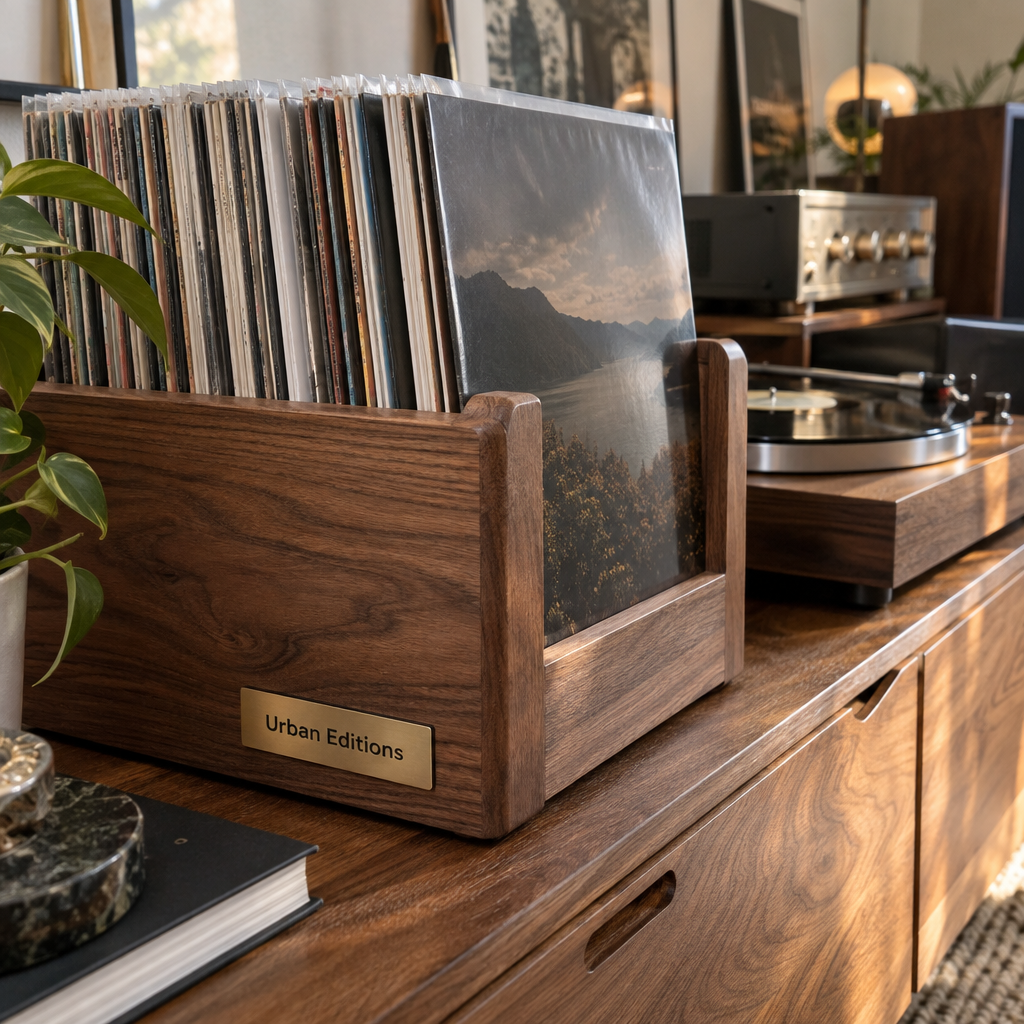
A record crate is a straightforward choice for a small selection beside a chair or amplifier. It’s easy to move and can keep a few frequently played records together. But a full crate gets heavy, and a basic box may not support records evenly or leave enough room to browse comfortably.
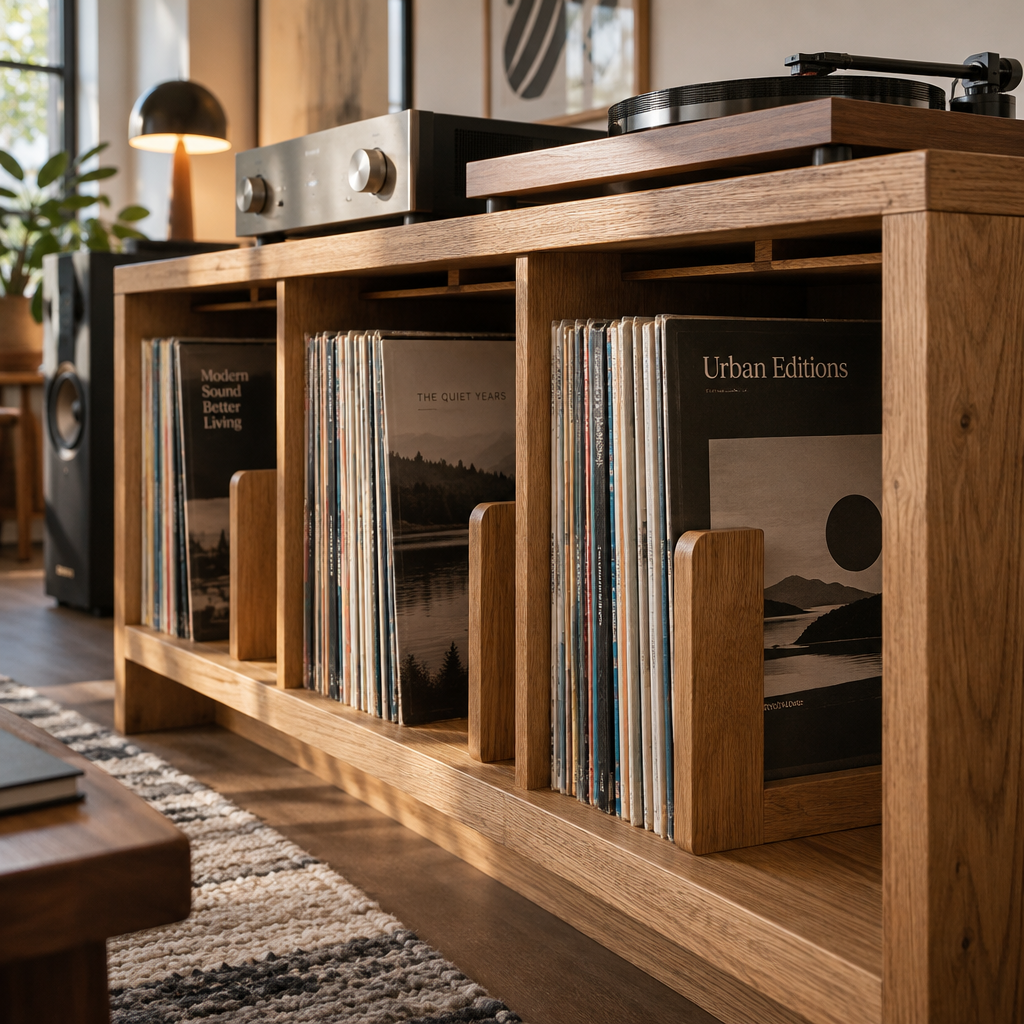
Open record racks display sleeves clearly and make finding an album quick. Look for dividers or compartments that keep records standing upright as the collection changes. A decorative rack with a wide opening may look tidy when full but leave a short row leaning over, which puts pressure on sleeves.
Storage format
Access
Dust barrier
Best fit
Record crate
Easy to move and browse
Low
A small listening selection
Open record rack
Fast visual browsing
Low
Regular access in a clean room
Enclosed vinyl cabinet
Browsing through doors or openings
Higher
A larger collection needing coverage
Combined turntable stand
Records stored beside the player
Depends on design
A single listening station
An enclosed cabinet keeps records covered between listening sessions, though doors add a step when you want to browse. Check how the interior is divided: a broad, unsupported space can still let LPs tip, while compartments help keep a row upright.
Capacity alone doesn’t decide usability. Think about how often you play records and whether the holder sits near your listening position. A larger unit across the room may store more LPs, but a smaller one within easy reach can make everyday browsing simpler.
Check sleeve fit before trusting the capacity
Check the holder’s internal dimensions, not only its advertised capacity. Measure the largest jacket you own, including a gatefold or box set, and compare it with the clear width and height inside the storage area. A 12-inch LP is a useful starting point, but its outer sleeve takes up more room than the disc.
Measure the space records actually need
Take measurements inside the compartment, between any dividers or rails. External dimensions can include the frame, panels and legs, so they don’t tell you how much room records have. Check the opening as well: a cabinet may have ample internal space but a narrow door that makes larger jackets awkward to remove.
Then consider depth. The record row should sit securely without sleeves being pushed against the back panel or protruding into a walkway. If the holder has a raised front rail, make sure it doesn’t cover too much of the sleeve or make it harder to grip an album.
Treat capacity as a working limit
Capacity figures are useful for comparing designs, but only when the records fit without pressure. A working capacity leaves enough space to slide an LP out and return it without forcing the sleeves together. Overcrowding can scuff jackets and make the records at the ends lean.
To check a holder against your collection, use this sequence:
Count the LPs you want to store there now.
Measure the widest sleeve or box set in that group.
Check the unit’s internal width, height and depth.
Confirm dividers keep a short row upright.
Leave spare room for new records and easy retrieval.
For example, if you have 80 LPs, assess the storage space against those 80 jackets rather than assuming a stated capacity will suit them. The thickness of your sleeves and the number of gatefolds affect how tightly they fit; the only reliable check is the holder’s dimensions against your own records.
Solid hardwood brings lasting structure and a considered finish
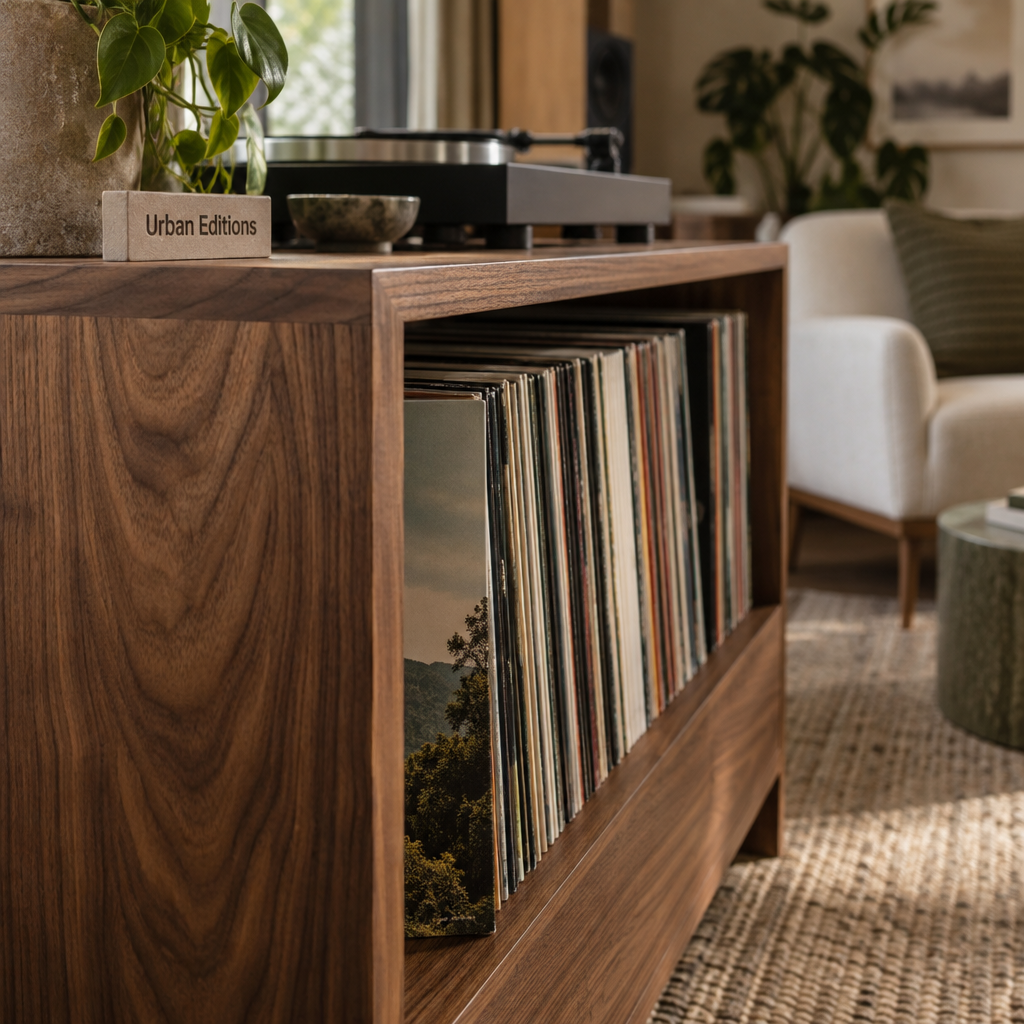
A solid hardwood holder gives you a substantial piece of furniture, with the grain and colour visible across its surfaces. The Urban Editions uses sustainably sourced oak, walnut, ash and iroko in furniture designed and made in the UK. Choose the wood for how it will sit with the rest of your room, as well as for the storage layout.
Choose a wood that suits your room
Oak has a pronounced grain that works well when you want the furniture to read as a clear feature. Walnut has a darker look; ash is a lighter option; iroko brings a warm tone. Order samples if you need to compare finishes beside your flooring or other furniture, since a screen won’t show how the wood looks in your light.
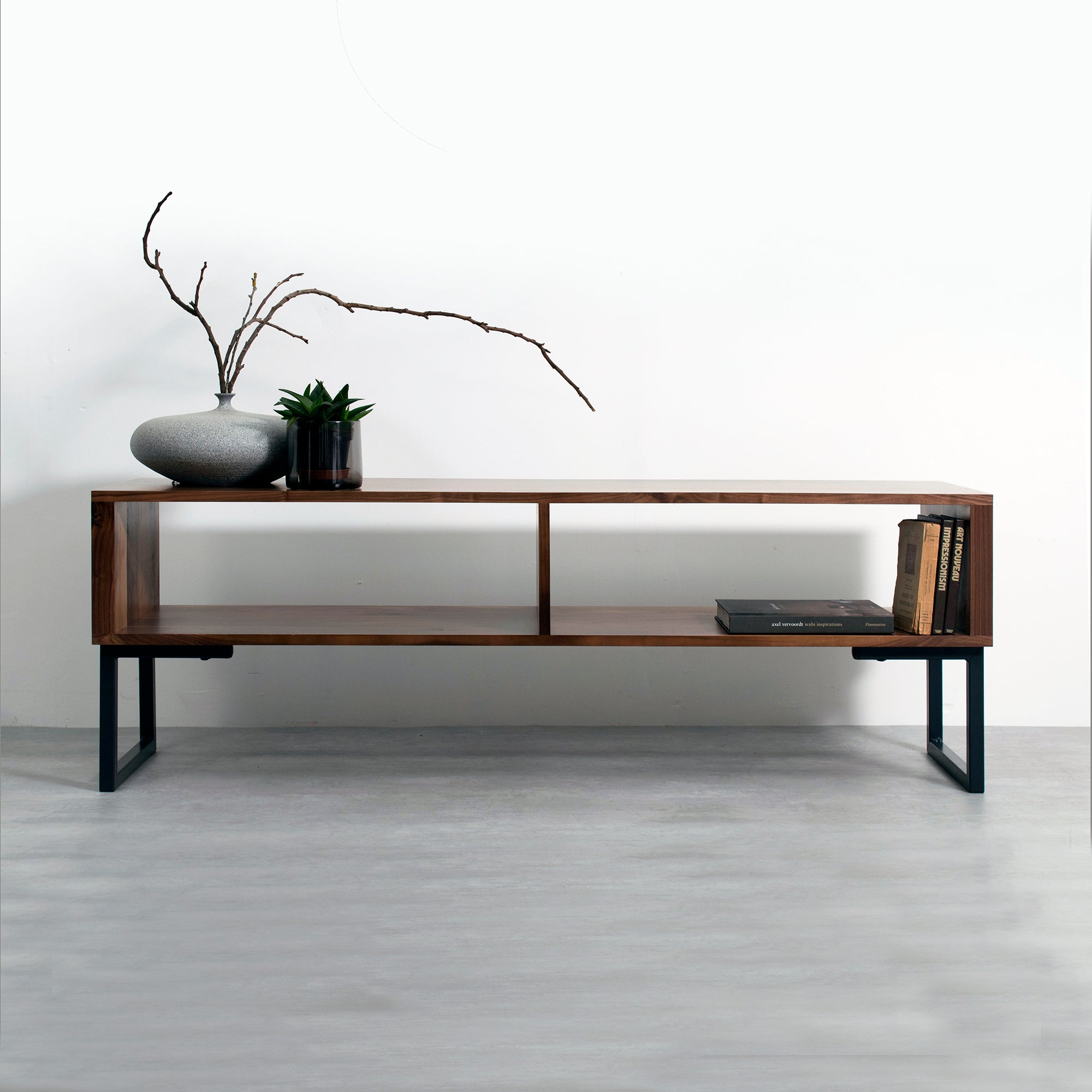
The finish affects the overall feel, but the working details matter too. Check how the record compartments are separated and whether their edges leave room to grip a sleeve. A clean, restrained design can still be practical when the dividers guide the records upright instead of leaving a wide, unsupported row.
Look at the structure as well as the surface
Solid hardwood is heavy compared with a lightweight crate, so decide where the holder will live before buying. Measure the route into the room, including doorways and tight turns. A large cabinet that fits the final spot may still be difficult to manoeuvre through a narrow hall.
A useful vinyl holder supports records upright and leaves enough room to retrieve each sleeve without forcing the row.
Ask for the internal measurements and details of the storage layout if they aren’t clear in the product information. Built-to-order furniture can suit a particular space, but custom dimensions still need to accommodate the largest sleeves you own. The Urban Editions builds its furniture to order in a family-run UK joinery, with options to customise designs and order wood samples.
Open racks give access; enclosed cabinets limit dust
Choose an open rack when quick browsing matters more than keeping every sleeve covered. Choose an enclosed cabinet when you want a physical barrier between your records and everyday room dust. Neither format removes the need to keep the storage area clean, but the doors on an enclosed unit reduce direct exposure between listening sessions.
Open storage keeps browsing simple
An open rack makes it easy to scan sleeves at a glance and pull out an album without opening a door. It suits collections that are played often and rooms where the rack can sit away from cooking areas, open windows or other sources of dust. Its drawback is direct exposure: a display rack doesn’t offer much dust protection.
Keep the rack away from direct sunlight and heat sources, and don’t position it where people regularly brush past the sleeves. Dust can settle on exposed record jackets and the playing surfaces of records left outside their inner sleeves. A quick-to-reach rack is only convenient if its location also suits the condition of your collection.
Enclosed storage adds a barrier
An enclosed cabinet covers records when they’re not in use, while still giving you a dedicated place to browse. Check the door opening, shelf divisions and access to the sleeves before choosing one. A very deep or crowded compartment can make the records at the back harder to reach, even if the cabinet protects them from dust.
If you want hardwood furniture with enclosed storage, browse solid-wood media units and compare their layouts with your collection and room. The Urban Editions offers furniture built to order in the UK, with wood choices including oak, walnut, ash and iroko. Confirm the internal dimensions before settling on a design.
Plan the footprint around the room and your collection
Measure the available floor space before choosing a holder, then mark out its width and depth with tape. This reveals whether doors, drawers or a nearby chair will get in the way. Include the space needed to stand in front and browse; a unit that technically fits against a wall may still leave too little room to use comfortably.
A freestanding rack needs a stable, level position so records stay upright. If the floor slopes or the rack sits on a thick rug, check that it doesn’t wobble when you remove a sleeve. Keep it clear of radiators and strong sunlight, which can expose records and sleeves to unwanted heat.
Think about the shape of the room, not just the wall where the holder will go. A narrow room may suit a taller unit, while a wide low cabinet can sit beneath other furniture. Check the route around the unit as well: a protruding corner near a doorway or chair can turn browsing into an obstacle.
Plan for the collection you expect to keep, but don’t buy the largest holder available by default. If you currently have 80 records, decide how many you want within easy reach and how many belong in longer-term storage. A smaller, well-used rack beside your listening chair may be more practical than a larger unit that dominates the room.
Leave deliberate spare room. Records need enough space to stand straight, and your collection may grow through gifts or the occasional new release. A compartment filled to its limit is harder to browse and leaves no simple place for the next record. Check the usable space, not just the unit’s overall width.
Choose a combined stand only when the turntable belongs there
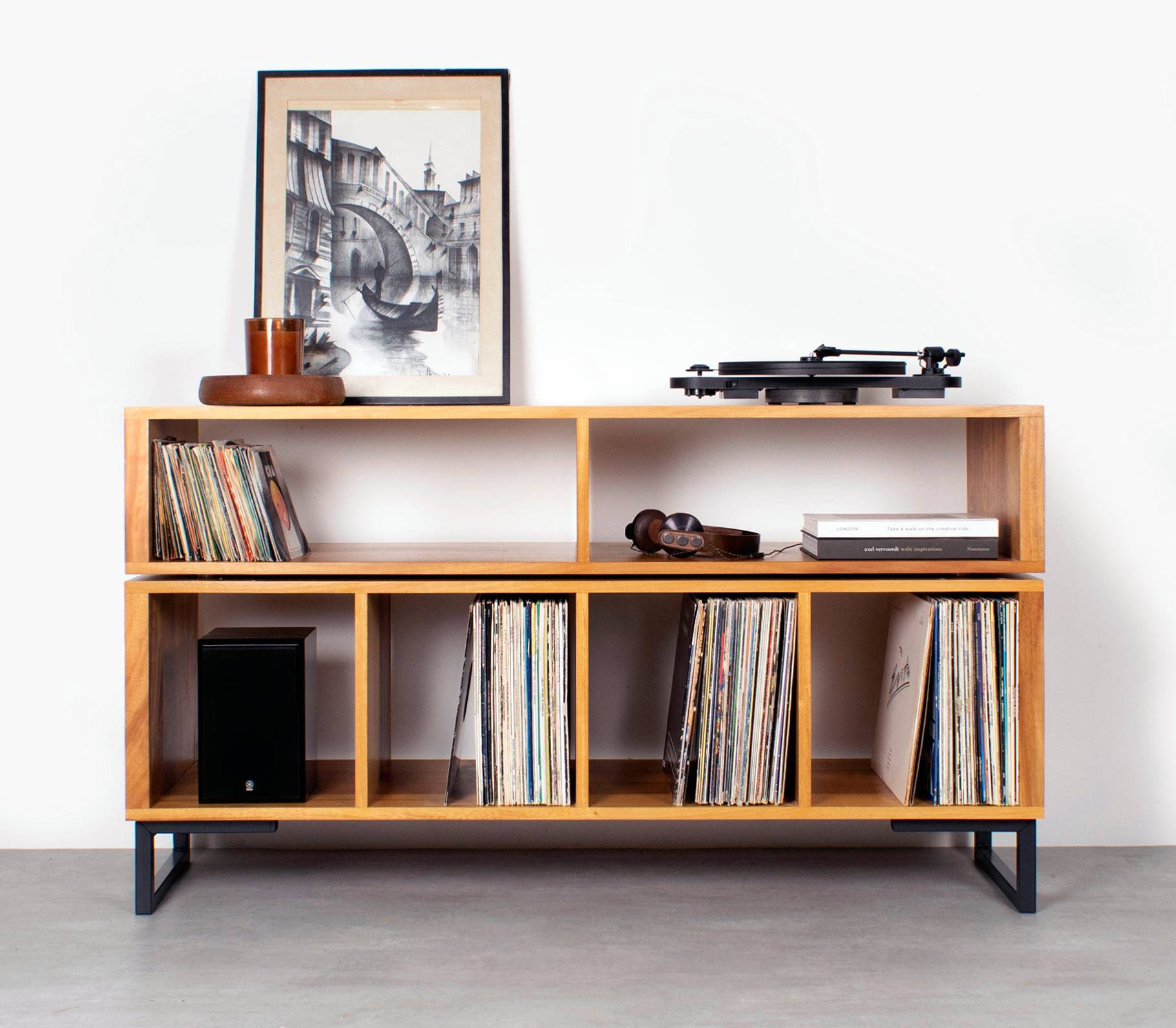
A combined turntable stand makes sense when your player and records share one listening station. It keeps the records you use close to the deck and avoids buying separate furniture for each. If the turntable is already set up elsewhere, a record-only holder usually makes better use of your floor space.
Keep separate furniture when the player has its own place
A turntable may already sit on a dedicated surface, in a cabinet or on another part of the room. In that case, a combined stand can duplicate furniture and create an unnecessary gap between your records and the listening setup. Choose a storage-only unit if it suits the room and makes browsing easier.
Also consider the connections and controls around your player. A stand should leave practical access to the turntable, cables and any equipment in use. Don’t assume an attractive top surface will work for your setup without checking its dimensions and where the cables need to run.
Combine storage and listening when the layout supports it
When you want records beside the player, compare the top surface, storage access and whole-unit footprint together. Check that you can remove sleeves without reaching across the turntable, and that the records won’t obstruct controls or cables. The right layout keeps playing and browsing in one place without making either task awkward.
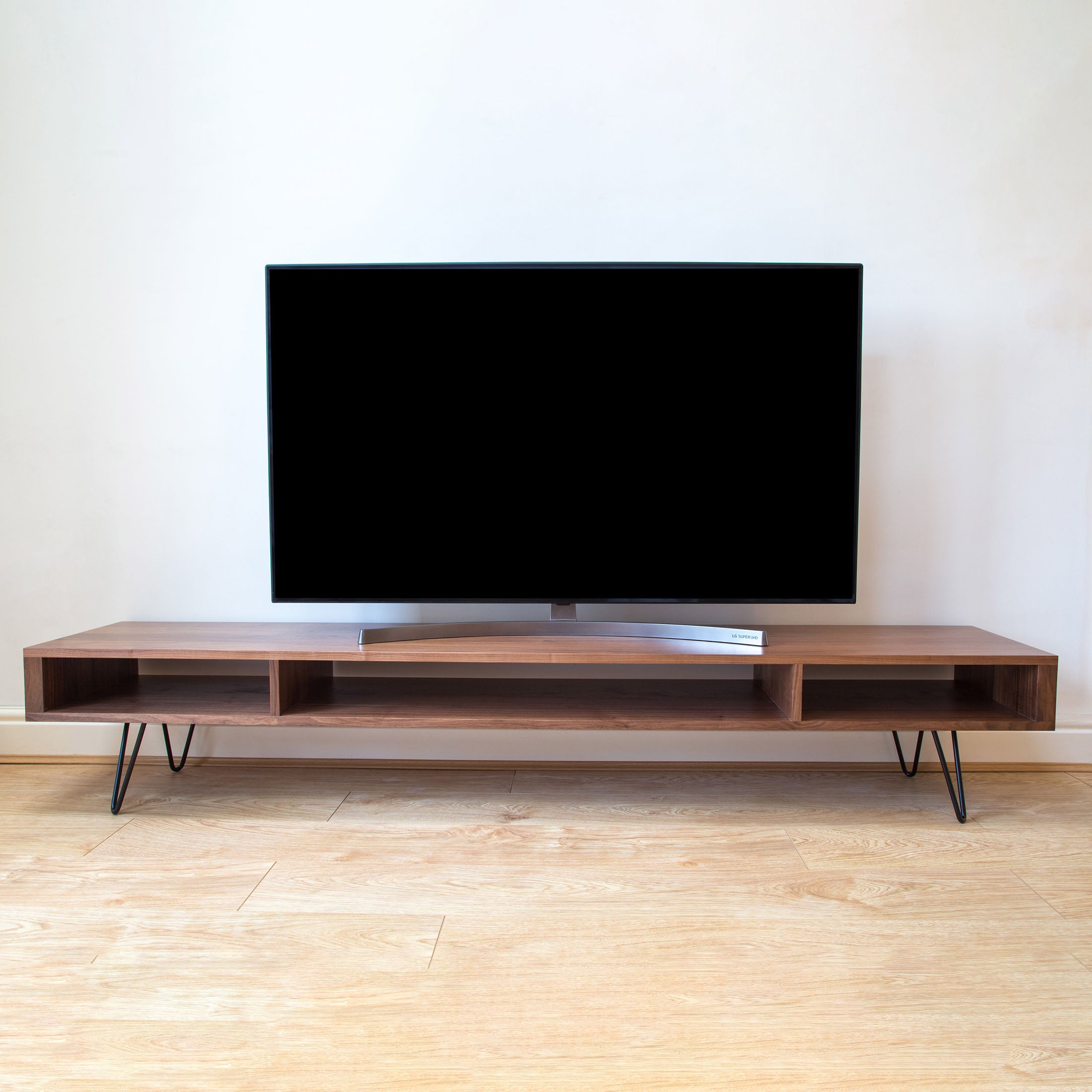
For a built-to-order option, compare the tall stack minimalist record-player stand with your room measurements and listening arrangement. The Urban Editions makes furniture in the UK using solid hardwoods including oak, walnut, ash and iroko, with customisable designs. Confirm that the storage and surface suit your actual equipment before ordering.
A combined unit does use more floor space than a simple crate, and it may not suit a turntable that lives elsewhere. Make the decision around your listening habits: choose one if you’ll use the shared station regularly; otherwise, keep storage and playback separate.
Conclusion
Measure your largest sleeve, mark out the available floor space and decide whether your records need an enclosed barrier. Choose a record-only holder when your turntable already has a home; pick a combined stand when both will share a listening station.
Frequently Asked Questions
Can I store 7-inch singles in a holder made for LPs?
Yes, but use a smaller compartment or a divider so singles don’t fall over in a space designed for 12-inch records. Keep their sleeves upright and check that the divider supports the row from side to side.
Is a loft a suitable place to store vinyl?
No. Loft temperatures can swing widely, so choose an indoor room with a more stable environment instead. Keep records away from radiators, direct sunlight and damp-prone walls.
Should box sets go at the end of a row?
Store box sets upright with their spines supported, but don’t use them to wedge a tightly packed row in place. If a set is too tall or wide for the compartment, store it separately rather than forcing it into the space.
Can I place a record holder on carpet?
Yes, if it sits level and stays stable when you remove a record. Check for rocking after placing it, especially on a thick carpet, and adjust its position before loading the shelves.




%20is%20the%20diameter%20of%20a%20standard%20LP,%20so%20a%20vinyl%20holder%20needs%20room%20for%20more%20than%20the%20record%20alone.%20Choose%20by%20sleeve%20fit,%20upright%20storage%20and%20the%20space%20beside%20your%20turntable,%20not%20the...)