September SPECIAL OFFER! Sign-up to our newsletter to receive the latest offers and news.
Record Storage Unit: Solid Wood Furniture for LPs
About 31 cm across: that’s the space a sleeved 12-inch LP needs before you allow room to pull it out. Choose a record storage unit by its clear shelf dimensions and access, not its headline capacity, and you’ll avoid records wedged into a tight row or furniture that overwhelms your room.
For a collection that’s growing, make space for the records you own now and those you expect to buy next. Solid hardwood gives you a durable, considered piece of furniture, but the right design still depends on your storage needs, room layout and whether your turntable needs a place on top.
Key Takeaways
Measure usable internal space, not external cabinet dimensions.
Store LPs upright, with enough room to browse.
Leave headroom for collection growth.
Check shelf-load guidance before filling a cabinet.
Choose open or enclosed storage to suit your room.
Plan a separate, stable surface for your turntable.
Start with your collection, not the advertised capacity
A capacity figure is useful only if the unit fits your records and gives you room to handle them. Start by counting your collection, then look at the shelf space that holds sleeved albums upright. The usable space matters more than a large number on a product listing.
Allow space for growth
If you have 180 records today, don’t shop for a unit that only just fits 180. New releases, second-hand finds and gifts all add up, while an overfilled shelf makes it harder to browse and remove records without catching their sleeves.
Think in terms of comfortable capacity: records should stand upright and move with a little give, not press tightly against one another. Leave a clear part of a shelf or a spare bay for additions. This also gives you room to sort records by artist, genre or listening mood.
When comparing designs, check whether a capacity estimate refers to LPs, singles or a mixture. Those formats take up different amounts of shelf space. A large collection of gatefold albums also needs more room than a row of standard single sleeves.
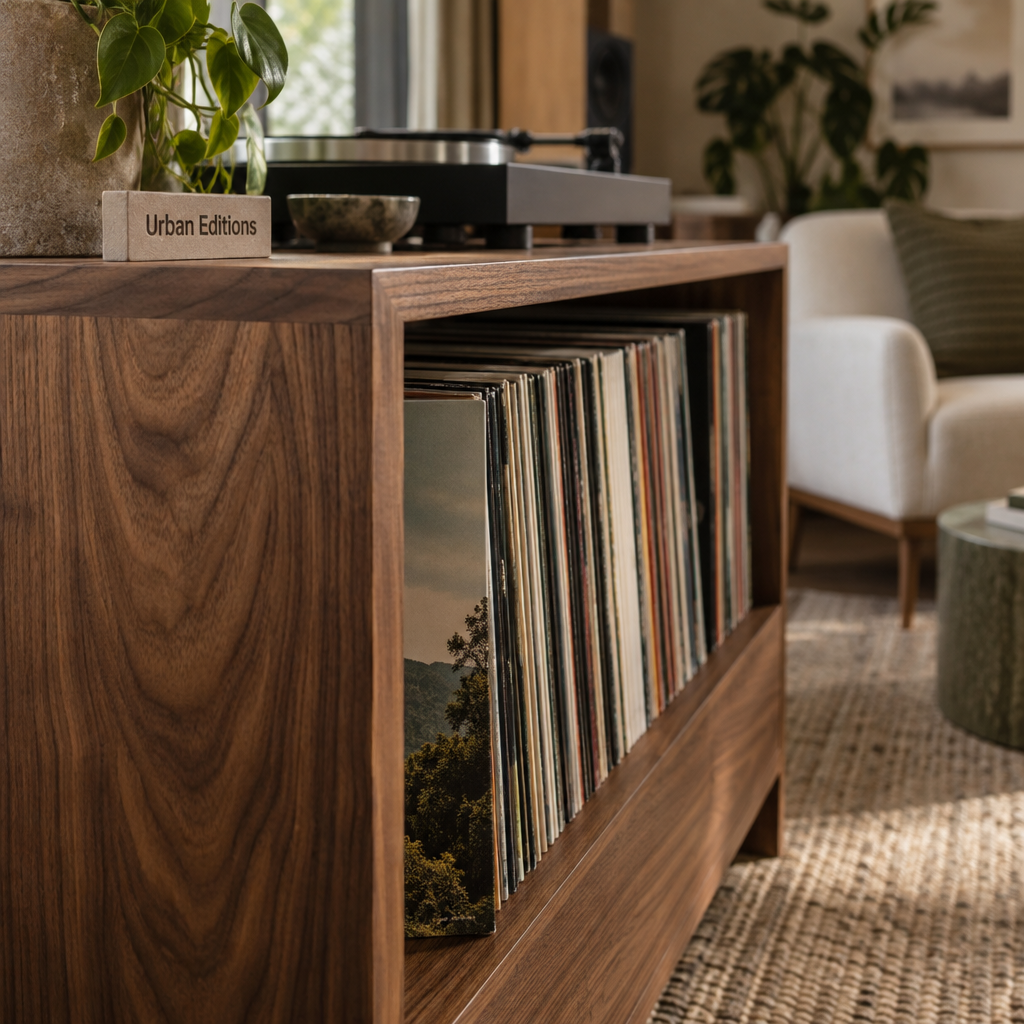
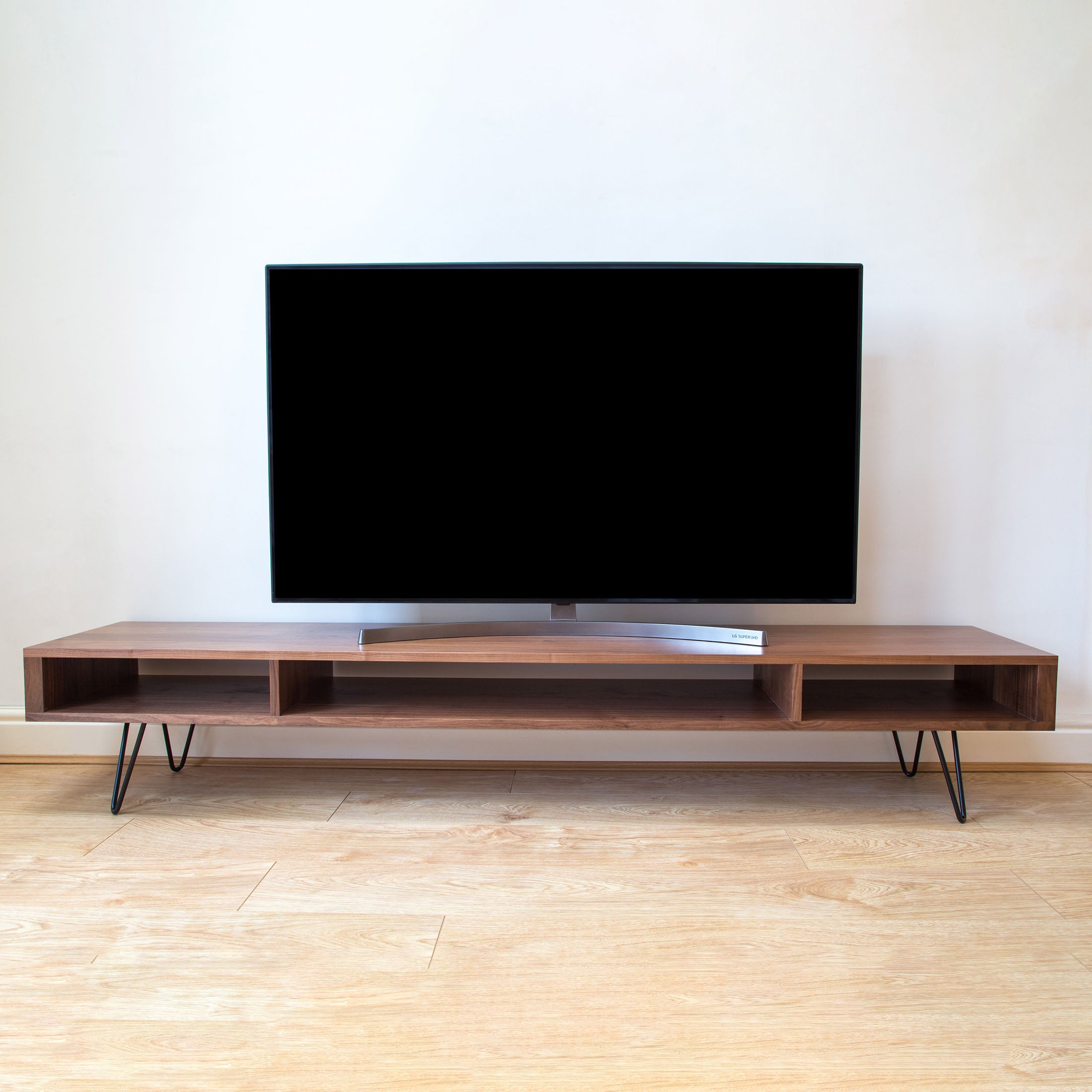
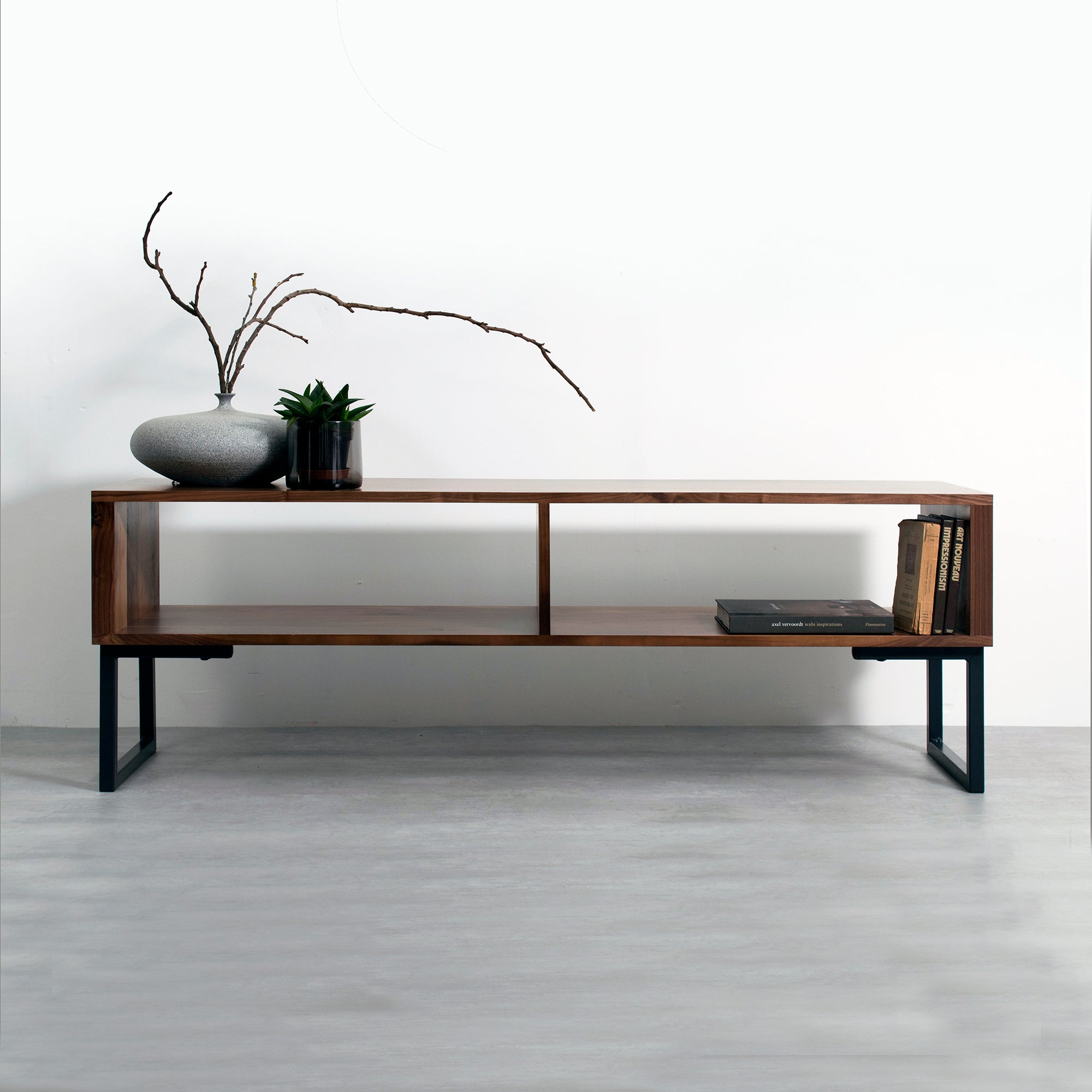
The Urban Editions offers solid hardwood media units designed and made in the UK, with customisable designs and wood choices including oak, walnut, ash and iroko. Ordering a wood sample helps you judge the grain and finish in your room before choosing a built-to-order piece.
Keep browsing easy
Records stored on their edges are easy to flick through and remove. Avoid laying LPs flat in a tall stack: the weight sits on the records at the bottom, and finding one album means moving the others first. A row that’s packed too tightly creates a different problem, making sleeves awkward to grip.
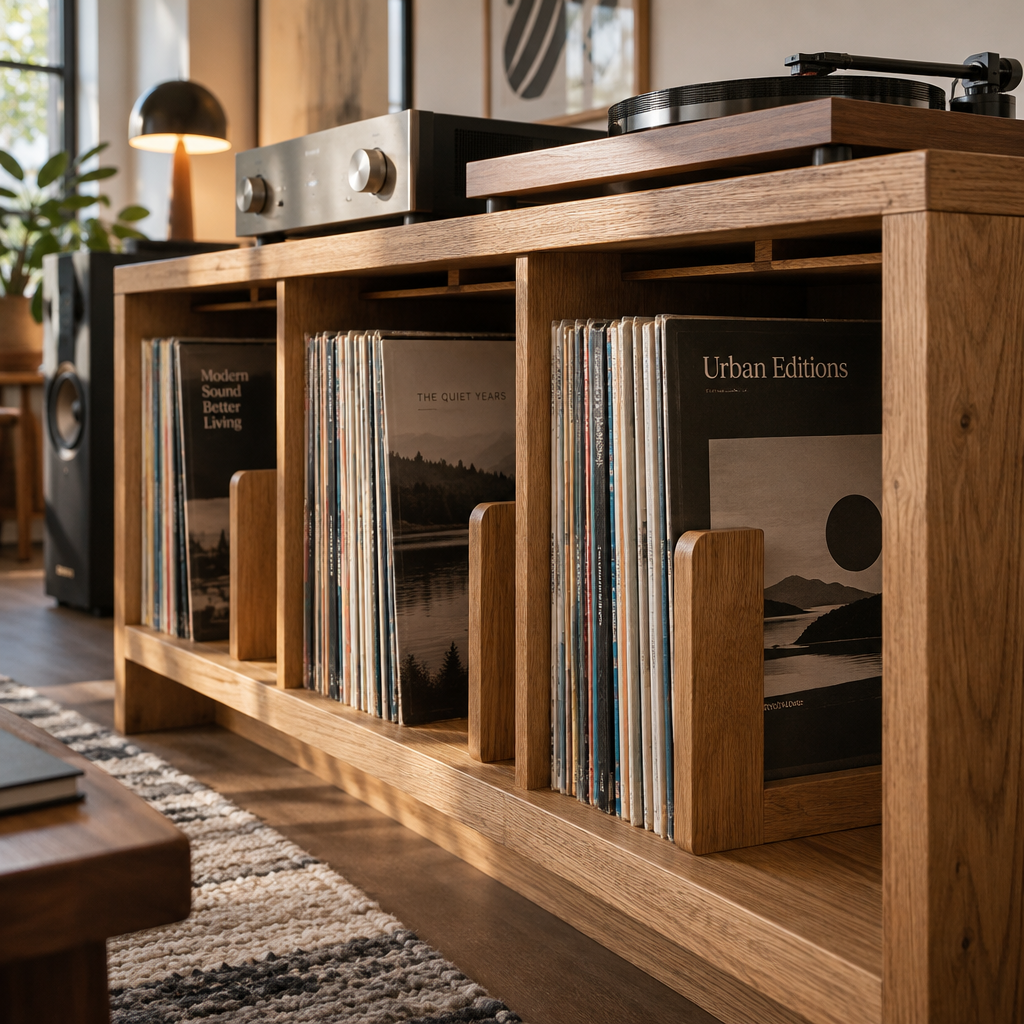
Check how the shelf is divided, too. A wide bay may hold more albums, but dividers can stop a partly filled row from leaning. The best balance is a shelf that supports the records while leaving enough space to slide one out without pulling its neighbours with it.
Measure the shelf opening for sleeved 12-inch records
Measure the clear internal space where records will sit, not the cabinet’s overall height or width. A practical starting point is a bay around 33 cm square, but measure your largest sleeved LP and the unit’s actual shelf opening before ordering. Allow a little extra room for your fingers.
Measure the opening, not the outside
Take a tape measure to the shelf’s clear width, depth and height. The side panels, back, dividers and shelf thickness reduce the space available inside the cabinet. A unit that is 35 cm deep outside, for example, may offer less usable depth once its back panel is included.
Check the depth against your largest sleeve, including any protective outer sleeve. If a record sits too close to the front edge, it can catch as you browse; if the shelf is much deeper than the records, you may lose space behind them or find the row harder to reach.
Compare formats by access and protection
Open racks, enclosed cabinets and integrated turntable units all suit different rooms. Compare the usable dimensions and access method, not just the product label.
Format
Record access
Dust protection
Check before buying
Open rack
Direct access from the front
Least protection
Shelf depth and record support
Enclosed cabinet
Access through doors or drawers
More protection when closed
Door clearance and internal bay size
Integrated turntable unit
Records stored below the deck
Depends on the storage section
Shelf opening and top-surface layout
A door needs room to swing open; a drawer needs enough clearance to pull out fully. In a narrow room, that movement can matter as much as the cabinet’s footprint. Check the listed dimensions against your measured space and the position of nearby furniture.
A full LP shelf carries more weight than it looks
A full row of records creates a concentrated load, so check the maker’s shelf-load guidance before filling a cabinet. The weight depends on the number and type of records, their sleeves and the shelf design. Don’t assume a shelf can take a full collection simply because it fits.
Usable capacity is the number of sleeved records you can store upright and remove without forcing the row apart.
To understand your own collection, weigh a small group of records on household scales, then use that result to estimate the total for a similar group. Ten records can give you a practical sample, but double albums, heavy sleeves and box sets change the result. Treat the estimate as a prompt to ask about the shelf’s load limit, not as a substitute for it.
Shelf span matters as well. A long, unsupported shelf may behave differently from a shorter shelf with a central divider, even when both are made from hardwood. Ask the furniture maker for the recommended load per shelf and whether that guidance assumes the weight is spread evenly.
Solid hardwood furniture has a substantial feel, but wood type alone doesn’t tell you the shelf limit. Thickness, joinery, span and support all affect how a shelf performs. If the maker can’t confirm a suitable load, choose a design with shorter shelf spans or additional support rather than packing records in and hoping for the best.
Open racks give quick browsing; doors cut dust
Choose open storage for quick browsing and enclosed storage when you want records behind doors. Both formats work well when the shelves fit your sleeves and the unit sits in a suitable part of the room. The right choice comes down to how you use your collection and what the room exposes it to.
Open storage suits regular listening
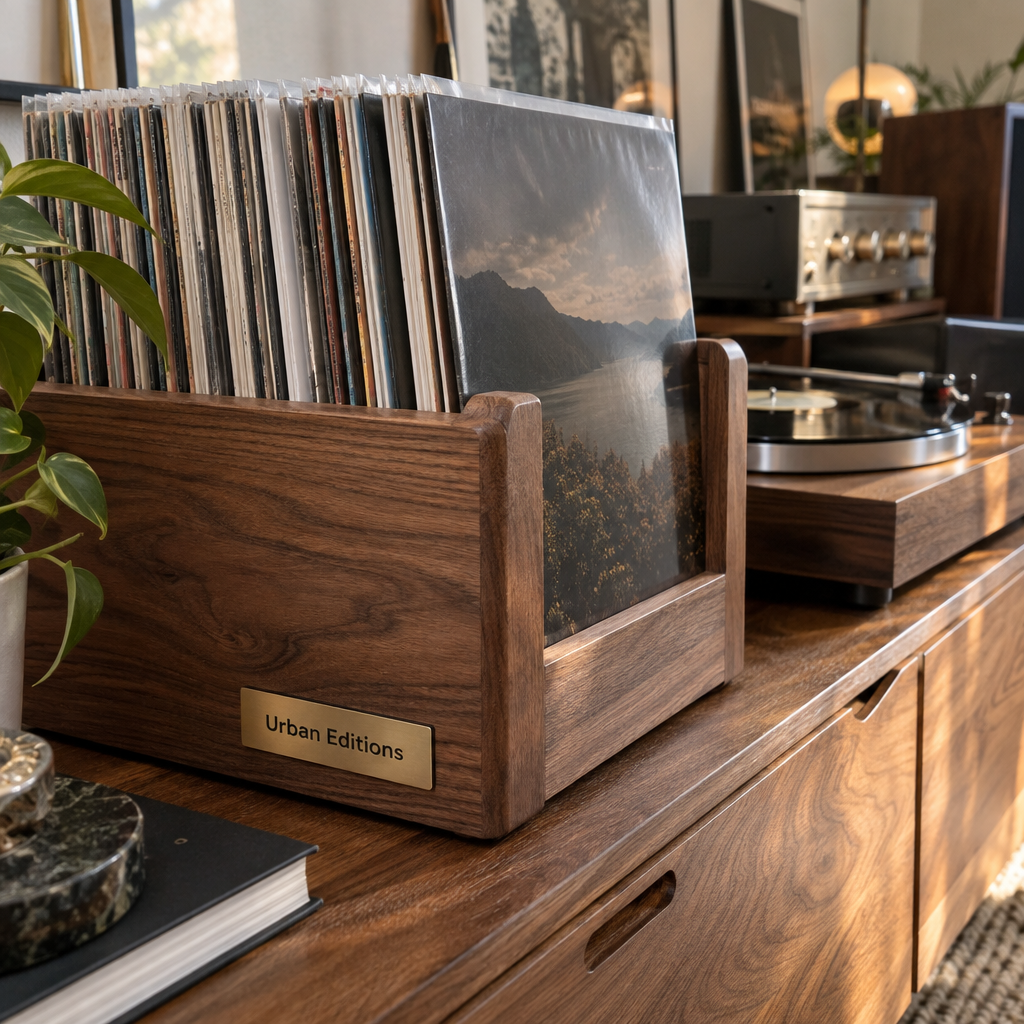
An open rack lets you see album covers and reach records without opening a door. That makes it a good fit beside a listening chair or in a music corner where records are played often. Dividers can keep a shorter row upright as the collection changes.
The trade-off is that records are more exposed to household dust and sunlight. Avoid placing the rack beside a bright window, especially one that gets direct afternoon sun, and keep it away from a radiator. Those locations can bring unwanted heat, light and cleaning into the routine.
Enclosed storage protects the collection between plays
A cabinet with doors keeps more dust off records when they’re not in use, though it still needs regular care. Choose doors that open fully enough for you to browse comfortably. If you have a small room, check that an open door won’t block a walkway or knock against nearby furniture.
Consider the rest of the room, too. In a busy living room with children or pets, a closed cabinet can keep sleeves less exposed to accidental knocks. In a dedicated listening space, open storage may make more sense. Either way, don’t crowd records against the cabinet’s back or force them beneath a low shelf.
Match the cabinet footprint to the room and listening setup
Measure the cabinet’s planned position before you buy. Include skirting boards, sockets, door swings and nearby furniture, then check that you can still reach the records and move around the room. A cabinet that fits on paper can feel awkward once it blocks a socket or narrows the route past a sofa.
Mark the footprint before ordering
Use a tape measure and masking tape to mark the unit’s width and depth on the floor. This gives you a quick view of how much room it takes up beside a TV stand, bookcase or listening chair. If the unit will sit under a window, measure the available height as well.
Work through these checks in order:
Measure the available width, depth and height.
Mark the footprint, including any door or drawer movement.
Check sockets, skirting boards and cable routes.
Confirm there’s room to reach and remove records.
Compare the measured space with the unit’s external dimensions.
If you’re buying a larger unit, check the route into the room as well. Measure narrow hallways, stairs and door openings before delivery. A cabinet can fit its final position yet prove difficult to move through a tight turn on the way there.
Keep the listening area practical
If your turntable is elsewhere, keep records close enough to reach while choosing an album. Avoid placing the cabinet where opening a door or drawer interrupts a main walkway. Small layout details affect daily use more than a few extra LPs of advertised capacity.
A neat setup also needs room for cables and cleaning. Keep the cabinet clear of the turntable’s power lead and leave access to the socket; avoid trapping cables behind the furniture. If a unit sits near a skirting board, account for that projection when checking how closely it can stand against the wall.
An integrated turntable surface needs a stable layout
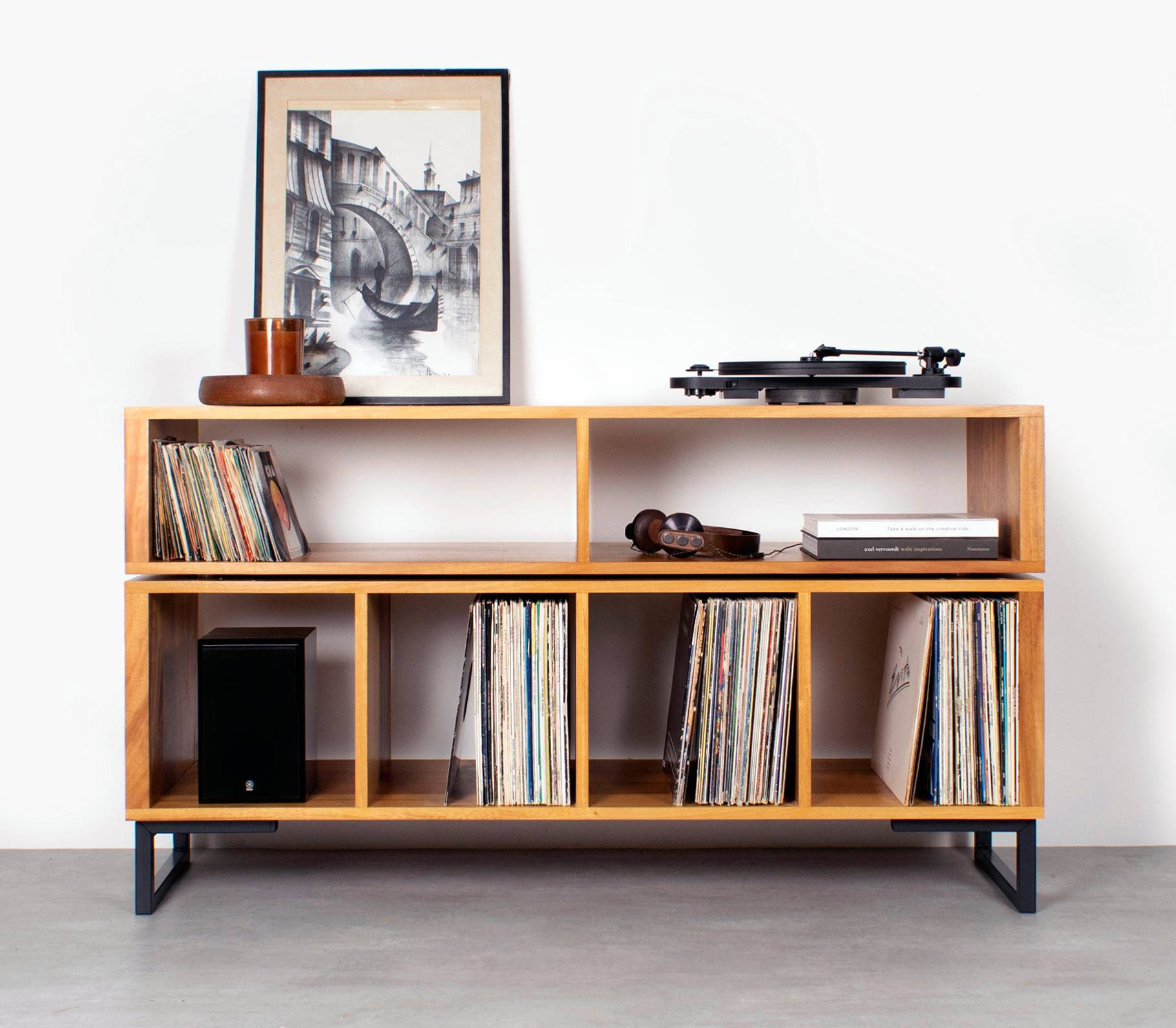
An integrated unit can bring records and turntable together, saving the space a second piece of furniture would take. Check that the top surface suits your deck, that the record shelves meet your storage needs and that you can operate the equipment without shifting albums around.
Check the top and storage separately
Measure the turntable’s footprint and compare it with the unit’s usable top surface. Leave space to lift the dust cover, reach the controls and handle records. A top that fits the deck but leaves no working room can make a compact setup frustrating.
Ask about the supported load for the top and the record shelves as separate parts of the design. The turntable, its platter and any accessories add weight above the storage area. Keep records upright below, and avoid using a shelf as a place to stack heavy equipment unless the maker confirms it is designed for that load.
Reduce vibration and leave room for cables
A turntable needs a stable surface. Keep the furniture level and avoid placing the unit where people regularly bump into it. Speakers can also transmit vibration through nearby surfaces, so position them separately from the cabinet where your room layout allows.
Before deciding on an integrated design, check access to the sockets and the path of the cables. Make sure the deck’s cover opens freely and you can reach the rear connections without pulling the unit away from the wall. Those details are easy to overlook when you focus only on capacity.
The Urban Editions’ Technic vinyl storage cabinet is one option to review if you want a UK-made, built-to-order hardwood design for records and a turntable. Compare its listed dimensions with your measurements, then check the available design choices and order a wood sample if you want to see the finish in person.
Conclusion
Measure the largest sleeved record, mark the cabinet footprint and confirm the shelf-load guidance before choosing. Pick an open unit for fast browsing or an enclosed design for more protection from dust. If you need a turntable surface too, check its usable space and support separately from the record shelves.
Frequently Asked Questions
Should I anchor a tall record cabinet to the wall?
Yes, follow the maker’s installation guidance and use fixings suited to your wall type. Plasterboard, solid brick and stud walls need different fixings, so ask a qualified installer if you’re unsure what will hold securely.
Can I keep 7-inch singles in an LP cabinet?
Yes, but use a properly sized divider or storage box so shorter records stay upright. If they lean across a wider LP bay, their sleeves can become harder to browse and more likely to slump out of place.
Is a garage suitable for storing vinyl records?
A garage is usually a poor choice if temperatures and humidity swing widely or the space gets damp. Keep records in a dry, lived-in room, away from direct sun and heat sources.
What should I ask about a shelf-load rating?
Ask for the maximum load per shelf and whether it applies to weight spread evenly across the full shelf. If you plan to store heavy box sets or a dense collection, state that when checking the rating with the furniture maker.