Allow roughly 60cm of clear walking space around a substantial cabinet or media unit if you want the room to feel comfortable. Funky chunky furniture works when its bold proportions have room to breathe, not when every surface competes for attention.
If you want a statement piece that feels designed rather than oversized, start with solid wood, accurate measurements and one clear focal point. A chunky vinyl cabinet, record player stand or TV unit can give a minimalist room warmth, storage and a strong visual anchor.
Key Takeaways
Use one substantial focal piece per room
Solid hardwood gives chunky forms lasting visual weight
Check clearance before choosing cabinet dimensions
Oak feels lighter; walnut creates deeper contrast
Visible grain variation is a natural feature
Balance bold furniture with open space
What Does Funky Chunky Furniture Mean?
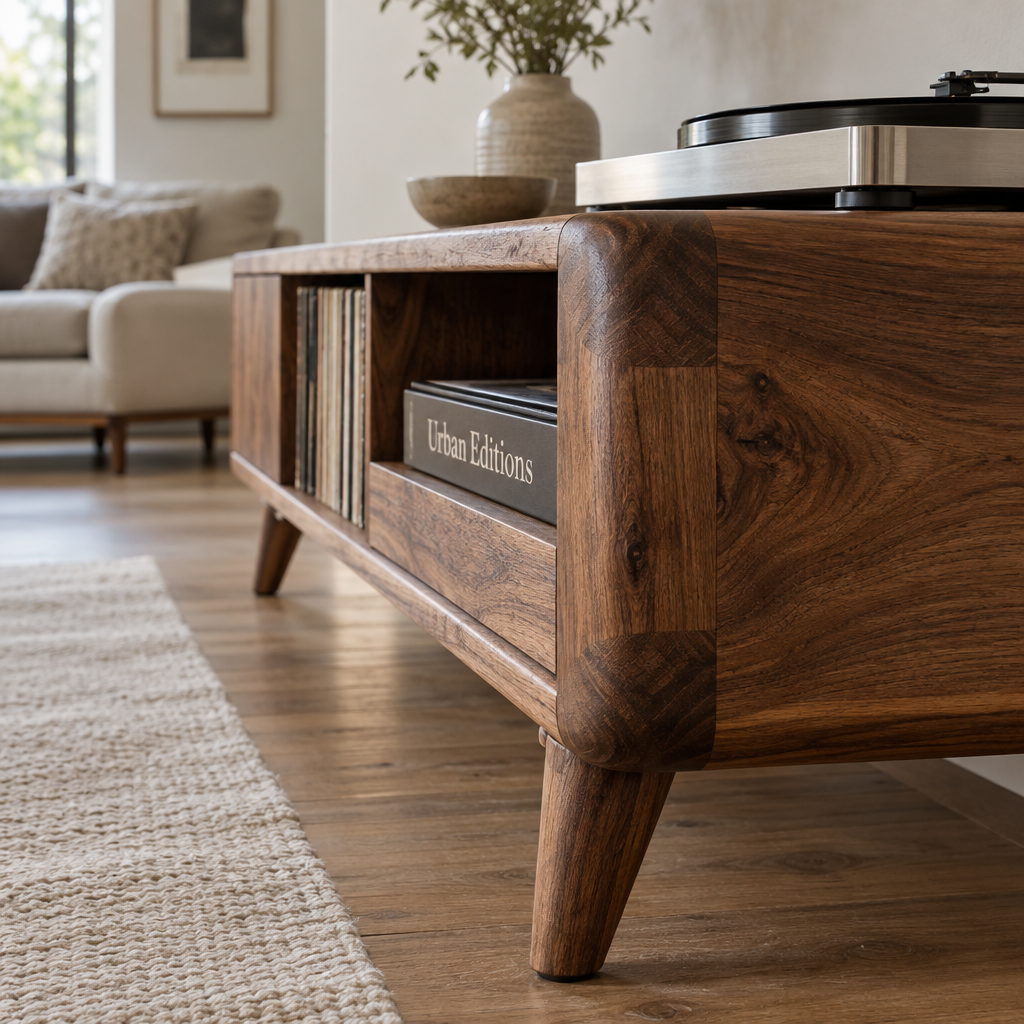
Funky chunky furniture combines unusually generous proportions with distinctive shapes, strong grain and practical use. It might be a deep solid-wood console, a low vinyl cabinet with thick sides or a record player stand that gives the turntable proper visual presence.
“Chunky” describes mass, not poor proportion. A well-designed piece has a relationship between its width, height, depth and the room around it. A cabinet that is 120cm wide but only 35cm high will feel very different from a 90cm-wide unit that is 75cm high.
The funky element usually comes through in the details. Rounded corners, offset doors, contrasting timber, unusual leg positions or visible joinery add character without turning the room into a themed display.
A minimalist interior can take this approach easily. Plain walls, restrained textiles and a simple sofa create enough visual calm for one expressive furniture piece to lead the room.
Chunky furniture is best understood as a measured focal point: substantial enough to command attention, controlled enough to leave the room usable.
The common mistake is treating every bold item as a statement piece. If a coffee table, TV stand, shelving unit and sideboard all demand attention, the eye has nowhere to settle. Choose one lead item, then let the remaining furniture support it.
Why Solid Hardwood Makes Chunky Furniture Work
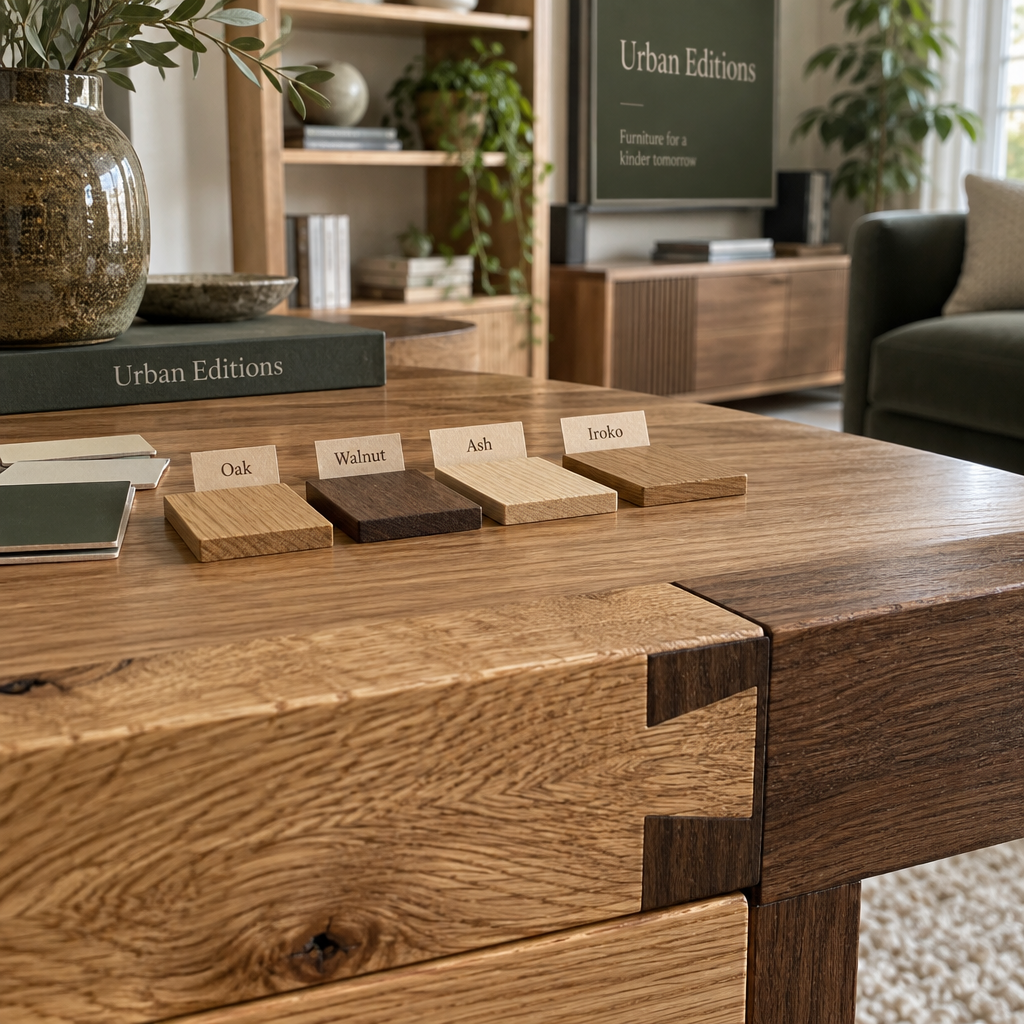
Solid hardwood gives large furniture forms the material depth they need. Veneered board can produce a convincing surface, but solid oak, walnut, ash or iroko brings visible grain through edges, doors and exposed sections.
Oak for a lighter, architectural look
Oak is a strong choice when you want chunky furniture without a heavy colour effect. Its pale to medium tones work with white walls, black metal, muted upholstery and mid-century modern interiors.
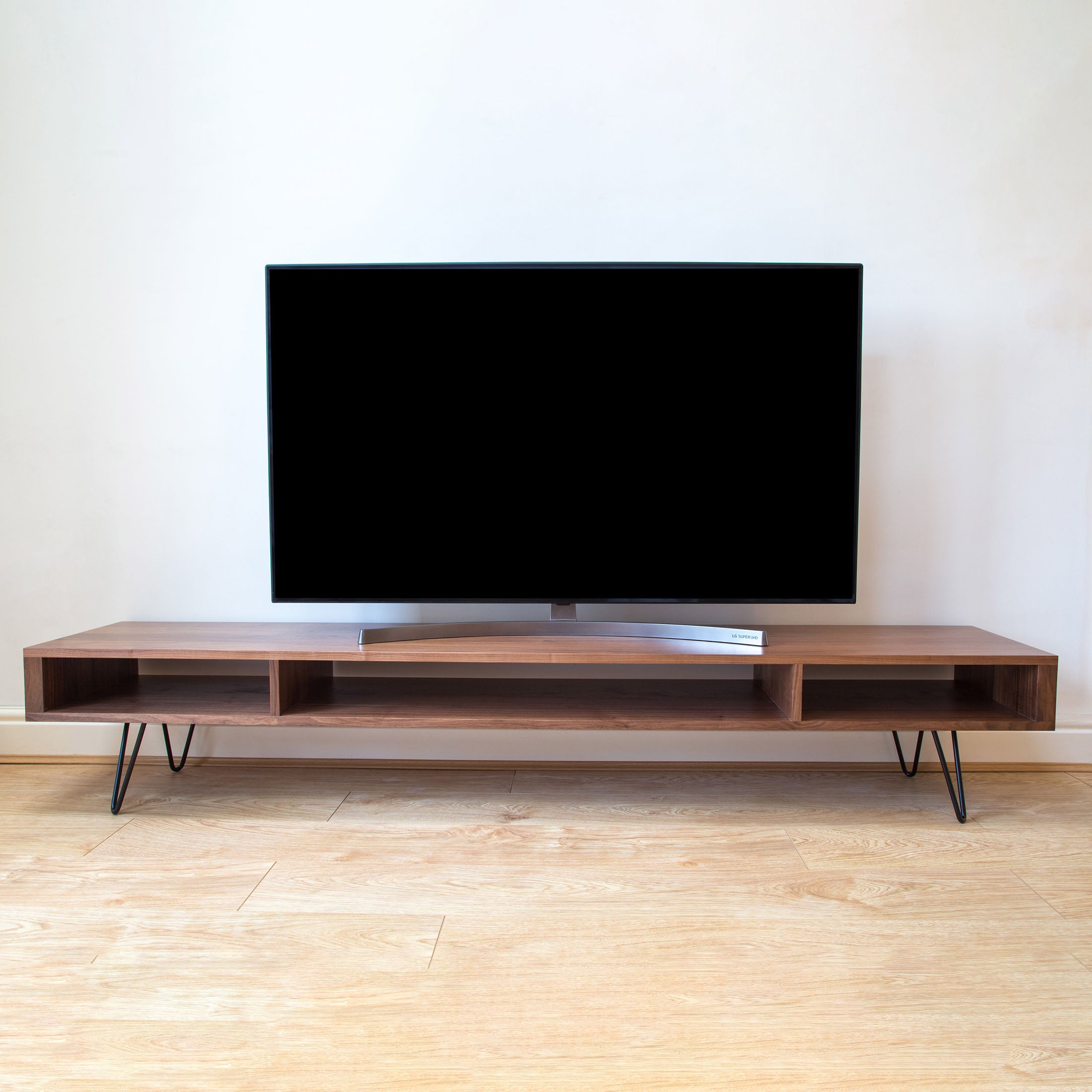
A solid-oak TV stand with a low profile can look substantial while keeping the wall behind it visually open. The grain adds movement, so you do not need bright accessories to make the piece interesting.
Walnut for contrast and warmth
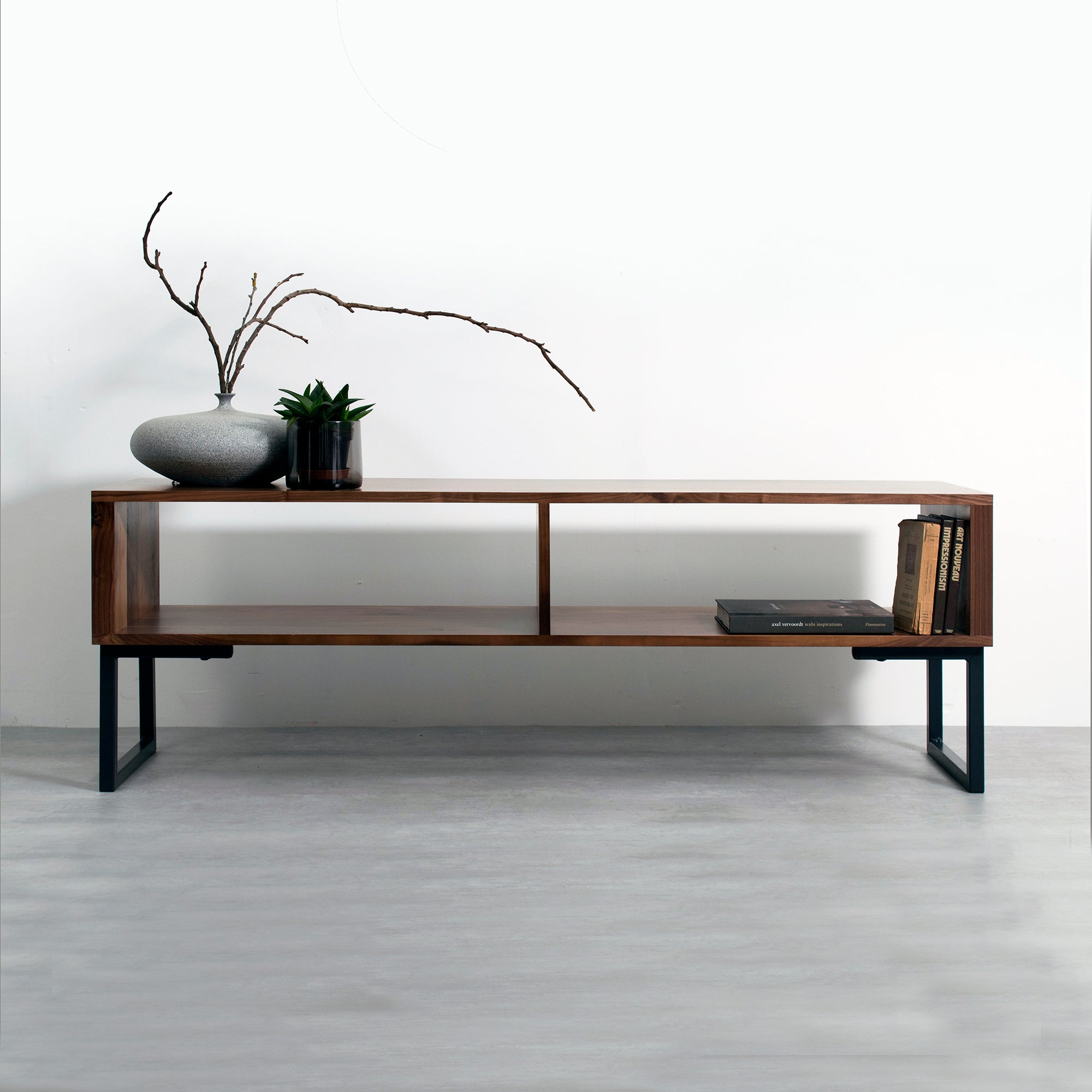
Walnut creates a deeper, richer impression. It suits rooms with cream walls, warm lighting and darker flooring, although a walnut cabinet against a pale wall gives the clearest contrast.
Choose walnut when you want the furniture to read as the room’s main feature. Its darker tone makes a wide cabinet feel more grounded, particularly when paired with slim legs or recessed storage.
Ash and iroko for character
Ash often gives you a brighter grain pattern with a clean, contemporary feel. Iroko has stronger colour variation and a more distinctive presence, making it useful when the wood itself needs to carry the design.
The grain will vary from one board to the next. That variation is a natural feature, not a defect, and it means your finished cabinet will not look like a printed surface repeated across a production line.
The practical objection is cost. Solid hardwood furniture requires more material and skilled joinery than flat-pack board, so it costs more at the point of purchase. In return, you get a piece designed for long-term use and a surface that develops character rather than simply wearing through a thin finish.
The Urban Editions makes furniture in the UK from sustainably sourced solid hardwoods including oak, walnut, ash and iroko, with designs made in a family-run UK joinery.
How Big Should a Statement Furniture Piece Be?
Choose the largest piece that fits your wall, circulation and equipment without forcing the rest of the room into awkward positions. For example, a 160cm media unit may suit a wide wall, but it will feel crowded if the sofa leaves only 45cm for passage.
Measure the full footprint, including doors, cables and any overhang from equipment. Use masking tape on the floor to mark the proposed width and depth, then walk around it during normal use.
Practical proportions by furniture type
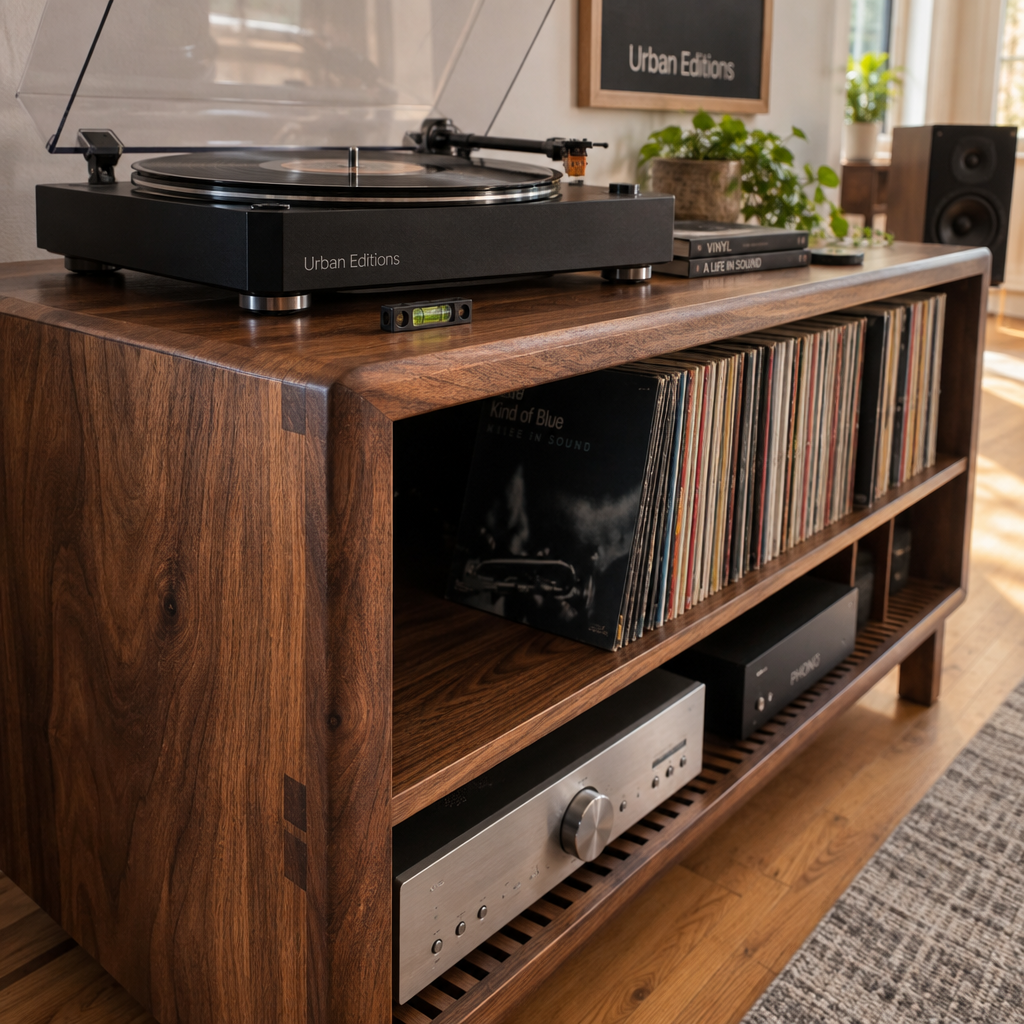
A vinyl storage cabinet needs enough depth for records to stand upright without leaning. A turntable stand needs a stable top surface and room for the amplifier, cables and handling space. A TV stand must also allow the screen to sit at a comfortable height.
Furniture type
Worked width example
Main clearance check
Vinyl storage cabinet
90–140cm
Door and record access
Turntable stand
60–100cm
Cable route and operating space
TV stand or media unit
140–200cm
Screen width and sofa sightline
Coffee table
90–120cm
Walking space around edges
These are planning examples, not fixed rules. A 140cm cabinet may be perfect in a small sitting room if it is shallow and low, while a 90cm-high unit could dominate the same space.
For record storage, think about weight as well as volume. Vinyl is heavy, so a cabinet packed with records needs sound internal construction and a level floor. Keep the unit stable, especially if it has tall doors or open shelving.
Measure the room before choosing the finish. A beautiful walnut piece in the wrong size remains wrong, while a correctly proportioned ash or oak unit will usually look more intentional.
Custom dimensions solve awkward walls, alcoves and equipment layouts. Built-to-order furniture lets you specify the width, height or configuration needed instead of accepting a standard size that leaves unused gaps.
Chunky Vinyl Storage Ideas That Stay Practical
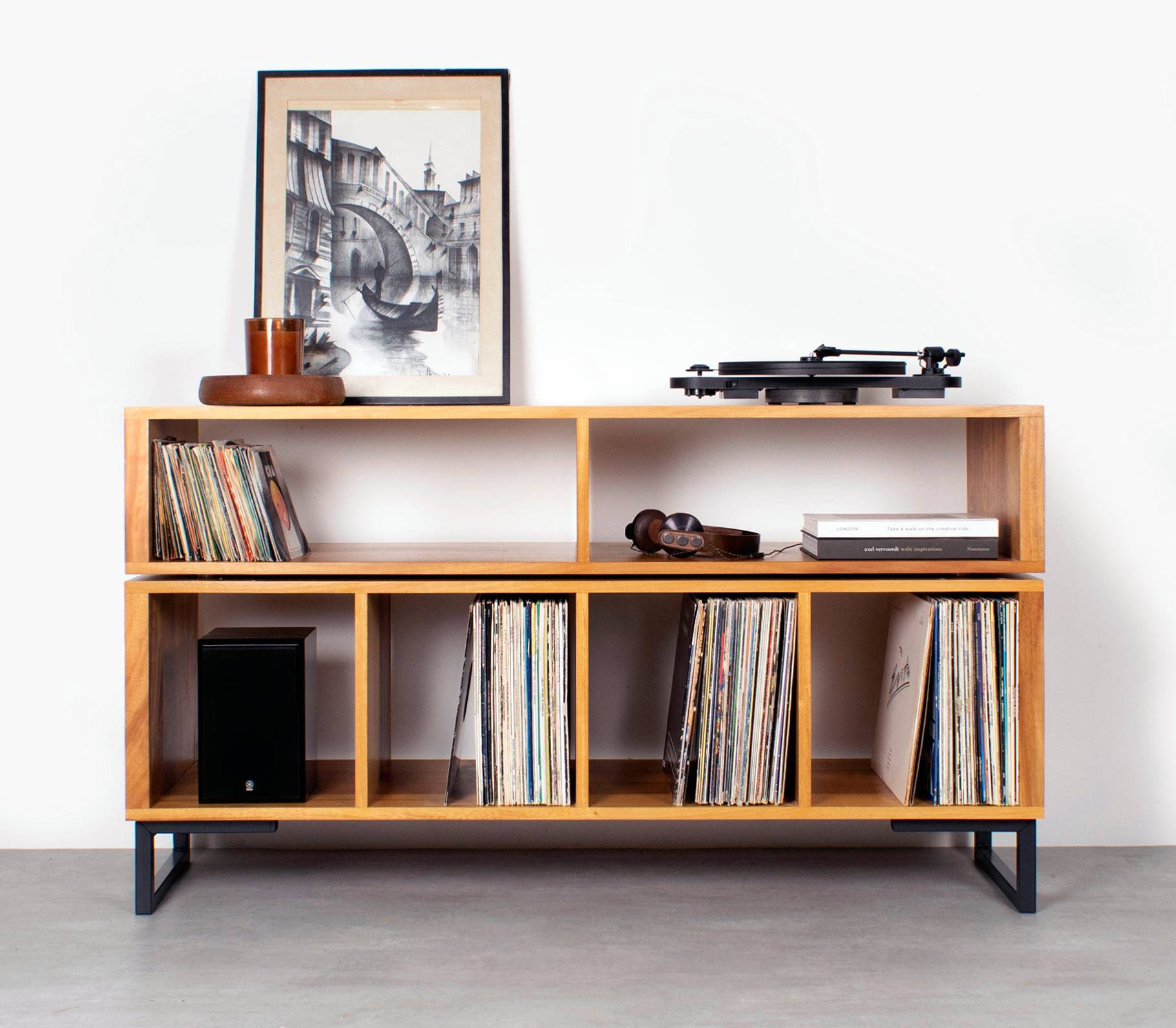
The best chunky vinyl storage combines a strong silhouette with easy access. Your records should be stored upright, protected from direct heat and simple to browse without moving a speaker, lamp or stack of magazines.
Build around the listening routine
Place the turntable where you can reach it comfortably from your usual chair. A low cabinet may suit a floor-level listening setup, while a taller record player stand can bring the controls closer to standing or seated height.
Keep cables in mind from the start. The turntable, amplifier and speakers need practical routes, and a cabinet pushed tightly against a wall may leave nowhere for plugs or signal cables to bend.
A good setup also separates storage from clutter. Use the top surface for the turntable and a small number of records or objects, while keeping spare cables, cleaning brushes and accessories inside.
Give media storage a clear visual rhythm
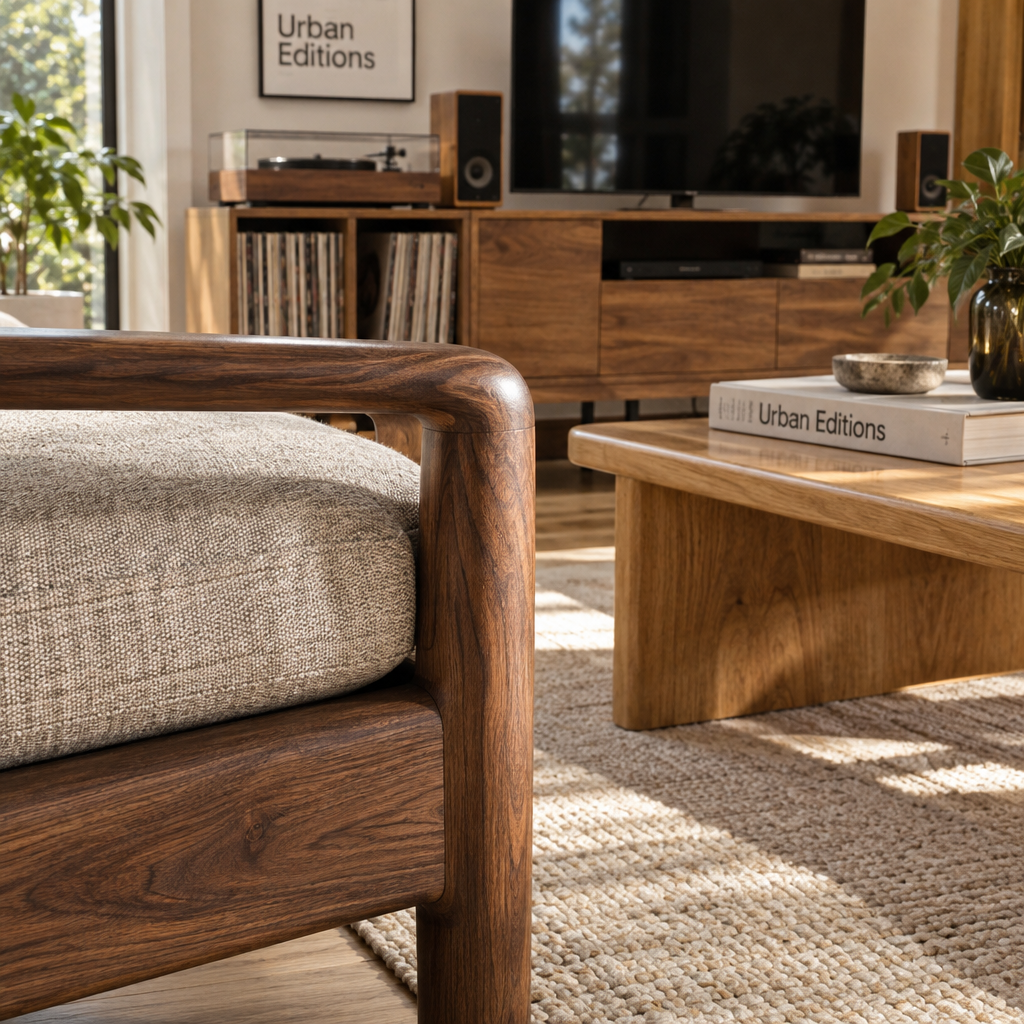
Chunky media storage does not need to look rustic. Flush doors, consistent gaps and a simple base can create a clean mid-century modern profile, even when the timber is thick and strongly grained.
Open shelving gives records a more visible role, but closed storage creates a calmer room. If your collection is colourful, doors can keep the cabinet from becoming the loudest surface in the space.
For further inspiration, browse these solid-wood media units for chunky storage ideas that keep equipment and records organised.
A single large cabinet often works better than several small storage cubes. It reduces visual noise and gives the room one continuous horizontal line.
Plan for the collection you have now
Do not buy a cabinet based only on the number of records you hope to own. Measure your collection, allow space for dividers and leave room to browse without pulling every sleeve forward.
If the furniture is built to order, specify the storage purpose clearly. Records, books, games consoles and audio components need different shelf heights, ventilation and access.
One more point matters: keep heavy records low where possible. This lowers the visual centre of gravity and makes a substantial unit feel stable rather than top-heavy.
How to Style Bold Furniture Without Overloading the Room
Start with one statement item and reduce visual competition around it. A chunky walnut cabinet can lead the room while the sofa, rug and lighting stay quieter in texture and shape.
Use negative space deliberately
Leave a section of wall visible above a low media unit. Keep some floor area open beside a wide cabinet. These gaps are part of the composition, not wasted space.
A 180cm TV stand may look balanced beneath a large screen with 20cm or more of breathing room at each side, depending on the wall. The same unit could look cramped beneath a narrow screen surrounded by unrelated artwork.
Repeat one material or shape
Echo the wood tone through a frame, lamp base or shelf, but do not match every item exactly. A walnut cabinet beside a pale oak stool can work when the room has a consistent warm palette.
Rounded corners pair well with curved seating and circular lamps. Strong rectangular forms suit linear rugs, framed prints and simple pendant lighting.
Control the colour around the wood
Pale oak and ash suit soft whites, clay tones and muted greens. Walnut works with cream, charcoal and deep blue. Iroko can take richer colours, but keep the surrounding scheme restrained so its variation remains visible.
Do not treat visible knots or tonal shifts as damage. Natural variation gives each solid-hardwood piece its own surface pattern, particularly when the cabinet has broad doors or a long top.
A minimalist room does not need to stay visually empty. It needs a clear hierarchy. One deep-grained cabinet, one large artwork and a controlled group of accessories will usually feel stronger than a collection of small decorative objects.
Which Furniture Types Suit the Chunky Style?
Choose the furniture type according to the room’s main need, then use proportion to add personality. A chunky piece should improve storage, viewing, working or listening before it becomes a visual statement.
TV stands and media units
A substantial media unit works well when the television needs a stable base and the room needs hidden storage. Low, wide proportions help the screen remain the visual focus while the timber adds warmth beneath it.
Check the television width, soundbar position and cable routes together. A cabinet that fits the screen but leaves no space for a soundbar will create an awkward second layer.
Coffee tables
A chunky coffee table should leave enough room to walk around it and reach the sofa. In a compact sitting room, choose a shorter or narrower design rather than compensating with a very low table that becomes difficult to use.
Solid wood gives the table presence, so keep the top mostly clear. One tray, a book or a small lamp is enough for daily use.
Desks and console tables
A solid-wood desk benefits from a thicker top when the room has otherwise lightweight furniture. Check knee space, chair movement and access to sockets before prioritising a dramatic front panel.
Console tables work in hallways and open-plan rooms, but their depth matters. A 30cm-deep console leaves more circulation than a 45cm version, particularly beside a front door or stairway.
Vinyl cabinets and turntable stands
These are the most natural choices for music-focused rooms because the furniture supports the listening ritual as well as the equipment. Choose a turntable stand when the player deserves a dedicated operating surface; choose a cabinet when storage is the priority.
Do not place every audio component inside an enclosed compartment. Amplifiers and other equipment need suitable ventilation, while turntables need a stable, level surface.
A useful selection process is simple:
Measure the wall and available floor area.
List the equipment and storage the piece must hold.
Mark cable routes and door clearances.
Choose the hardwood tone against your flooring and walls.
Confirm the finished dimensions before ordering.
Made-to-order furniture is especially useful when your equipment, collection or room has unusual dimensions. The Urban Editions offers customisable designs, wood samples and furniture made in the UK for this purpose.
How to Order Custom Statement Furniture With Confidence
Custom statement furniture starts with a written brief, not a colour choice. Record the wall width, maximum depth, desired height, equipment list and storage requirements before comparing finishes.
Ask for a wood sample if the decision depends on tone. Oak, walnut, ash and iroko can look different under north-facing daylight, warm lamps and evening light, so check the sample in the room where the furniture will sit.
Confirm the functional details
Write down what goes inside each compartment. A shelf for vinyl needs different space from a games console, books or an amplifier. Mention doors, open bays, cable holes and ventilation before production begins.
If the unit will sit beneath a television, measure the screen and stand together. If it will hold a turntable, include the lid opening area rather than measuring only the closed footprint.
Check access before delivery
A 160cm-wide cabinet may fit the wall but fail at a narrow hallway turn. Measure the front door, stair width, lift or landing, and the tightest internal corner.
Also check the final room position. Skirting boards, radiators and sockets can change the usable depth by several centimetres, which matters when a cabinet is designed close to the wall.
Furniture made to order takes planning. Allow time for discussing dimensions, reviewing samples and arranging delivery rather than treating it like an impulse accessory purchase.
The Urban Editions offers free UK delivery and international shipping, and its built-to-order approach allows customers to specify designs and dimensions for a more precise fit.
Conclusion
Choose funky chunky furniture when you want one piece to give the room weight, storage and character. Start with measurements, select the hardwood that suits your light, then protect the focal point with open space. For a tailored music-led centrepiece, browse the Technic vinyl storage cabinet and compare its possibilities with your wall, collection and listening setup.
Frequently Asked Questions
Is funky chunky furniture suitable for a small room?
Yes, if the piece is low, shallow or built to fit the wall. A single 90cm-wide cabinet can create more order than several small units, provided you retain roughly 60cm of comfortable walking space where people pass.
Does solid wood furniture always look rustic?
No. Flush doors, clean lines, recessed handles and a restrained finish give solid hardwood furniture a modern appearance. Ash and oak often feel lighter, while walnut creates a richer mid-century modern effect.
How should I care for visible grain variation?
Treat it as part of the material’s character and keep the surface away from standing water, strong heat and direct sunlight. Use a soft cloth for routine dusting and follow the maker’s care guidance for the specific finish.
Can custom furniture be made for unusual audio equipment?
Yes, provided you give accurate measurements before production. Include the equipment width, depth, height, cable exits and ventilation needs, then allow extra room for plugging in and removing components.