November SPECIAL OFFER! Sign-up to our newsletter to receive the latest offers and news.
Hallway Console Table: Choosing the Right Depth, Height and Wood
25–35 cm is a useful starting depth for a hallway console table, but the passage left beside it matters more. Work backwards from the space you need to walk through, then choose a typical height of around 75–85 cm. Check door swings before matching the wood’s colour, grain and finish to everyday use.
A slim table should give you somewhere to put keys and post without changing how you move through your home. We recommend settling the footprint first, then choosing the details that make the piece useful and comfortable to live with.
Key Takeaways
Aim for around 90 cm of clear walking space.
Measure projecting legs, handles and gaps behind the table.
Test the height with your everyday reach.
Choose width around doors and switches, not proportions alone.
Compare wood samples in your hallway’s changing light.
Judge drawers by internal space and opening clearance.
How much passage space should you leave?
Aim for around 90 cm of clear passage beside a hallway console table as a practical starting point for comfortable movement. This is a planning recommendation, not a universal legal minimum. Leave more where people pass each other or where you regularly move a pushchair, wheelchair or bulky shopping bags.
Depth recommendations differ because they describe different rooms. A 40 cm console can work in a broad entrance, while even a 25 cm design can crowd a tight corridor. The label narrow console tells you less than the remaining gap.
Measure the actual route through the hall, rather than the distance between two convenient points on the walls:
Find the tightest point. Measure across the proposed position, including any radiator or stair projection opposite.
Choose your clear passage. Start with around 90 cm, then allow for your household’s normal movements.
Allow for the full footprint. Include the gap caused by skirting boards, projecting legs and handles.
Check every door swing. Open the front door and nearby room doors through their usual range.
Mark and test the space. Use low-tack tape suitable for your floor, then walk past carrying your usual bags.
For example, take a hallway measuring 125 cm from the wall behind the table to the opposite obstruction. A 30 cm table, sitting 2 cm away from the wall because of the skirting, leaves 93 cm of clear passage. A 35 cm table in the same position leaves 88 cm.
That extra 5 cm changes the result, even though both tables fall within a commonly recommended depth range. If the legs project beyond the top, measure to those instead.
A floor outline checks the footprint, but a cardboard box at the proposed height gives a better sense of how the table will feel beside your body. Test the turning movement from the front door too. A clear straight route does not guarantee a comfortable corner.
If the depth available after these checks is only 20 cm, choose a genuinely shallower design or move the table to another wall. Do not preserve a preferred size by squeezing the passage.
Height and width: fit your reach and your wall
Choose height for comfortable use and width for the uninterrupted wall space. Around 80 cm is a useful height to test, while a table occupying roughly two-thirds of a clear wall section offers a visual starting point, not a sizing rule.
Everyday reach
A hallway surface should let you put down keys without bending noticeably or lifting your shoulder. Test that action against a temporary surface at the proposed height, wearing the shoes you normally leave in.
Taller users may prefer the upper end of the typical range. A lower table can suit a household where seated access matters. Your reach is more useful than matching the table to an unrelated piece of furniture elsewhere.
Plan the objects on top at the same time. A deep bowl raises the point you reach into, and a large lamp base reduces the space available for post. Keep your daily landing spot near the front, rather than behind decorative objects.
Usable wall length
Measure between interruptions such as door frames, switches and the start of a stair. A 180 cm wall section might suit a 120 cm table visually, leaving 30 cm at each end when centred. That arrangement stops working if one end blocks a switch or narrows a turning route.
Usable wall length comes before symmetry. Position the table so you can reach controls comfortably and open adjacent doors without moving anything. Then judge whether the remaining gaps look balanced.
Also consider the space above. A mirror or artwork can bring a shorter table into proportion with a long wall without adding furniture across the whole length.
Long-wall options
A long wall does not require a deep table. Width gives you more surface for separate tasks, while depth determines how far the furniture reaches into the passage. For a generous wall in a narrow hall, we would prioritise a wide, shallow shape.
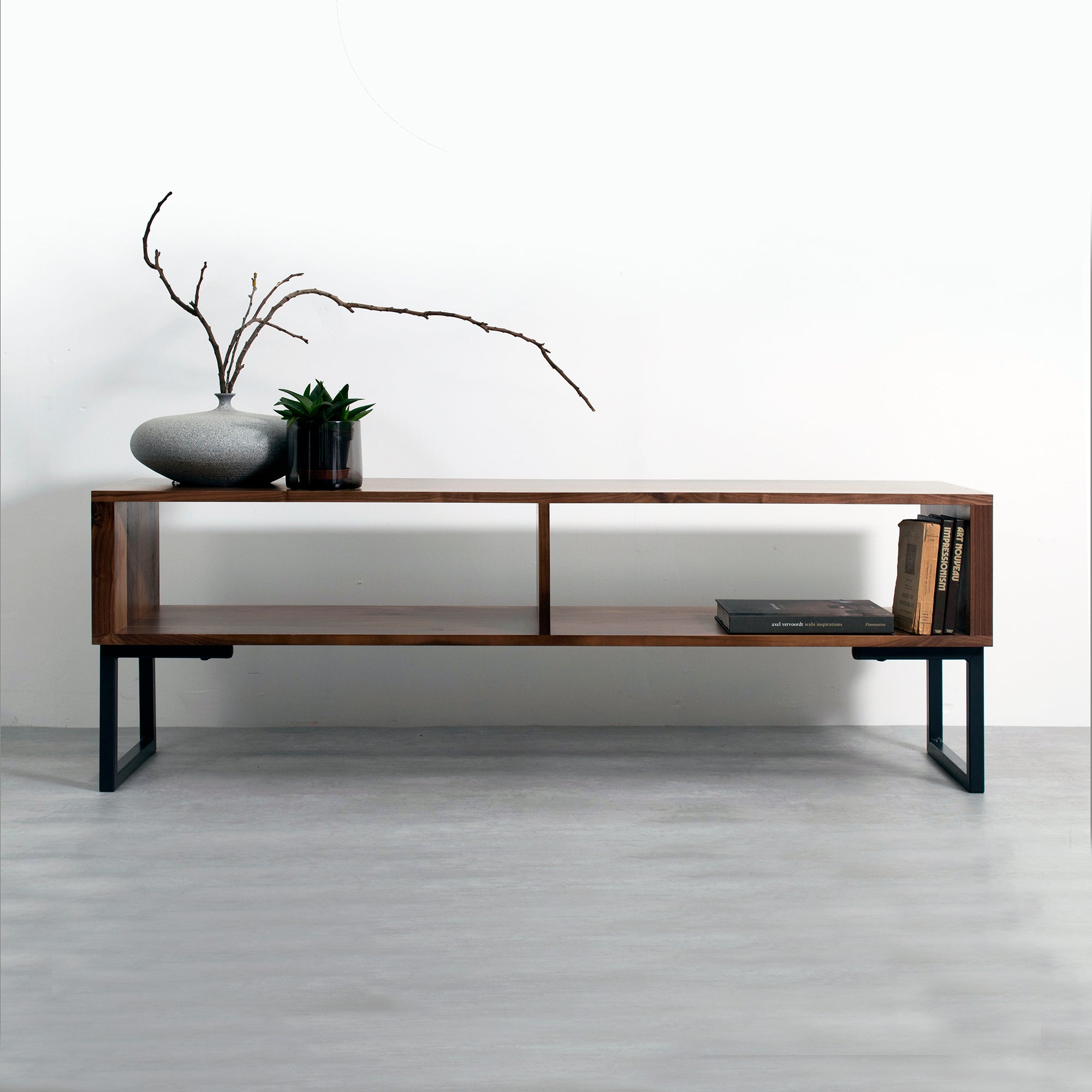
The Marston Wide Console Desk on Minimalist Square Legs offers widths of 160, 180 and 200 cm, with depths of 30, 40, 50 and 60 cm. Its solid hardwood construction and square frame legs give it a streamlined, contemporary form, with oak, dark ash, walnut and iroko options.
The 30 cm depth is the relevant starting point for a hall; the deeper versions suit spaces with more room or a desk function. A wide console still needs its full footprint checked at both ends, especially near a doorway.
Which wood suits your hallway?
Oak is a strong starting choice for warmth and visible grain; walnut gives a darker, quieter appearance. Ash suits a lighter scheme in its natural colour, while iroko offers golden-to-brown tones. Choose between them using a finished sample, because the finish and light affect what you see.
Compare four woods
All four are hardwoods used for furniture, but hardwood is a botanical category, not a promise that every species has the same hardness. Surface protection, construction and daily treatment matter alongside the timber.
Wood
Typical colour
Grain character
Useful design direction
Oak
Pale biscuit to warm golden brown
Pronounced grain, sometimes with broad flecks
Warm interiors where you want visible texture
Walnut
Medium to deep brown, sometimes with lighter areas
Often flowing, with varied figuring
A darker focal point against pale walls
Ash
Pale cream to light brown when naturally finished
Clear, often bold grain lines
Light schemes with a distinct wood pattern
Iroko
Yellow-gold through to deeper brown
Variable, sometimes interlocking grain
Warm schemes with richer golden tones
These are typical appearances, not exact colour specifications. Boards vary within the same species, and a tabletop can include lighter and darker sections. That variation is part of choosing real timber rather than a uniform printed surface.
Oak’s strong grain can sit comfortably alongside plain painted walls. Walnut creates more contrast against a pale wall, though a large dark surface will have greater visual weight. Ash keeps the colour lighter without making the grain disappear.
Iroko changes colour as it ages, generally becoming deeper and browner. Choose it because you enjoy that developing warmth, rather than expecting the freshly finished colour to remain fixed.
Light and samples
Look at a sample horizontally, as the tabletop will sit, rather than only holding it upright against the wall. Check it in daylight and under the hallway lights you use in the evening.
A windowless entrance can make small colour differences difficult to judge. Warm bulbs can emphasise golden tones, while neighbouring floorboards and painted walls change how the wood reads. Put the sample beside those fixed surfaces.
Do not choose wood from screen colour alone. Screens, photography and room lighting all alter the impression. If you are comparing a coloured finish such as dark ash with naturally pale ash, assess the finished sample rather than relying on the species name.
Matching the floor exactly is unnecessary. Aim for a deliberate relationship: a lighter table against dark flooring, or warm wood against a cool painted wall.
Is solid hardwood better than veneer?
Choose solid hardwood when you value material depth and the possibility of future refinishing. Choose well-made veneer when you prefer its appearance and construction. Neither description alone tells you how well a console table has been made.
What you are buying
Solid hardwood means the wooden part is timber throughout its thickness, rather than a thin decorative layer over another material. A solid top may be made from several joined boards; it does not have to come from one wide plank.
Veneer is a thin layer of real wood bonded to a supporting material. It is different from a printed wood-effect surface.
Good veneer can produce attractive, carefully matched grain across a broad surface. A stable supporting board also limits the movement associated with solid timber. Poorly protected edges, however, are vulnerable to damage and moisture.
Solid hardwood commonly costs more because it uses more timber. The practical reason to pay that premium is its capacity for surface renewal, not a belief that it cannot be marked.
Repair and ageing
Scratches in solid wood can often be reduced through refinishing, depending on their depth and the existing coating. Veneer has less material available for sanding, so aggressive treatment risks cutting through the decorative layer.
Solid timber also responds to seasonal changes in indoor humidity. Sound construction allows that movement rather than trying to stop it completely. Keep a console away from direct, sustained radiator heat.
At Urban Editions, we make our furniture from solid hardwood. That gives you the material itself through the wooden parts, while the finish still determines how you clean and maintain the surface.
Drawers need opening space as well as depth
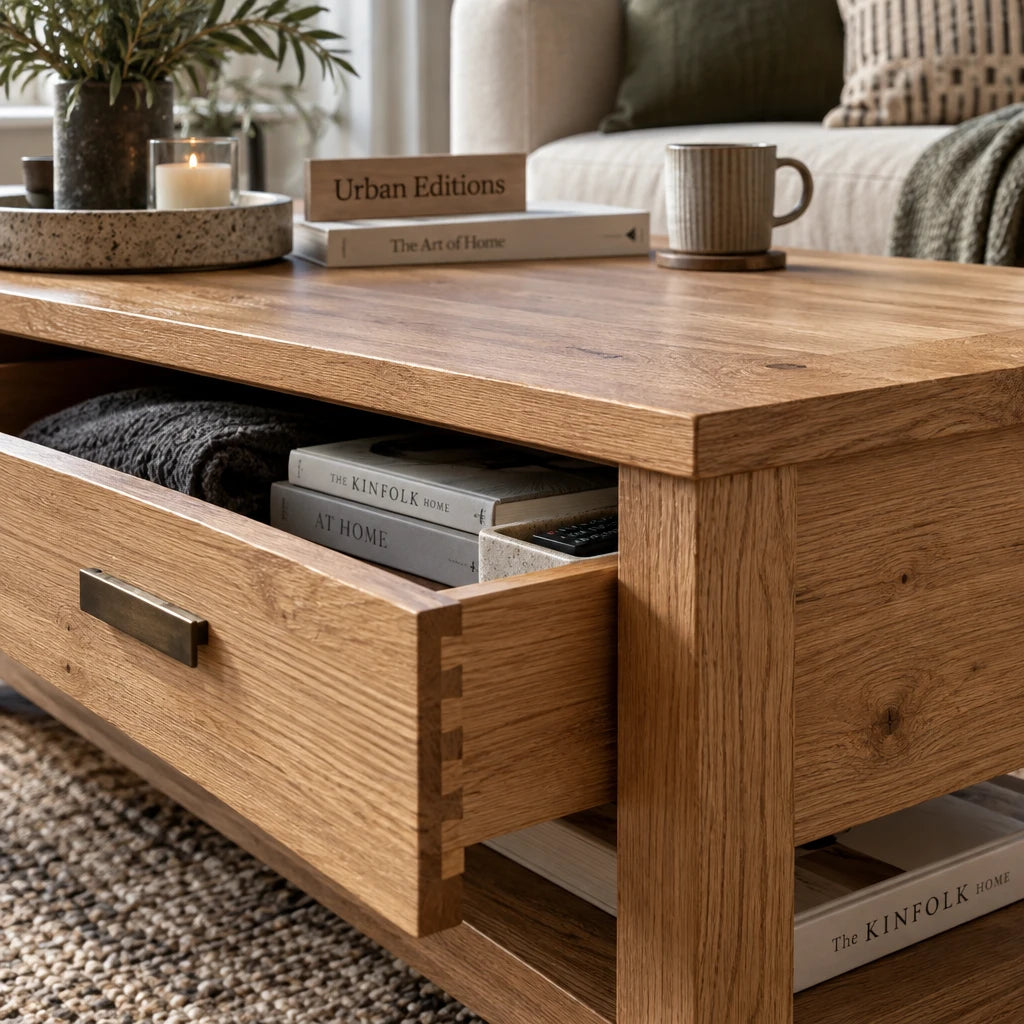
A console table with drawers can work in a narrow hallway, provided you check both its closed footprint and the space needed to use it. The tabletop depth does not tell you how far an open drawer will project.
Consider a console that leaves 95 cm of clear passage when closed. If its drawer opens 20 cm into that space, the gap reduces to 75 cm before you allow for the person standing there. It may be usable for a brief task, but it interrupts the route while open.
Drawers suit small items you want out of sight: keys, sunglasses, charging cables and loose post. Ask for internal drawer dimensions, because runners, sides and the back reduce the usable space.
For example, an A4 sheet measures 21 × 29.7 cm. If you want to store paperwork flat, the drawer needs internal dimensions larger than that in the intended orientation. A shallow external depth can make this difficult.
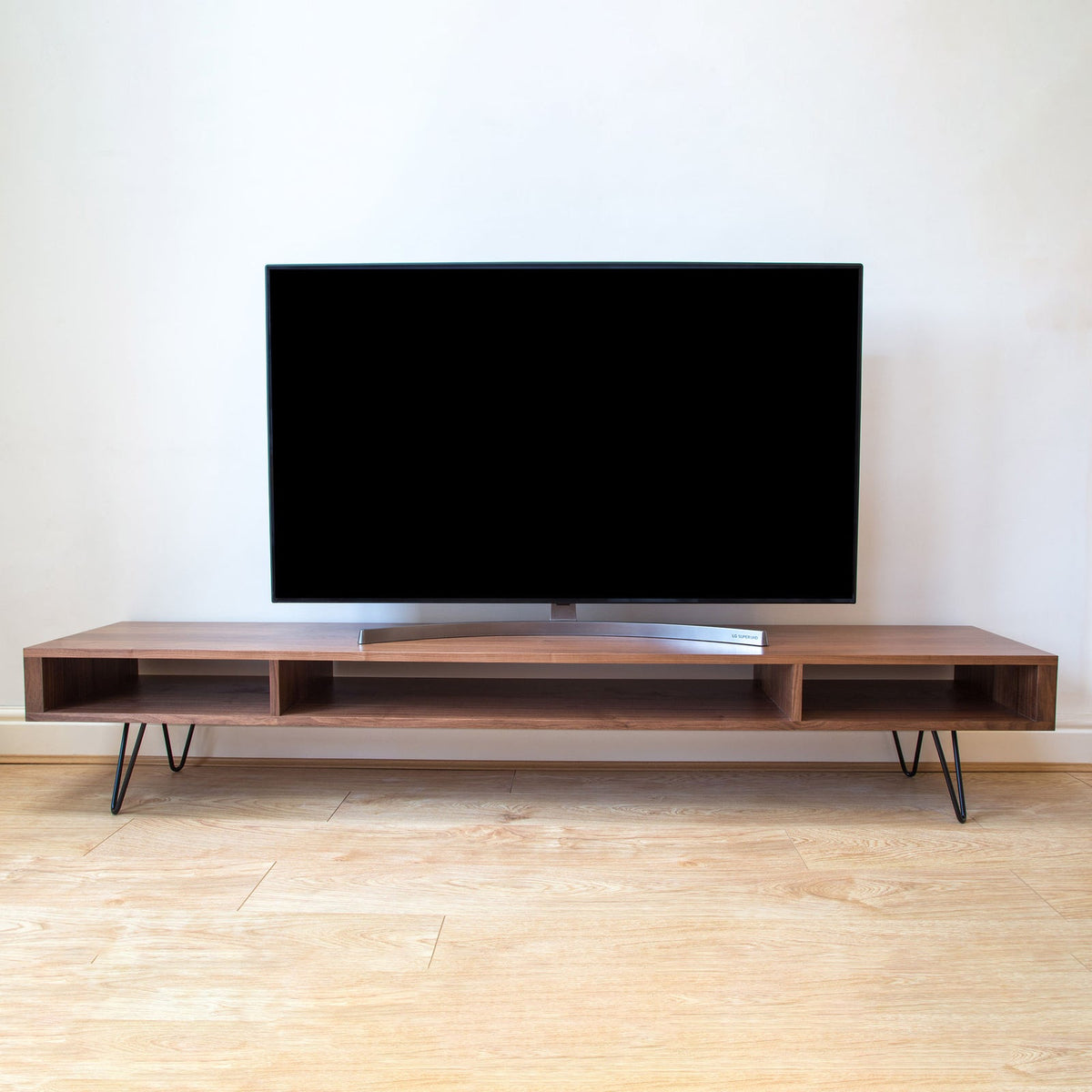
Open shelves avoid drawer-opening clearance and make baskets easy to reach. However, a basket pushed beyond the shelf edge increases the working footprint, and shoes left in front reduce the passage you measured.
An open console without storage can be the better choice when the job is simply to hold a lamp and a small tray. Less storage also means fewer places for the day’s belongings to collect. A useful limitation, sometimes.
Before choosing compartments, gather the items that genuinely belong in the hall. Measure the largest one and decide where it will go. A drawer that fits everything except your everyday sunglasses case is less useful than its neat appearance suggests.
Finish and custom sizing: make the final checks count
Choose the surface finish for the contact it will receive, then confirm dimensions against the actual room. A hallway table used twice daily for keys needs a different care routine from one that regularly holds drinks, plants or damp bags.
Surface care
Oil and hardwax-oil finishes often retain a natural-looking surface and may allow local maintenance, depending on the product. Lacquer forms a protective film, although repairing a visible chip can be less straightforward. Judge the specific finish rather than treating either category as automatically better.
Solid hardwood is not waterproof. Use a tray for frequently dropped keys, put plants on waterproof dishes and wipe up spills promptly. Protection at the point of contact is easier than dealing with a mark later.
For routine cleaning, use a soft cloth and the care method specified for the coating. Avoid soaking the surface or adding polish without knowing whether it suits the finish. An oiled sample and a lacquered sample of the same wood can look and feel noticeably different.
Samples and sizing
Custom dimensions are worthwhile when a standard size misses a real constraint, such as a doorway or a narrow turning point. Specify the overall width, depth and height, rather than describing the piece only as “slim”.
You can browse our console table collection at Urban Editions with those measurements in hand, compare customisable designs and order wood samples. We build to order in our family-run UK joinery, so the size and wood choice can be considered together.
Before settling on the specification, run through these final checks:
Overall footprint: include the widest part of the legs, handles and wall gap.
Moving space: test the route with doors open and everyday bags in hand.
Daily use: confirm reach, drawer access and the dimensions of stored items.
Finished appearance: assess the wood sample beside flooring in day and evening light.
Surface care: match the coating’s maintenance needs to how you will use the table.
Keep the agreed measurements in centimetres or millimetres throughout the order. A note such as “30 cm overall depth, including projections” is clearer than “approximately 30 cm top”.
Conclusion
Mark out your preferred table today and leave the outline in place through a normal morning and evening. Test the door, carry your bags past it and check where your hand naturally reaches. If the footprint works, move on to samples. If it does not, change the depth before changing the wood: the right material cannot correct an awkward route through your home.
Frequently Asked Questions
How deep should a hallway console table be?
A depth of 25–35 cm is a useful starting range, but choose the depth that preserves comfortable passage in your hall. Include any gap behind the table and any legs or handles that project beyond the top.
What height should a hallway console table be?
Around 75–85 cm is typical, with 80 cm a useful height to test. Choose the height that lets you place and retrieve everyday items comfortably; include the height of any tray or bowl when testing your reach.
How wide should a console table be compared with the wall?
Roughly two-thirds of an uninterrupted wall section is a useful visual starting point, not a requirement. Doorways, switches and turning space take priority, so a shorter or off-centre table can be the better fit.
Which wood is best for a hallway console table?
Oak is a dependable starting choice for warm colour and visible grain, while walnut suits a darker focal point. Choose ash for a paler natural appearance or iroko for golden warmth, then confirm your preference with a finished sample in the hallway.