October SPECIAL OFFER! Sign-up to our newsletter to receive the latest offers and news.
Record Case Holder for Neat Vinyl Storage
You’re choosing a record case holder for the albums beside your turntable, but the right choice depends on how you use them. A portable case suits carrying or occasional storage; an upright rack or cabinet makes records easier to reach at home. Keep LPs upright, snug but not compressed, and leave room for sleeves and future additions.
The key is access, not the biggest capacity printed on a case. Choose storage that fits your listening routine, the jacketed records you own and the space you can spare.
Key Takeaways
Choose a portable case for carrying or occasional storage.
Pick fixed storage for easier everyday browsing.
Compare internal dimensions, not capacity claims alone.
Leave room for sleeves and thicker multi-disc albums.
Keep records upright, away from heat, damp and direct sunlight.
Portable case or fixed holder: choose by how you play
Choose a portable record case if you carry 12-inch LPs or store a selection between listening sessions. For records you play at home, an upright rack or cabinet is easier to browse and return to. Match the holder to your routine, then keep each record snug without squeezing it.
When a case earns its place
A case is useful when you move records between rooms, take them to a friend’s house or need to put a small selection away. Its enclosed format keeps albums together and makes a temporary collection easier to handle than loose sleeves on a table.
That convenience comes with a trade-off. Records inside a closed case aren’t as quick to flick through, and a full case needs lifting before you can browse. Check that its handle and closure suit the way you’ll carry and store it.
A case also works for occasional storage, but don’t treat it as a substitute for suitable conditions. Keep it somewhere cool and dry, rather than in a damp shed, hot loft or sunlit spot.
When a fixed holder works better
A fixed rack or cabinet suits the albums you play regularly. You can see the spines, browse without lifting a lid, and return records to the same place after listening. That makes a holder beside your turntable practical for a collection you use at home.
Open racks give quick access, while cabinets enclose records behind sides or doors. Both need enough room for LPs to stand upright and move freely. A holder that’s too tight turns browsing into a squeeze, which risks scuffed sleeves and makes records harder to put back.
If you mostly listen at home, choose a stable fixed holder first. Its main drawback is the space it occupies; a portable case is easier to put away when you don’t need it.
Cases, open racks and cabinets have different trade-offs
A case, an open rack and a cabinet all hold records, but they suit different routines. Compare how often you browse, whether you need to carry LPs and how much space you can give the holder. The table shows the practical difference.
Compare the three formats
Storage type
Best fit
Access at home
Main trade-off
Portable case
Carrying or occasional storage
Open the case to browse
Records are less convenient to reach
Open crate or rack
Frequent browsing in a small area
Quick to see and handle
Records are exposed to room dust
Cabinet or turntable stand
Regular listening with a fixed setup
Records stay beside the deck
Needs a dedicated footprint
An open crate or rack is a straightforward choice if you want to flick through records without opening anything. Check that its sides support the records upright, especially when the row isn’t full. A partly empty row can lean if there’s nothing to hold the jackets in place.
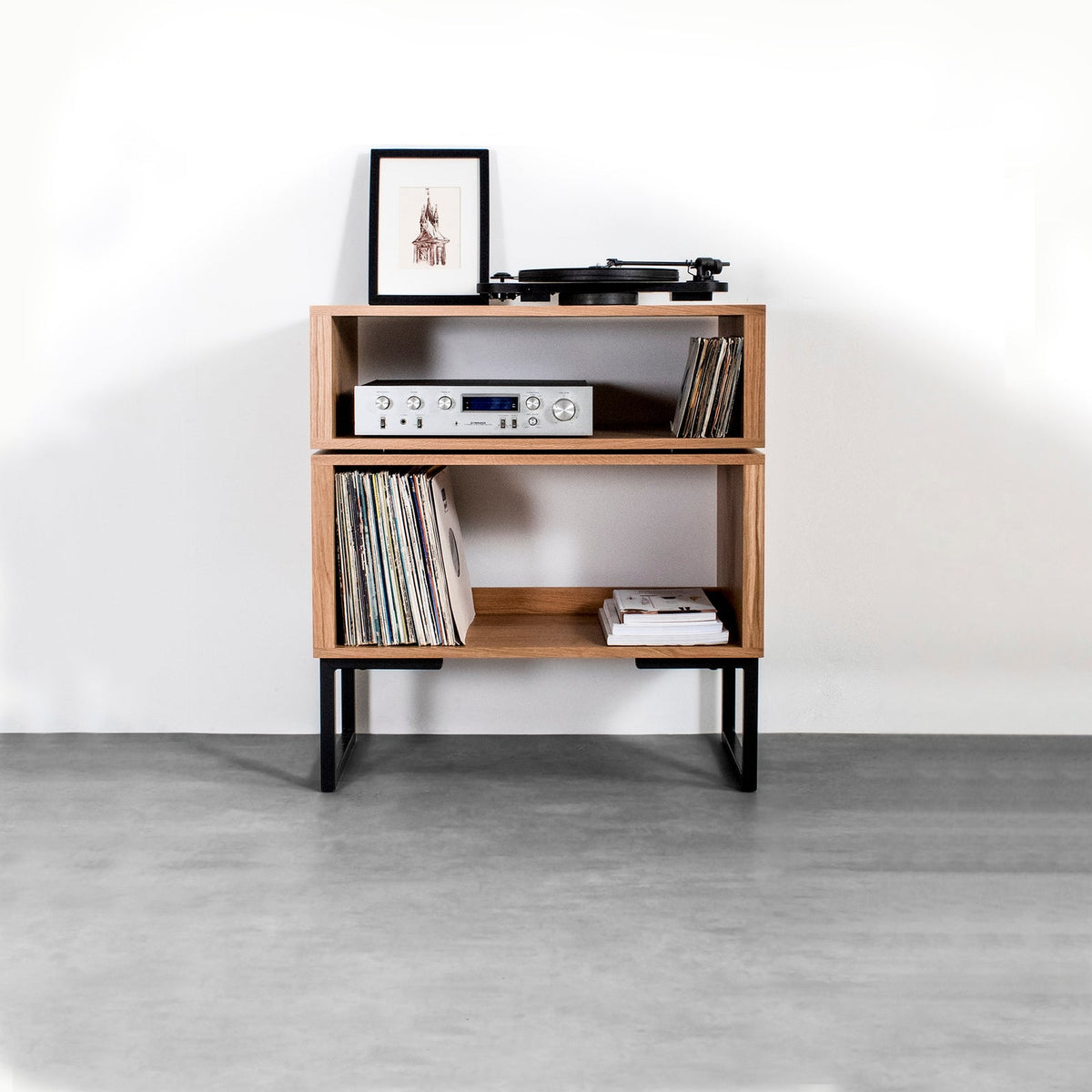
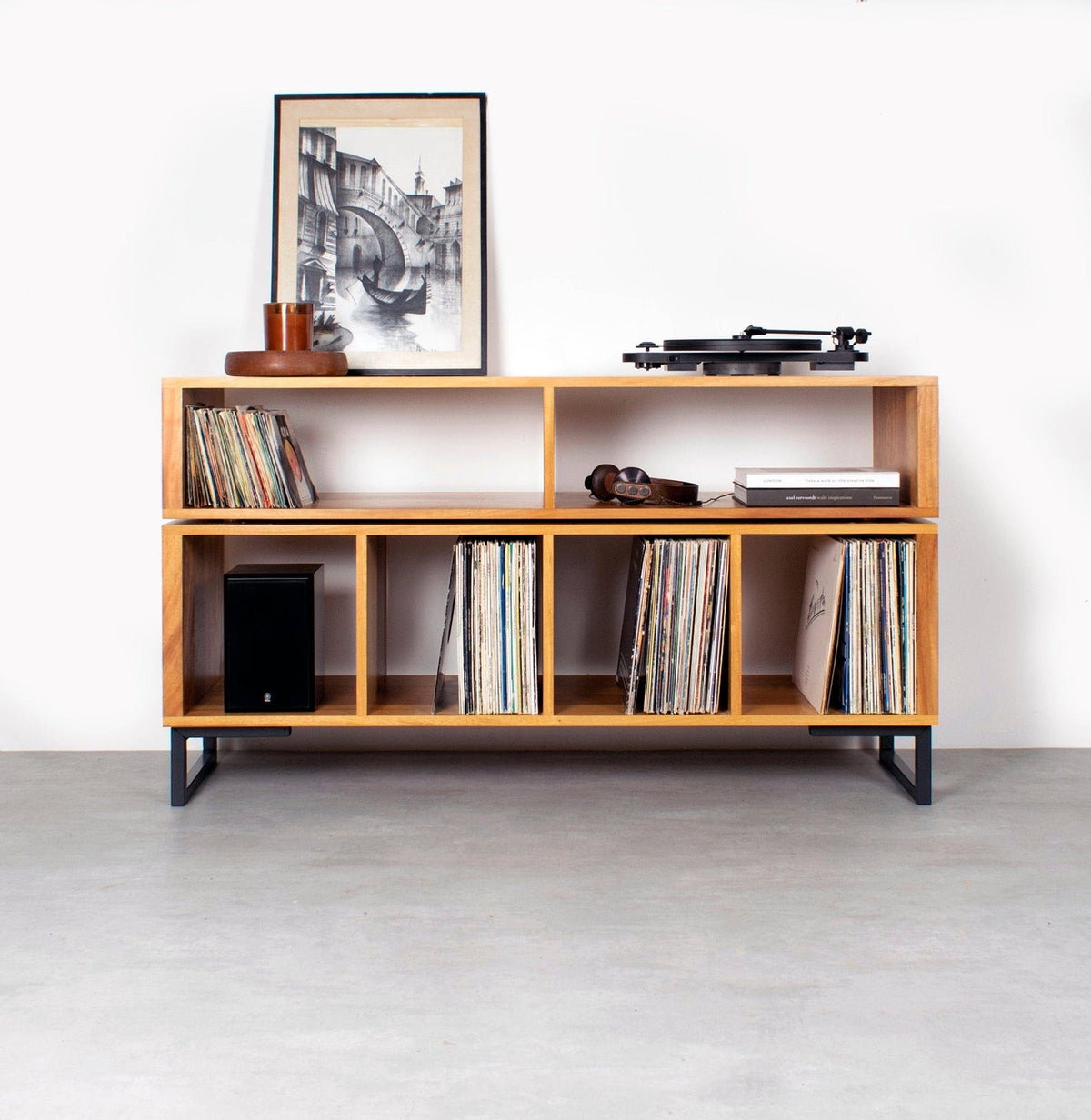
A cabinet gives the collection a set place and can keep records less exposed than an open rack. A turntable stand adds a listening surface, but check its layout before buying: you need space for the records and the equipment you use.
Choose around your room
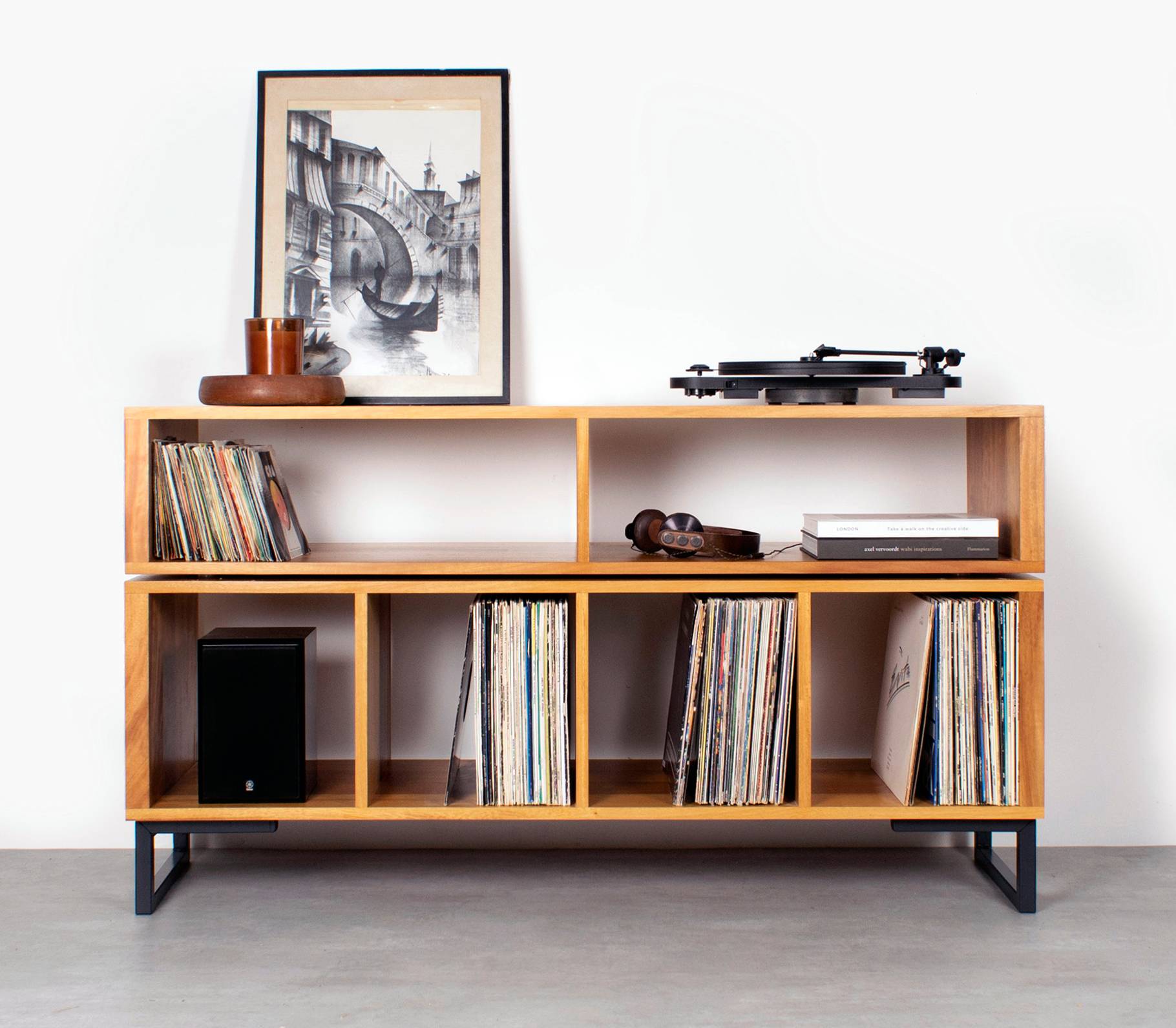
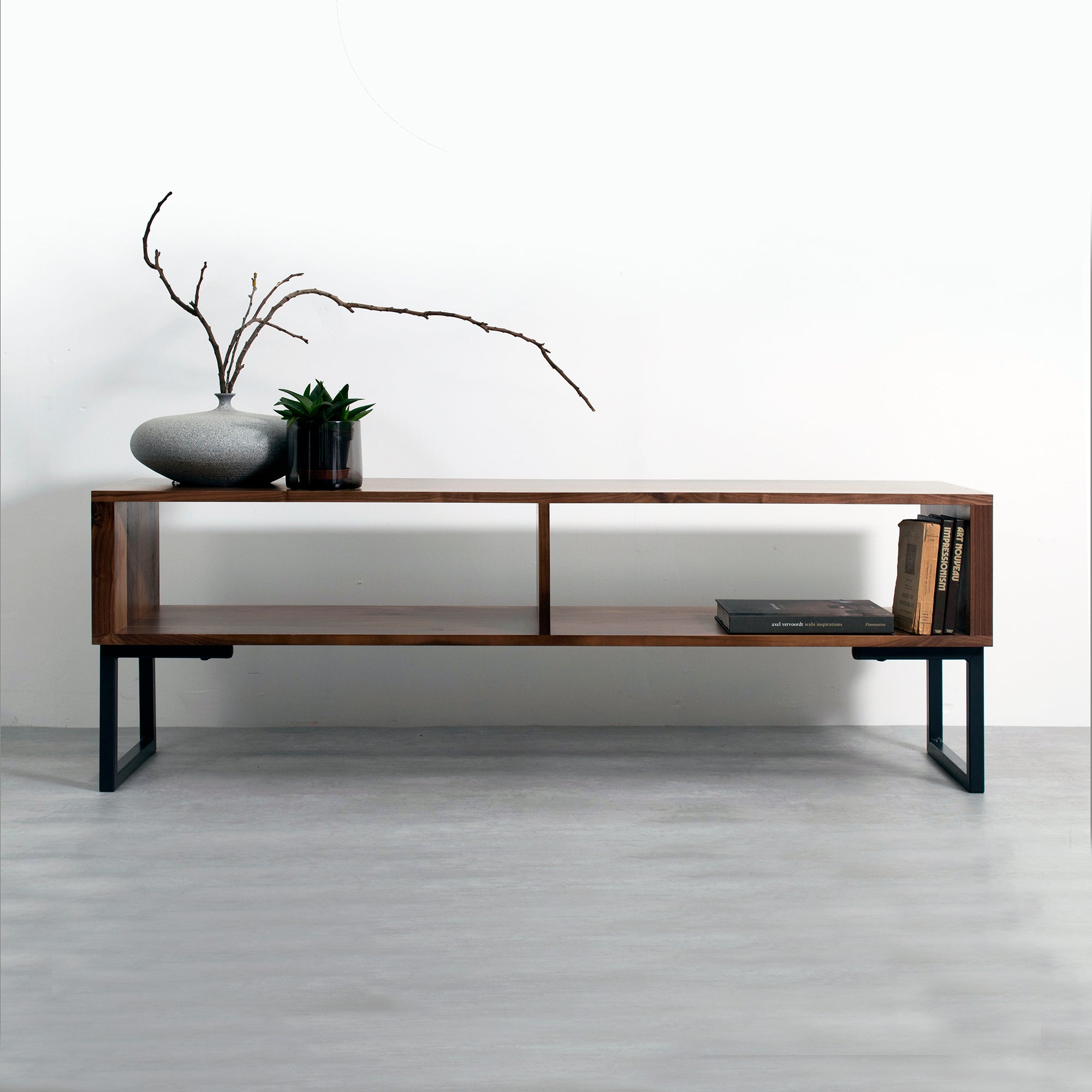
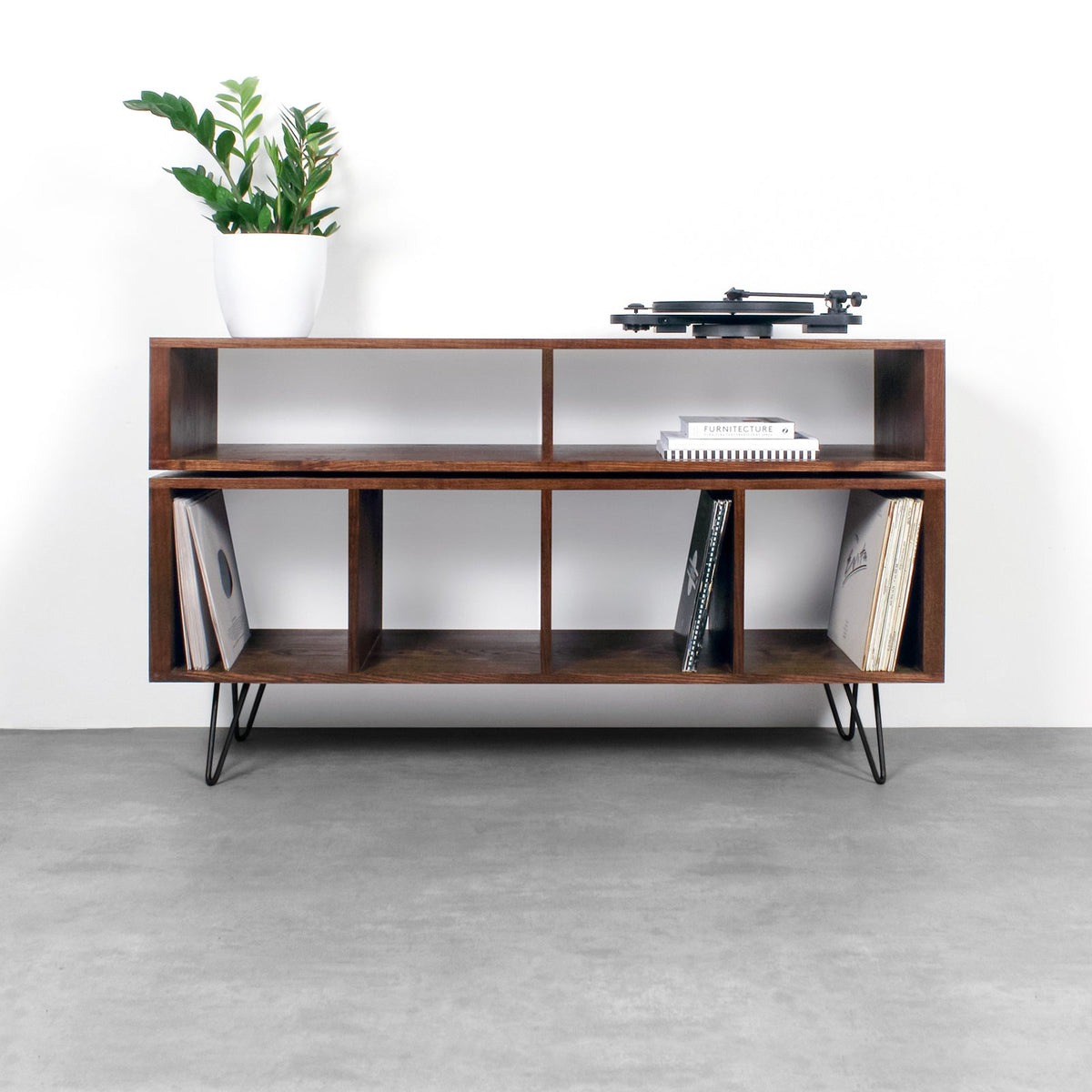
If furniture suits your listening routine better than a carry case, browse ourmedia units and vinyl storage furniture. A fixed unit works well when you want records near the deck and don’t need to move them often.
Think about the everyday route from shelf to turntable. A holder placed across the room can make browsing a chore, while one positioned where you sit may block a walkway or crowd other furniture. Measure the space you can give it before settling on a format.
Capacity depends on dimensions, sleeves and album thickness
Case capacity isn’t a universal figure. One UK listing for the Vinyl Tonic 12-inch case states that it holds up to 100 LPs and includes 10 sleeves, but that claim applies to that case. Other capacities aren’t directly comparable unless you check the case dimensions and what the listing counts.
Read the capacity claim carefully
A headline number won’t tell you how easily your own collection fits. Some jackets are thicker than others, and double albums, gatefold sleeves and boxed sets take up more room than a single LP jacket. Protective sleeves also add bulk.
Check whether the advertised capacity refers to records alone or assumes a particular sleeve arrangement. If protective sleeves are included, note how many; don’t assume every album in your collection will fit as neatly as the listing’s example.
Check fit before you buy
Use this check before choosing a case for 12-inch LPs:
Measure the case’s usable internal space, not its outside dimensions.
Compare it with the largest jacket or protective sleeve you store.
Check whether the capacity includes sleeves or describes records alone.
Allow extra room for gatefolds, boxed sets and multi-disc releases.
Confirm records can slide out without forcing or bending the sleeves.
Buy for the collection you actually store, not a bare-disc count. If you have a mixture of standard albums and thicker releases, leave clearance rather than filling every available space.
It also pays to think ahead. Choose a capacity that leaves room for additions, but don’t buy a much larger case if you’ll find it awkward to carry or store. The right size gives your records room to move without letting them slump.
Upright storage keeps records easy to browse
Store LPs upright, with their jackets supported and space to slide them in and out. This applies to a portable case as well as a home rack: a tall flat stack puts weight on the records underneath and makes the bottom albums awkward to reach.
Support the spines
Set records on their bottom edges, like books on a shelf. Keep the row upright rather than leaning hard against one side, and don’t pack it so tightly that you have to pull at the sleeve to remove an album.
A full rack supports its contents, but a partly filled one may leave records leaning. Use a divider or a solid side panel to support the row as it grows. Check the records after browsing; return them upright rather than leaving a gap that lets the remaining jackets tip.
Flat storage is useful only for a short handling moment, such as setting an album down while you change sides. Avoid leaving records in tall horizontal stacks: the weight presses through the pile, while the lower jackets can take the strain.
Make room to browse
Leave enough clearance to move a record without scraping its neighbours. You should be able to separate the jackets with your fingers, read the spines and return an LP without pushing the row sideways.
If a crate or shelf feels cramped, move some records elsewhere instead of forcing them in. That’s especially useful when your collection includes thicker sleeves. Snug support is helpful; compression isn’t.
Keep vinyl away from heat, damp and pressure
Good storage starts with the room around the holder. Keep records away from radiators, fireplaces, hot windows and damp areas such as spaces near laundry. A case or cabinet won’t prevent problems caused by poor conditions.
Control the room, not just the cabinet
A guide Shelved published on 16 October 2025 recommends a steady room at 18–21°C with 35–50% relative humidity. Treat that as a practical reference rather than a guarantee for every home; avoid sharp changes and places that feel damp or muggy.
Relative humidity compares the water vapour in the air with the maximum it could hold at that temperature.
Position records away from direct sunlight, which can warm the vinyl and fade sleeve artwork. Don’t put a cabinet next to a radiator or where an air vent blows straight onto it. Leave room for air to circulate rather than trapping heat behind the unit.
Protect the sleeve and record
Protective sleeves reduce everyday dust and scuffs. Use an inner sleeve for the disc and an outer cover for the jacket if you want to protect both. Make sure the protected jacket still fits the case or rack without being squeezed.
Return each record to its sleeve after playing and put it back upright. Paper sleeves can absorb smells and moisture, so avoid storing albums near kitchens or laundry areas where odours and humidity fluctuate.
Check the storage area as seasons change. If a room becomes muggy, improve ventilation or move the collection to a drier spot. A sunny position might look good at first, but it can expose records and artwork to avoidable heat and fading.
A turntable-side holder needs to fit more than the records. Check where the deck will sit, how you’ll reach the albums and whether the storage below suits your collection. Measure the space before choosing a combined stand, including the room needed to browse comfortably.
Plan the unit around your listening setup
Keep the turntable on a stable surface and leave room to reach its controls. If your setup includes hi-fi equipment, check the compartment height and arrangement rather than assuming every stand accommodates every piece of kit.
Think about how you’ll use the top and the storage beneath it. A dedicated record compartment keeps albums close to the deck, while a separate open rack may suit you better if you want faster browsing or more flexibility in the room.
Choose a footprint that grows with your collection
A compact stand works best when its capacity matches the records you keep beside the player. If you own more LPs than the unit can hold, decide where the rest will go before the new furniture arrives. A crowded compartment undermines the easy access you wanted.
Check those options against your room and equipment before choosing. The stand’s capacity is a guide for a small collection, not a reason to pack records tightly. Keep enough space to browse, and leave room for sleeves and new additions.
Conclusion
Choose a portable case if you carry records or store them between listening sessions. For a collection you play at home, pick an upright rack, cabinet or turntable stand that fits your space and makes browsing easy. Before ordering, measure the usable storage area and compare it with your largest sleeved LP; that check prevents a capacity claim from becoming a tight fit.
Frequently Asked Questions
What is the difference between a record storage case and a record holder?
A record storage case is usually enclosed and portable; a record holder is a broader term for anything that supports albums, including an open rack or cabinet. Listings use these terms inconsistently, so judge the design and dimensions rather than relying on the label.
How many LPs fit in a record case?
It depends on the case’s usable dimensions and the thickness of your albums. One UK listing claims up to 100 LPs for a particular 12-inch case, but treat that as the maker’s maximum, not a target; leave space to remove records without pulling at sleeves.
Are vinyl records better stored in cases or upright on shelves?
Both work if records stay upright, supported and away from heat and damp. A case is more useful for carrying or occasional storage; an upright shelf is easier for regular browsing. An enclosed case can reduce dust, but it doesn’t control the room conditions.
What should I check before buying a case for 12-inch LPs?
Check the internal height, width and depth against your largest sleeved jacket, then confirm the lid closes without pressing the records. Also check the handle and closure with the case loaded, especially if you’ll carry it up stairs or between rooms.