October SPECIAL OFFER! Sign-up to our newsletter to receive the latest offers and news.
Turntable Stand or Ordinary Shelf? Why Your Setup Deserves Better
A 12-inch record needs more room than a turntable alone. That simple measurement changes the turntable stand vs shelf decision, because your setup also needs space for records, cables, hi-fi components and safe handling. A narrow shelf may hold the deck but leave everything else crowded.
You want stable playback, sensible listening height and furniture that still looks right when the room is tidy. A properly supported shelf works for a compact system. A dedicated turntable stand earns its space when you store vinyl, expect equipment upgrades or want a setup that works smoothly every day.
Turntable stand vs shelf: which option is better?
A dedicated turntable stand is the better choice for most serious vinyl setups because it combines stable support, record storage and practical access in one piece of furniture. An ordinary shelf is sensible when you have one lightweight deck, limited records and a wall fixing or cabinet that provides firm, level support.
The difference is more than appearance. A turntable transfers tiny movements from the record groove into the cartridge, so vibration from speakers, footsteps or a flexing shelf can affect playback. A heavy, well-supported unit gives the deck a more reliable platform.
An ordinary shelf can still work. A properly fixed hardwood shelf, a strong alcove shelf or a section of a substantial media cabinet may provide enough support for a turntable and a small phono stage. The shelf must be level, securely attached and rated for the combined load, not simply the turntable’s weight.
A turntable platform should be level, stable and isolated from avoidable vibration.
The main objection is cost. A shelf often costs less at the start, but it may force you to buy record storage, cable accessories and another cabinet later. If your collection is growing, one purpose-built unit usually gives better everyday value than assembling several pieces around a deck.
Think about the whole system rather than the deck alone. A turntable, amplifier, speakers, records and accessories form one working arrangement. If the furniture makes any part awkward to reach, the saving quickly becomes a daily irritation.
What makes a turntable stand more stable than an ordinary shelf?
A turntable stand improves stability through its construction, footprint and support points. It gives the deck a dedicated surface, keeps heavy items from pressing against a narrow span and reduces the chance of movement caused by overloaded shelving or loose fixings.
Support across the full surface
A turntable normally sits best on a solid, level top with enough depth for its feet and cables. A shelf that is only slightly deeper than the deck can leave the rear connections pressed against the wall or the front edge too close to your hand.
A useful example is a 45-centimetre-deep turntable on a 46-centimetre shelf. The dimensions appear compatible, but the available clearance disappears once you allow for plugs, interconnects and a dust cover. Leave working room around the deck, not only the footprint shown in a catalogue.
Shelf span matters too. A long board supported at each end can flex under weight, especially when records or an amplifier sit on it. A dedicated stand usually places support beneath the working area, which reduces movement as you cue a record.
Vibration from speakers and footsteps
Speakers should not share a cramped surface with a turntable where their vibration can travel directly into the deck. Footfall is another problem, particularly on suspended timber floors. A stand will not cure every structural issue, but it gives you a better starting point for vibration control.
Keep the turntable away from a speaker cabinet, subwoofer and frequently used walkway. If the stand must sit on a wooden floor, check that it does not rock and use a suitable isolation solution where required. Avoid placing soft, unstable padding under the whole unit, as this can make the deck less secure.
A level check takes minutes. Place a spirit level across the front-to-back and side-to-side directions, then adjust the furniture or floor contact rather than trying to correct a badly tilted deck with random layers of card.
Load capacity includes your record collection
Records are heavy. A shelf holding a turntable, amplifier and 80 records carries a different load from one holding only a deck. Keep records upright, because horizontal stacks put pressure on sleeves and make the lower discs difficult to access.
Check the combined weight before buying. Add the turntable, amplifier, record collection and any storage boxes. If a unit has no published capacity, do not assume a flat surface is strong enough simply because it looks thick.
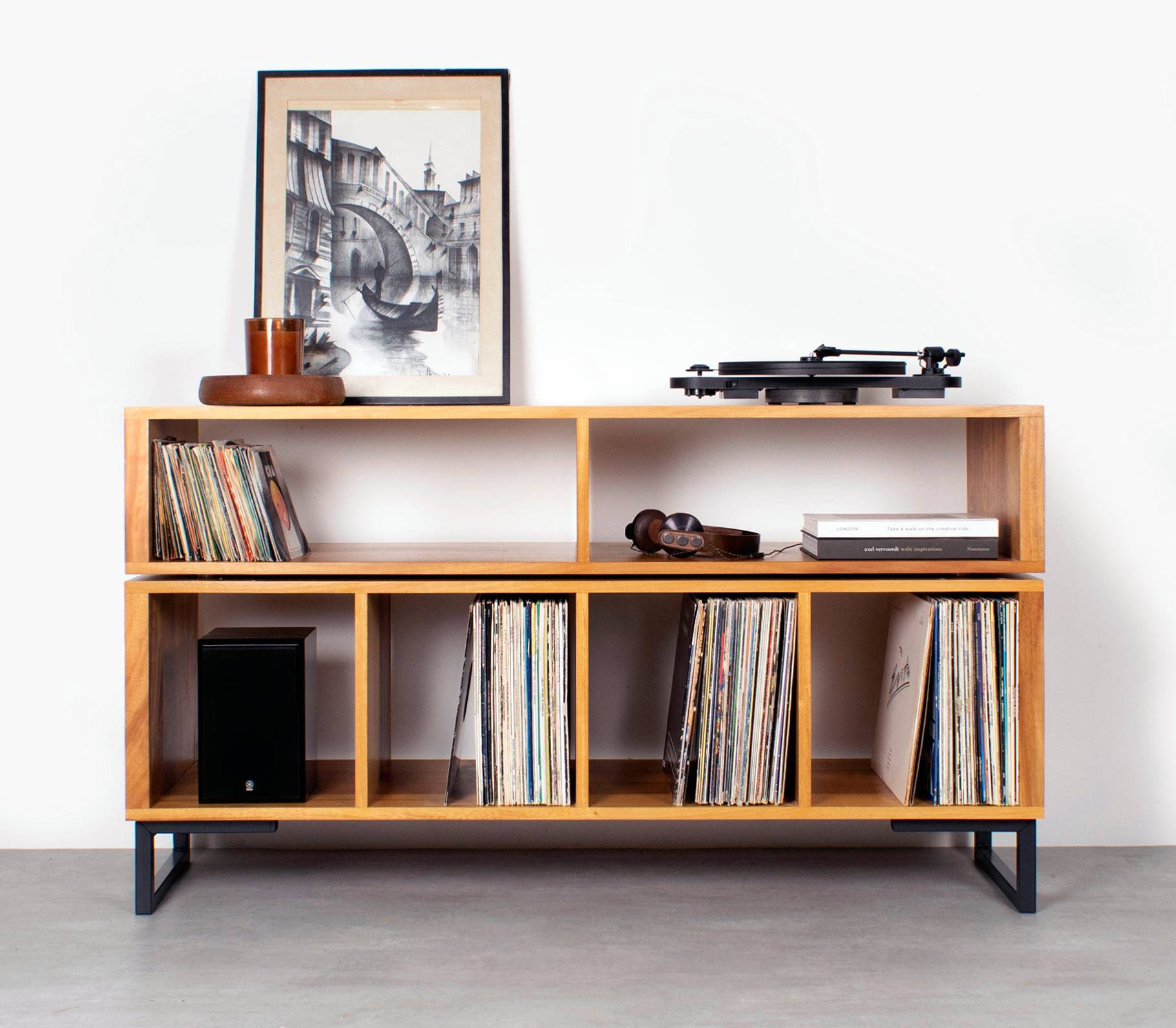
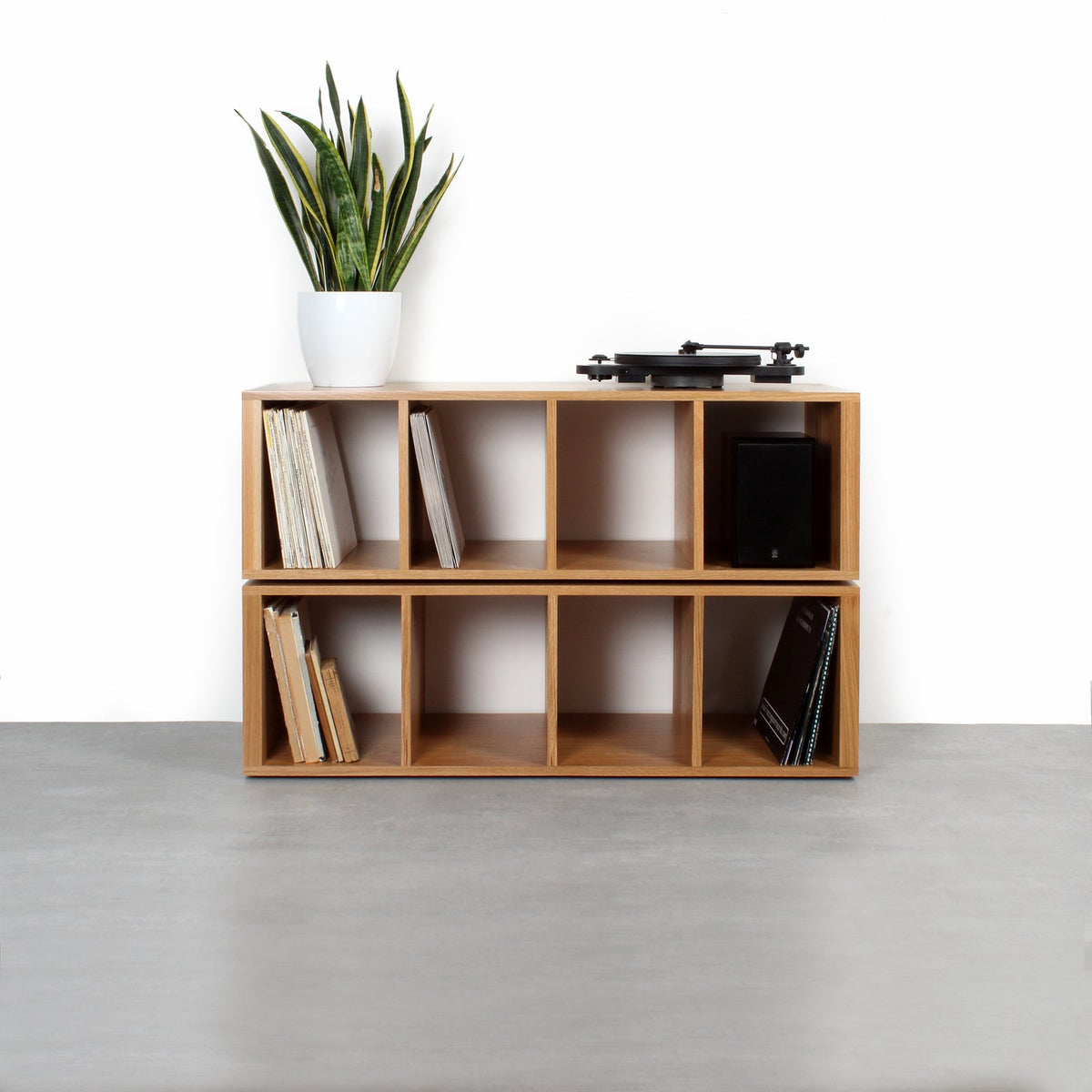
A purpose-built vinyl cabinet gives the collection a defined home and keeps weight distributed through the structure. The Technic vinyl storage cabinet is designed around this type of setup, making it a more coherent choice than balancing records on a shelf beside the turntable.
How much space does each option need?
A shelf uses less floor space, while a turntable stand uses space more efficiently because it combines deck support with storage. Measure the equipment, cable routes and record access area first; then choose furniture that leaves enough clearance to operate the system without moving it.
The compact shelf arrangement
A wall shelf can suit a small system in a flat or a narrow living room. The turntable may occupy roughly 45 centimetres of width and 35 centimetres of depth, but those figures are only a starting point because rear cables and a raised dust cover need room.
The shelf also needs clearance below it. An amplifier placed immediately underneath can trap heat and make controls awkward to reach. If the shelf is above a desk or sideboard, check that the lid opens fully and that your hand can lift a record without hitting the wall.
Wall construction affects the result. Plasterboard, masonry and timber-stud walls need different fixings, and a bracket rated for the shelf itself may not cover the final equipment load. Fix the shelf for the actual weight, not an empty-board estimate.
The dedicated stand arrangement
A freestanding stand often needs more floor width, but it reduces visual clutter by giving records, components and cables planned positions. In a living room, that means fewer loose cases on the floor and less equipment competing for space on a sideboard.
Allow room to remove records vertically from their storage compartment. A record sleeve is approximately 31 centimetres square, and your fingers need extra space above the sleeve to grip it comfortably. A shelf opening that barely clears the sleeve will become frustrating after repeated use.
Placement affects listening height as well. The turntable should be easy to cue without bending sharply or reaching across other equipment. A low coffee-table arrangement might look attractive, but it is less practical for frequent listening than a stand at a comfortable working height.
A worked room example
Imagine a 2.8-metre-wide living-room wall with a sofa, one speaker on each side and a narrow media unit. A floating shelf may hold the turntable, but the amplifier and records still need somewhere to go. A dedicated stand could occupy one controlled footprint while keeping the cables close to the equipment.
The better choice depends on the full arrangement. If the shelf is already installed, securely fixed and used for a single deck, keep it. If you are buying furniture from scratch and own more than a small handful of records, choose storage that grows with the collection.
Which option handles hi-fi components and cables better?
A dedicated turntable stand normally handles hi-fi components and cable management better because it provides planned surfaces, openings or compartments around the equipment. An ordinary shelf works when the system is simple, but cable bends, ventilation and access become difficult as soon as you add an amplifier or phono stage.
A turntable setup often includes more than the deck. You may have a phono preamplifier, integrated amplifier, streamer or external power supply. These items need safe routing, clear controls and enough air around them.
Cable routes need room
Avoid forcing interconnects into tight bends behind a turntable. Keep signal cables separated from mains cables where practical, and leave enough slack to remove the equipment for cleaning or cartridge work. A shelf pushed hard against the wall often leaves no useful route.
A rear gap or cable opening changes the installation. It lets you route power and signal leads without hanging them over the side, where they collect dust or catch on a sleeve. Cable access is part of furniture design, not an afterthought.
Measure plug depth, not just cable length. A right-angled plug may fit where a straight plug does not, while a bulky power supply can consume valuable space behind a shallow shelf.
Ventilation protects the equipment
Amplifiers produce heat, especially during long listening sessions. Do not enclose a warm component in a tight, unventilated compartment or press its top against a shelf above. Follow the equipment maker’s clearance guidance, because ventilation needs vary between models.
A turntable itself creates less heat, but its motor and electronics still need a stable, clean position. Dust covers also require space to open fully. Test the lid movement before pushing the stand against a wall.
An ordinary shelf may be fine for a deck and compact phono stage, yet unsuitable for a full-size amplifier below. Plan ventilation around the warmest component, not the smallest one.
Daily access affects how often you listen
A tidy installation should make the next record easy to play. You need to reach the power switch, lift the dust cover, cue the arm and adjust the amplifier without shifting another component.
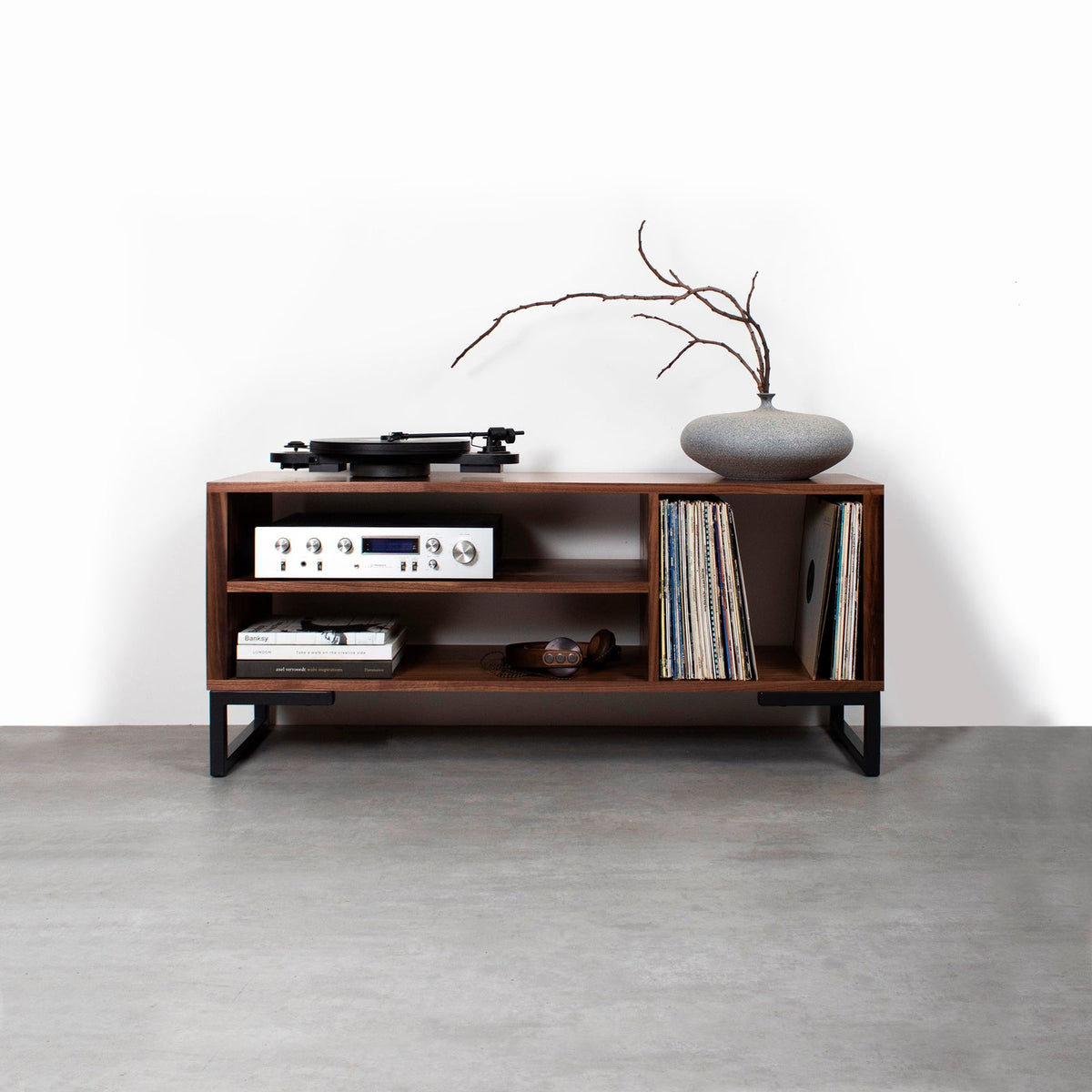
This is where a purpose-built turntable stand earns its footprint. A dedicated surface keeps the deck separate from records, while storage below lets you browse with the sleeves upright and visible. You are less likely to leave records in temporary piles.
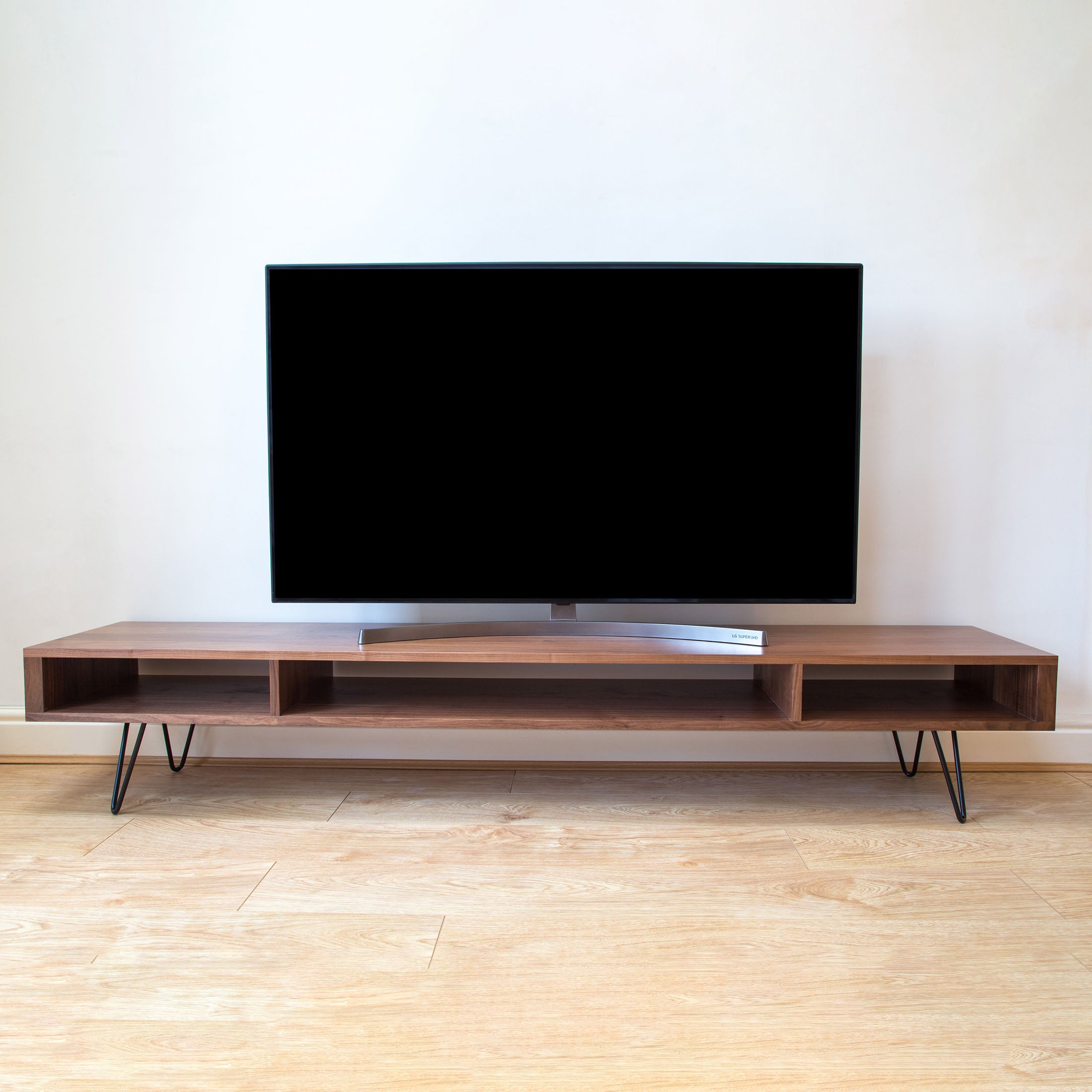
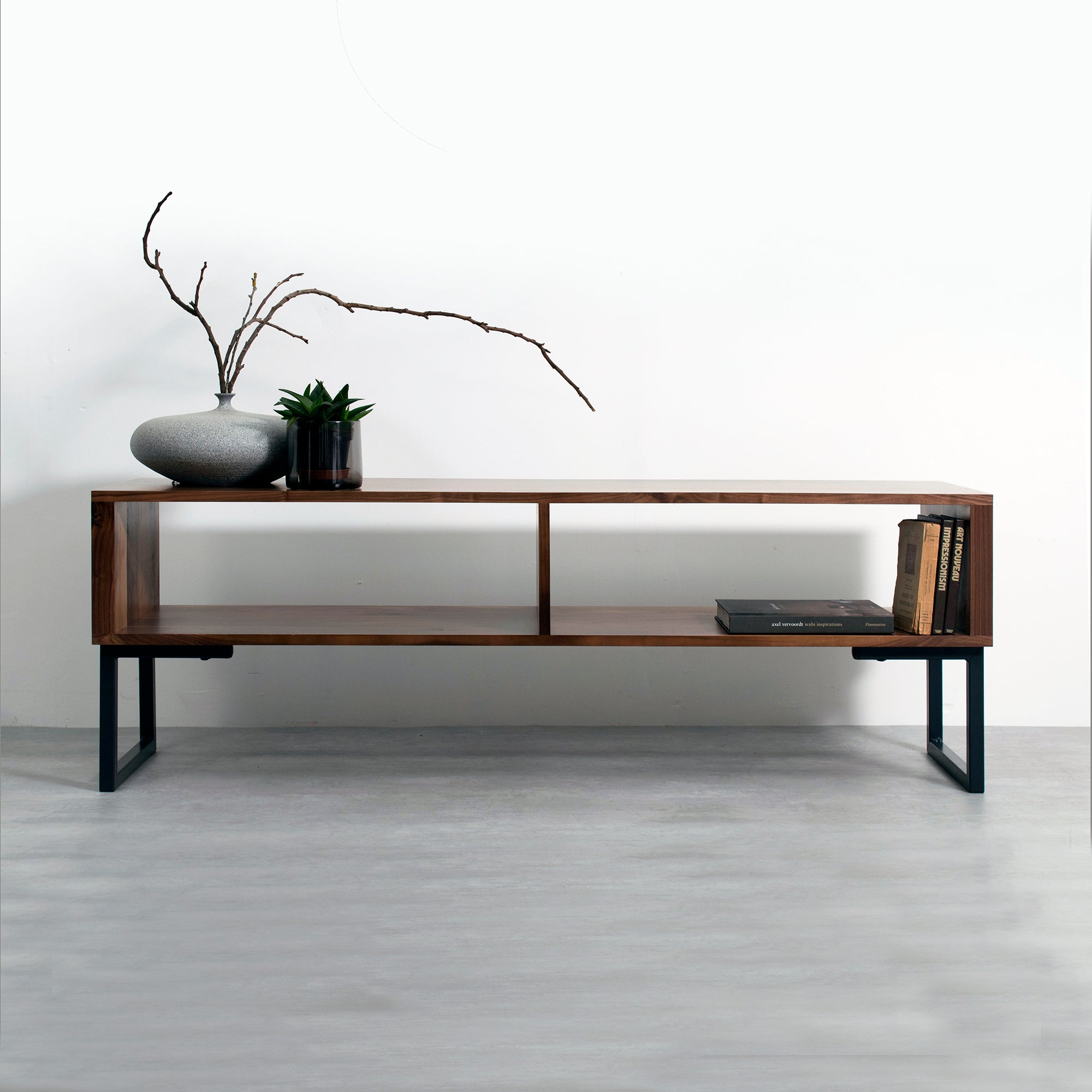
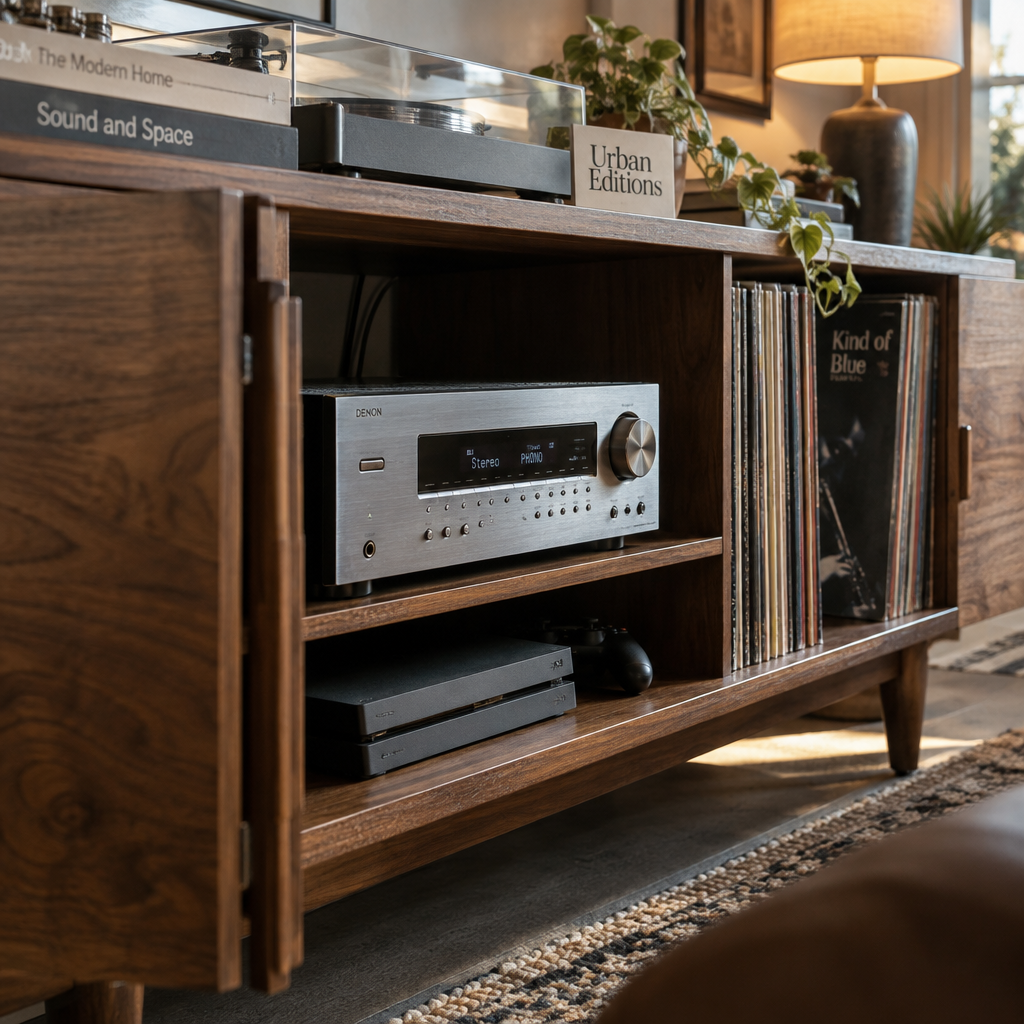
Solid hardwood furniture also brings a practical advantage: it gives the room a stable, substantial base and can be selected to suit the surrounding pieces. The Urban Editions designs and makes its furniture in the UK, with built-to-order options that let the furniture fit the room rather than forcing the room around a standard size.
How should you compare cost and long-term value?
Compare the complete setup cost, not the price of an empty shelf against the price of a turntable stand. A shelf may be the lower-cost answer for a deck-only system, while a dedicated unit becomes better value when it replaces separate record storage and reduces later furniture changes.
Setup option
Best for
Space used
Typical practical drawback
Strong wall shelf
Turntable and small phono stage
Low floor use
Limited record storage and cable space
Existing sideboard
Deck, amplifier and a small collection
Uses furniture already owned
Surface may flex or become crowded
Dedicated turntable stand
Deck, hi-fi components and upright records
Moderate floor use
Higher initial furniture cost
Vinyl storage cabinet
Growing collection and organised playback
Larger dedicated footprint
Needs careful placement and access
The table compares functions rather than invented retail prices. Furniture costs vary with timber, dimensions, construction and whether the piece is built to order. Do not treat the cheapest surface as the cheapest complete solution if it leaves you needing a second cabinet.
A realistic comparison starts with what you already own. If you have a strong sideboard with a level top and enough depth, using it may be the most sensible decision. Buying a dedicated stand would add cost without solving a real problem.
If you are starting from an empty wall, however, combining support and storage usually improves the room. One properly sized piece gives you fewer mismatched finishes and fewer awkward gaps between cabinets.
When a shelf is the right spend
Choose the shelf when your system is genuinely compact. That means the turntable is the main component, the collection is small enough to store elsewhere and the wall can accept reliable fixings. A shelf is also useful when floor space is reserved for furniture with another purpose.
Check the shelf after installation. It should remain level when you apply firm hand pressure near the front edge, and it should not shift when you lift the dust cover. If it moves before equipment is added, it is not ready for a turntable.
The saving is worthwhile only when the shelf meets those conditions. A flimsy flat-pack board or overloaded floating shelf is a poor economy.
When a stand justifies the spend
A dedicated stand makes sense when you listen often, own a growing collection or expect to upgrade your hi-fi components. It also suits a room where the turntable is visible and the furniture needs to look finished from every angle.
Built-to-order solid hardwood furniture costs more than mass-market shelving because the material and joinery are selected for a specific piece. In return, you choose a design intended for the equipment and storage job rather than adapting a generic shelf.
The drawback is clear: a stand needs permanent floor space. Measure that footprint beside skirting boards, doors and speaker positions before ordering, because good furniture cannot compensate for a cramped location.
Which stand and storage details should you check before buying?
Check the top dimensions, internal storage, load path, cable access, ventilation and finish before you choose a turntable stand. The strongest buying decision matches the furniture to your current equipment while leaving practical room for a larger record collection or a future component.
Start with your largest item. Measure the turntable with its dust cover open, then measure the amplifier, record sleeves and any power supply. Write the figures down in centimetres, including the depth of plugs behind the equipment.
Upright storage protects access
Store records vertically, supported closely enough that they do not lean heavily. Horizontal storage makes the bottom record carry the weight above it and turns browsing into a lifting exercise.
A cabinet should allow your hand to grip a sleeve without scraping the top edge. Leave room for dividers or expansion if the collection is growing. A 12-inch sleeve needs a compartment with usable clearance, not an opening that only matches the sleeve’s nominal size.
Look for a construction that keeps the cabinet square. Doors and drawers that bind can indicate poor alignment, excessive loading or an uneven floor, all of which affect everyday use.
Solid hardwood changes the furniture choice
Solid oak, walnut, ash and iroko each bring different colour and grain character. The choice should relate to the room’s floor, shelving and lighting rather than the turntable’s brand.
Solid hardwood furniture also has visual weight. That can anchor a listening corner, but it may look too heavy in a very small room if the design has deep sides or closed storage. Use the overall proportions as your guide.
The Urban Editions collection uses sustainably sourced solid hardwoods including oak, walnut, ash and iroko. Customers can order wood samples before selecting a finish, which makes it easier to compare the grain in your own room’s daylight.
Custom sizing solves awkward rooms
Custom sizing is valuable when your wall has a chimney breast, a low window, a radiator or a narrow gap beside a media unit. A few centimetres can decide whether the turntable clears the skirting board and whether the lid opens without striking the wall.
Built-to-order furniture also lets you plan around the actual hi-fi components rather than buying a standard compartment and hoping everything fits. Keep the required dimensions written beside the order, including ventilation and cable clearance.
A well-made stand should still be easy to move into the room. Check access through the front door, stairwell and tightest corner, especially if you live in a terrace or upper-floor flat.
How do you decide between a turntable stand and shelf for your room?
Choose an ordinary shelf for a secure, compact deck-only setup. Choose a turntable stand when you need vinyl record storage, better cable control, stronger upgrade flexibility or a finished piece of furniture. For most growing collections, I’d choose the dedicated stand and place speakers away from it.
Your room gives the final answer. In a small flat, a wall shelf can preserve floor space and keep the system visually light. In a larger living room, a stand can organise the listening corner and stop records spreading across other furniture.
Your listening habits matter too. Someone who plays one record at the weekend may value a discreet shelf. Someone who browses several albums each evening benefits from storage that keeps sleeves upright, visible and close to the deck.
The right furniture supports the way you listen, not merely the equipment you own.
Use the shelf only if it passes the practical checks: it is level, fixed for the true load, deep enough for cables and clear of direct speaker vibration. If one of those conditions fails, the dedicated stand is the safer recommendation.
For wood choice and custom sizing, you can compare the available finishes through solid hardwood samples before committing to furniture. The Urban Editions furniture is designed and made in the UK, built to order in a family-run UK joinery, with free UK delivery and international shipping available.
The best setup looks calm because its working details have been planned. Your records stand upright, the cables reach without strain, the amplifier has air around it and the turntable stays steady when you cue the stylus.
Frequently Asked Questions
Can I put a turntable on any shelf?
No. The shelf must be level, rigid, securely fixed and strong enough for the turntable, components and any stored records. Test for movement before installation, and keep speakers or a subwoofer away from the same support.
Should speakers sit on the same stand as a turntable?
They should not share a cramped turntable surface because speaker vibration can reach the cartridge. Place speakers on separate stands or stable surfaces, leaving clear space between them and the turntable.
How should vinyl records be stored in furniture?
Store records upright with close support, rather than in horizontal piles. Keep them away from damp areas and direct sunlight, and leave enough room above each sleeve to remove it without bending the cover.
Is solid hardwood necessary for a turntable stand?
No, but the stand must be rigid, level and properly supported. Solid hardwood gives you a substantial, durable furniture option, while the design, construction and load path matter more than the material label alone.