October SPECIAL OFFER! Sign-up to our newsletter to receive the latest offers and news.
Vinyl Record Display Stand
A 12-inch LP sleeve is roughly 32 cm across, so a vinyl display stand with a narrow ledge can hide the artwork or leave the record poorly supported. Measure your sleeves before buying, then check that the stand holds them upright without squeezing their edges.
The best display is a small, rotating selection of records you want to see and play. Keep the rest of your collection upright in proper storage, away from direct sunlight and heat.
Key Takeaways
Measure the full sleeve, including any protective outer cover.
Check usable width and stated capacity, not appearance alone.
Choose tabletop, wall-mounted or floor-standing to suit your space.
Keep records upright, supported and easy to lift.
Rotate displayed favourites; store the rest safely.
Keep sleeves away from direct sunlight and heat.
Start with 12-inch sleeves, not the stand’s headline capacity
A stand can look right and still be too small for your records. Check the space where the sleeve sits, not just the outside dimensions or the number of records shown in a product photograph.
Measure the sleeve you’ll display
Measure across the outer sleeve if you use one, as it may extend beyond the record’s paper or card cover. Check the height too, especially if the holder has a front lip or side supports that could cover the artwork.
A practical check is to measure three or four records from your collection, including the thickest gatefold sleeve. These covers open out and can take up more room than a standard single album. If the stand’s product details give internal measurements, compare them with your largest sleeve.
Check capacity in usable space
Capacity depends on sleeve thickness, holder width and how tightly records sit together. A listing that says “holds 10 records” may not account for thick gatefolds or protective covers, so ask whether the figure applies to standard sleeves or your intended mix.
Choose a stand with spare room, rather than one that only fits your current selection when packed tightly. You should be able to lift one record out without dragging its neighbours across the surface. A handful of albums with clear gaps is easier to browse and less likely to catch on a tight divider.
If you’re unsure, send the seller your sleeve measurements and ask for the usable width and depth. That gives you a concrete comparison before you order. Also check whether the stand supports the lower edge along its length, rather than balancing the record on a narrow point.
Choose a format that suits the wall, table or floor
Where the stand sits affects how easily you’ll use it and how much room it takes up. A tabletop holder keeps a few covers near your turntable; a wall-mounted rack uses vertical space; a floor-standing design gives you more freedom to place it elsewhere.
Format
Works well when
Check before buying
Main drawback
Tabletop
You want favourites beside a turntable or on a shelf
Usable depth and sleeve clearance
Uses surface space
Wall-mounted
Floor and table space are limited
Fixing method and wall type
Requires secure installation
Floor-standing
You want a movable display at room level
Base stability and footprint
Takes up floor space
Face-out ledge
You want covers clearly visible
Ledge depth and retaining lip
Usually displays fewer records
Match the stand to its location
A tabletop stand suits a cabinet or desk if the surface is deep enough for the sleeve and stable enough for records to be handled. Measure the available space before choosing; include room to reach the stand without knocking the turntable or other equipment.
A wall-mounted rack keeps records off furniture, but the wall and fittings must carry the load. Don’t assume a fixing is suitable for plasterboard just because it came in the box. Follow the maker’s installation guidance and use fixings suited to the wall construction.
A floor-standing design can work beside a listening area or in an open corner. Check the footprint against the route through the room, particularly in a narrow hallway or living room. Stability matters more than a slim profile if records could be bumped as people pass.
Face-out ledges make artwork easy to see, but the sleeve needs enough depth and a secure stop at the front. A shallow decorative ledge is not automatically a record holder. When the sleeve overhangs or wobbles, it is too small for the job.
Keep every record upright, supported and easy to lift
A record left leaning at an angle can press against the sleeves beside it and become awkward to remove. Give each sleeve support at the bottom and enough backing or side support to stay upright when you take another record out.
Set the display up safely
Use this sequence when arranging a new display:
Place the stand on a level, stable surface or fit it securely to the wall.
Set records upright with their lower edges resting on the holder.
Check that sleeves are supported and not forced tightly together.
Remove one record and return it to confirm the remaining sleeves stay upright.
That last check is easy to skip. It shows whether the holder still supports the display when one album is out, rather than relying on neighbouring records to hold everything in place.
Make browsing gentle on sleeves
Leave enough space to slide a record out by its sleeve edges. If you have to pull hard, rearrange the selection or use a wider holder. Tight spacing can scuff sleeves and makes the display less pleasant to use.
Avoid leaving records unsupported at a steep angle on a shelf or cabinet. A temporary lean against a wall may seem harmless, but it gives the sleeves uneven support and makes the stack easier to knock over. Use a proper holder with a base and backing instead.
Records are easier to handle when the display sits at a comfortable reach. Don’t place a low stand where you have to lift albums past furniture, or a high shelf that makes removal awkward. Keep the route clear so you can take out a favourite without catching its sleeve on the turntable or speakers.
Treat the display as a rotating listening edit
A display stand works best for records you’re playing or enjoying visually now. Think of it as a listening edit: a few current favourites with visible artwork, changed when your mood or listening plans change.
A display stand is a holder for the records you want visible now, not a cabinet for your entire collection.
Rotate covers without crowding them
Choose a small selection that fits comfortably, then change it when you’re ready to play something different. You might group albums for a weekend of listening or put a newly acquired sleeve at the front. Keep the choice personal; there’s no need to fill every available space.
When you rotate records, check that the sleeves have no grit or loose dust on the surfaces that will rest against the stand. Lift them rather than dragging them across a ledge. That simple habit helps keep both the sleeves and the stand’s finish in good condition.
Protect artwork from the room
Keep displayed records away from direct sunlight, which can fade printed sleeves, and away from radiators or other heat sources. A sunny windowsill may make a striking display, but the exposure is hard to manage as the light shifts through the day.
Dust gathers on both sleeves and furniture, so include the stand in your usual room cleaning. Move the records before wiping the surface; don’t spray cleaner near them. A display beside a turntable is convenient, but keep it clear of areas where drinks or cleaning products are likely to be used.
Match the stand’s material and finish to your room
The stand is part of the furniture around your records, so choose a material and finish that suits the room as well as the collection. Solid wood brings visible grain; metal and acrylic holders can create a lighter or more contemporary look.
Choose a finish you’ll enjoy seeing
Oak, walnut, ash and iroko each have distinct grain and colour. Compare samples with your existing furniture under the room’s usual lighting, as a finish can look different beside pale walls, dark flooring or other wood surfaces. A sample also lets you judge the grain before committing to a larger piece.
Think about the furniture around the display. A wooden stand can sit naturally beside a hardwood cabinet, while a contrasting material may suit a more mixed interior. Aim for a considered difference or a close match; an almost-matching wood tone can look accidental.
Consider cleaning and everyday use
Check how the holder is finished and what care the maker recommends. Use a soft cloth for routine dusting and avoid abrasive pads that could mark a surface. If the stand has joints, dividers or a retaining lip, look at whether you can clean around them without removing the whole display.
Choose for daily handling, not just a product photograph. You’ll touch the stand whenever you change a record, so a smooth, stable finish matters in practice. A delicate display piece may suit a shelf, while a busier listening area calls for a holder that feels secure when you lift sleeves in and out.
Pair a display stand with storage for the full collection
A display stand and a storage rack do different jobs. The stand brings a few sleeves into view; the rest of your collection needs upright, supported storage that keeps records away from sunlight, heat and avoidable dust.
Plan for the records you don’t display
Count the albums you want to keep accessible, then separate the small display selection from the main collection. Don’t judge storage by how many records fit on a shelf alone. Check that the furniture gives sleeves support and lets you browse without forcing albums into a tight row.
Allow for the collection to grow. A cabinet that fits today’s records with no spare room can become difficult to use once you add new albums or protective outer sleeves. Choose storage with usable capacity for your collection, and keep the display stand for the records you want to see now.
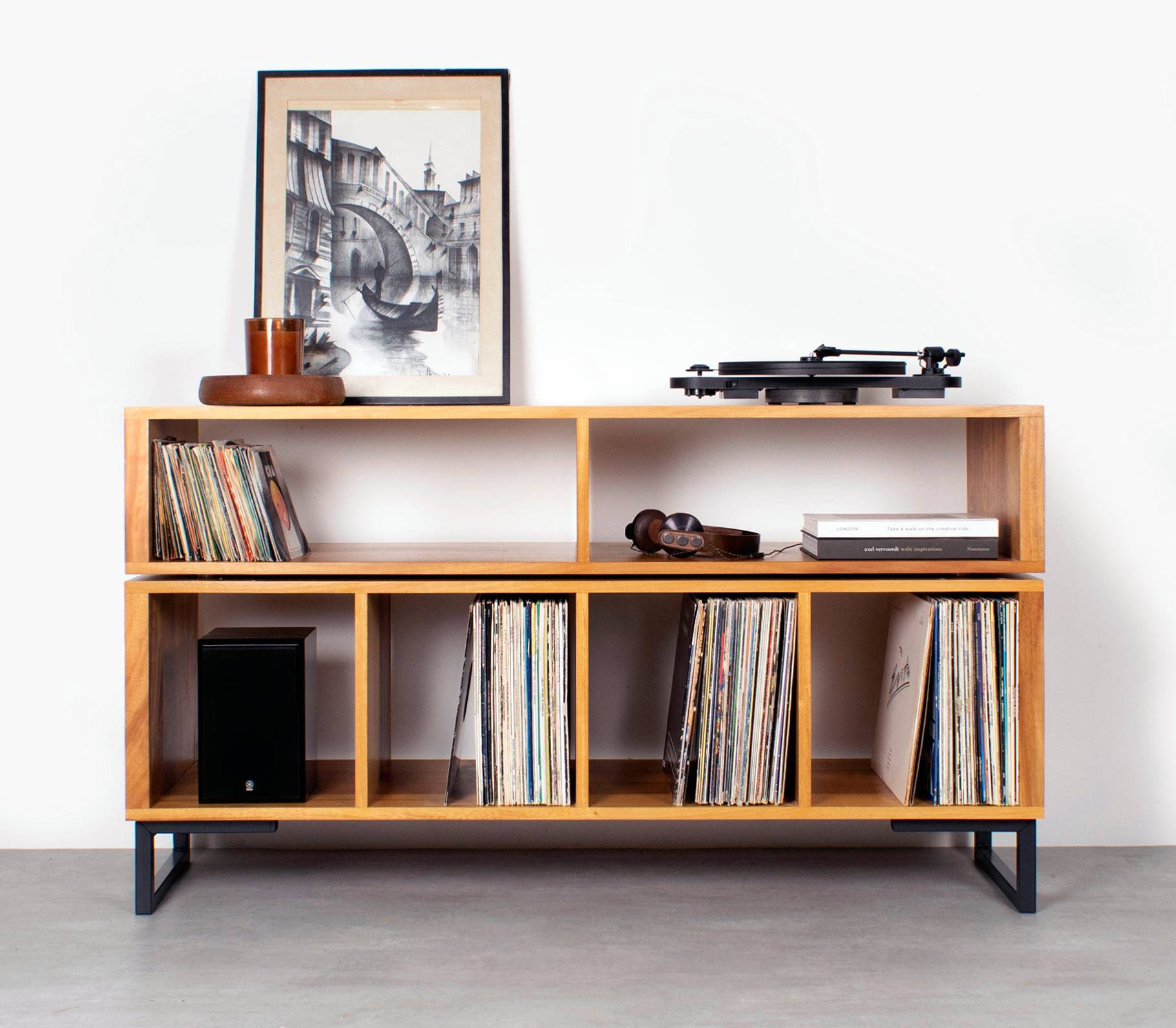
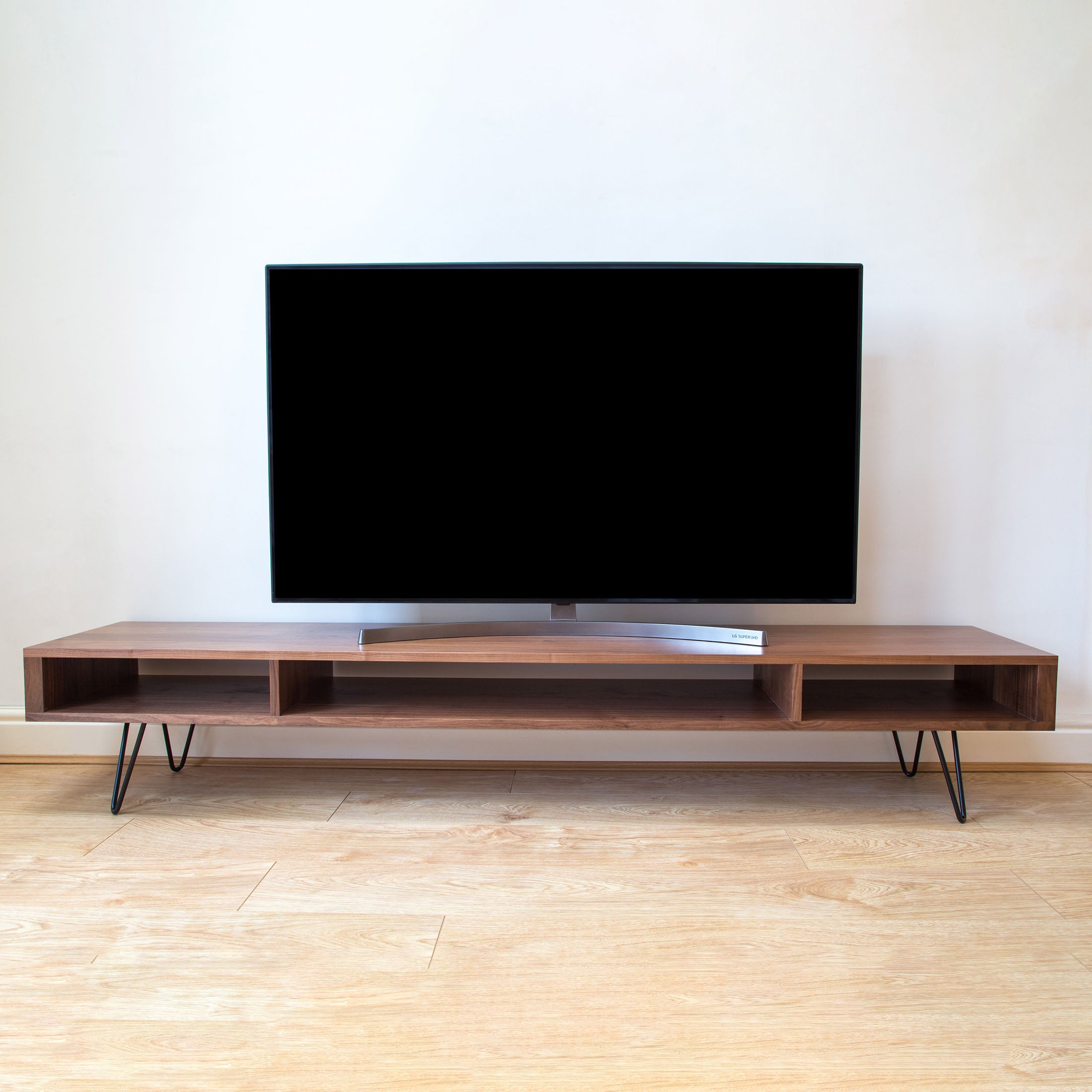
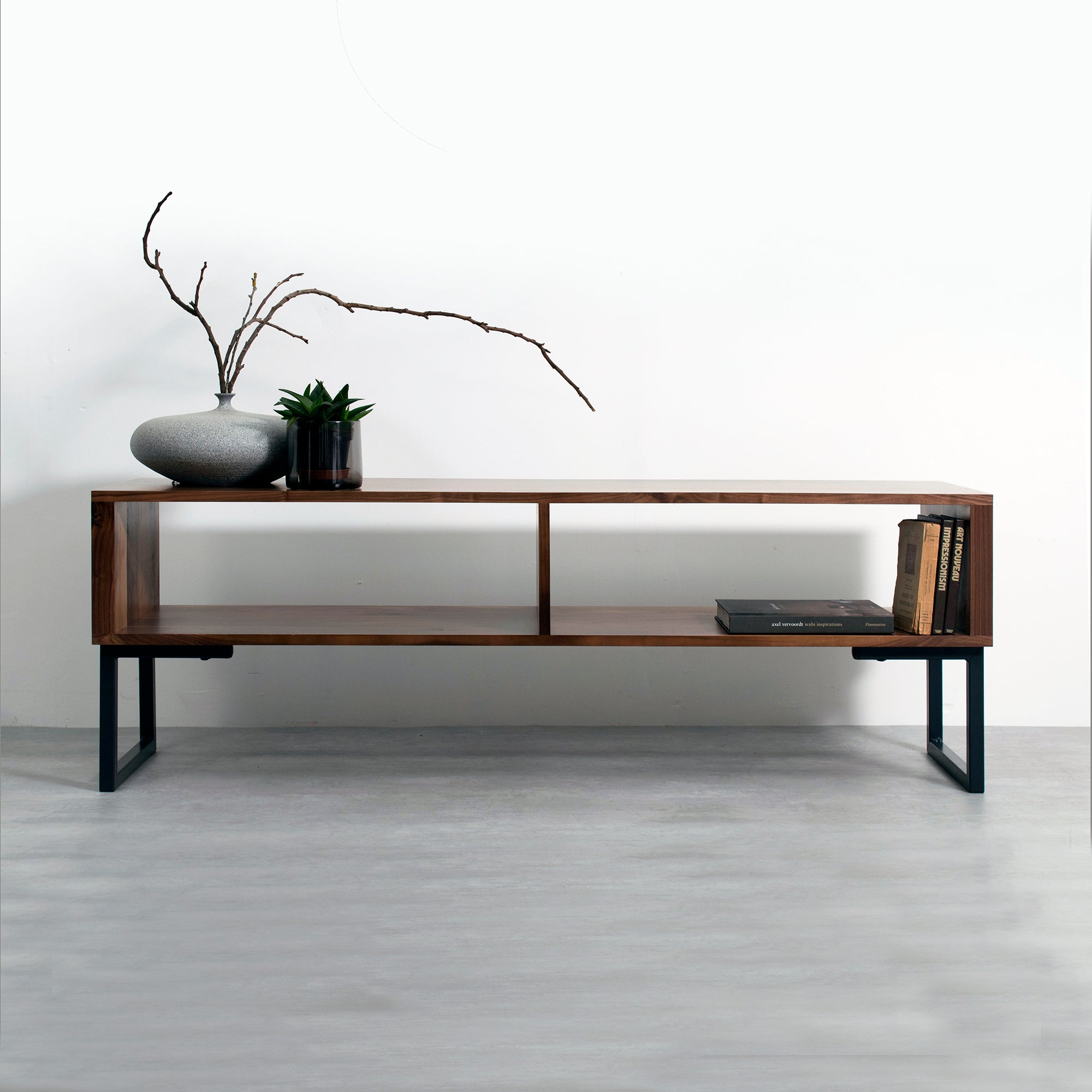
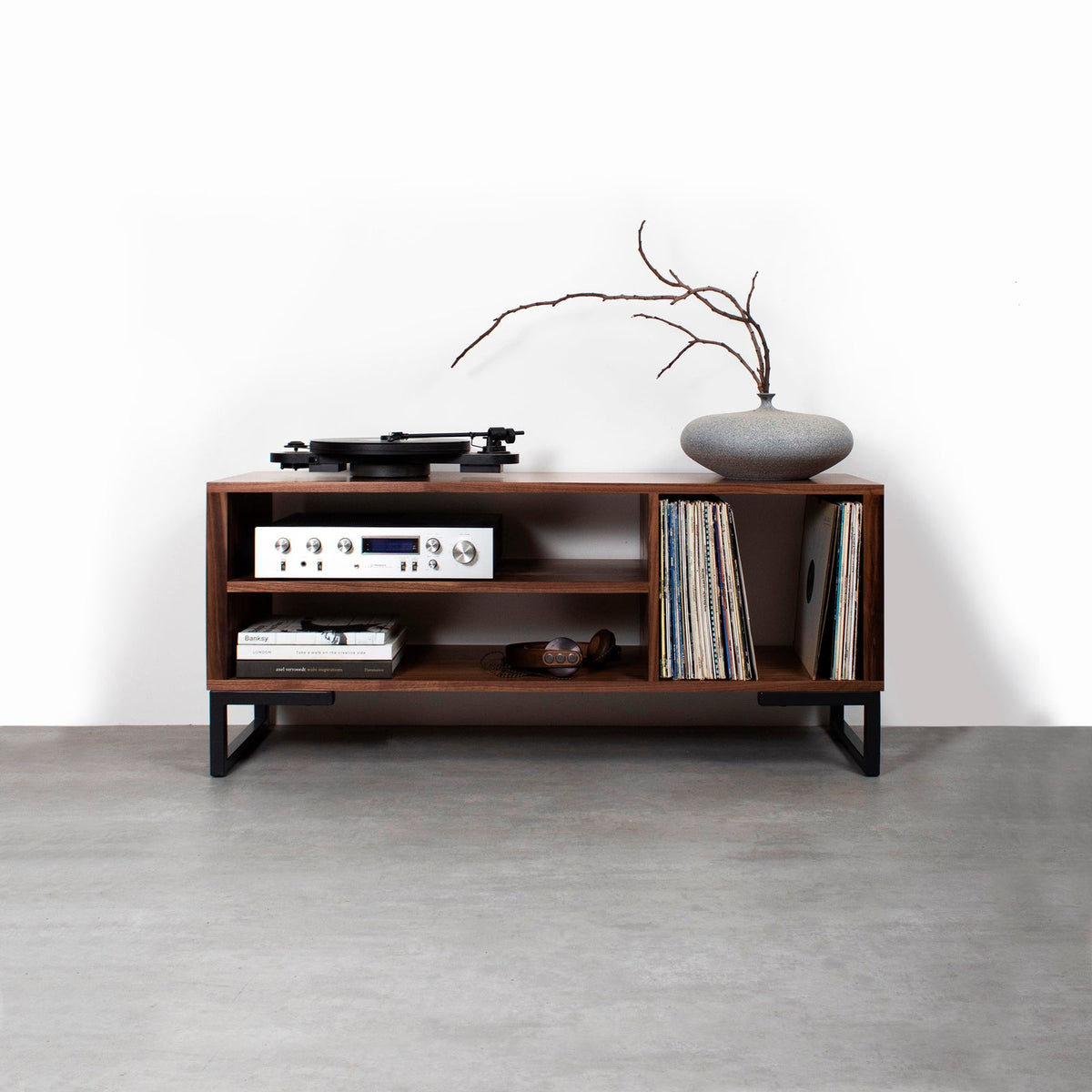
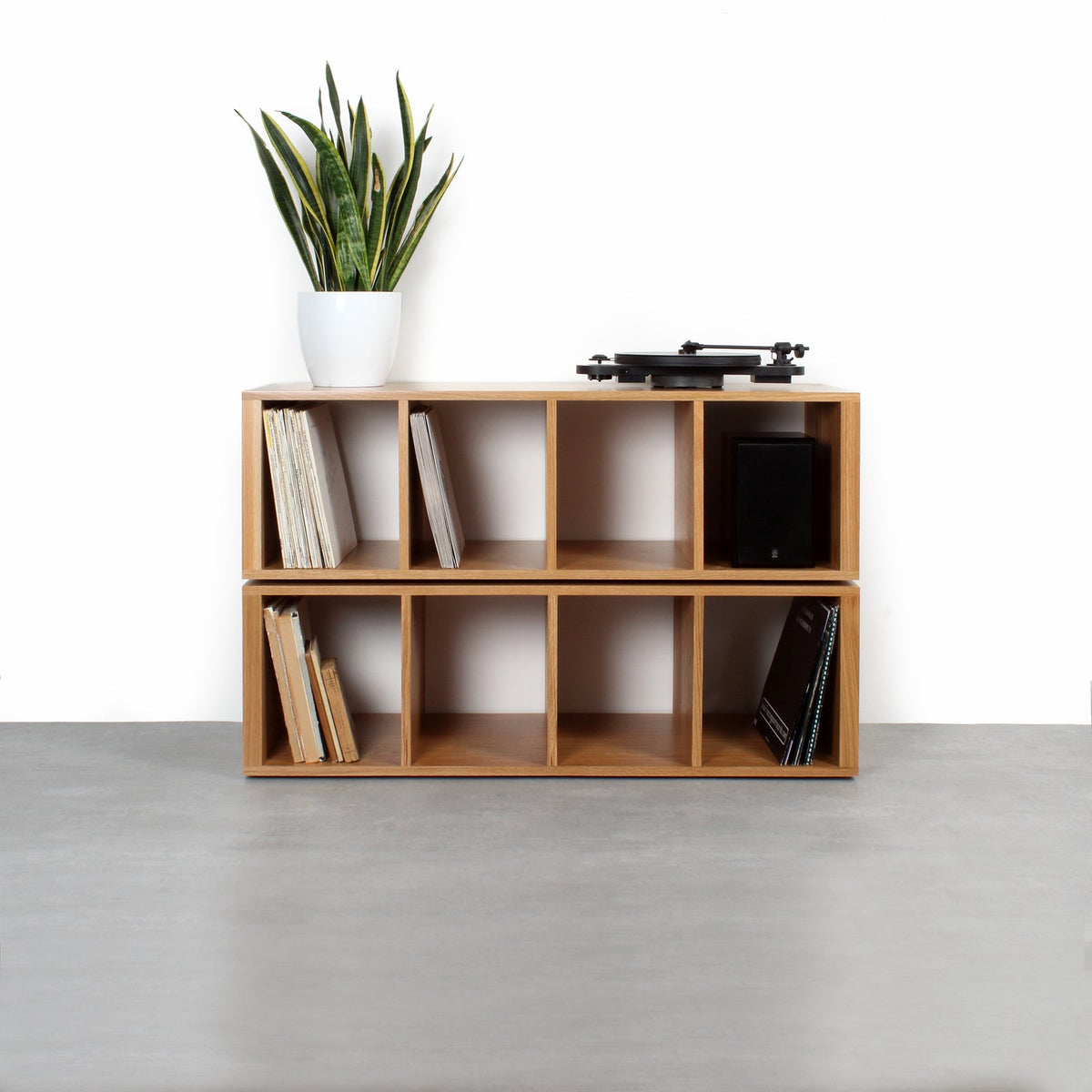
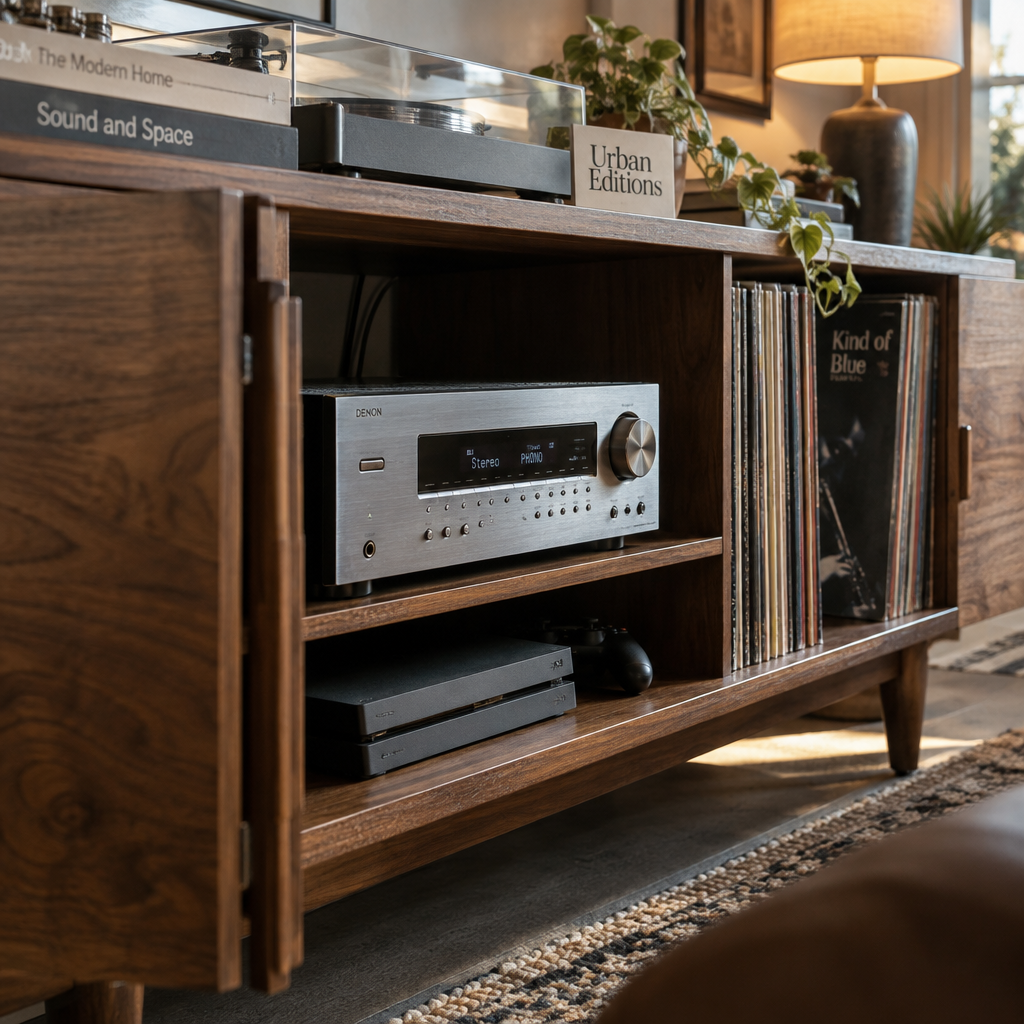
For a joined-up furniture choice, The Urban Editions’ solid hardwood media units sit within a range of furniture designed and made in the UK. Its built-to-order pieces use sustainably sourced oak, walnut, ash and iroko, with options to customise designs and order wood samples.
Make the display part of your listening setup
Place the display where you can choose a record without obstructing access to the turntable or its controls. Keep the stand on a stable surface and leave enough room to remove a sleeve cleanly. A well-positioned favourite is easy to play; a display squeezed behind other equipment is more likely to gather dust than attention.
If your room is compact, a wall-mounted display can free up furniture space, while a tabletop holder keeps selection close to the turntable. If the collection is large, give proper storage priority and reserve only a few slots for visible covers. The number of records on display should suit the stand and the room, not the size of the collection.
Conclusion
Measure your largest sleeved LP, decide where the display will sit, then choose a holder that supports records upright with room to lift them out. Use it for a rotating selection and store the rest in suitable furniture. If you’re choosing hardwood, compare samples with your room’s existing finishes before ordering.
Frequently Asked Questions
How many records should a display stand hold?
Choose capacity by the space available and how many records you’ll rotate through, rather than trying to display your whole collection. Leave enough room to remove a sleeve easily, especially if you display gatefold albums or use protective outer sleeves.
Can I display records on a normal picture ledge?
Only if the ledge is deep enough for the full sleeve and has a secure retaining edge. Many picture ledges aren’t designed to support records upright, so check the usable dimensions and make sure sleeves won’t slide or tip forward.
Is a wall-mounted record display safe on plasterboard?
It depends on the wall construction, the stand and the combined weight of its contents. Use fixings rated for your wall and follow the manufacturer’s instructions; if you can’t confirm the fixing method, ask a qualified installer before loading the stand.
Can I use one stand for 7-inch singles and 12-inch LPs?
Use a holder sized for both formats, or keep the singles in a separate compartment. A stand designed around 12-inch sleeves may not support 7-inch records securely, so check that smaller sleeves can’t tip or slip through.