November SPECIAL OFFER! Sign-up to our newsletter to receive the latest offers and news.
Walnut vs Oak Furniture: Colour, Grain, Durability and Price Compared
American white oak scores about 35% higher than American black walnut on the Janka hardness scale, which measures resistance to dents. For walnut vs oak furniture, choose oak for a lighter colour, stronger grain and generally lower price; choose walnut for rich brown colouring and smoother-looking grain at a premium.
Both can last for decades, but construction, finish and care matter alongside wood choice. Walnut’s extra cost buys its distinctive appearance, not greater durability. We recommend deciding how you want the piece to look, then comparing equivalent designs before paying more.
Key Takeaways
Oak generally resists dents better and costs less.
Walnut offers naturally dark colour and quieter-looking grain.
Finish affects surface protection; hardness does not determine scratch resistance.
Compare identical dimensions, construction and finishes before judging prices.
Test wood samples in your room’s daylight and evening lighting.
At a glance
Oak wins on value and dent resistance; walnut wins for natural dark colouring. Neither automatically produces a better cabinet or table. The differences below apply to typical natural-finish furniture, rather than stained pieces designed to imitate another wood.
Attribute
Oak furniture
Walnut furniture
Colour
Usually pale beige to golden brown; often becomes warmer over time
Usually rich brown, sometimes with purple or grey tones; often becomes lighter and warmer
Grain
More pronounced pores, with straight lines, arches or visible ray patterns
Usually finer-looking, with flowing lines and occasional curls or swirls
Durability
Generally harder and more resistant to dents; finish and construction still matter
More easily dented, but suitable for long-lasting furniture with sound construction
Price
Generally the more affordable option for an equivalent design
Usually costs more because the usable timber is less widely available and more expensive
For a busy dining table, oak’s practical advantages carry weight. For a console table or record cabinet chosen as a focal point, walnut’s colour may justify the extra spend.
There is no automatic winner for lifespan. A well-made walnut desk is a better long-term purchase than a poorly supported oak desk, despite oak’s harder surface.
Colour and light
Walnut is the stronger choice when you want naturally dark furniture without relying on a dark stain. Oak gives you a lighter starting point, although the finish can change either wood’s appearance substantially.
Natural colour varies
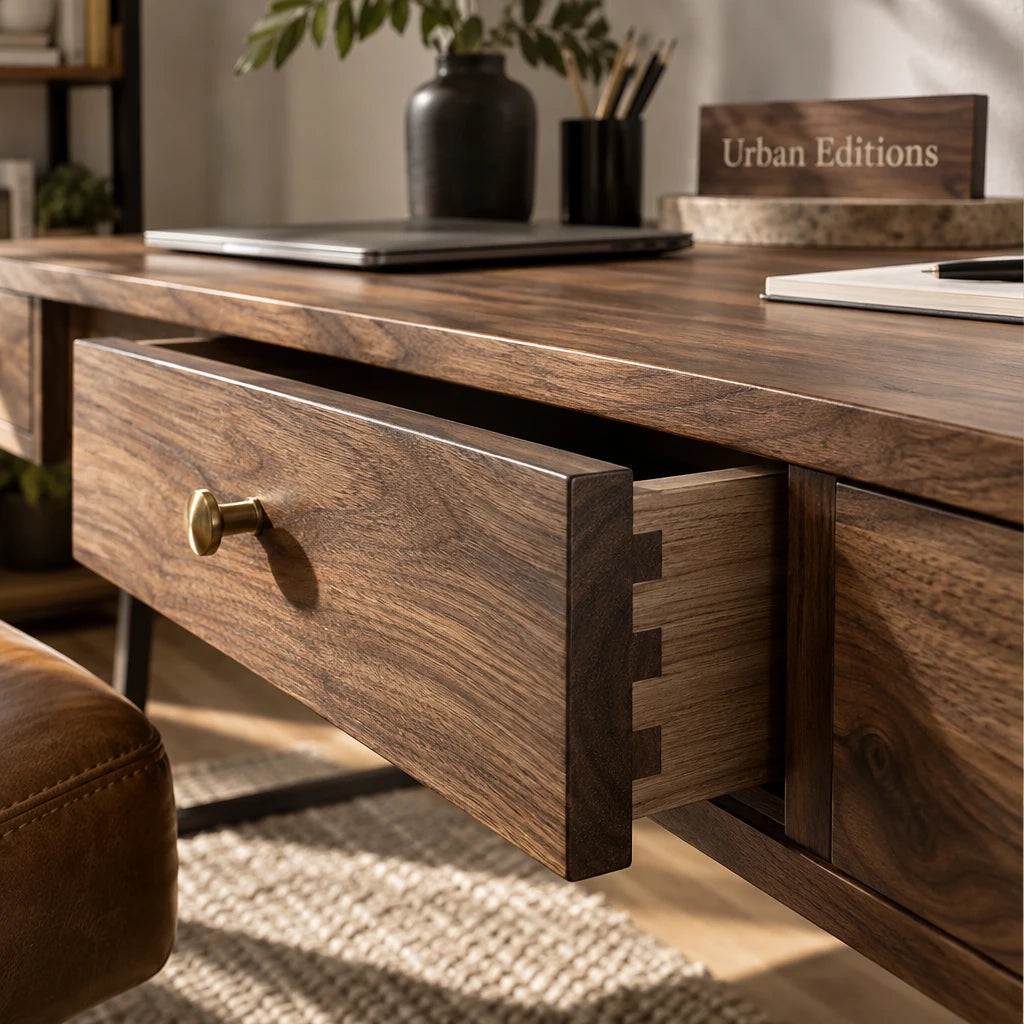
Oak ranges from pale straw and beige to honey brown. Walnut’s darker heartwood, the mature wood towards the centre of the tree, ranges from grey-brown to deep chocolate.
Both woods also contain lighter sapwood, the younger wood nearer the bark. In walnut, this can create a clear cream-coloured stripe beside a dark board. That contrast is natural, rather than evidence of a different material.
A wood name is not an exact colour specification. Board selection, natural variation and finish all affect the result. Clear oil usually deepens the colour and grain compared with unfinished timber, while tinted finishes can shift the appearance further.
Colour changes with age
Walnut generally becomes lighter and warmer with exposure to light. Oak usually develops a deeper golden or amber tone, although the finish also changes as it ages.
Neither change happens at a fixed rate. A cabinet beside a bright window will age differently from one against an internal wall. Objects left in the same position can leave contrasting patches because the covered wood receives less light.
Choose a colour you enjoy now, while allowing for gradual change. Do not buy walnut expecting its darkest new appearance to remain exactly the same.
Samples beat photographs
Compare two finished samples beside your flooring, wall colour and largest existing piece of furniture. Look at them in daylight and again under your evening lamps; warm bulbs can make oak appear more golden and walnut more reddish.
We offer wood samples at Urban Editions, so you can make this comparison in the room where the furniture will live. Treat a sample as a guide to colour and finish, rather than a promise that every board will match.
A little time with samples is well spent, particularly when your screen brightness has been doing some of the decorating.
Grain and species
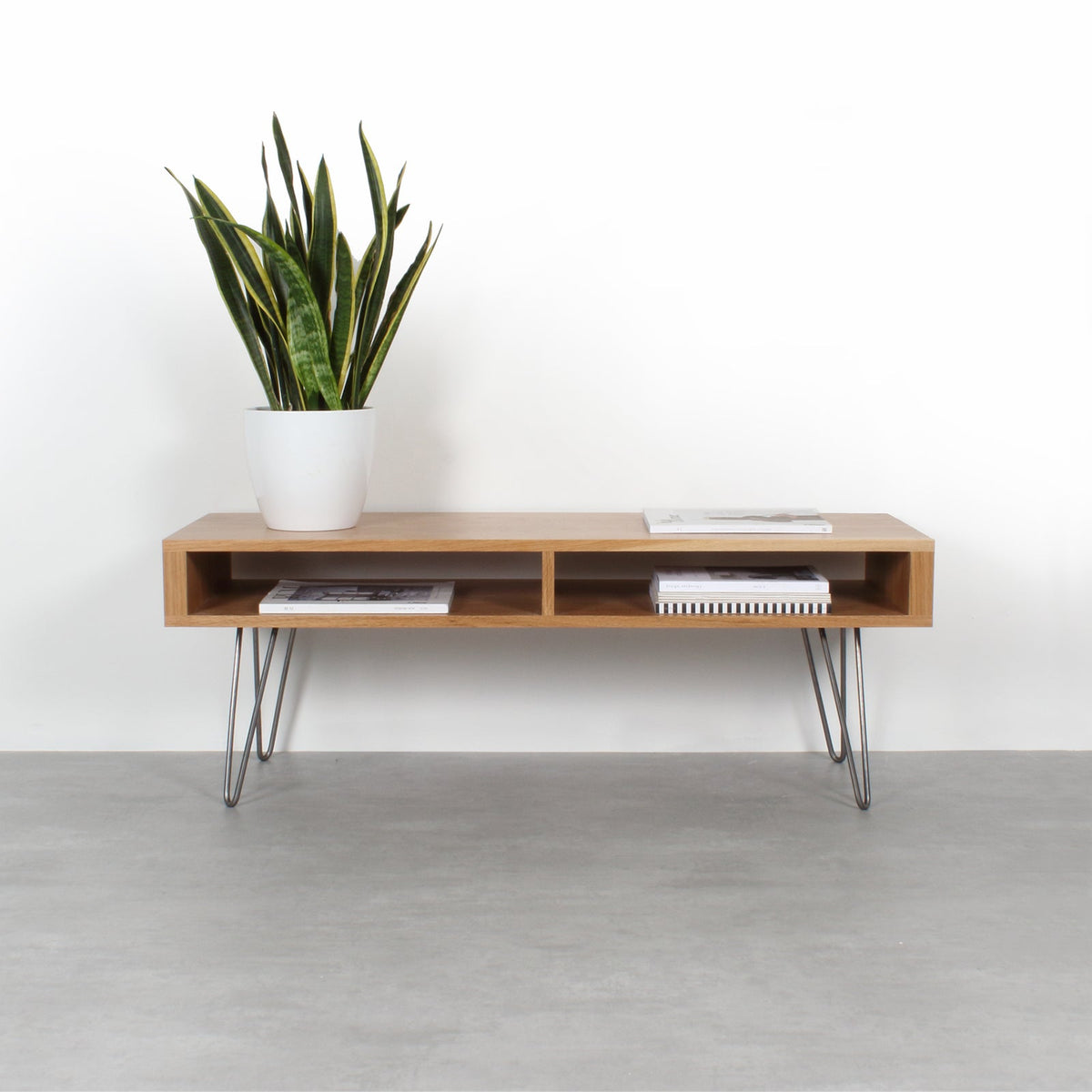
Oak usually has a more visible texture than walnut, but the way a board is cut can change its character considerably. Compare actual grain examples, rather than assuming that all oak looks rustic or all walnut looks uniform.
Species affect hardness
American black walnut is common in contemporary furniture. European walnut is a different species, and its colour and properties are not identical.
Oak also covers several species. European oak, American white oak and American red oak differ in appearance and physical properties. American red oak often has pinker undertones, while white oak commonly looks more beige or olive-brown.
The familiar Janka figures of approximately 4,500 newtons for American black walnut and 6,000 newtons for American white oak describe those species. They are not universal ratings for every piece labelled walnut or oak. Newtons measure force; the higher figure means more force is needed to make the test dent.
Sawing changes the pattern
Plain-sawn boards, cut to make efficient use of the log, often show broad arch-shaped patterns known as cathedral grain. These can be prominent in oak, especially across a large tabletop.
Quarter-sawn oak can show straighter grain alongside pale, reflective markings called medullary rays. Rift-sawn oak tends towards straight, even lines with less visible ray patterning.
Walnut can also have cathedral grain, straight grain or lively swirls. Its darker colour and less pronounced pore pattern often make those changes look softer.
For a minimalist desk, choose straight-grained boards in either wood. For a coffee table with more visual movement, broader grain patterns give the surface character without changing the furniture’s shape.
Everyday durability
Oak has the clearer advantage against dents, but scratches, stains and structural failure are separate questions. Judge each one on the feature that controls it, rather than treating hardness as a complete quality score.
Dents and scratches
A dropped metal object is more likely to dent walnut than American white oak under comparable conditions. That matters on dining tables, desks and coffee tables, where objects regularly strike the surface.
Janka hardness measures resistance to indentation: it is not a rating for scratch-proof finishes or furniture load capacity.
Scratches often begin in the finish rather than deep in the timber. Grit dragged beneath a vase can mark either wood, and a hard oak surface can still have a finish that scratches visibly.
Oak’s stronger grain can disguise some small marks. Walnut’s dark surface can make a pale scratch more obvious, especially where it cuts across the grain. This is an appearance difference as well as a hardness difference.
Finish controls protection
A film-forming finish, such as lacquer, creates a protective layer over the wood. Oils and hardwax oils produce a different surface, with repair methods and resistance that vary by product.
Compare the finish as carefully as the wood. A well-applied protective finish on walnut can resist everyday spills better than a less protective finish on oak.
Neither wood needs a permanently covered surface for ordinary use. Use coasters and desk mats where they serve a purpose, and lift gritty or heavy objects rather than sliding them.
Construction carries weight
A cabinet’s load capacity depends on shelf thickness, unsupported span, joints and the position of dividers or supports. Oak’s higher hardness does not establish how much a shelf can carry.
As a practical planning estimate, 100 single LPs in sleeves can weigh roughly 20–25 kg. Gatefold covers, box sets and heavier pressings increase the total. A record cabinet therefore needs support suited to the collection, not simply a reassuring wood name.
For a wide shelf, look for a stated load rating or construction details showing how the span is supported. Two shorter supported sections can behave very differently from one long shelf made from the same timber.
Price and quality
Walnut generally costs more than oak because suitable furniture-grade timber is less widely available and dark, consistent boards command higher prices. The premium reflects the material and its selection; it does not prove that the finished furniture is stronger.
Compare one design
Start with the same dimensions, leg option, internal layout and finish. Otherwise, you may be comparing the cost of extra timber or more complex construction rather than the wood choice itself.
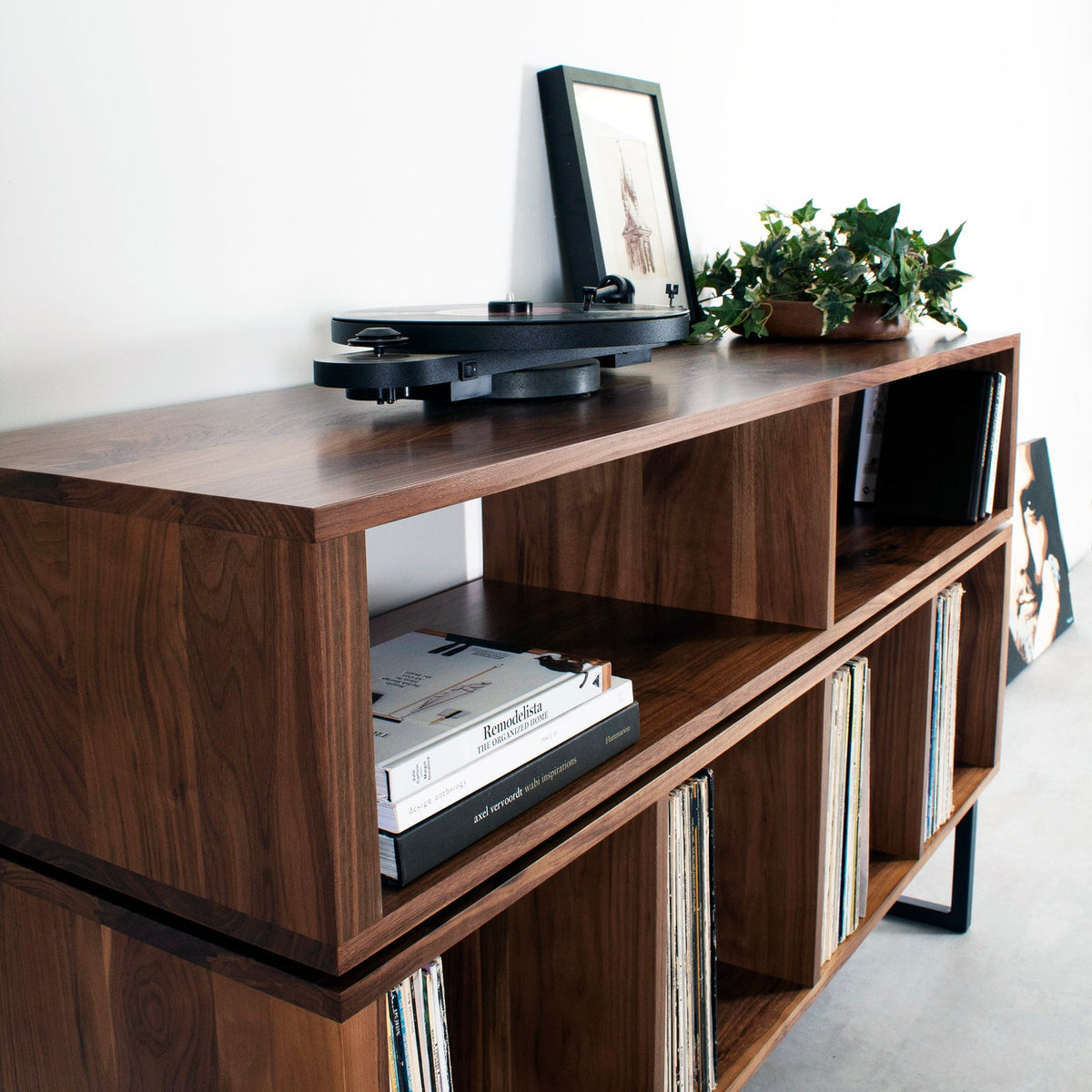
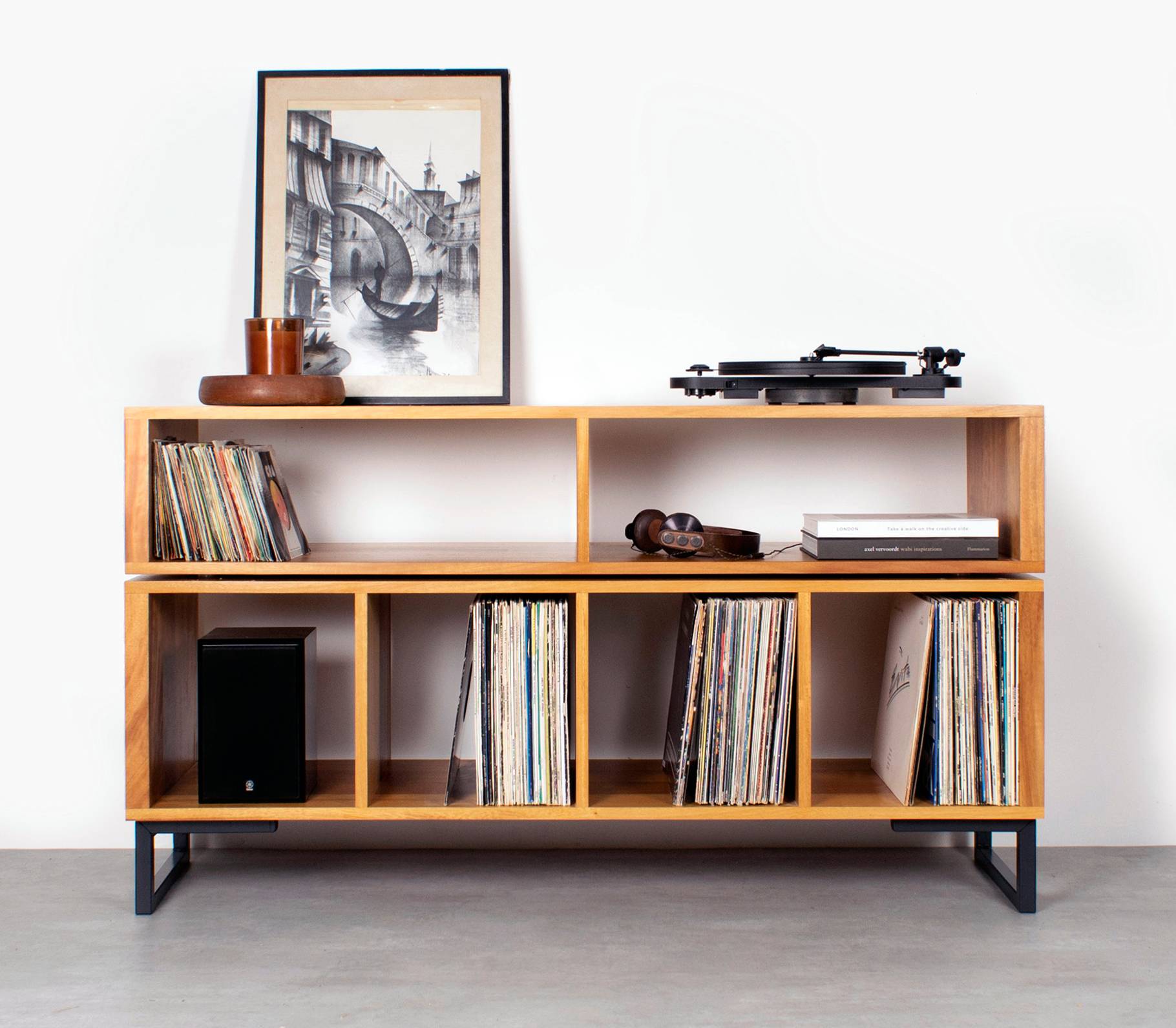
Our Technic Turntable Stand on Minimalist Square Legs gives you a direct way to compare oak and walnut within one solid wood design. It comes in 100 cm, 120 cm and 140 cm widths, with 15 cm or 25 cm leg-height options, so keep both selections unchanged when comparing the wood options.
As a rough guide for October 2026 prices, budget around 20–50% more for walnut than oak in comparable solid wood furniture. Treat that as a planning estimate, not a fixed market rule: timber selection and the amount of wood in the design can move the difference outside that range.
For example, if an oak quote is £1,000 and the equivalent walnut quote is £1,300, the walnut premium is £300, or 30%. That is the amount to weigh against your preference for its colour, rather than against an assumed durability benefit.
Separate solid wood from veneer
Veneer is a thin layer of real wood bonded to a core material. Walnut veneer can provide genuine walnut colour and grain at a lower cost than an equivalent solid walnut construction, although design and workmanship still affect the final price.
Veneer is not automatically poor quality. A well-made veneered panel can be stable and useful, particularly across broad surfaces. Its main limitation for long-term surface renewal is the thin decorative layer, which restricts sanding.
Solid wood offers more scope for future refinishing, provided the design and remaining thickness allow it. It also moves across the grain as indoor humidity changes, so good construction allows that movement.
Use four checks to keep your comparison fair:
Match the overall dimensions and usable storage space.
Identify which parts are solid wood, veneered board or another material.
Match the finish, doors, drawers and leg options.
Compare the full delivered price, including VAT.
A lower price becomes meaningful only when you know what has changed.
Care and refinishing
Oak and walnut need much the same routine care when they have comparable finishes. Walnut does not automatically need more oiling, and oak does not become maintenance-free because it is harder.
Wipe dust away with a soft cloth and remove spills promptly. For routine cleaning, use a lightly damp cloth followed by a dry one, unless the finish instructions specify another method. Avoid leaving moisture around plant pots, glass bases or equipment feet.
Maintain the finish, not the species. Some oiled finishes need occasional renewal when the surface becomes dry or worn. Lacquered furniture normally needs cleaning rather than fresh oil applied over the coating. Follow the finish maker’s instructions for the appropriate product and timing.
For local damage, repair methods differ. Some oil finishes allow a small area to be refreshed, although colour matching can remain visible. A damaged lacquer coating may need a larger area refinished to achieve an even sheen.
Solid oak and solid walnut can both be sanded and refinished, but start with the least aggressive repair. Edges, shaped details and previous sanding limit how much material you can remove. Veneer needs particular restraint because sanding through it exposes the core.
Keep either wood away from concentrated radiator heat and prolonged direct sunlight where practical. Stable indoor conditions reduce repeated swelling and shrinking; choosing oak instead of walnut does not remove that movement.
Which suits you?
Choose oak when everyday knocks and budget matter most. Choose walnut when its natural brown colour is a central part of your room scheme and you are comfortable paying for that appearance.
Dining tables and desks
For a family dining table used for meals, homework and craft projects, choose oak with a protective finish. Its dent resistance gives it a useful advantage, while the lower price leaves more room in the budget for the size you need.
Choose walnut for a dining table when you want the tabletop to be the room’s dark focal point. Accept that normal use can leave dents; paying more does not prevent them.
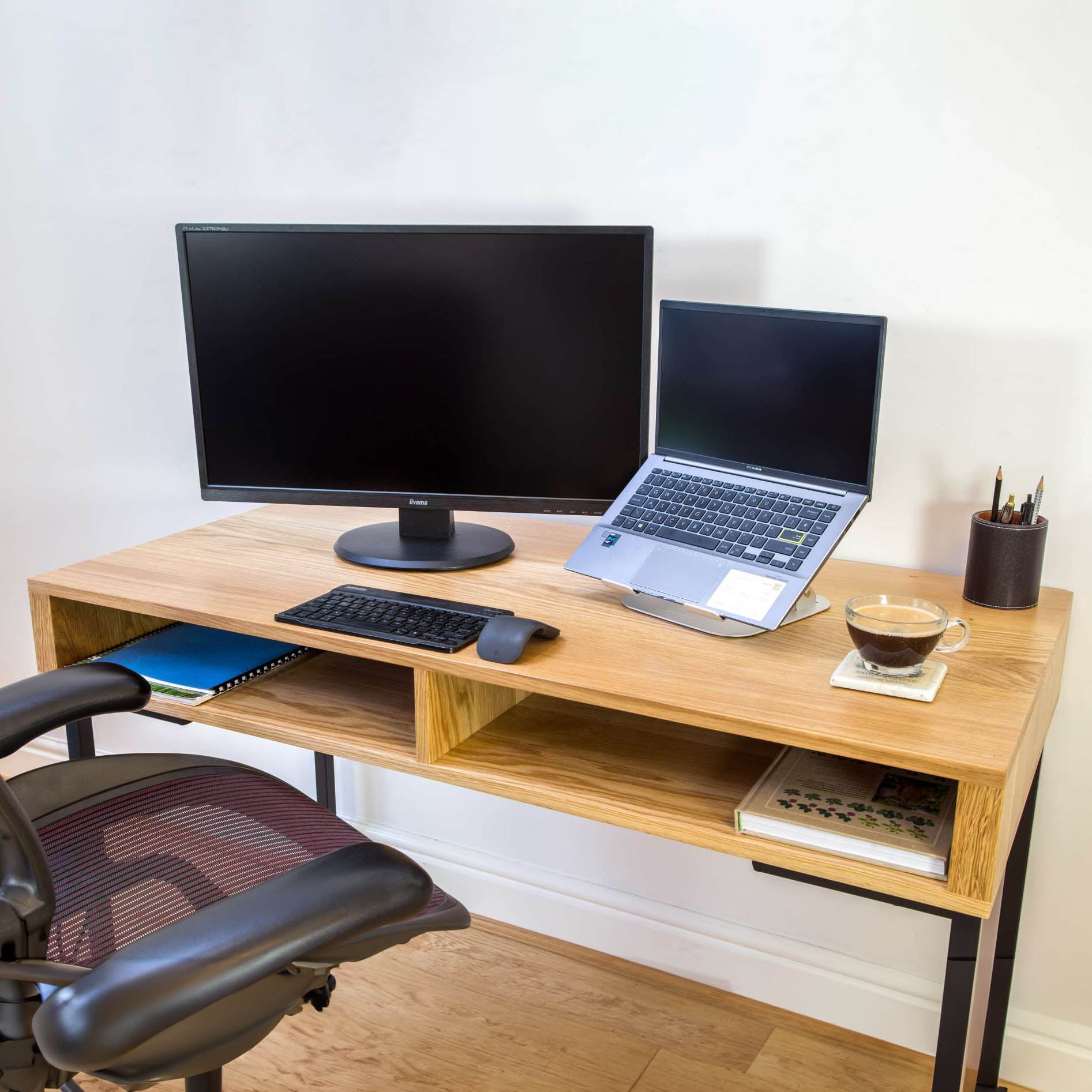
For a desk, both woods work well. Choose oak for frequent hands-on work, and walnut for a darker study scheme. Use a writing pad if you press firmly with a pen, because concentrated pressure can mark either surface.
Record cabinets and media units
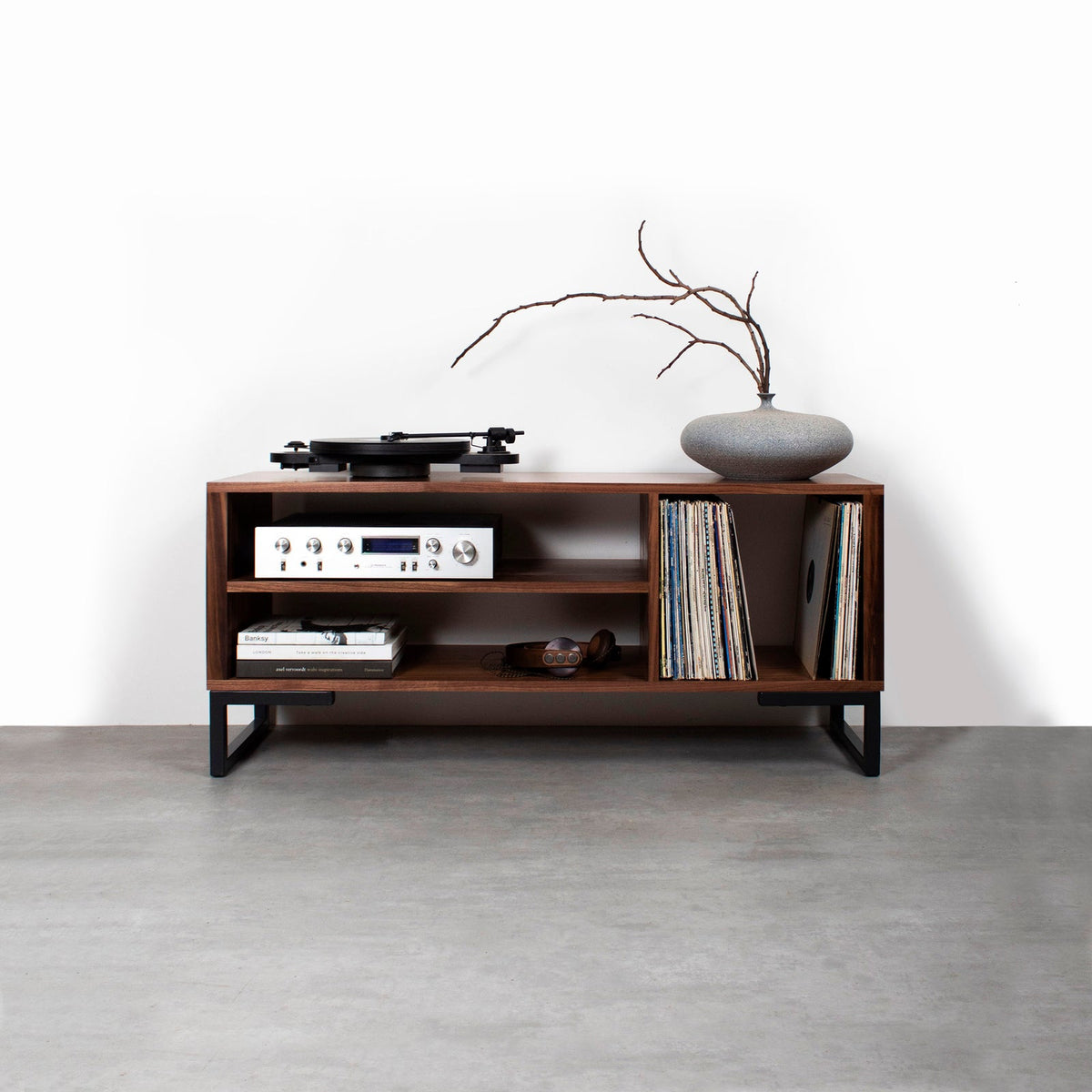
For record storage, decide the shelf layout and equipment space before choosing the wood. The weight of the collection and the width of each supported section matter more than the difference in hardness.
Choose oak if you want a large cabinet to sit lightly against pale walls. Choose walnut if you want contrast with light flooring or a darker frame around your audio equipment. Neither timber alone guarantees better sound or equipment support.
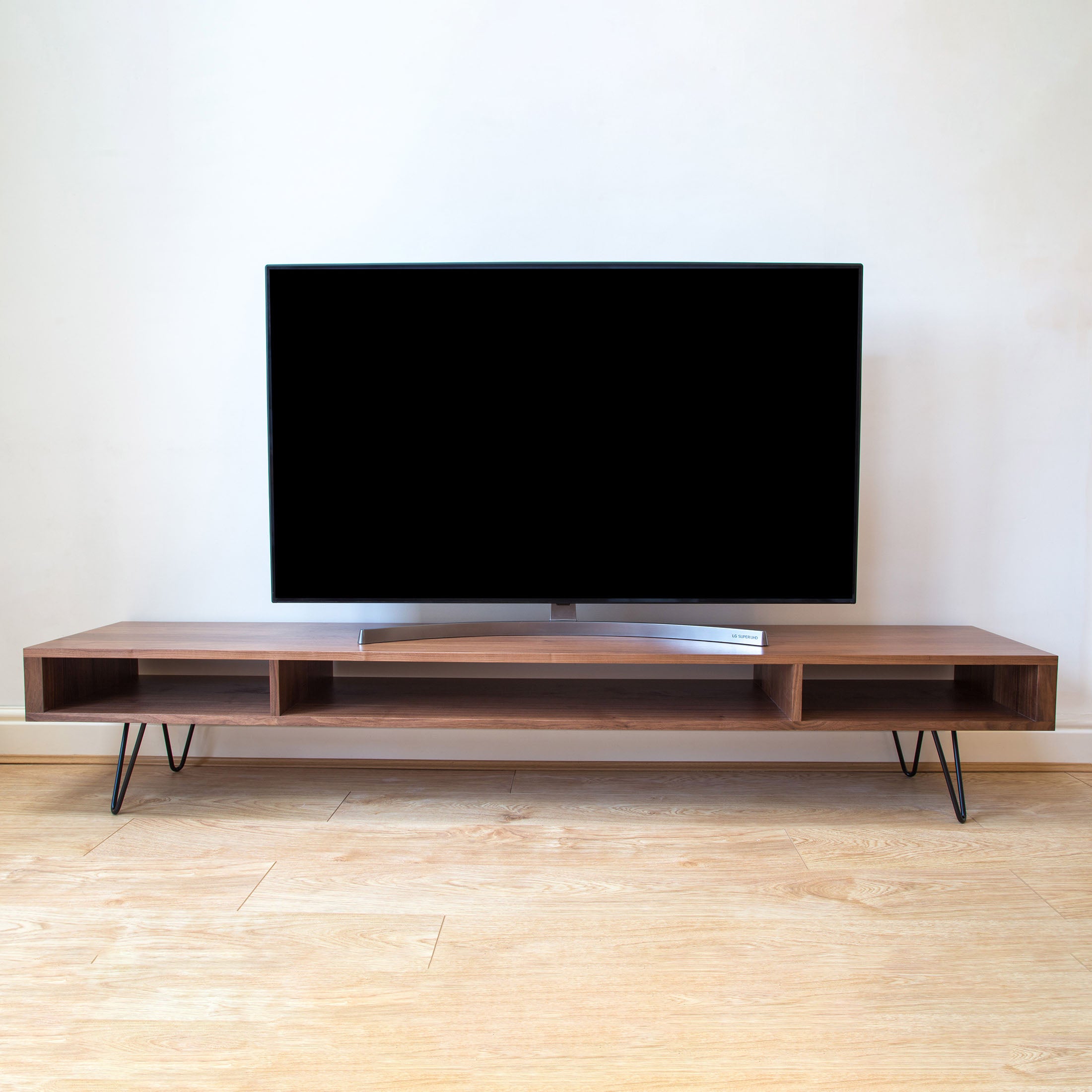
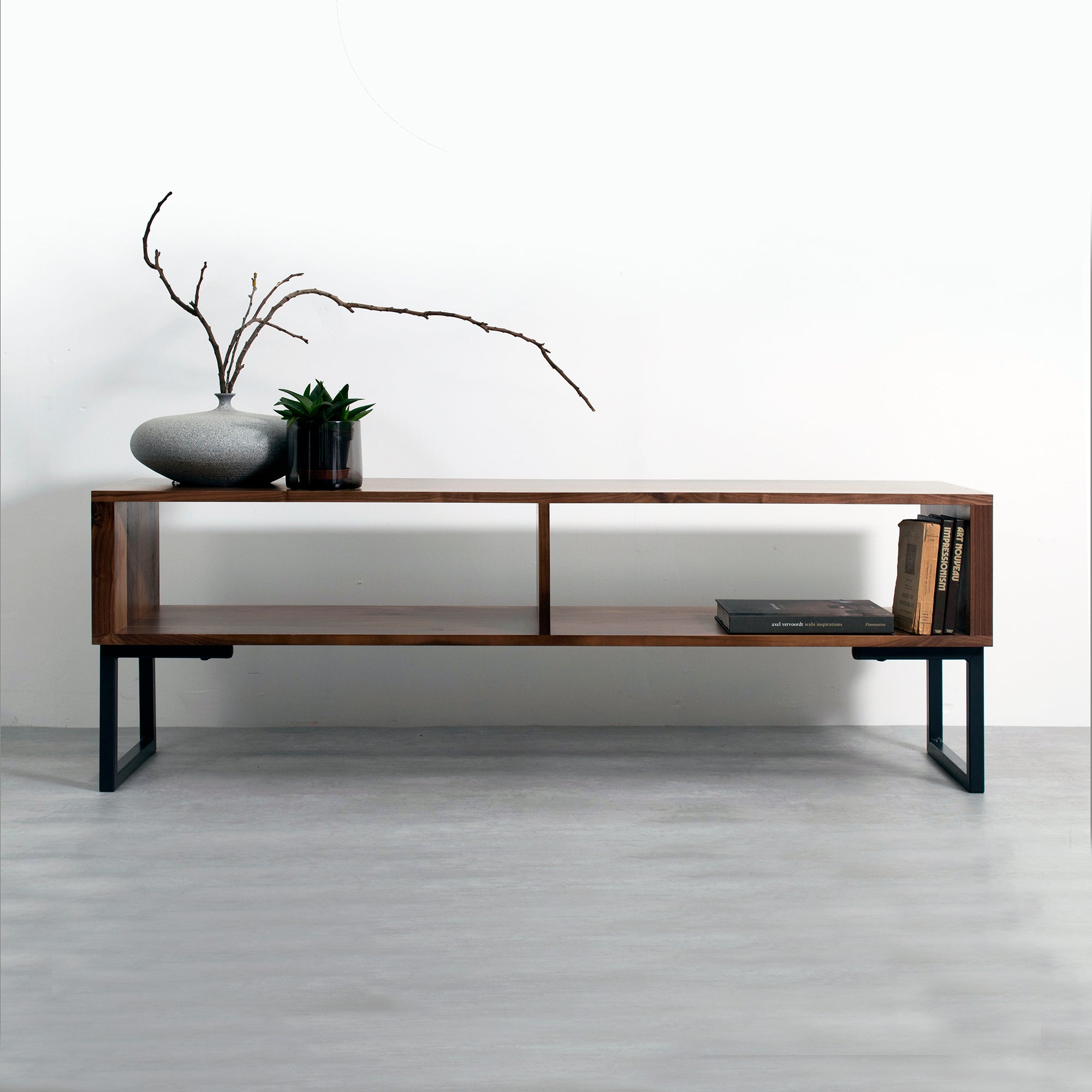
Our solid wood media units let you compare furniture layouts alongside wood choices. Start with the space your equipment and collection need, then use colour to narrow the choice.
When neither fits
Neither natural oak nor walnut is the right starting point if you want a perfectly uniform surface with no visible colour variation. Look at painted or laminate finishes instead.
If you want dark furniture but walnut exceeds your budget, compare stained oak and walnut veneer. Stained oak retains oak’s stronger grain, while veneer has more limited refinishing depth. Neither is an exact substitute, but each changes the cost without requiring you to abandon the darker look.
Conclusion
Order oak and walnut samples, then compare prices for one design with identical dimensions and finish. Choose oak if the lighter sample suits your room and daily knocks are your main concern. Choose walnut if its natural colour makes the piece feel right and the extra cost fits your budget. Before ordering either, settle the practical questions: usable dimensions, shelf support and the care required by the finish.
Frequently Asked Questions
Does walnut furniture dent more easily than oak?
Yes. American black walnut is softer than common furniture oaks, so it generally dents more easily under comparable impacts. Scratch resistance is a separate issue: the finish, the object causing the scratch and any grit on the surface all affect the result.
Can you mix oak and walnut furniture in one room?
Yes. Light oak and dark walnut create a clear contrast, which often looks more deliberate than trying to match slightly different browns. Repeat each tone elsewhere in the room, such as through shelving, frames or accessories, to connect the pieces.
Does walnut furniture become lighter over time?
Yes, walnut generally becomes lighter and warmer with light exposure, while oak often deepens towards golden brown. The rate depends on daylight and finish, so avoid expecting a new piece to remain an exact match for an older one.
Is walnut worth the extra money?
Walnut is worth the premium when you specifically want its natural brown colour and flowing grain. It is not worth paying more solely for durability: equivalent oak furniture is generally harder, and construction quality remains more important than price for long-term structural performance.